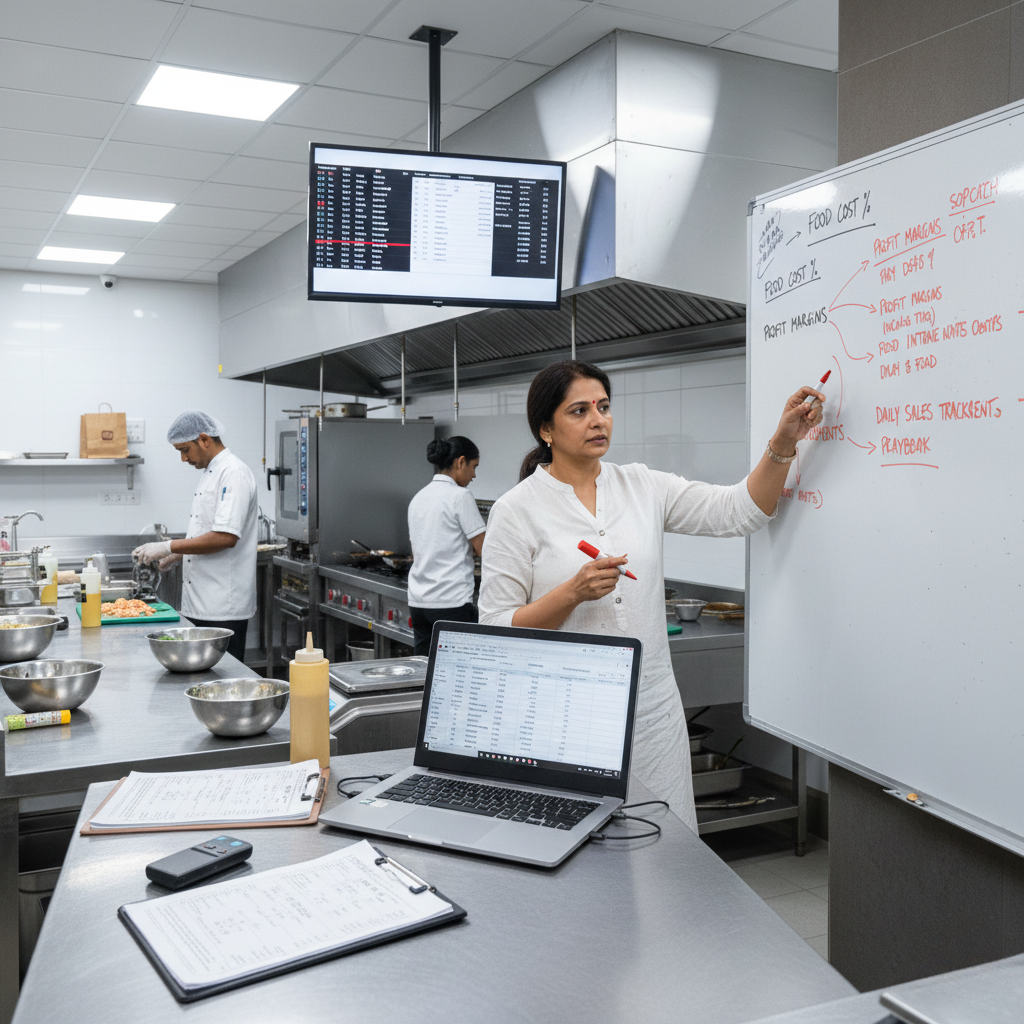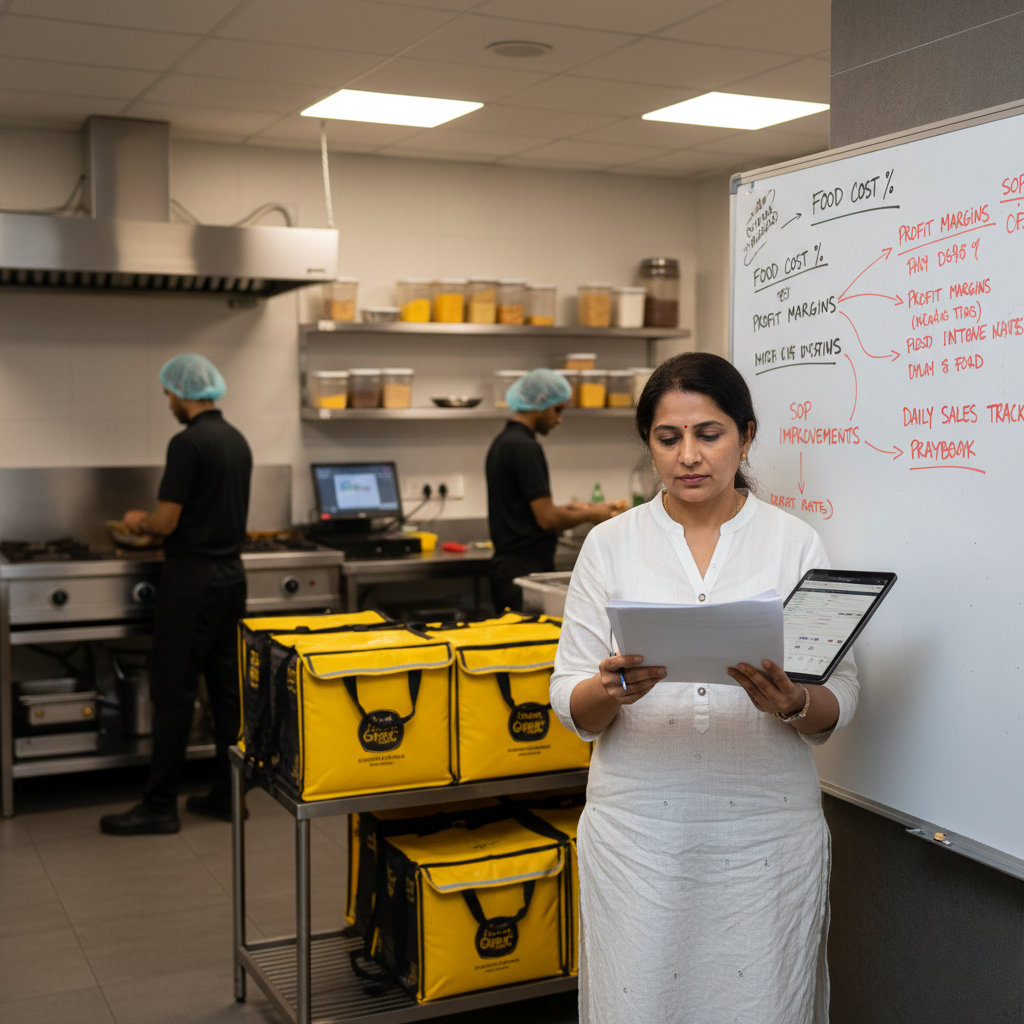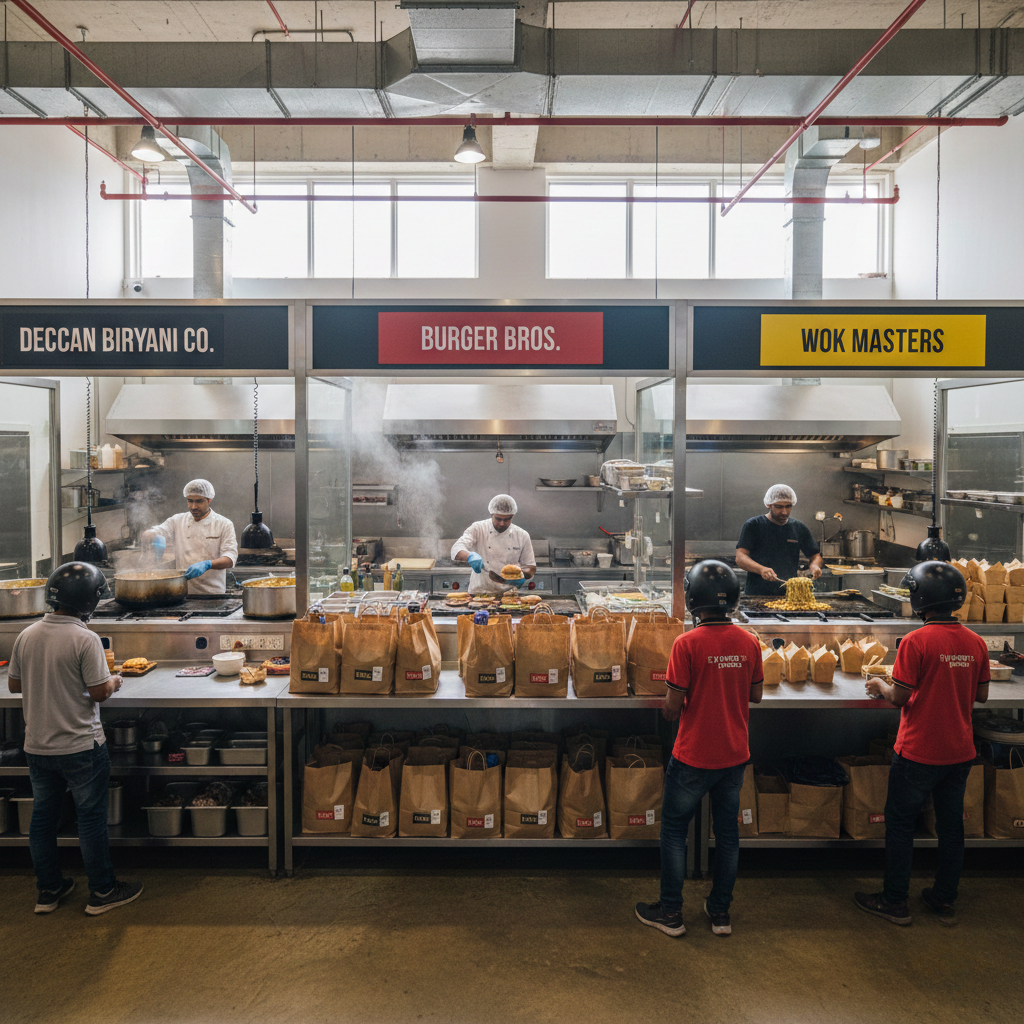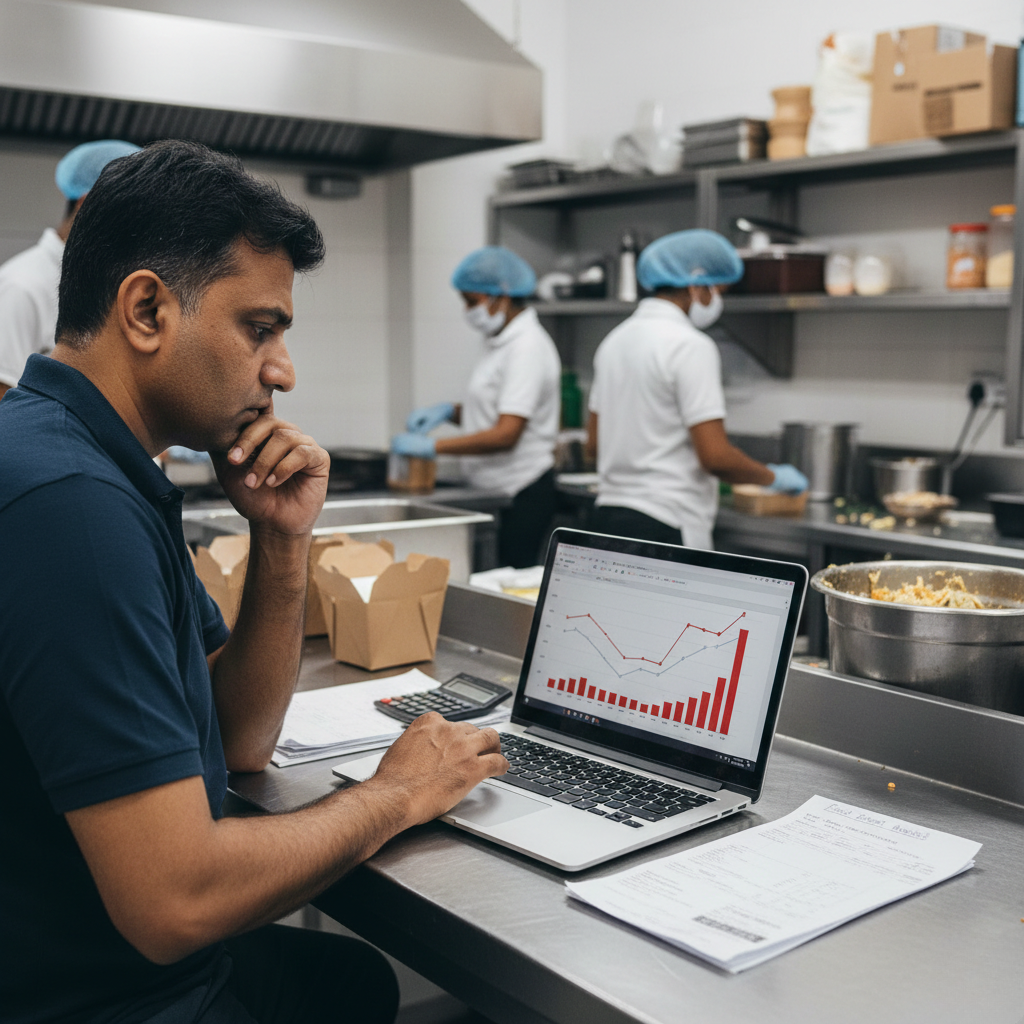
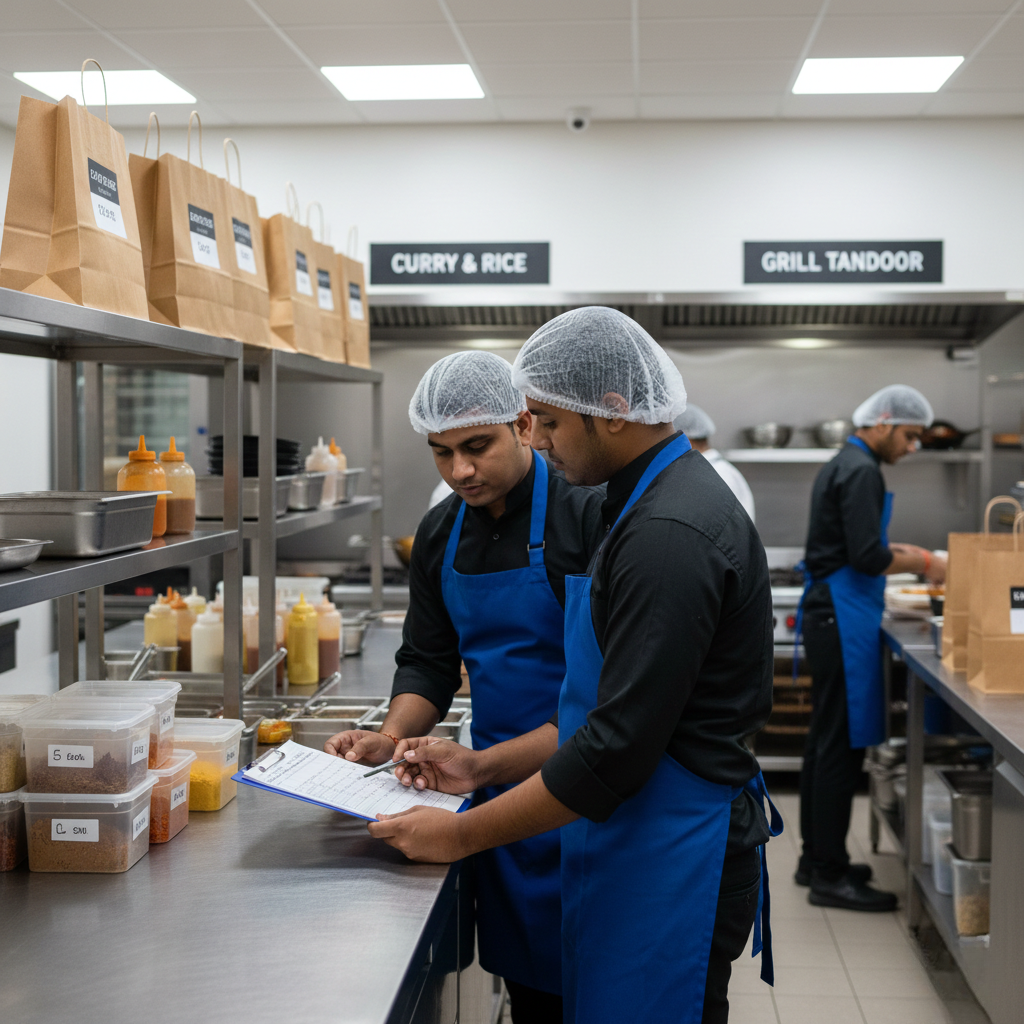
Cloud Kitchen Shift Standardization Case Study-This case study focuses on one of the most overlooked problems in cloud kitchen operations: inconsistent execution across shifts. The kitchen was busy, orders were steady, and staff attendance was regular-yet customer experience, food cost, and stress levels varied dramatically depending on the shift. Cloud kitchen as a service
The founder described the issue simply: “The same dish tastes different depending on who is working.” This is the story of how CKaaS standardized kitchen execution across all shifts and transformed inconsistency into predictability.
Background: One Kitchen, Three Different Performances
The cloud kitchen operated from a single location with two delivery-only brands. Orders were spread across the day, with lighter afternoon volumes and heavy evening peaks. Three shifts handled operations-morning prep, afternoon overlap, and dinner service.
On paper, it was one kitchen. In reality, it behaved like three different kitchens.
- Morning prep was calm but inconsistent
- Afternoon shifts improvised heavily
- Dinner service felt rushed and chaotic
The founder noticed that complaints, food cost, and staff stress spiked specifically during certain shifts.
This inconsistency is common in kitchens that grow without systems, as explained in what happens when cloud kitchens scale without systems.
The Problem: Same Menu, Different Outcomes
Customers ordered the same menu items throughout the day, but execution varied.
- Portion sizes changed between shifts
- Prep quality depended on who started it
- Cooking time varied under pressure
- Packing standards slipped during peak hours
These variations created:
- Inconsistent customer experience
- Unpredictable food cost
- Higher wastage during busy shifts
- Founder intervention during evenings
The kitchen was operational-but not repeatable.
Why Shift-Based Inconsistency Is So Dangerous
Shift inconsistency is not always visible in daily sales reports. Its damage appears gradually.
- Ratings fluctuate without clear reason
- Food cost creeps up silently
- Staff blame other shifts for problems
- Training becomes unreliable
Without standardization, experience cannot scale.
Initial Diagnostic: How CKaaS Studied Shift Behavior
CKaaS began by observing each shift separately.
- How prep was handled in the morning
- How handovers happened in the afternoon
- How cooking and dispatch ran at night
The diagnosis was clear: processes existed, but standards did not.
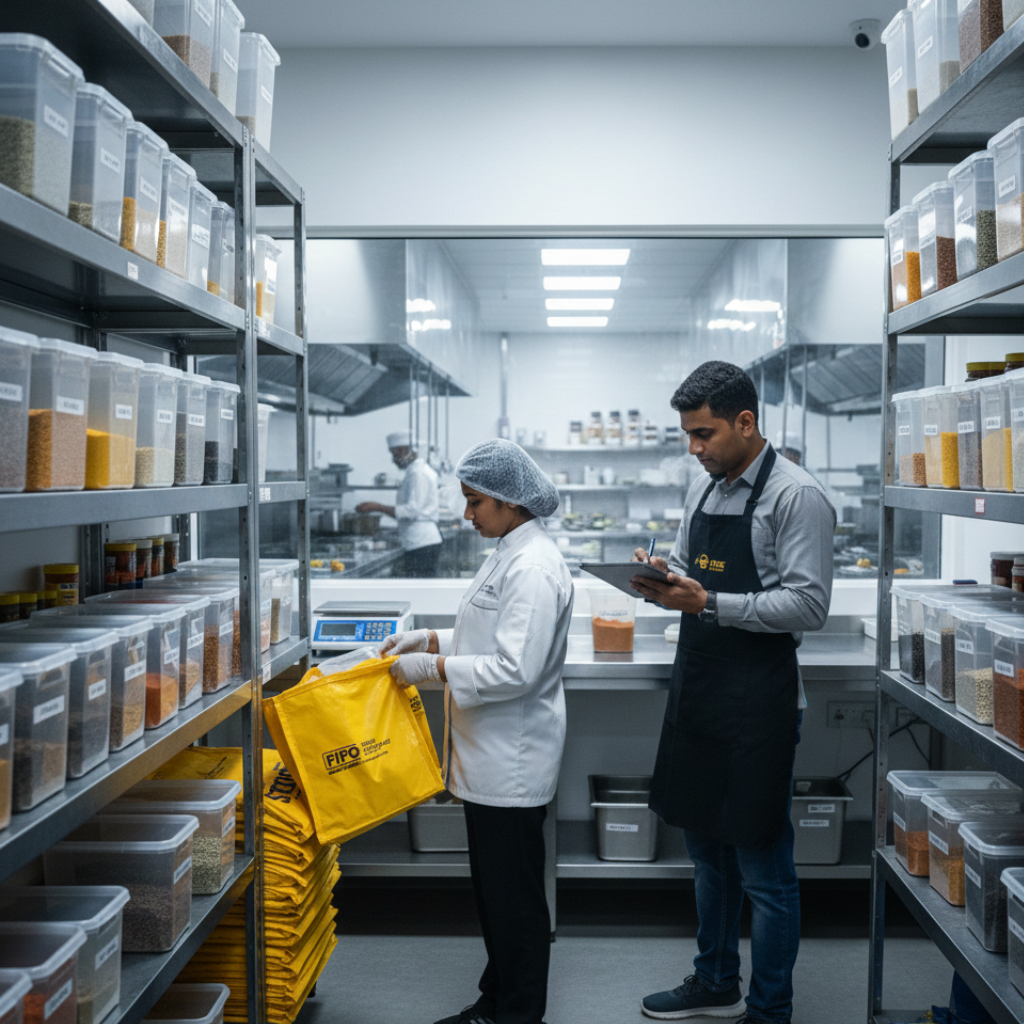
Root Cause #1: Prep Without Standard Output
Morning prep was done diligently, but without defined output standards.
- Quantities varied daily
- Cut sizes differed by staff
- Batch quality was inconsistent
This created downstream problems for later shifts that depended on prep quality.
Root Cause #2: Weak Shift Handover
Handover between shifts was informal.
- No checklist for prepared items
- No clarity on shortages
- No documentation of changes
Afternoon and evening shifts started with assumptions instead of clarity.
Root Cause #3: Pressure-Based Cooking During Peak Hours
During dinner rush:
- Portions were eyeballed
- Steps were skipped to save time
- Quality checks were ignored
Speed replaced consistency.
Root Cause #4: No Single Source of Truth
Each shift relied on its own habits.
Recipes, prep methods, and packing rules existed in people’s heads, not systems.
This made standardization impossible.
CKaaS Intervention: Designing Shift-Neutral Operations
CKaaS treated shift inconsistency as a design flaw.
The goal was simple: make outcomes independent of who or when.
The intervention focused on:
- Standardized SOPs
- Defined shift outputs
- Structured handovers
- Role-based accountability
System 1: Standardized Recipe & Cooking SOPs
Every menu item was documented with:
- Exact gram weights
- Cooking sequence
- Timing benchmarks
- Quality checks
These SOPs applied equally to all shifts.
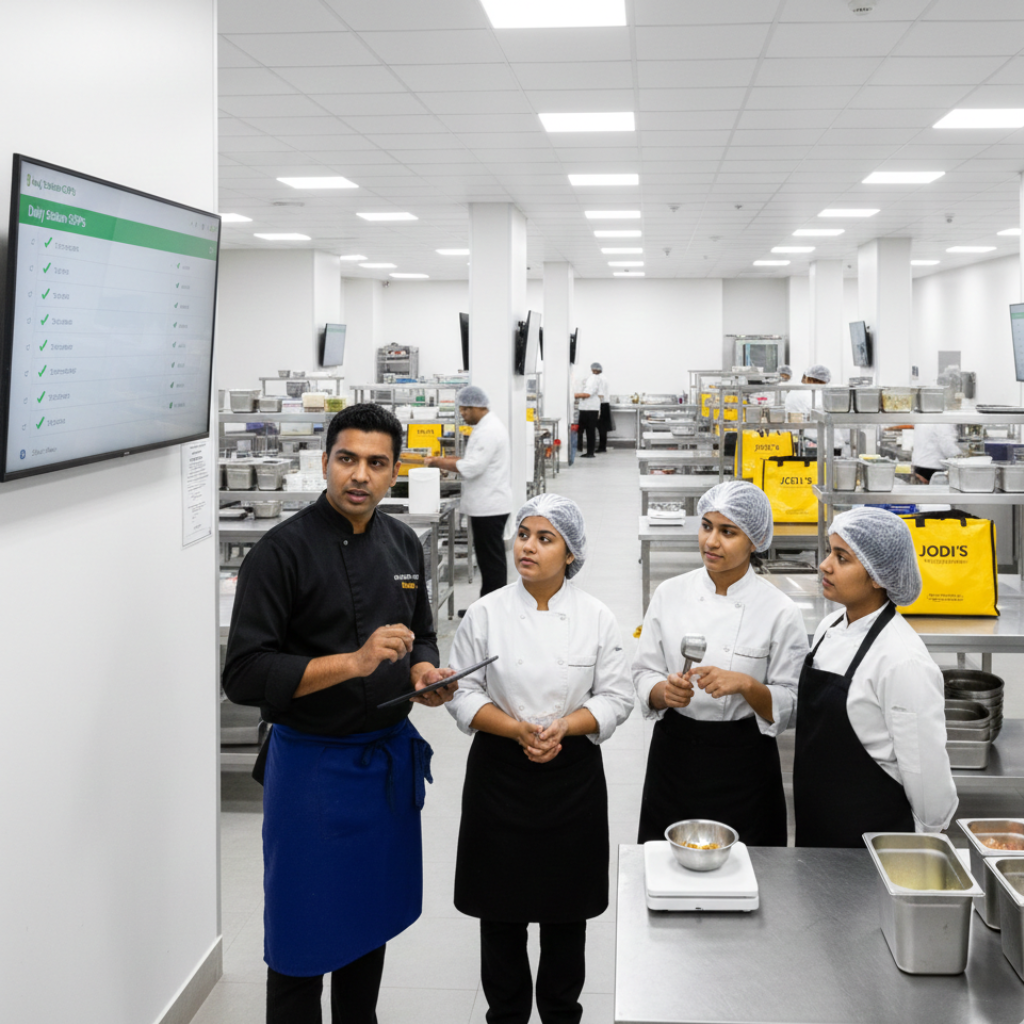
System 2: Prep SOPs With Defined Output
Prep SOPs were redesigned to specify:
- Exact quantities to prep
- Cut sizes and storage method
- Labeling and shelf-life rules
Morning prep became predictable and usable for all shifts.
System 3: Shift Handover Checklists
CKaaS introduced mandatory handover SOPs:
- Prepared stock status
- Shortages or risks
- Equipment issues
- Special instructions
No shift started blind anymore.
System 4: Role-Based Execution
Each shift had clearly defined roles:
- Prep lead
- Cooking station owner
- Dispatch owner
Responsibility followed the role, not the person.
This approach aligns with role-based kitchen operations explained.
The Transition: From Habit to Discipline
Initially, staff resisted change. Habits were deeply ingrained.
Within weeks:
- Execution stabilized
- Blame between shifts reduced
- Quality became predictable
- Stress dropped during peak hours
The kitchen began behaving like one system.
The Outcome: One Kitchen, One Standard
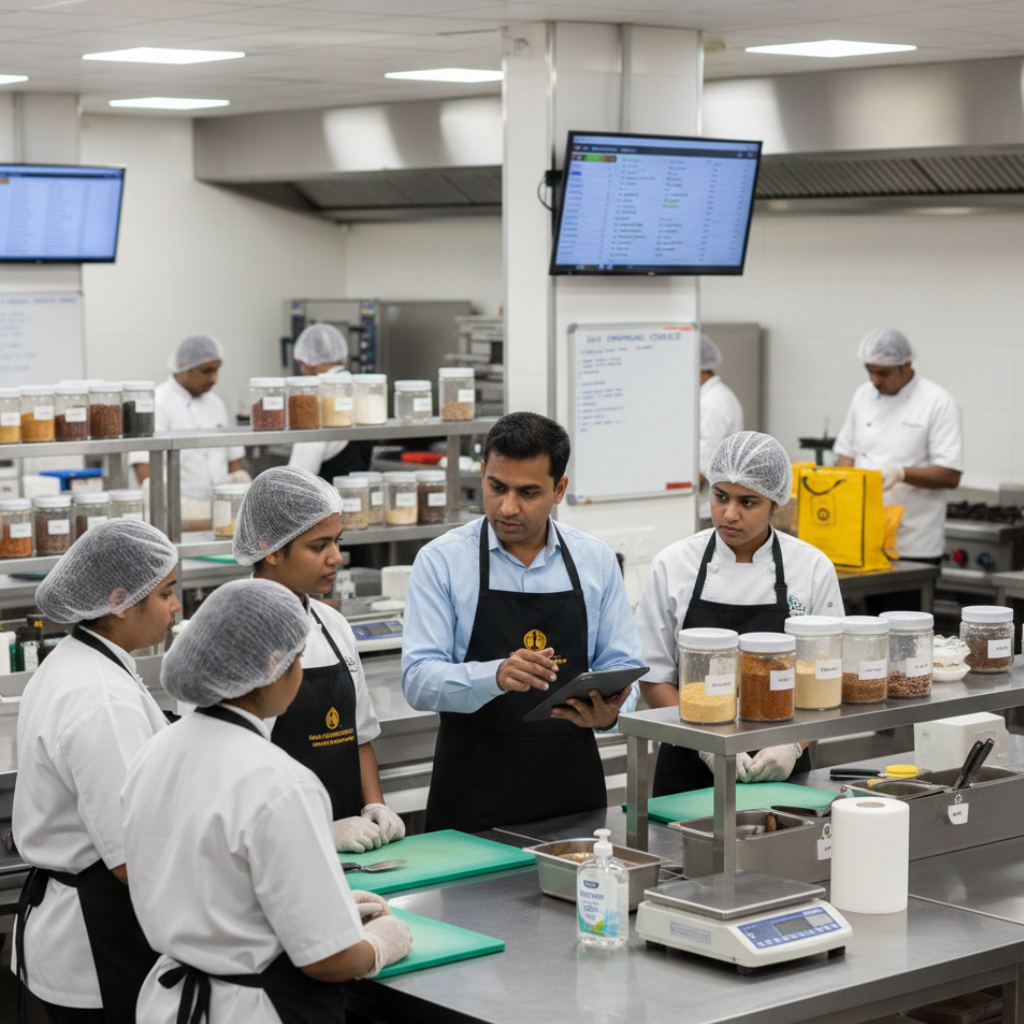
Within 45–60 days:
- Food cost stabilized across shifts
- Customer complaints reduced
- Shift performance equalized
- Founder interventions dropped
The kitchen delivered the same outcome-regardless of shift.
Founder Takeaways From This Case
- Inconsistency is a system problem
- Standardization reduces stress
- Shifts should not change outcomes
- Repeatability enables scale
Why CKaaS Worked
CKaaS worked because it designed operations around outcomes, not individuals.
Instead of asking “Who works better?”, CKaaS asked:
- What must be consistent?
- Where does variation occur?
- How can systems absorb pressure?
This approach aligns with insights shared by industry professionals like Rahul Tendulkar and disciplined brands such as Green Salad and Fruut.
Final Thoughts
If your kitchen behaves differently across shifts, it is not a staffing issue-it is a systems issue.
When systems are standardized, shifts stop mattering.
Still Have Questions?
For common SOP, operational, and scaling questions, read the Grow Kitchen FAQs.
You may also find these internal resources helpful:
- How to Fix a Loss-Making Cloud Kitchen
- From Zero Profit to Sustainable Margins
- What Happens When Cloud Kitchens Scale Without Systems
- Eliminating Staff Confusion Through CKaaS SOP Framework