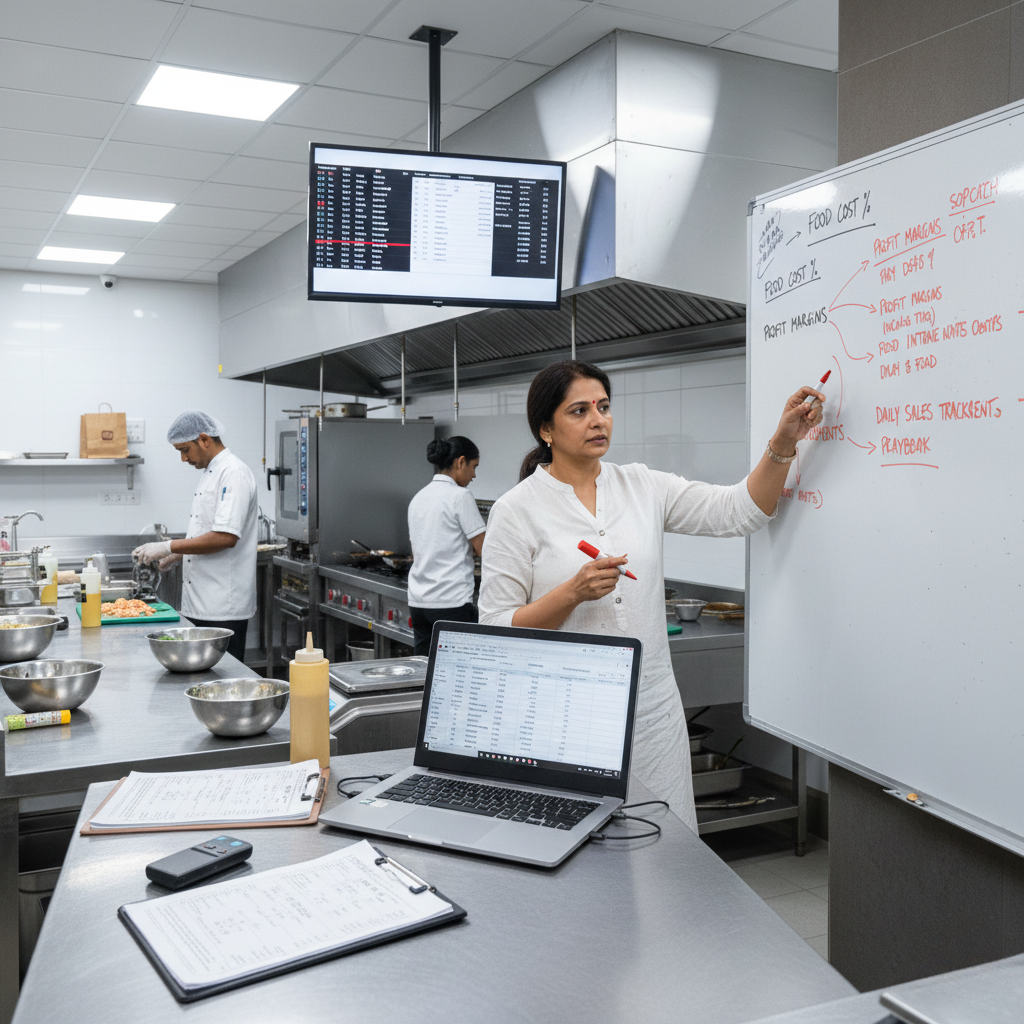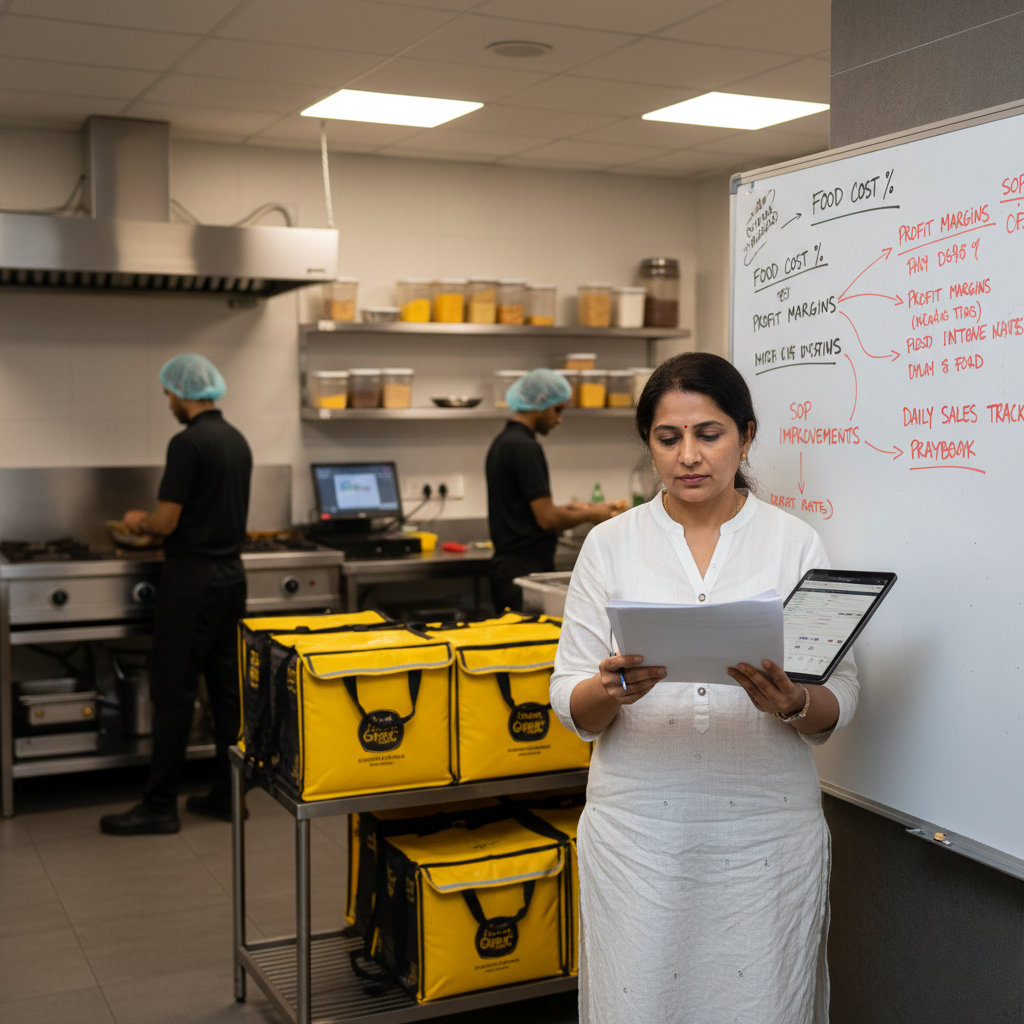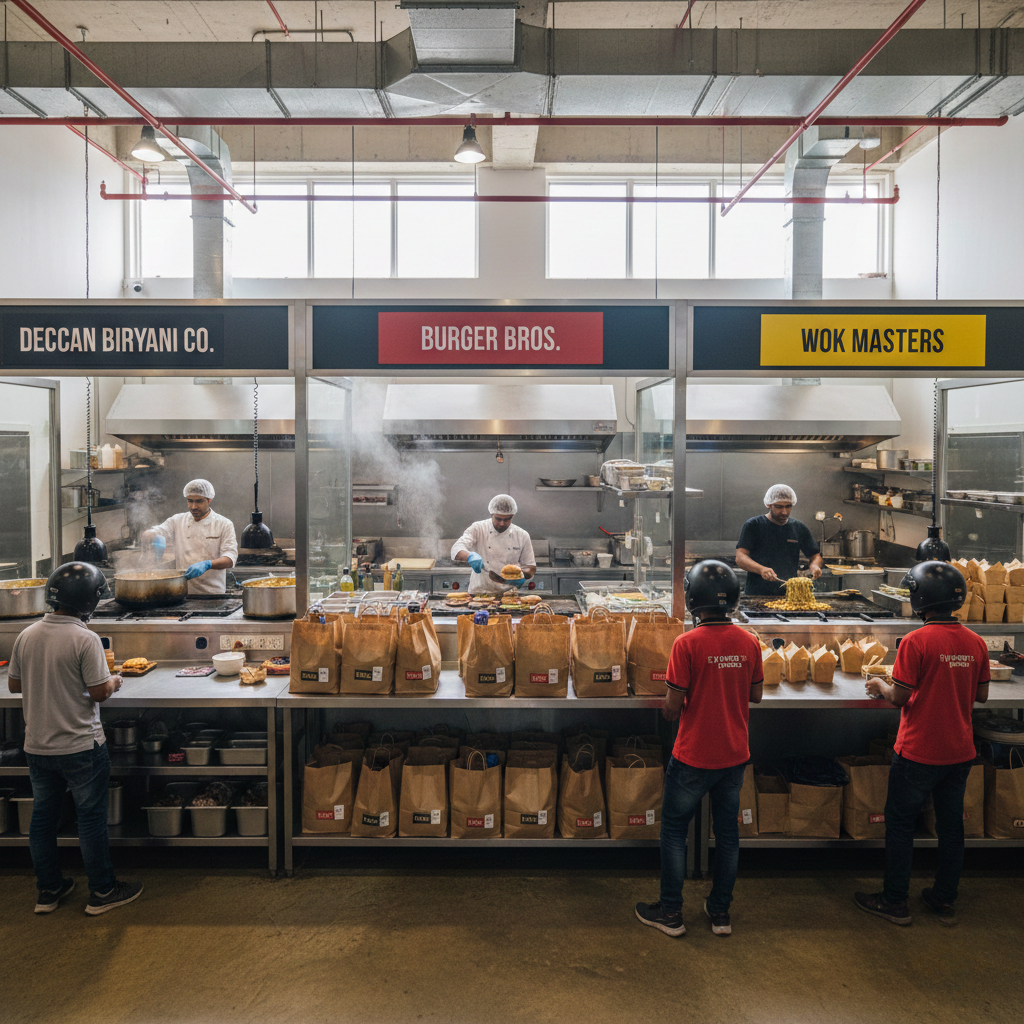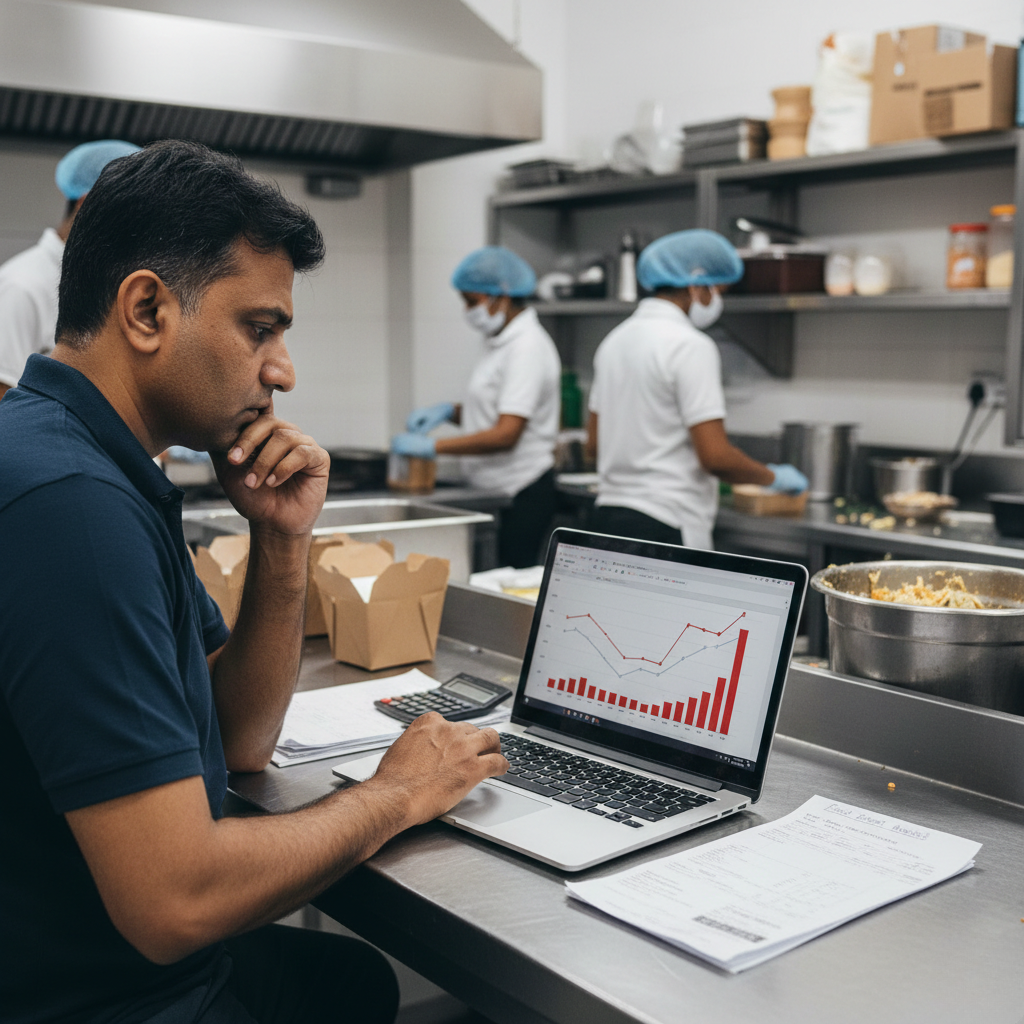
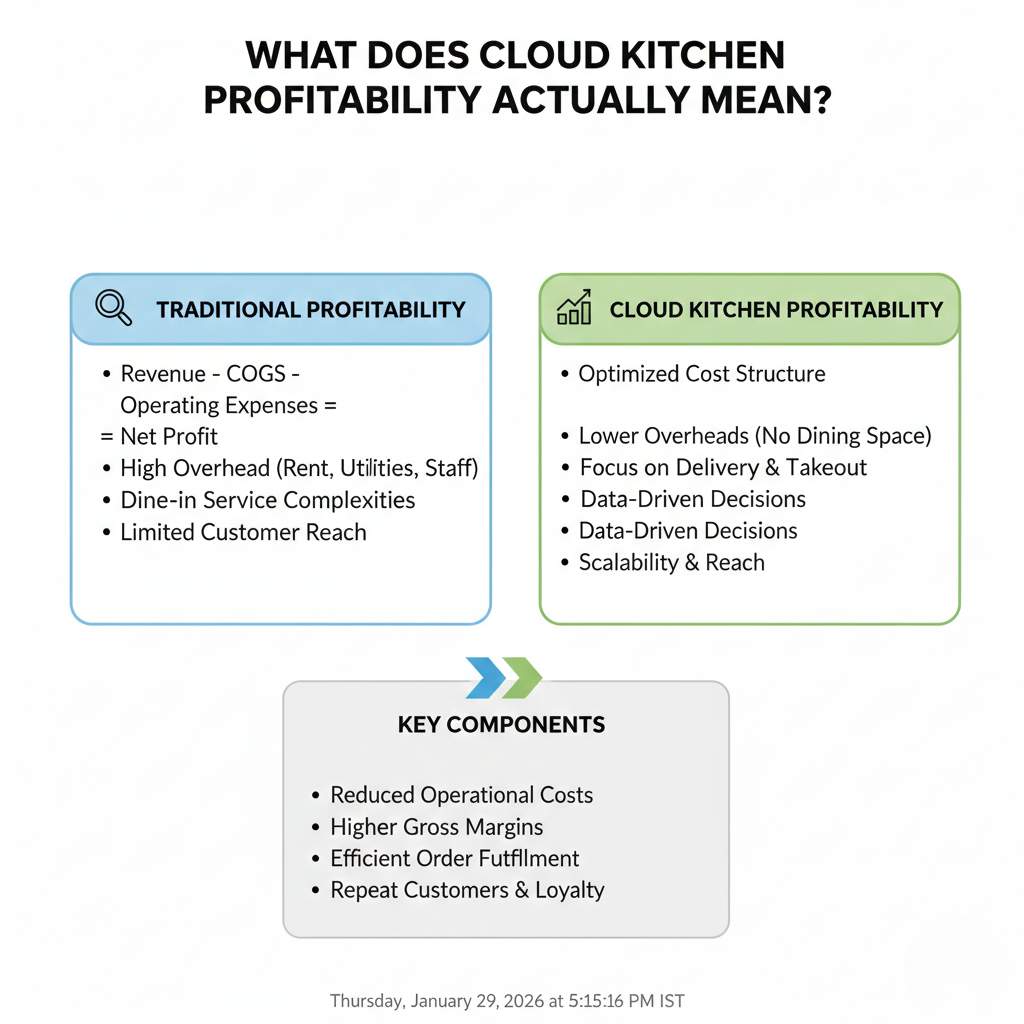
What Does Cloud Kitchen Profitability Actually Mean? Most founders believe profitability means “making some money” or “not losing cash every month.” In reality, cloud kitchen profitability is far more precise, structured, and measurable. This guide explains what cloud kitchen profitability actually means in India, how professional operators define it, why revenue and profit are not the same, and how to build a delivery-first kitchen that survives, scales, and compounds margins over time.
Read This Before Measuring Your Cloud Kitchen Profits
This article is part of GrowKitchen’s profitability and operations clarity series. If you are still understanding how cloud kitchens work structurally, start with Cloud Kitchen Business in India before interpreting profit numbers.
Profitability only makes sense when compliance and reporting discipline exist. Ensure your kitchen aligns with FSSAI, staff certification through FoSTaC, and accurate reporting via the GST Network.
Why Most Cloud Kitchen Founders Misread Profitability
Many cloud kitchen founders judge profitability emotionally. If the bank balance is not zero, the kitchen feels “okay.” If sales are growing, things feel positive.
This is dangerous. Cloud kitchens can grow revenue while silently destroying margin. Discounts, commissions, refunds, food cost drift, and manpower inefficiency slowly eat the business from within.
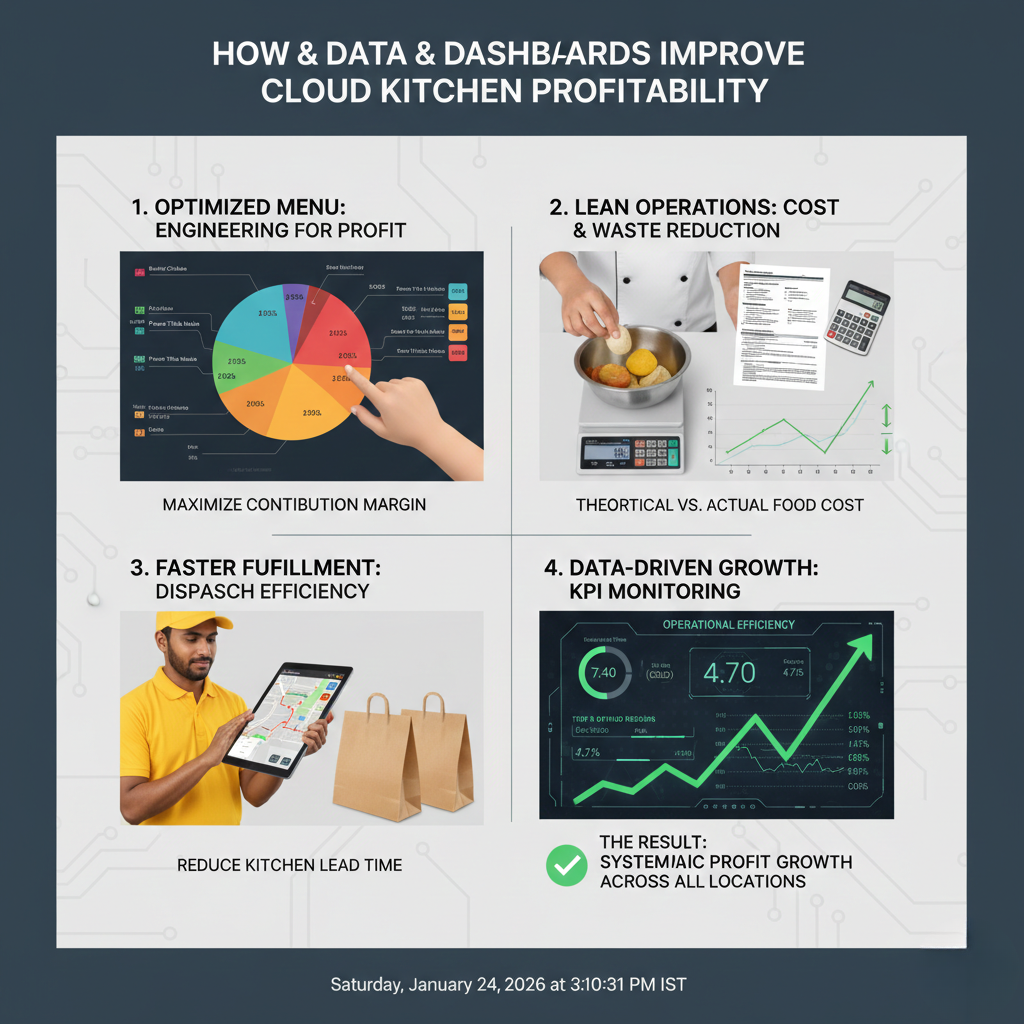
Revenue vs Profit: The First Mental Shift
Revenue answers only one question: how much money came in.
Profitability answers a deeper one: how much money stayed after the system operated.
In delivery kitchens, high revenue often hides poor economics. Aggregator commissions, platform discounts, refund leakage, and variable food costs create an illusion of growth.
This is why revenue-based confidence collapses during scale.
Profitability Starts With Unit Economics
Cloud kitchen profitability is always measured per order. Not monthly. Not emotionally. Per order.
- Order value after discounts
- Aggregator commission impact
- Food cost per SKU
- Packaging and consumables
- Variable manpower cost
If one order does not contribute positively, scaling that order multiplies losses.
This concept is expanded in Cloud Kitchen Profit Margin in India.
Contribution Margin: The Real Profitability Metric
Professional operators track contribution margin, not net profit alone.
Contribution margin shows what remains after variable costs are removed from each order.
This margin funds:
- Fixed rent
- Core staff salaries
- Marketing experiments
- Growth and buffer capital
Without contribution margin clarity, kitchens operate blindly.
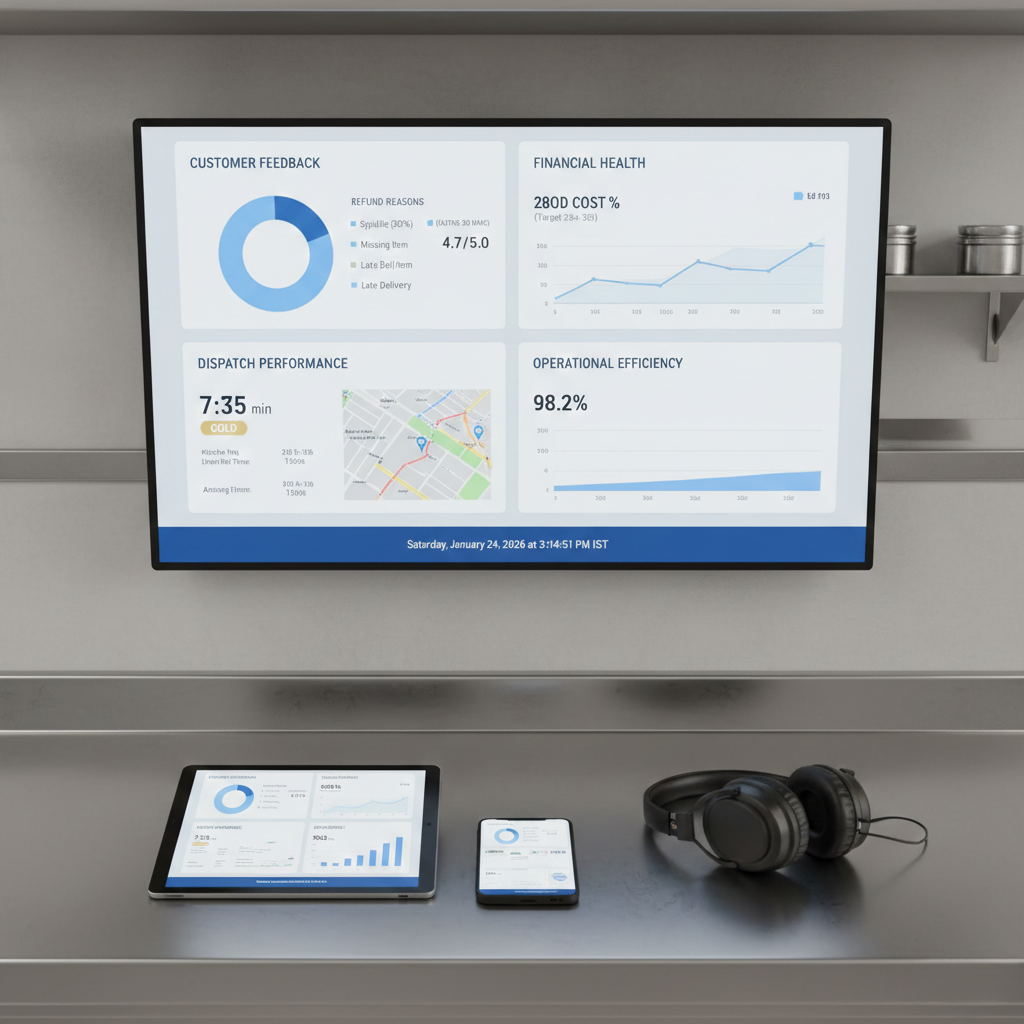
Food Cost Is the Largest Profitability Lever
Food cost is not static. It drifts silently.
Portion creep, recipe inconsistency, vendor variance, and staff shortcuts push food cost upward without notice.
Most kitchens only realize this when profits disappear.
Learn how professionals control this in Ideal Food Cost Percentage for Cloud Kitchens.
Why Discount-Driven Growth Is Not Profitability
Discounts feel like growth. But they are borrowed demand.
When discounts stop, demand collapses. Profitability must survive without artificial pushes.
Sustainable kitchens design menus that convert without heavy discounting.
Refunds: The Most Ignored Profit Killer
Refunds are often treated as “platform issues.” In reality, they are operational signals.
- Packing errors
- Leakage and spillage
- Incorrect SKUs
- Quality inconsistency
Every refund removes revenue, increases commission loss, and damages ratings.
Fixed Costs Only Matter After Unit Stability
Many founders obsess over rent and salaries. These matter only after unit economics are stable.
Strong contribution margins absorb fixed costs naturally.
Weak unit economics make any fixed cost fatal.
Profitability Is Created by Systems, Not Effort
Founder effort does not scale. Systems do.
Profitable kitchens run on:
- Recipe SOPs
- Portion control
- Prep planning
- Inventory discipline
- Daily reporting
Explore execution structure in Cloud Kitchen Operations Framework.
Profitability During Scaling Looks Different
Scaling exposes weakness.
If profitability depends on founder presence, it collapses during expansion.
Only system-led kitchens scale safely.
Learn the correct approach in How to Scale Cloud Kitchens.
Final Thoughts: Profitability Is Structural, Not Accidental
Cloud kitchen profitability is not luck. It is engineered.
When unit economics, systems, and discipline align, profit becomes predictable.
GrowKitchen works with founders who want clarity, not chaos.
FAQs: Cloud Kitchen Profitability
Is profit possible without high revenue?
Yes. Strong unit economics outperform weak high-volume models.
What margin should a cloud kitchen target?
Contribution margins must stay positive after commissions and discounts.
When does profitability stabilize?
After SOPs, pricing, and refund control are implemented.