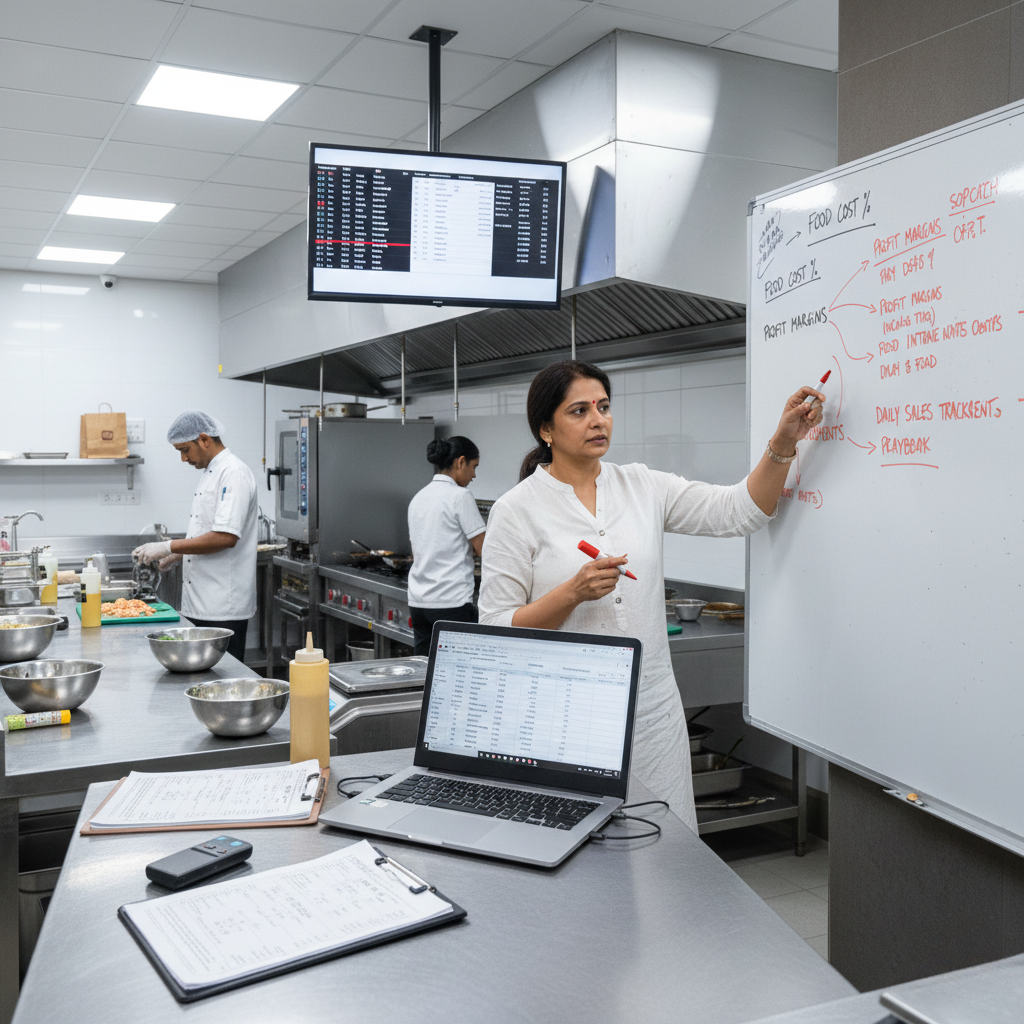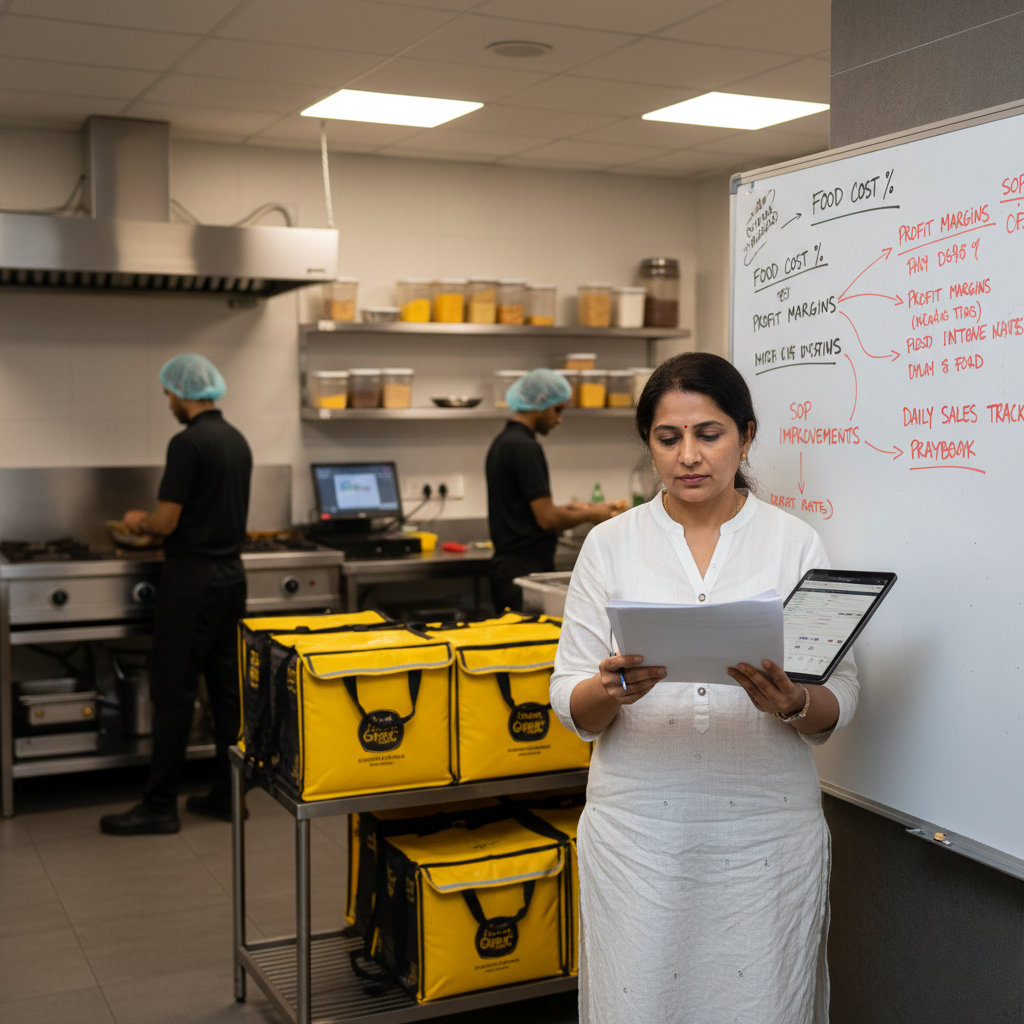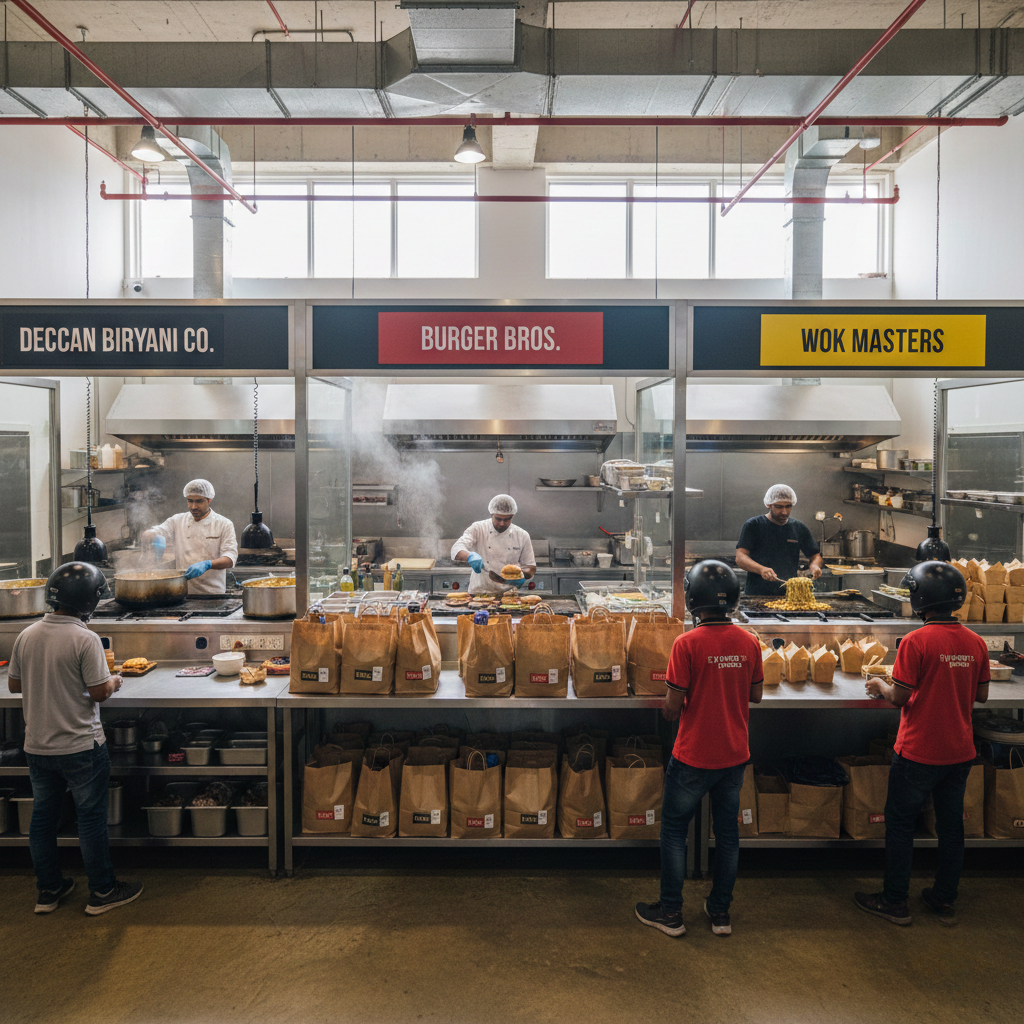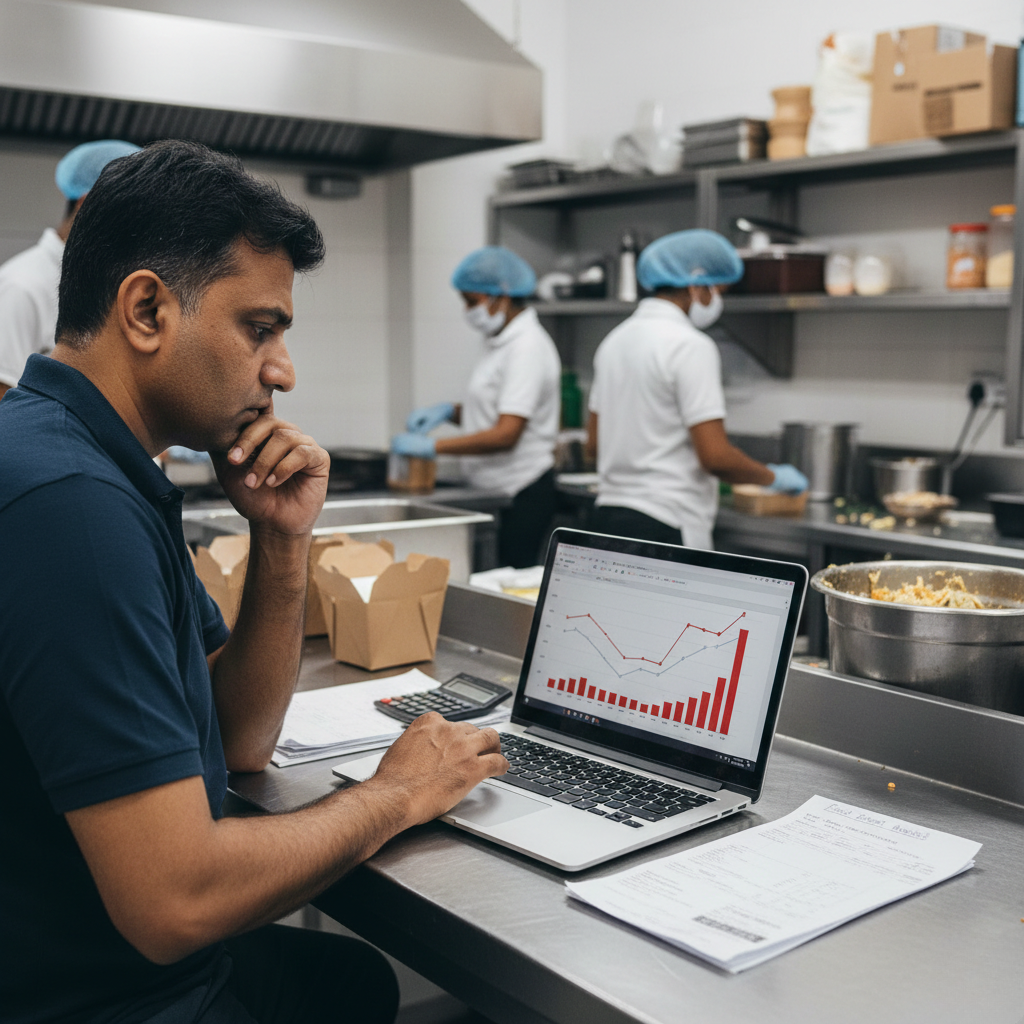
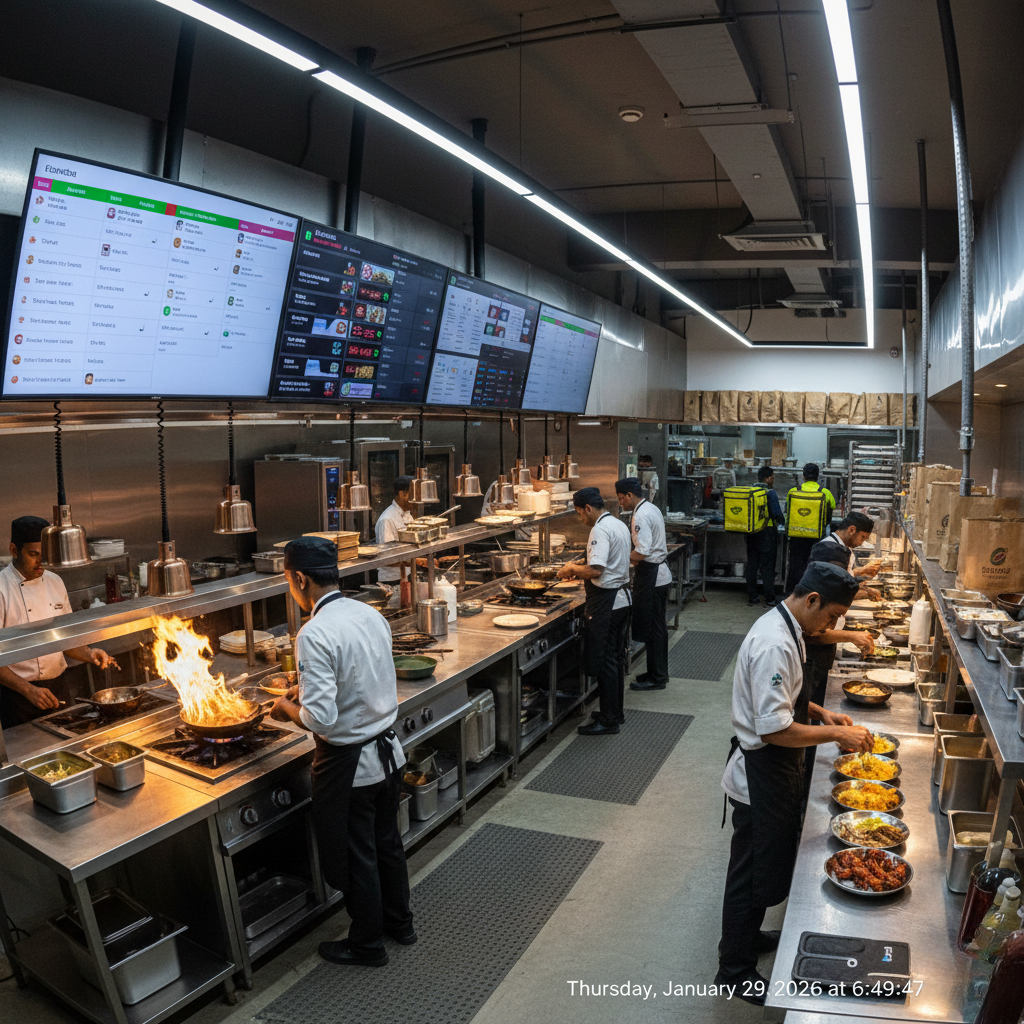
Cloud Kitchen Profit vs Revenue Explained Many cloud kitchen founders celebrate revenue growth. Orders are rising. Monthly GMV looks healthy. Dashboards show upward trends. Yet cash remains tight and profits feel missing. This guide explains the real difference between profit and revenue in cloud kitchens, why confusing the two is dangerous, and how professional operators evaluate financial health beyond top-line numbers.
Read This Before Judging Your Cloud Kitchen’s Financial Health
This article is part of GrowKitchen’s profitability and financial clarity series. If you are still understanding the cloud kitchen business model, start with Cloud Kitchen Business in India before analysing profit and revenue numbers.
Profit analysis only works with disciplined reporting. Ensure compliance with FSSAI, trained staff via FoSTaC, and transparent taxation through the GST Network.
Why Revenue Is the Most Misleading Metric in Cloud Kitchens
Revenue is easy to understand. It shows how much money customers paid.
Profit is harder. It shows how much money actually stayed after the kitchen operated.
Many founders track revenue obsessively while profit quietly deteriorates.
What Revenue Actually Represents
Revenue is the total value of orders placed by customers.
In cloud kitchens, this usually reflects:
- Menu prices before platform deductions
- Orders boosted by discounts
- High-volume promotional periods
Revenue does not account for costs. It only measures demand.
What Profit Actually Represents
Profit is what remains after the entire system operates.
This includes deductions for:
- Aggregator commissions
- Discount funding
- Food and packaging costs
- Manpower and fixed overheads
- Refunds and cancellations
Profit measures sustainability. Revenue does not.
Why Revenue Can Grow While Profit Shrinks
Cloud kitchens often grow revenue by increasing visibility.
This visibility is bought through:
- Heavy discounts
- Aggregator promotions
- Expanded menus
Each tactic increases order count but weakens per-order margins.
This phenomenon is explored in Why Most Cloud Kitchens Are Busy but Not Profitable.
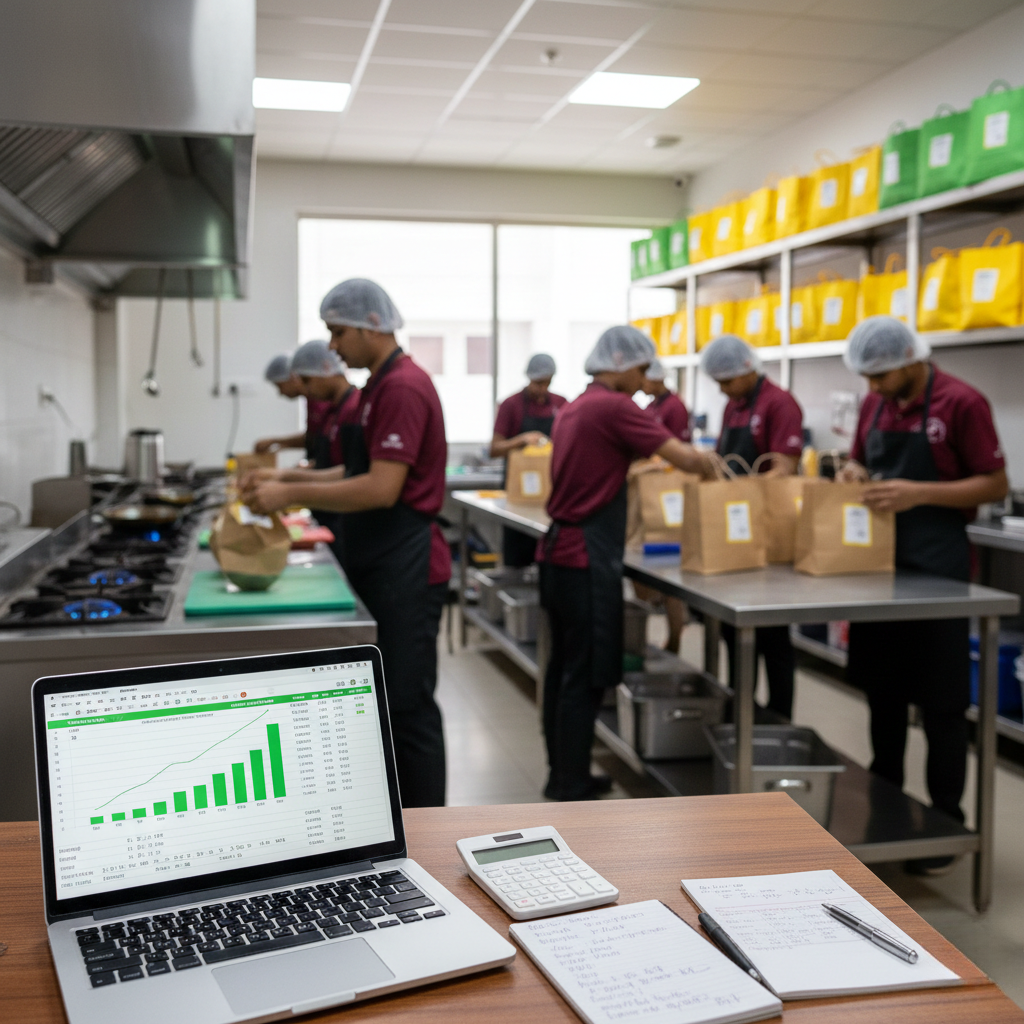
Profit Lives Inside Unit Economics
Profitability is created at the order level.
Each order must contribute positively after variable costs.
If unit economics are weak, revenue growth accelerates losses.
Learn how unit economics work in What Does Cloud Kitchen Profitability Actually Mean?.
Contribution Margin Bridges Revenue and Profit
Contribution margin explains what remains after variable costs.
It funds:
- Rent
- Core team salaries
- Marketing experiments
- Growth buffers
Without contribution margin clarity, revenue becomes misleading.
Margin benchmarks are covered in Cloud Kitchen Profit Margin in India.
Food Cost Separates Revenue From Profit
Food cost directly eats into revenue.
Poor portion control, recipe drift, and vendor inconsistency reduce profit without affecting sales.
This is why many high-revenue kitchens remain unprofitable.
Control mechanisms are detailed in Ideal Food Cost Percentage for Cloud Kitchens.
Refunds and Commissions Distort Revenue Reality
Refunds reduce realized revenue.
Commissions reduce retained revenue.
When both are ignored, revenue appears healthy while profit collapses.
Revenue Cannot Fix Broken Cost Structures
Many founders expect revenue growth to “solve everything.”
But broken unit economics magnify fixed cost pressure.
Profit only improves when structure improves.
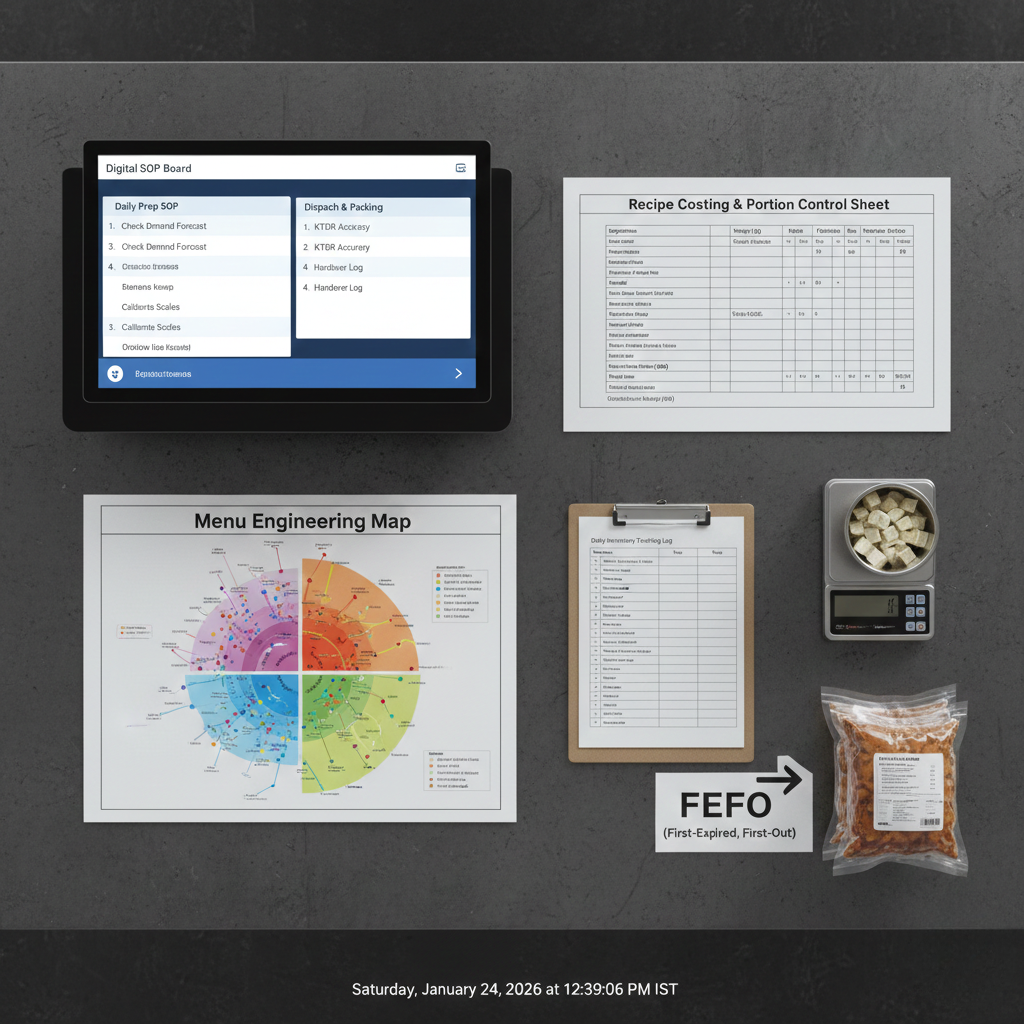
Profit Is a Result of Systems, Not Sales Alone
Sustainable profit comes from:
- Menu engineering
- Recipe SOPs
- Inventory discipline
- Daily reporting
These systems are explained in Cloud Kitchen Operations Framework.
Scaling Revenue Without Profit Is Dangerous
Scaling multiplies outcomes.
Profitable kitchens scale smoothly. Unprofitable ones collapse faster.
Expansion strategy is covered in How to Scale Cloud Kitchens.
Final Thoughts: Revenue Is a Signal, Profit Is the Truth
Revenue shows demand. Profit shows discipline.
Confusing the two is one of the biggest mistakes cloud kitchen founders make.
GrowKitchen helps founders build profitable systems, not just high-revenue dashboards.
FAQs: Cloud Kitchen Profit vs Revenue
Can a cloud kitchen have high revenue and no profit?
Yes. Discounts, commissions, and food cost drift can erase margins.
Which metric matters more for survival?
Profitability and contribution margin matter more than revenue.
When should founders focus on revenue growth?
Only after unit economics and systems are stable.