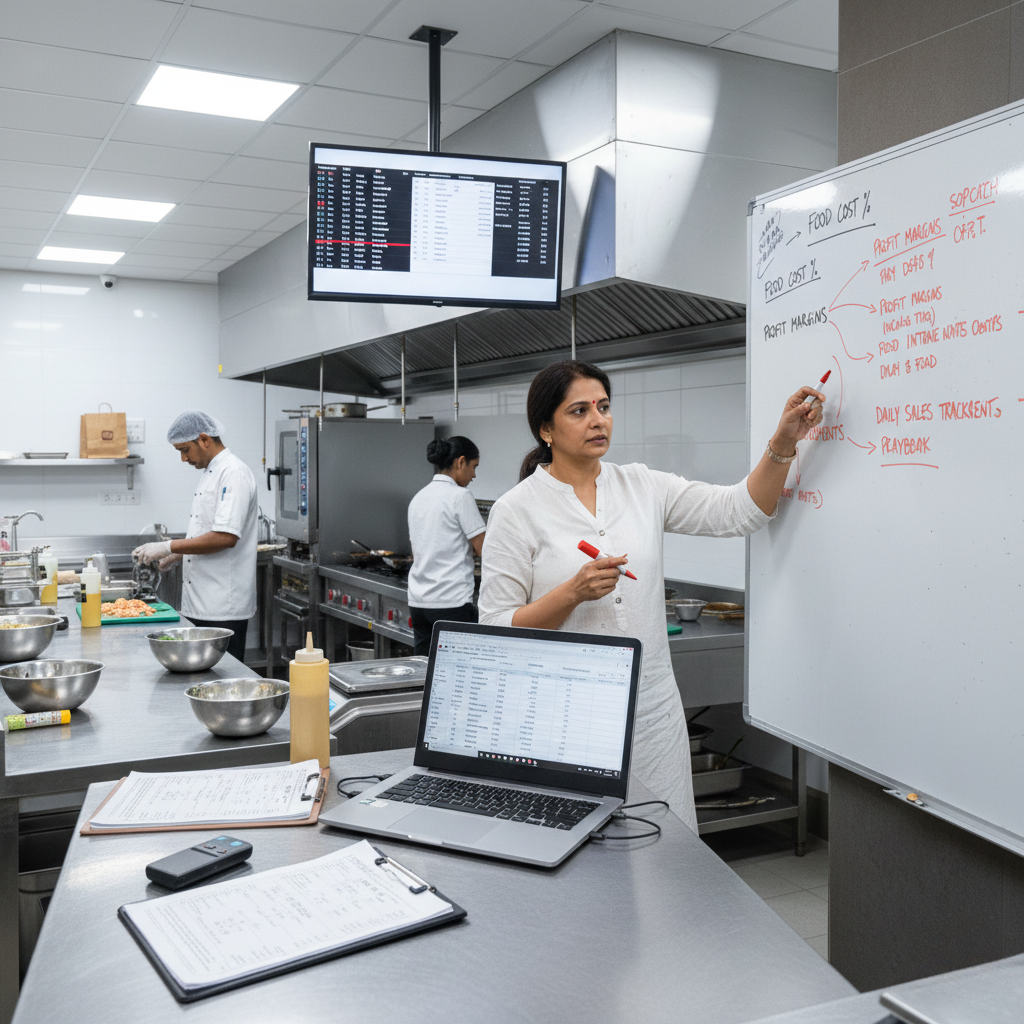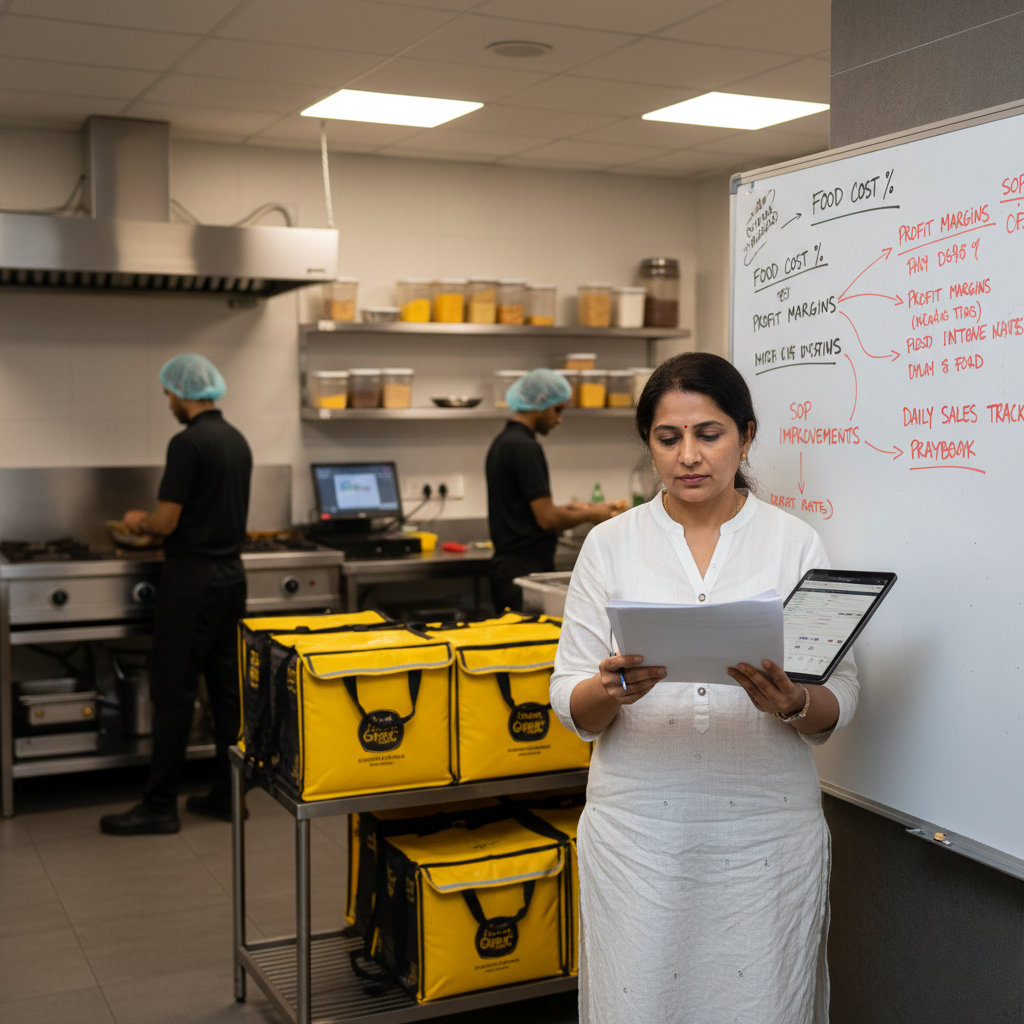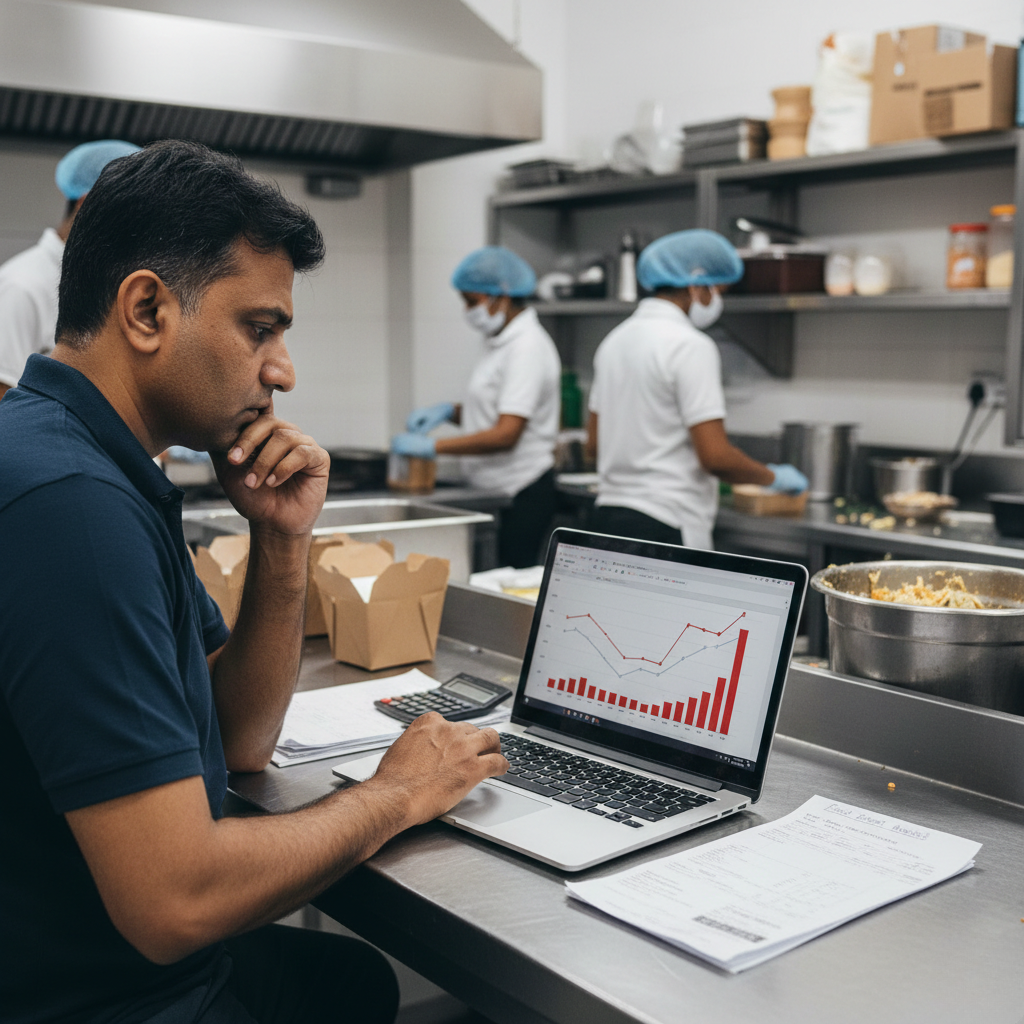
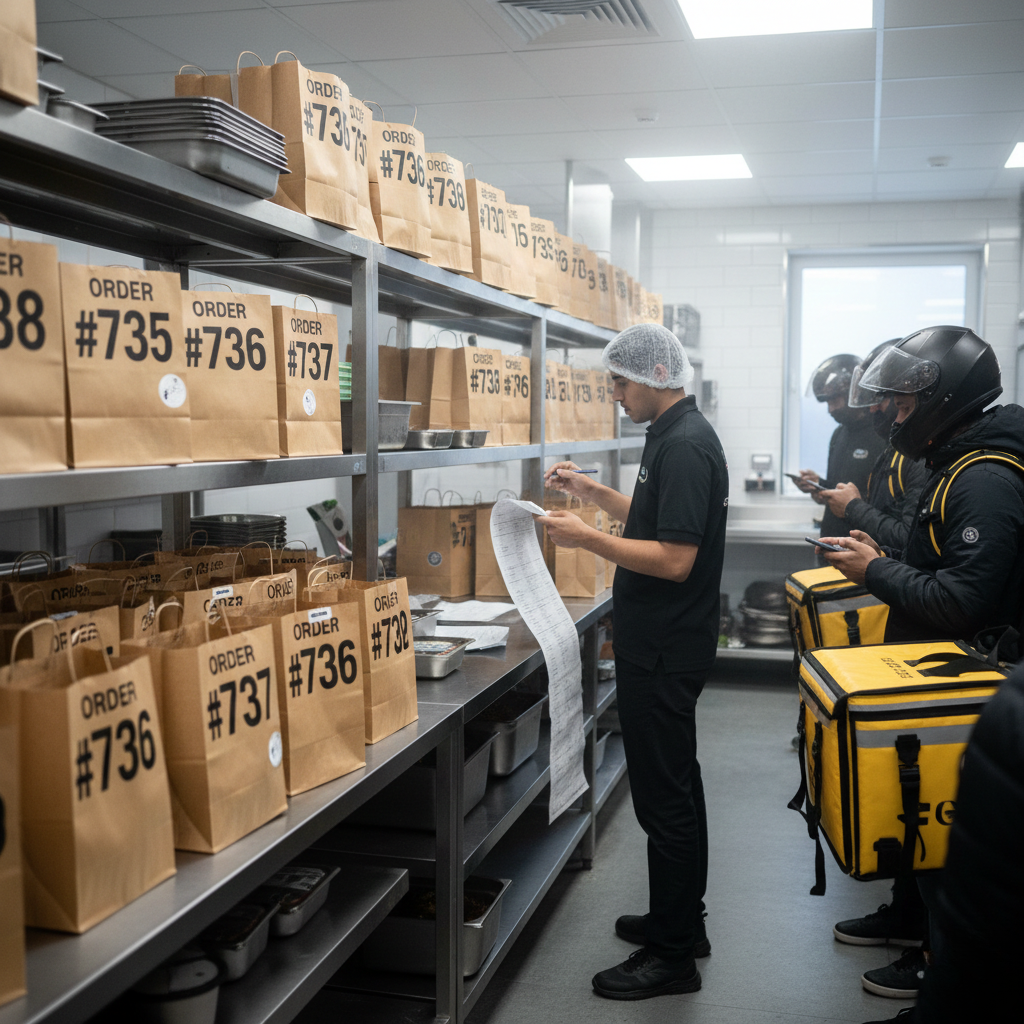
Cloud Kitchen Operations Case Study-This case study focuses on a phase almost every growing cloud kitchen reaches-daily firefighting. Orders were coming in, staff was present, and customers were ordering regularly. Yet every day felt like a crisis. Cloud kitchen as a service
Phone calls during service, constant staff questions, inventory surprises, delayed dispatches, and last-minute fixes had become normal. The kitchen was running-but only because problems were being patched in real time.
This is the story of how CKaaS eliminated daily firefighting by replacing reactive operations with structured systems.
Background: A Kitchen That Ran on Urgency
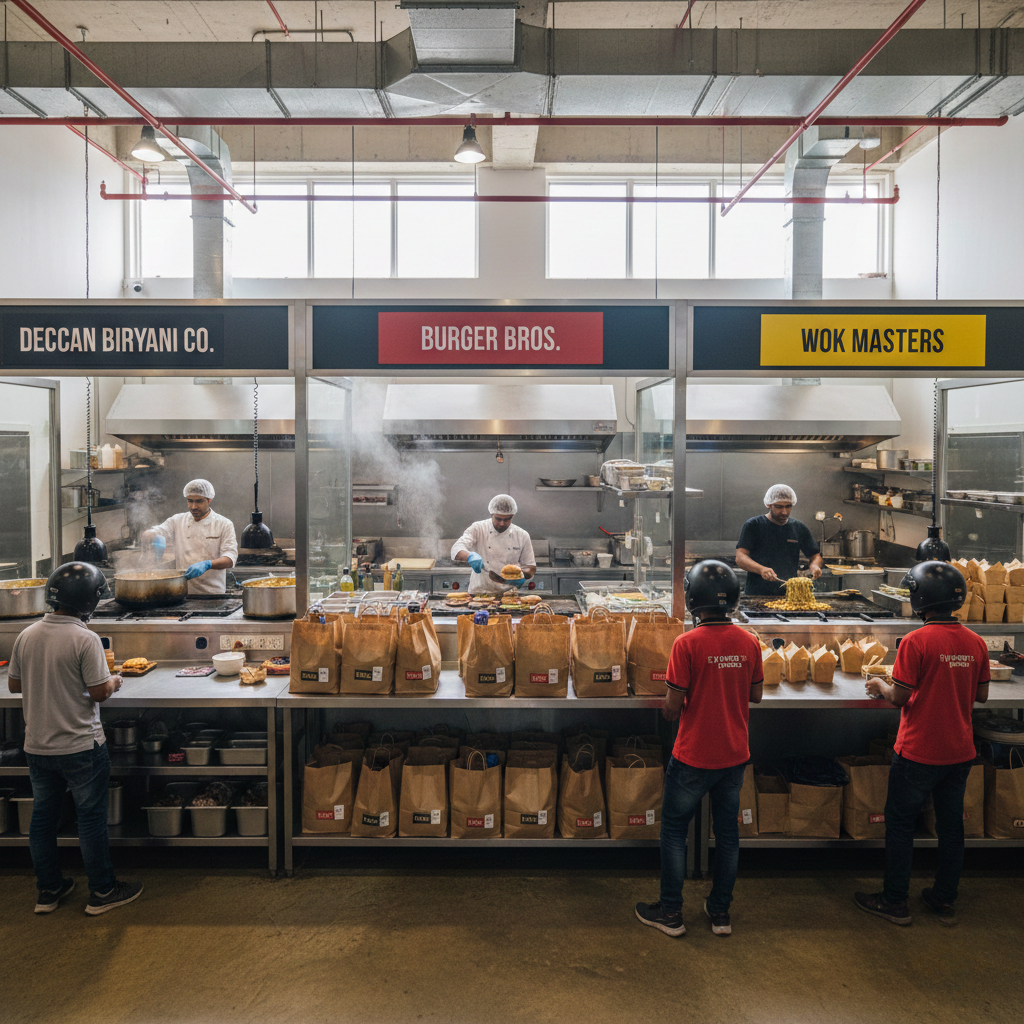
The cloud kitchen operated from a single location with two delivery-only brands. Daily order volume averaged between 90 and 130 orders, with heavy spikes during dinner hours.
From the outside, the business looked functional. From the inside, every shift felt exhausting.
- Staff constantly asked for clarifications
- Inventory ran out unexpectedly
- Prep mismatches delayed service
- Founder intervention was required daily
Nothing was technically broken-yet nothing felt under control.
This phase is extremely common in kitchens that grow without systems, as discussed in what happens when cloud kitchens scale without systems.
What Daily Firefighting Really Looked Like
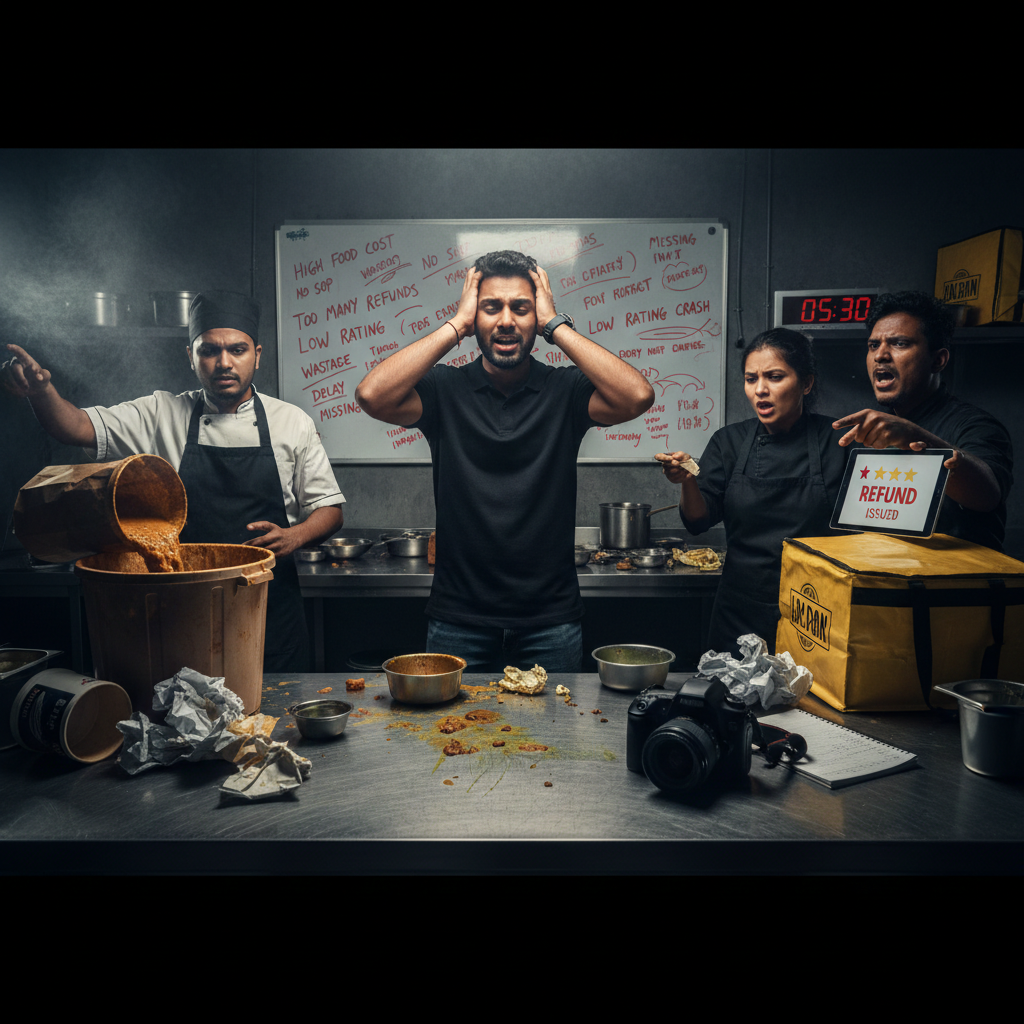
Firefighting did not mean one big failure. It meant dozens of small issues every single day.
- “We’re out of this ingredient-what should we do?”
- “This dish tastes different today-is this okay?”
- “Who handles this order issue?”
- “Can we substitute this item?”
Each question required a decision. Each decision interrupted someone. Over time, the kitchen ran on interruptions instead of flow.
The Hidden Cost of Firefighting
Firefighting feels productive, but it is extremely expensive.
- Founder attention was constantly fragmented
- Staff confidence dropped due to uncertainty
- Errors increased during peak hours
- Learning never compounded because nothing was documented
Most importantly, firefighting masked the real problem: lack of systems.
Why Firefighting Increased as Orders Grew
As order volume increased, the kitchen expected processes to naturally improve. Instead, pressure exposed weaknesses.
Growth amplified:
- Inconsistent recipes
- Unclear staff roles
- Inventory guesswork
- Founder-dependent decisions
This is why many founders feel busier but less effective as their kitchens grow.
Initial Diagnostic: What CKaaS Identified
CKaaS began by observing service, not spreadsheets.
- Where do questions arise?
- Which decisions repeat daily?
- Who gets interrupted most often?
- What problems appear every shift?
The diagnosis was clear: the kitchen was reacting to problems instead of preventing them.
Root Cause #1: Decisions Lived in People’s Heads
Critical decisions were not documented:
- How to handle ingredient shortages
- What substitutions were allowed
- Acceptable portion ranges
- Dispatch exception handling
Without documented answers, staff escalated everything.
Firefighting became the default operating mode.
Root Cause #2: No Role-Based Ownership
Everyone did everything-which meant no one owned outcomes.
During peak hours:
- Multiple people handled the same task
- Handoffs were unclear
- Problems bounced between staff
Without role clarity, every issue became urgent.
Root Cause #3: Inventory Surprises
Inventory was managed reactively. Stock levels were checked only when items ran out.
This caused:
- Last-minute substitutions
- Menu disruptions
- Service delays
Each stockout created multiple downstream fires.
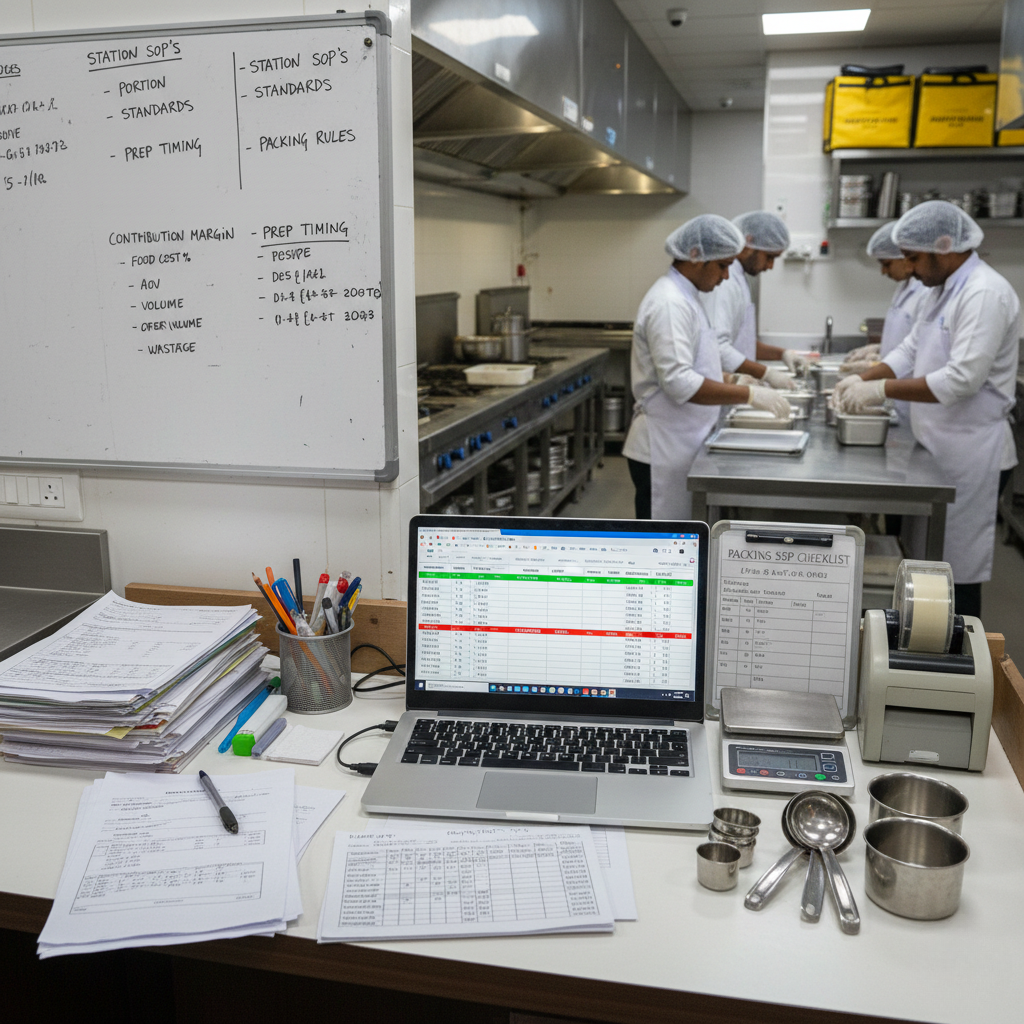
Root Cause #4: Founder as the Default Problem Solver
Every exception escalated to the founder:
- Recipe clarifications
- Customer complaints
- Staff disagreements
- Vendor issues
This slowed decisions and exhausted leadership.
Founder dependency and firefighting reinforced each other.
CKaaS Intervention: Designing Out Firefighting
CKaaS did not focus on “handling” problems faster. It focused on removing the need for problems to arise in the first place.
The intervention focused on:
- Replacing verbal decisions with SOPs
- Creating role-based ownership
- Introducing predictable inventory systems
- Building visibility instead of urgency
System 1: SOPs That Answered Questions Before They Were Asked
CKaaS documented repeat decisions into SOPs:
- Recipe execution SOPs
- Substitution rules
- Dispatch exception SOPs
- Quality checklists
Staff no longer needed to ask-they could refer.
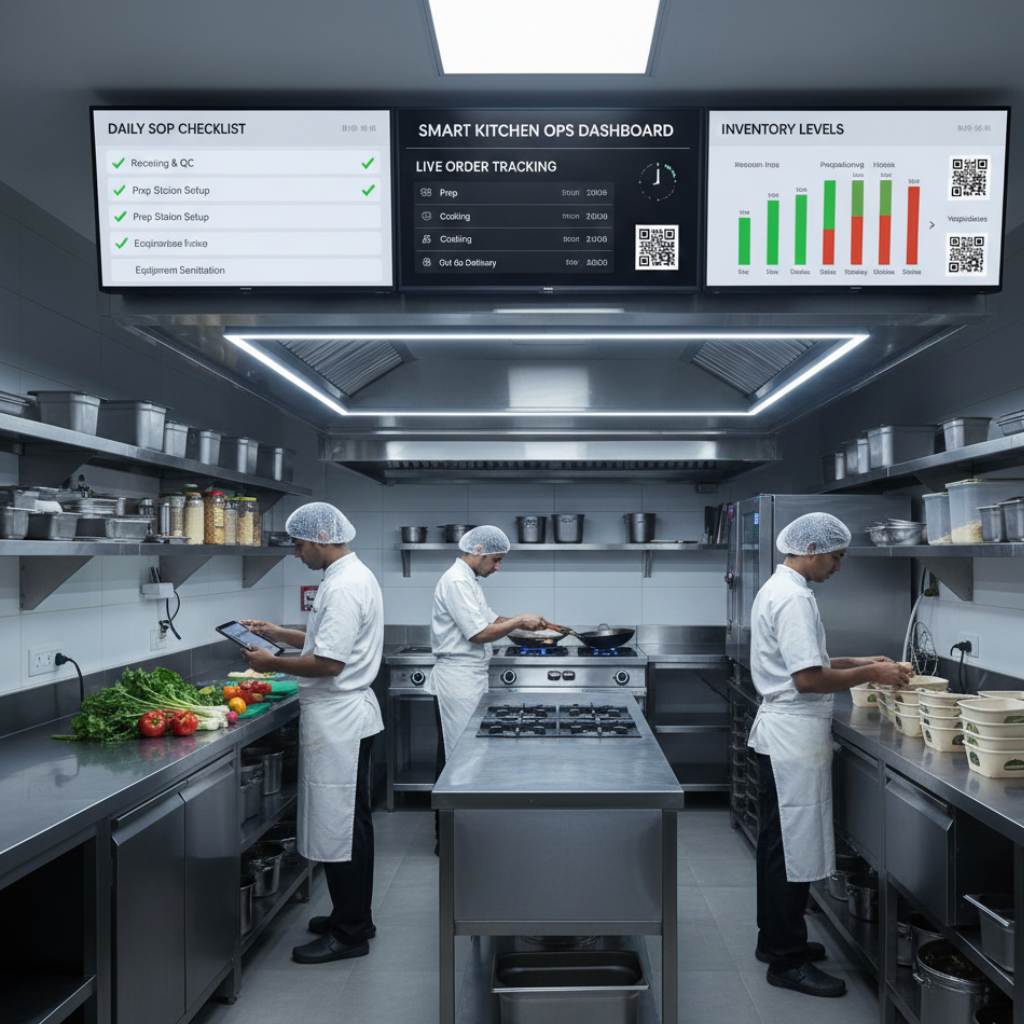
System 2: Role-Based SOPs
Roles were clearly defined:
- Prep lead responsibilities
- Cooking station ownership
- Dispatch accountability
Each role had:
- Clear tasks
- Defined decisions
- Escalation boundaries
This approach reflects principles discussed in role-based kitchen operations explained.
System 3: Inventory SOPs That Prevented Emergencies
Inventory was shifted from reactive to planned:
- Weekly demand-based forecasting
- Defined reorder points
- Clear vendor escalation paths
Stockouts reduced dramatically. Service disruptions disappeared.
System 4: Visibility Replacing Urgency
Daily dashboards were introduced:
- Order flow by time slot
- Prep completion status
- Inventory risk indicators
- Daily contribution margin
Problems became visible early-before they became fires.
The Transition: From Chaos to Calm
The first few weeks felt unfamiliar. Staff adjusted to following systems instead of instincts.
Soon, something changed:
- Questions reduced sharply
- Interruptions dropped
- Peak hours felt controlled
- Founder stopped firefighting
The kitchen began running on flow instead of adrenaline.
The Outcome: A Calm, Predictable Kitchen
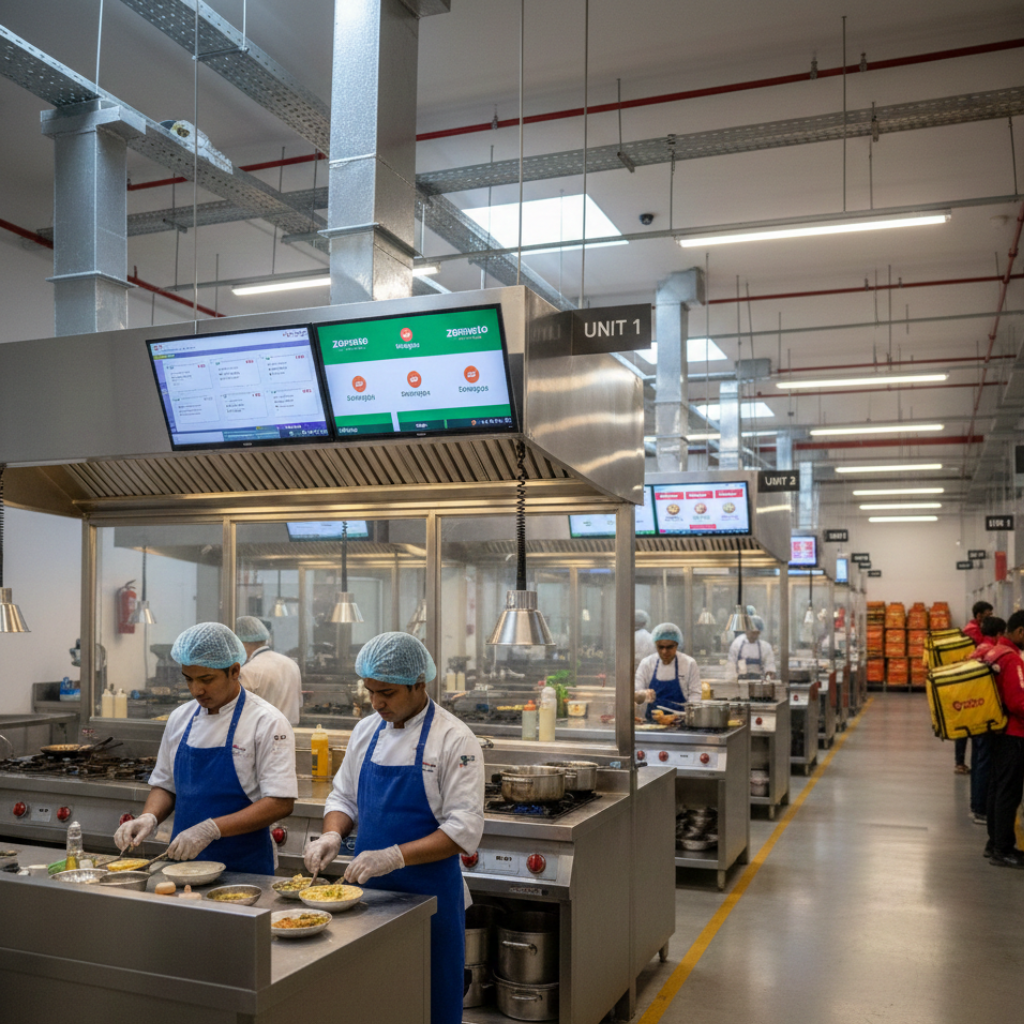
Within 45–60 days:
- Daily firefighting reduced drastically
- Staff confidence increased
- Founder stress dropped significantly
- Operational errors declined
The kitchen felt boring-in the best possible way.
Founder Takeaways From This Case
- Firefighting is a system failure, not a people problem
- Urgency hides structural gaps
- Prevention beats reaction
- Calm operations are scalable operations
Why CKaaS Worked
CKaaS worked because it treated firefighting as a design flaw, not a discipline issue.
Instead of asking “Who should handle this?”, CKaaS asked:
- Why does this problem repeat?
- Can this be prevented?
- Can this be systemized?
This system-first thinking aligns with insights shared by industry professionals like Rahul Tendulkar and operationally disciplined brands such as Green Salad and Fruut.
Final Thoughts
Daily firefighting is not a sign of growth-it is a sign of missing systems.
When systems are built, urgency disappears. And when urgency disappears, scalability begins.
Still Have Questions?
For common operational, SOP, and scaling questions, read the Grow Kitchen FAQs.
You may also find these internal resources helpful:
- How to Fix a Loss-Making Cloud Kitchen
- From Zero Profit to Sustainable Margins
- What Happens When Cloud Kitchens Scale Without Systems
- Founder-Dependent Kitchen Converted Into System-Driven Operations