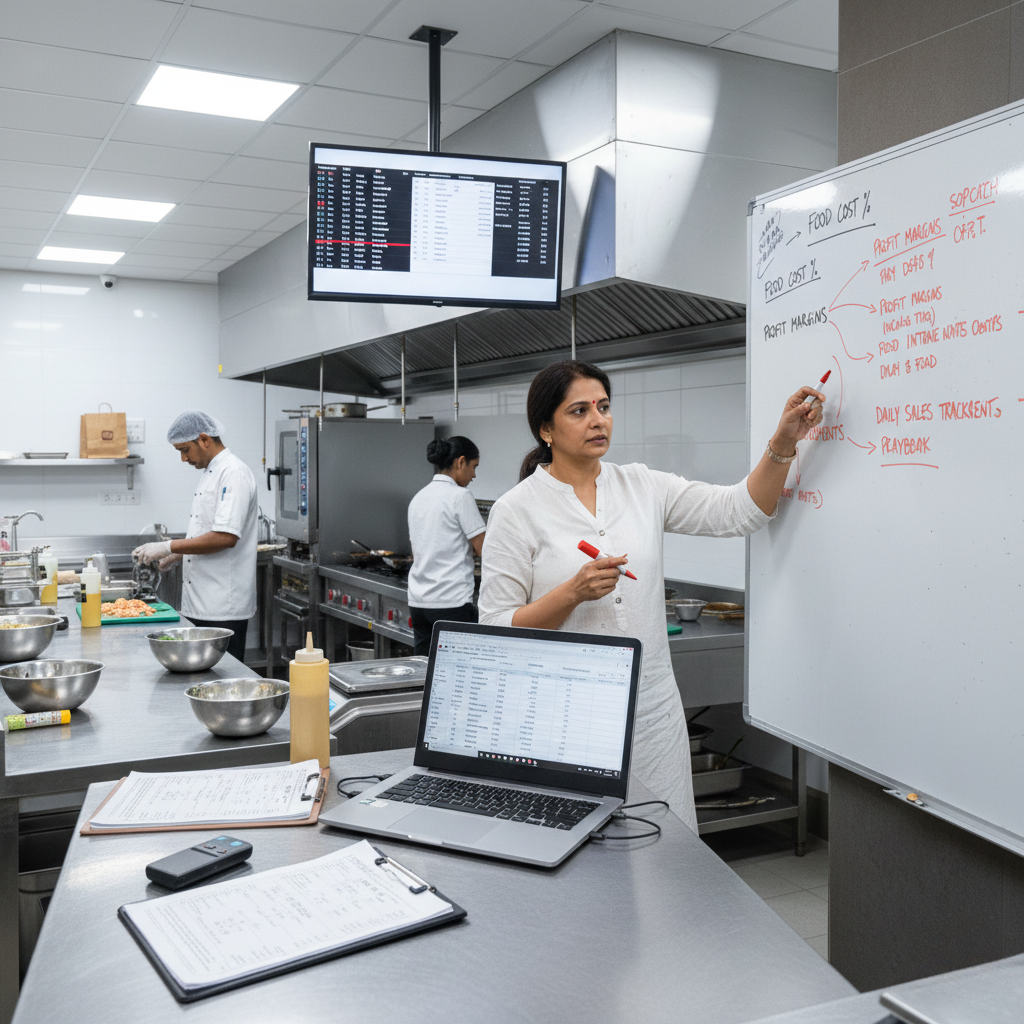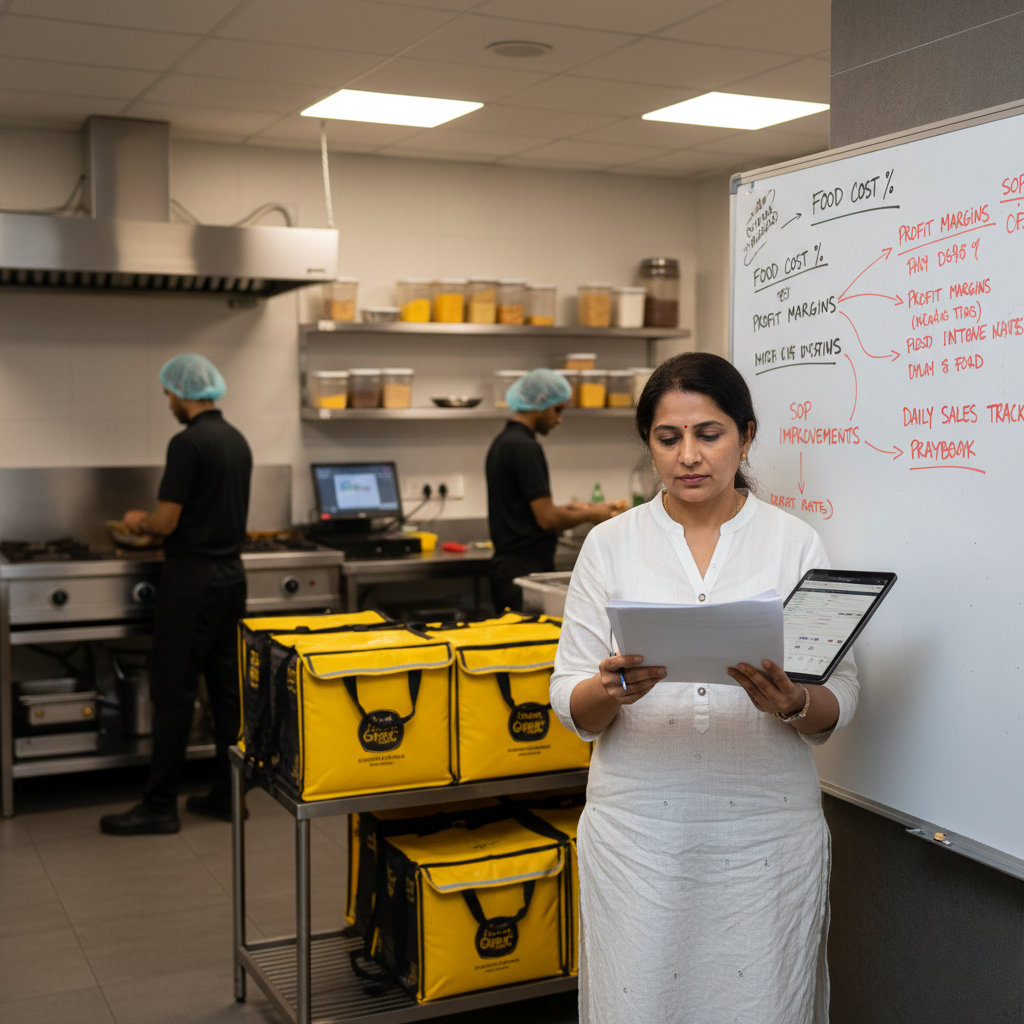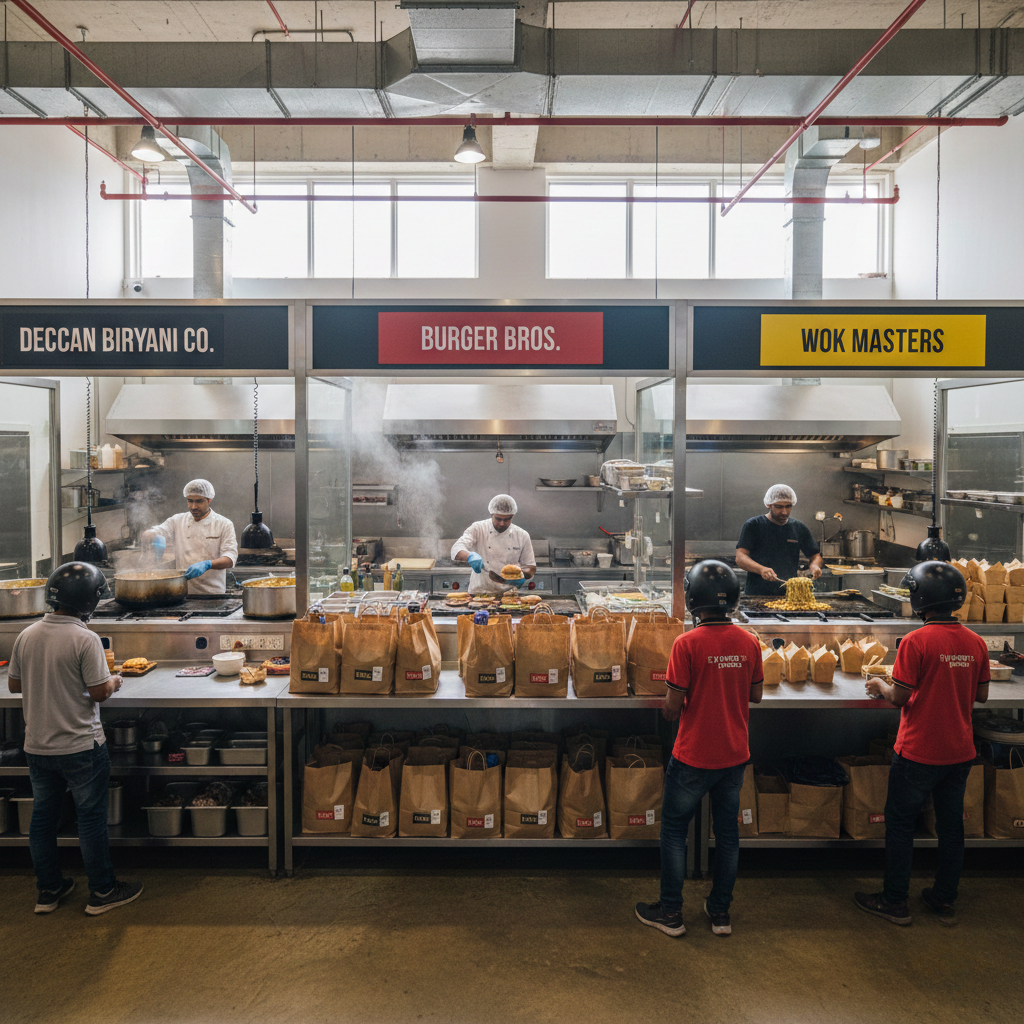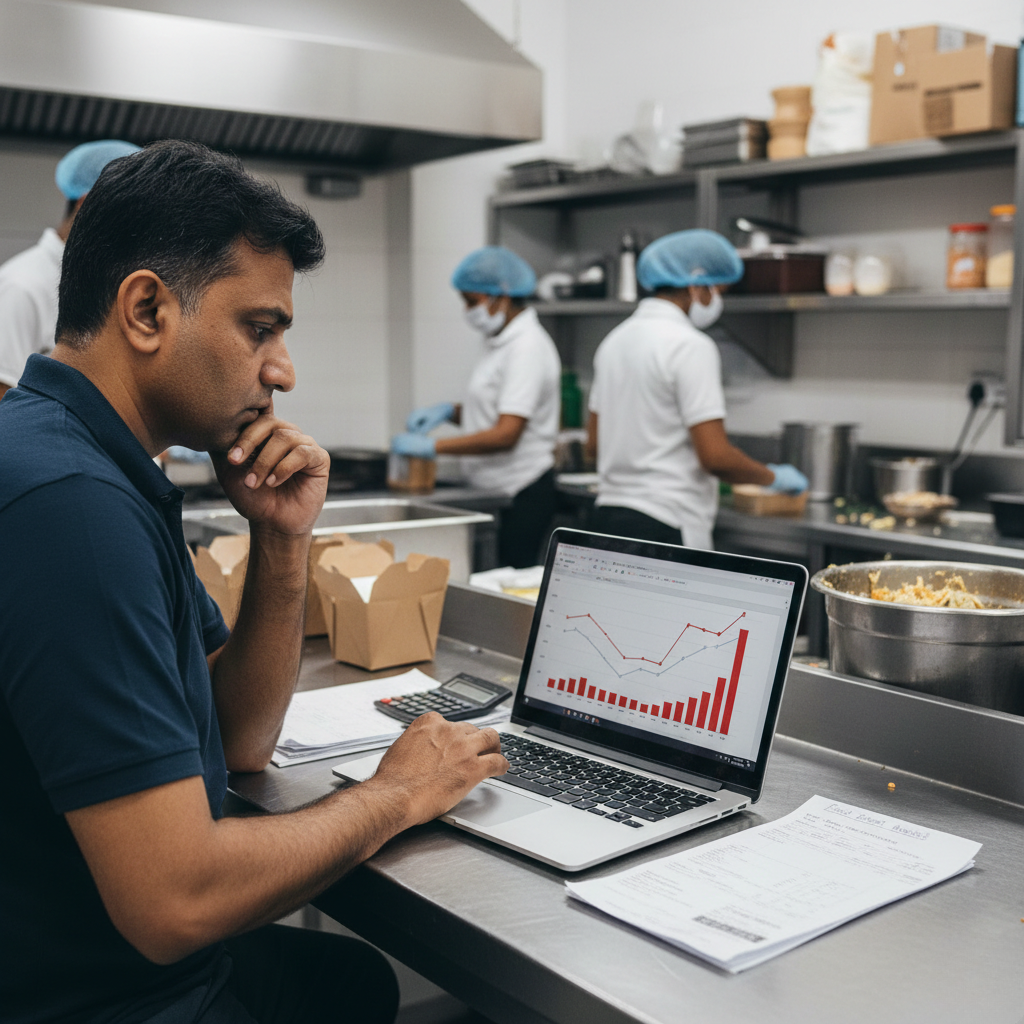

A cloud kitchen operation framework is the “operating system” that keeps your kitchen profitable while scaling orders. It’s not one SOP or one dashboard-it’s a connected workflow that controls food cost, prep time, packaging performance, dispatch speed, hygiene, and customer experience every single day. Most cloud kitchens fail because operations are managed by memory and WhatsApp, not by a repeatable framework. This guide breaks down a practical cloud kitchen operations framework you can implement in India: core pillars, daily rhythms, station SOPs, inventory discipline, delivery-first quality control, and the KPIs that reveal problems before ratings collapse.
Start Here Before Building Your Cloud Kitchen Operations Framework
This article is part of GrowKitchen’s operations and scalability series. If you want the foundation of how delivery-first kitchens work, start with: Cloud Kitchen as a Service and Cloud Kitchen Business in India.
Your operations framework must also align with compliance basics such as FSSAI hygiene and licensing, and structured billing + taxation via the GST Network. If compliance is weak, operations become fragile (fines, shutdown risk, reputation loss).
Cloud Kitchen Operation Framework Explained
A cloud kitchen operation framework is a standardized way to run production, packing, and dispatch so that your kitchen delivers the same taste, speed, and margin-regardless of who is on shift. In India, frameworks matter more because aggregator pressure (commissions + ads + discounts) punishes inconsistency.
The goal is simple: predictable contribution margin + stable ratings + repeat orders. That only happens when your kitchen runs on systems, not on founder supervision.
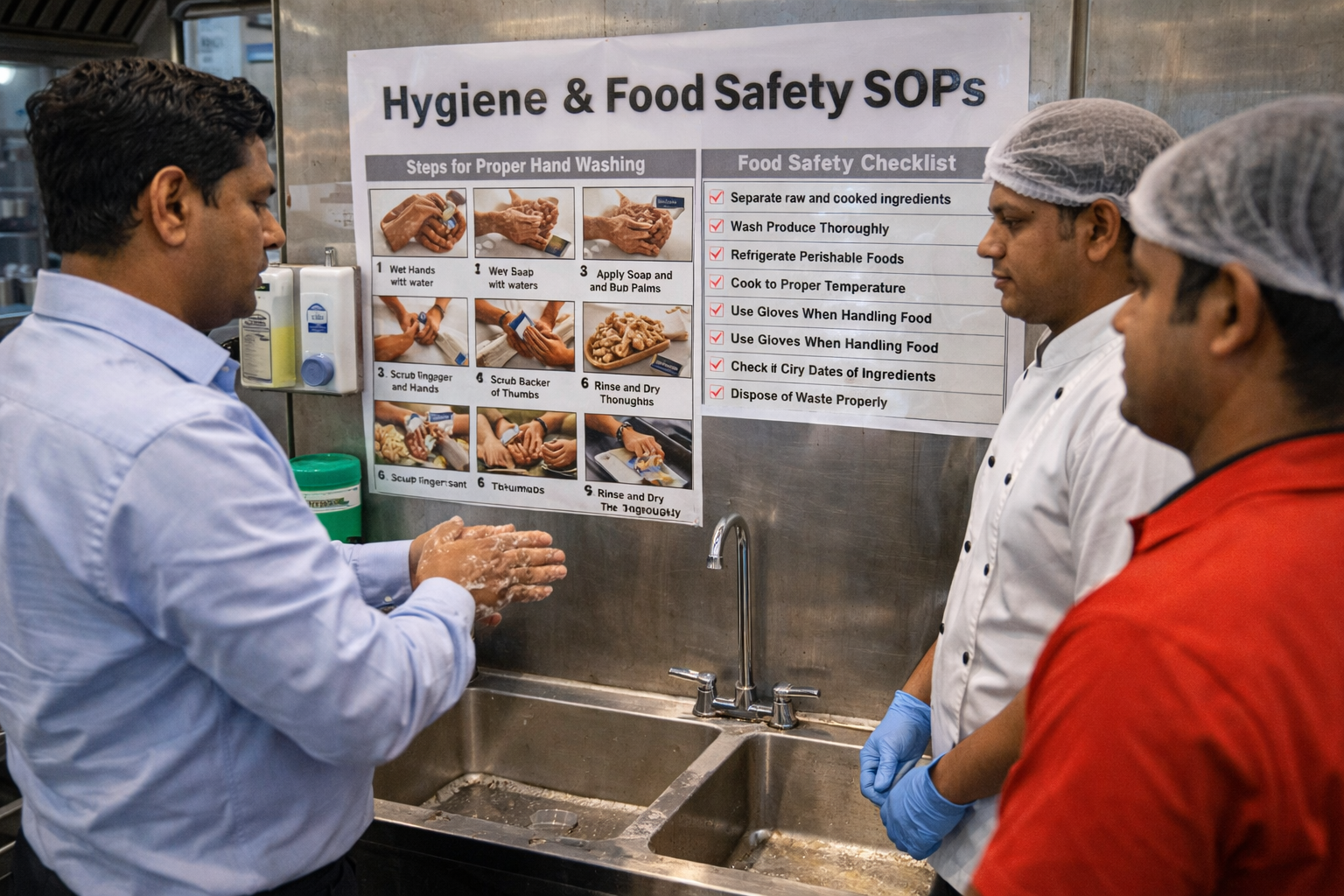
The 6 Pillars of a Cloud Kitchen Operations Framework
A strong framework is built on pillars that connect day-to-day execution with business outcomes. If any pillar is missing, the kitchen leaks money quietly through wastage, refunds, delays, and low repeat rate.
- Menu + Portion Control: SKU discipline, standardized recipes, ladle rules, weigh-points.
- Prep System: batch prep cycles, yields, labeling, FIFO, cold chain discipline.
- Inventory + Purchase Control: RM master, reorder points, stock variance checks.
- Packing + Dispatch Control: packaging SOPs, ticket aging limits, rider handover discipline.
- Quality + Hygiene: temperature checks, taste checks, cleaning schedules, audit logs.
- Reporting + KPIs: contribution margin, delays, refunds, rating variance, repeat rate.
If you want a ready SOP baseline to start from, use: Cloud Kitchen SOP Checklist.
The Daily Operating Rhythm: What “Good Operations” Looks Like
Operations improve when your day has a rhythm. Most Indian kitchens run in firefighting mode: prep happens late, dispatch gets congested, and inventory is “checked” only when items go out of stock. A framework replaces chaos with predictable cycles.
- Opening (30-45 min): hygiene checks, station readiness, stock quick-scan, batch plan finalization.
- Pre-Peak Prep: batch gravies/sauces/components, portioning, labeling, hold protocols.
- Peak Execution: assembly line discipline, pack checks, ticket aging control, rider staging.
- Between Peaks: top-up prep, wastage log, stock movement update, equipment cleaning resets.
- Closing: variance checks, leftover tagging, deep clean checklist, next-day prep plan draft.
If your kitchen is scaling to multiple locations, your rhythm must be replicable: How to Scale Cloud Kitchens.
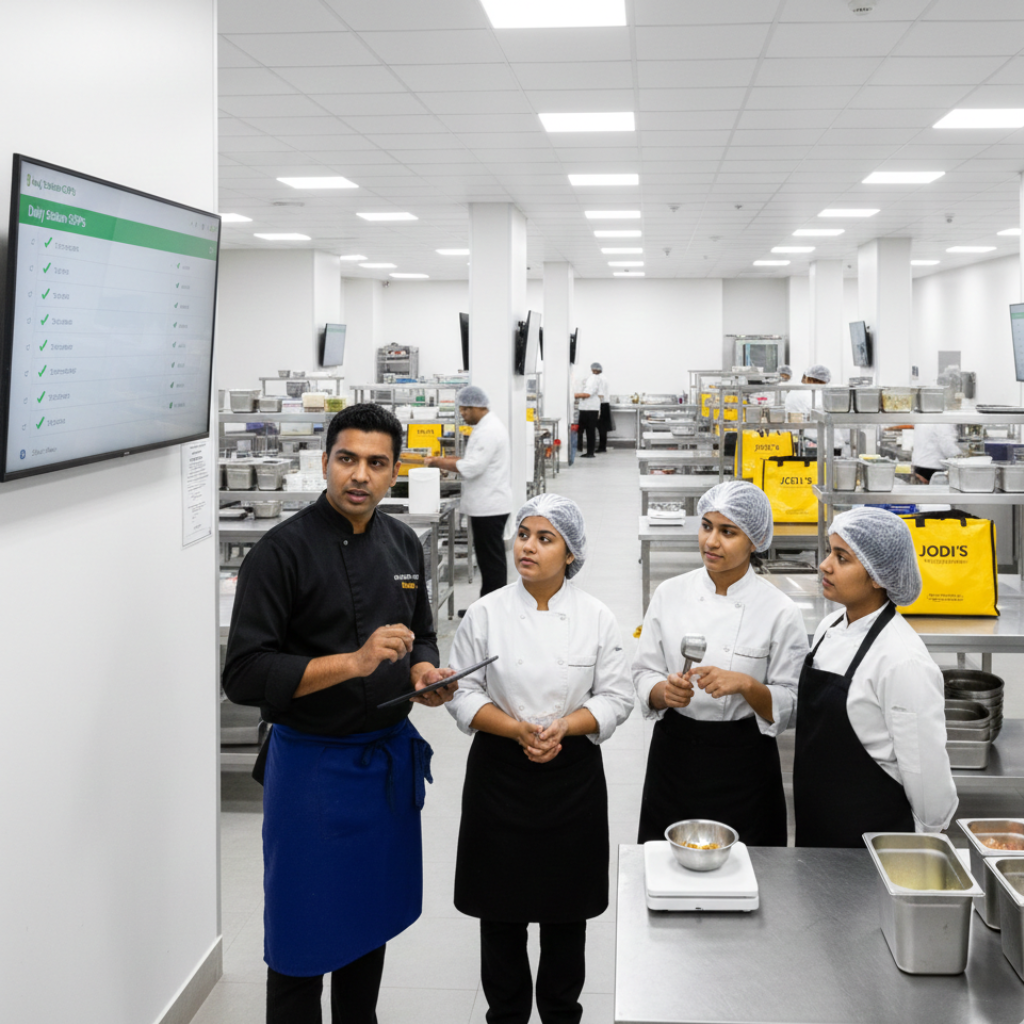
Inventory + Purchase Control: Stop Silent Losses
Inventory is where most kitchens bleed: over-purchasing, poor storage, no yield tracking, and weak FIFO. A framework should treat inventory like finance: everything is measurable and auditable.
- RM Master: standardized item names, units, vendors, substitutes, and storage rules.
- Par Levels: reorder points linked to demand and lead time (not gut feeling).
- Yield Tracking: raw-to-cooked yield for key SKUs (gravies, meats, sauces).
- Stock Variance: weekly variance report (purchased vs consumed vs expected).
- Wastage Log: expiry, spillage, over-production, returns-categorized daily.
If setup budgets are still being planned, see: Cloud Kitchen Setup Cost in India.
Packing + Dispatch Framework: Ratings Are Won Here
Great food can still get low ratings if it arrives cold, soggy, leaked, or late. Packing and dispatch are not “end steps”-they are core operations. Your framework must define packaging specs per menu type and strict dispatch timing rules.
- Packaging engineering: venting for fried items, separation for crunchy components, leak-proof for gravies.
- Pack check protocol: item count, add-ons, cutlery/napkins (if promised), seals and labeling.
- Ticket aging limits: maximum time from “ready” to “handover.” If exceeded, escalation triggers.
- Rider staging: dedicated handover spot, peak-hour traffic management, dispatch batching rules.
Aggregator dependency affects your operations and pricing decisions. Keep this strategy tight: How to Reduce Swiggy Commission.
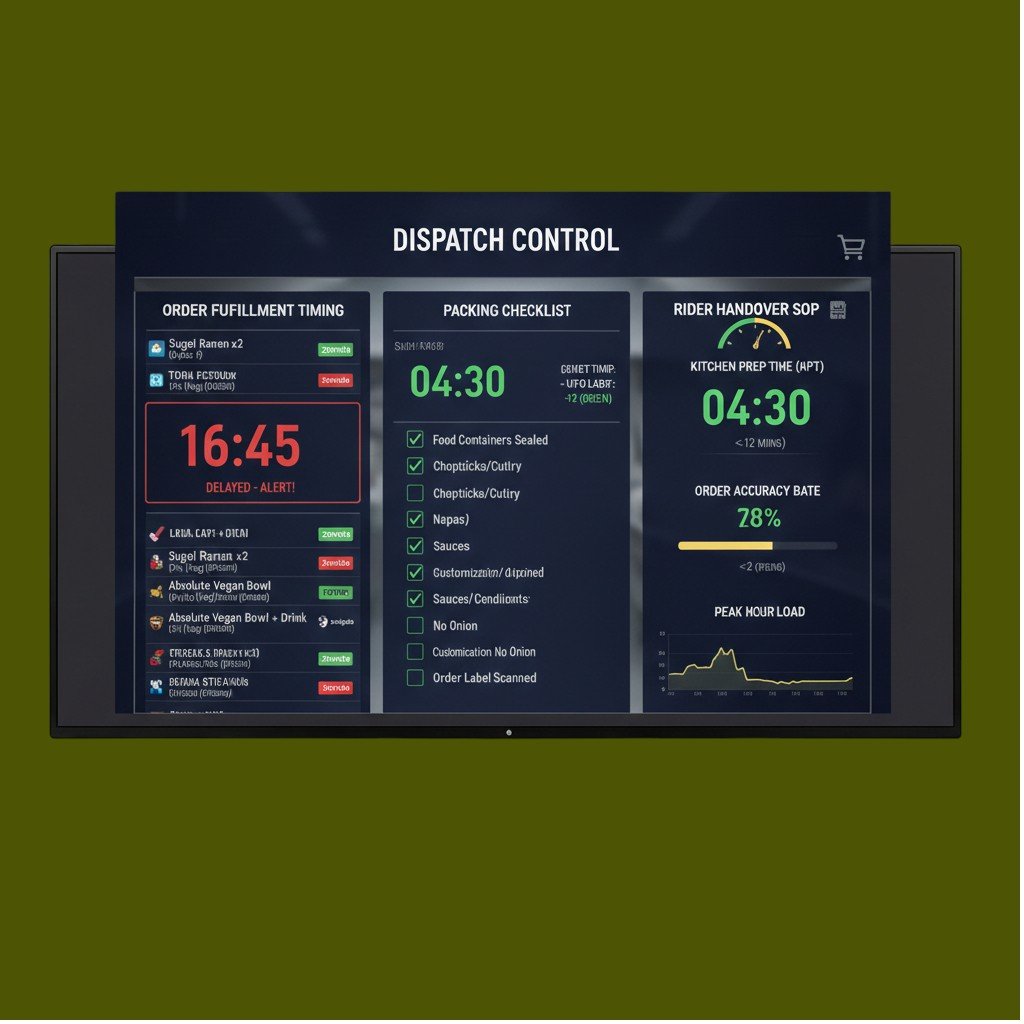
Hygiene + Quality Control: Audit-Ready, Not Assumption-Ready
Hygiene is not a one-time checklist. It’s a daily audit habit. Your framework should include documented cleaning schedules, temperature checks, storage labeling, and corrective actions. This keeps you safer operationally and stronger commercially.
Practical controls to include:
- Daily opening + closing cleaning checklists (with signatures).
- Temperature logs for cold storage and hot holding.
- Labeling rules: prep time/date, expiry, FIFO order, allergen notes.
- Weekly internal audit (hygiene + taste + packaging performance).
For structured food safety training, you can reference: FSSAI FoSTaC.
Operational KPIs: The Numbers That Predict Failure Early
A framework is incomplete without KPIs. When you scale, you can’t “sense” problems. You need indicators that reveal drift before it becomes refunds and low ratings.
- Contribution margin per order (by SKU + by channel)
- Prep-to-pack time and dispatch delay % during peaks
- Refund rate and top complaint reasons (missing, cold, spillage, late)
- Rating variance (stability matters more than one good week)
- Food cost % (weekly) + stock variance (weekly)
- Repeat rate (week 1 → week 4 cohort retention)
If your operations are currently unstable, study failure patterns here: Why Cloud Kitchens Fail in India.
Final Thoughts: Cloud Kitchen Operation Framework
A cloud kitchen operation framework is how you convert effort into profit consistently. It protects margins through portion control, protects ratings through packing + dispatch discipline, and protects scalability through SOP replication. The strongest operators treat operations like a system: measurable, auditable, repeatable.
If you implement the pillars, enforce the daily rhythm, and track the right KPIs, your kitchen stops reacting to problems and starts preventing them.
FAQs: Cloud Kitchen Operation Framework
What is a cloud kitchen operations framework?
It’s a structured operating system that standardizes prep, inventory, packing, dispatch, hygiene, and KPIs so the kitchen performs consistently without founder dependence.
Which part of operations impacts ratings the most?
Packing and dispatch. Late orders, cold food, leakage, and missing items reduce ratings even if taste is strong.
How often should I track food cost and stock variance?
Food cost by SKU should be checked weekly. Stock variance should also be reviewed weekly to catch leakage early.
What should I build first: SOPs or dashboards?
SOPs first. Dashboards only help when the kitchen executes standard processes that generate reliable data.
- Cloud Kitchen Business in India
- How to Start a Cloud Kitchen in India
- Cloud Kitchen SOP Checklist
- Cloud Kitchen Setup Cost in India