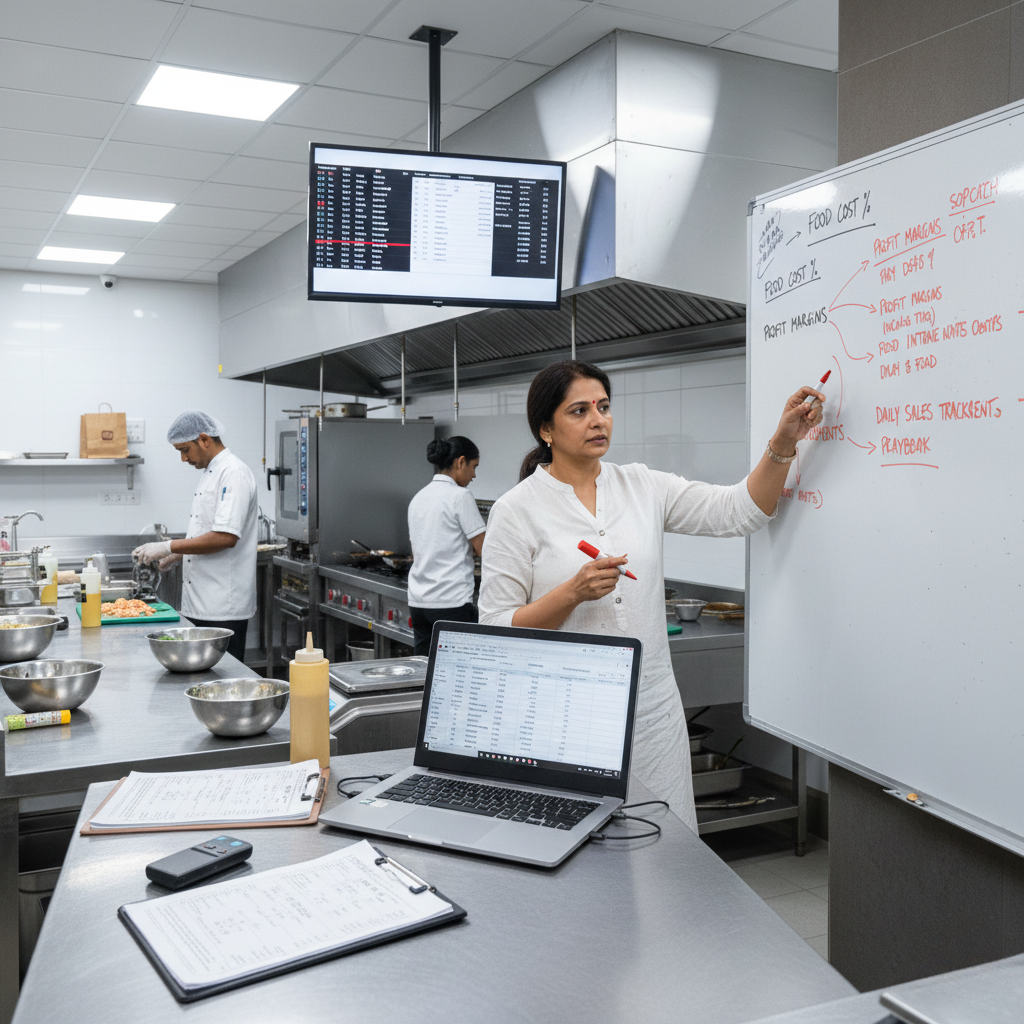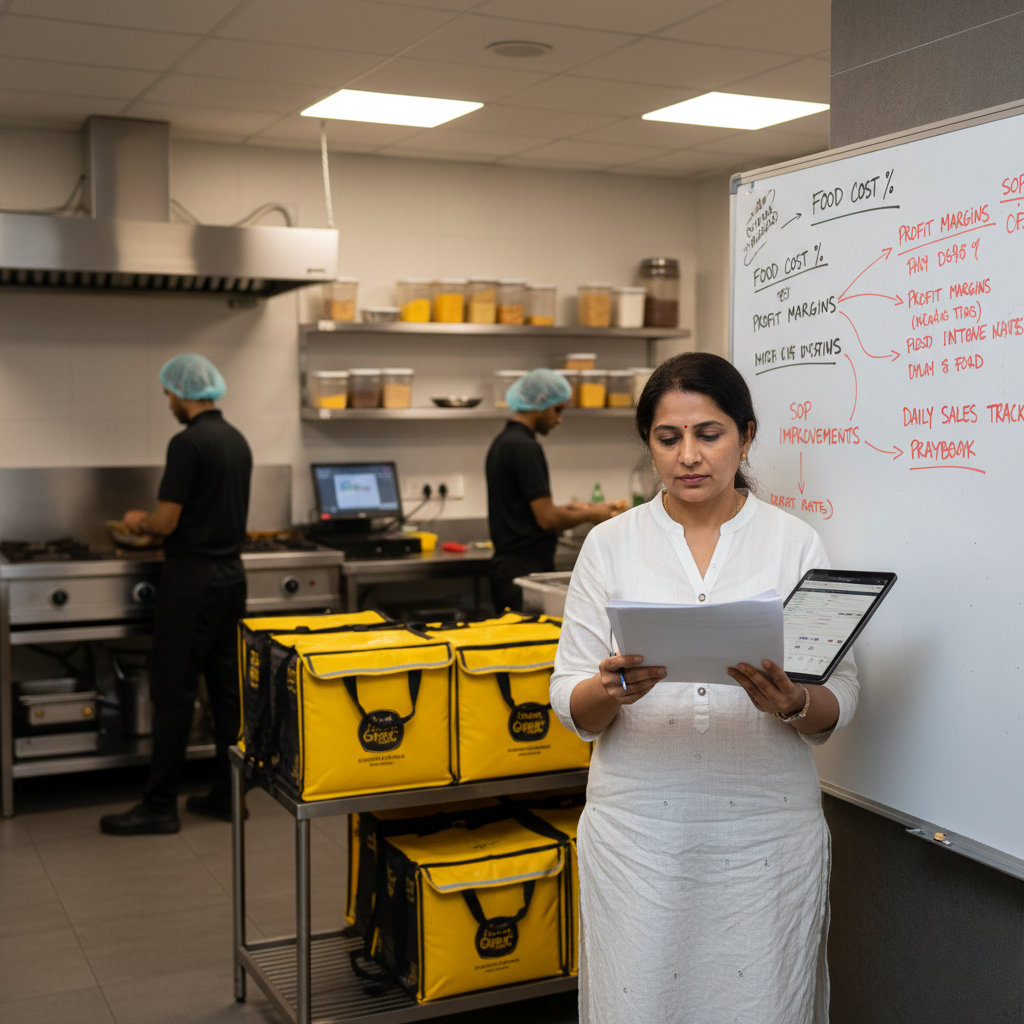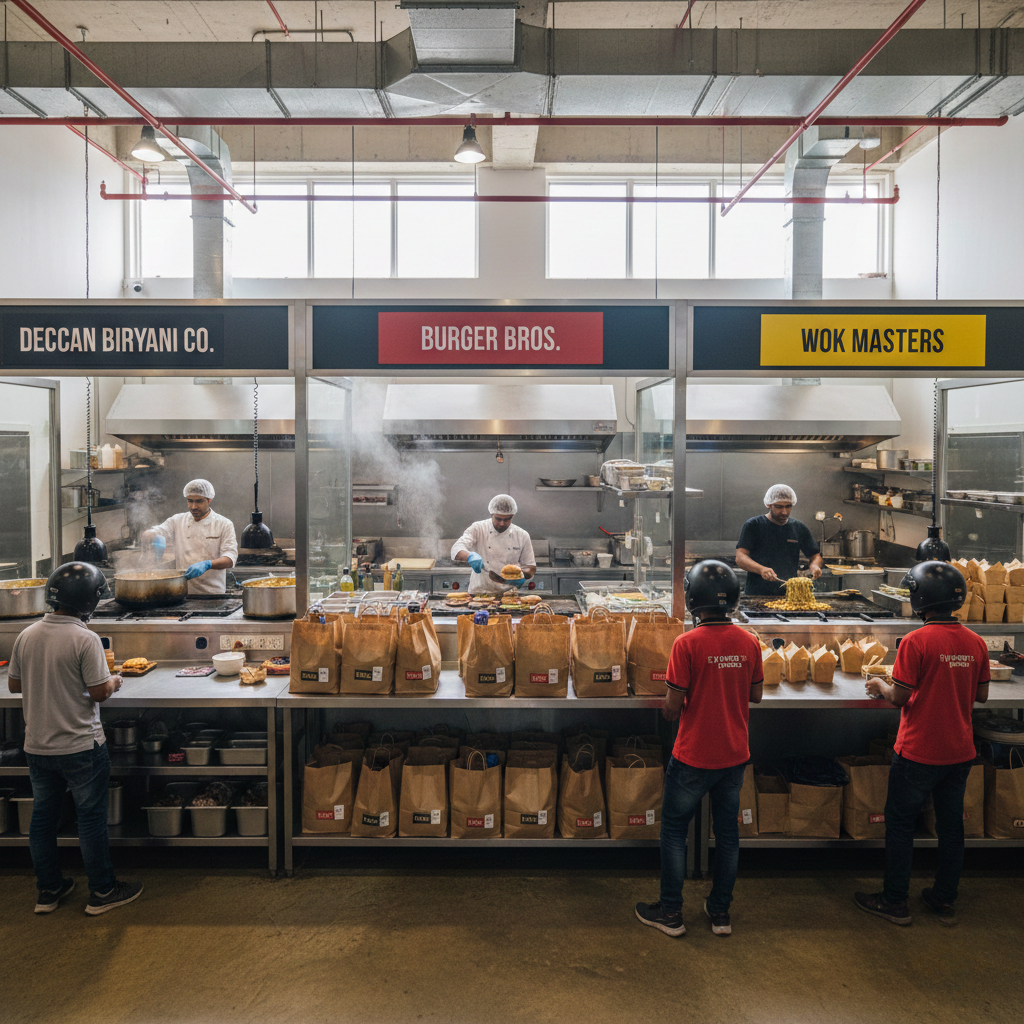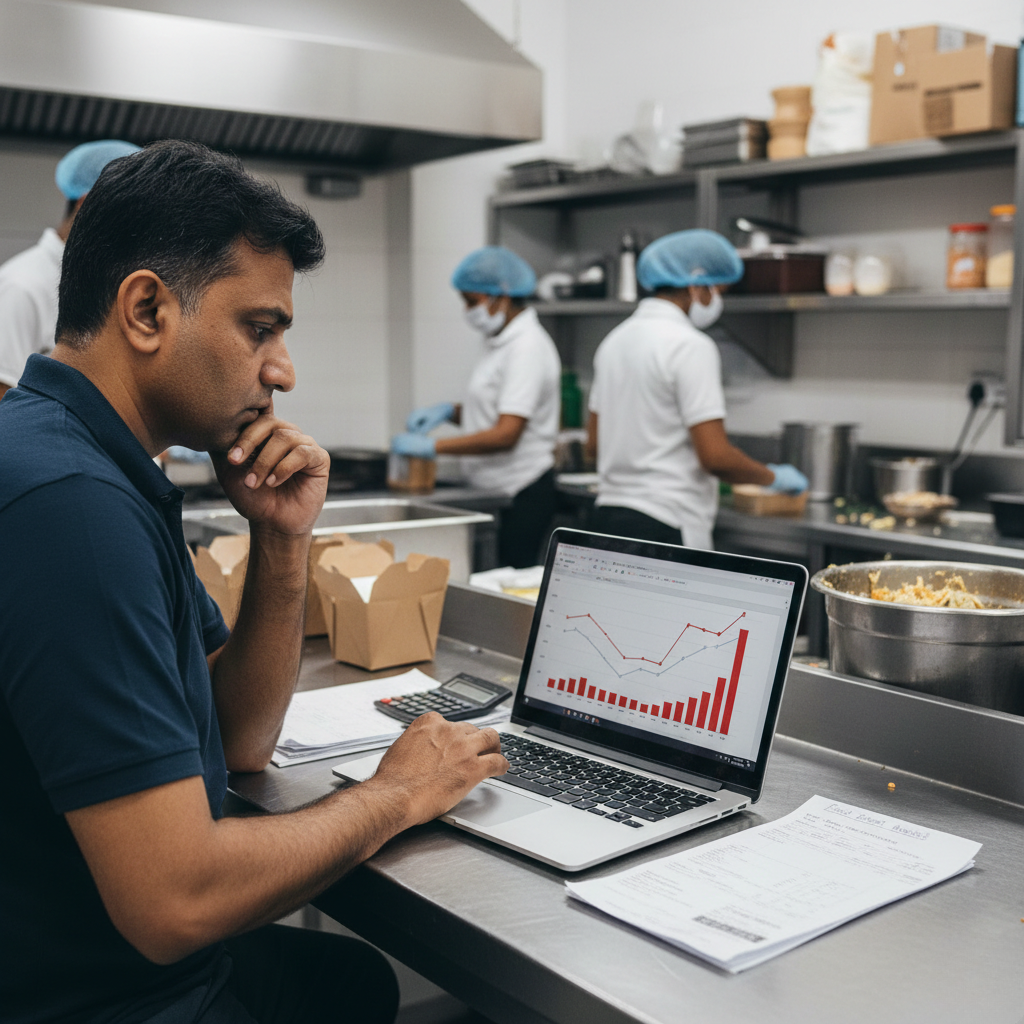
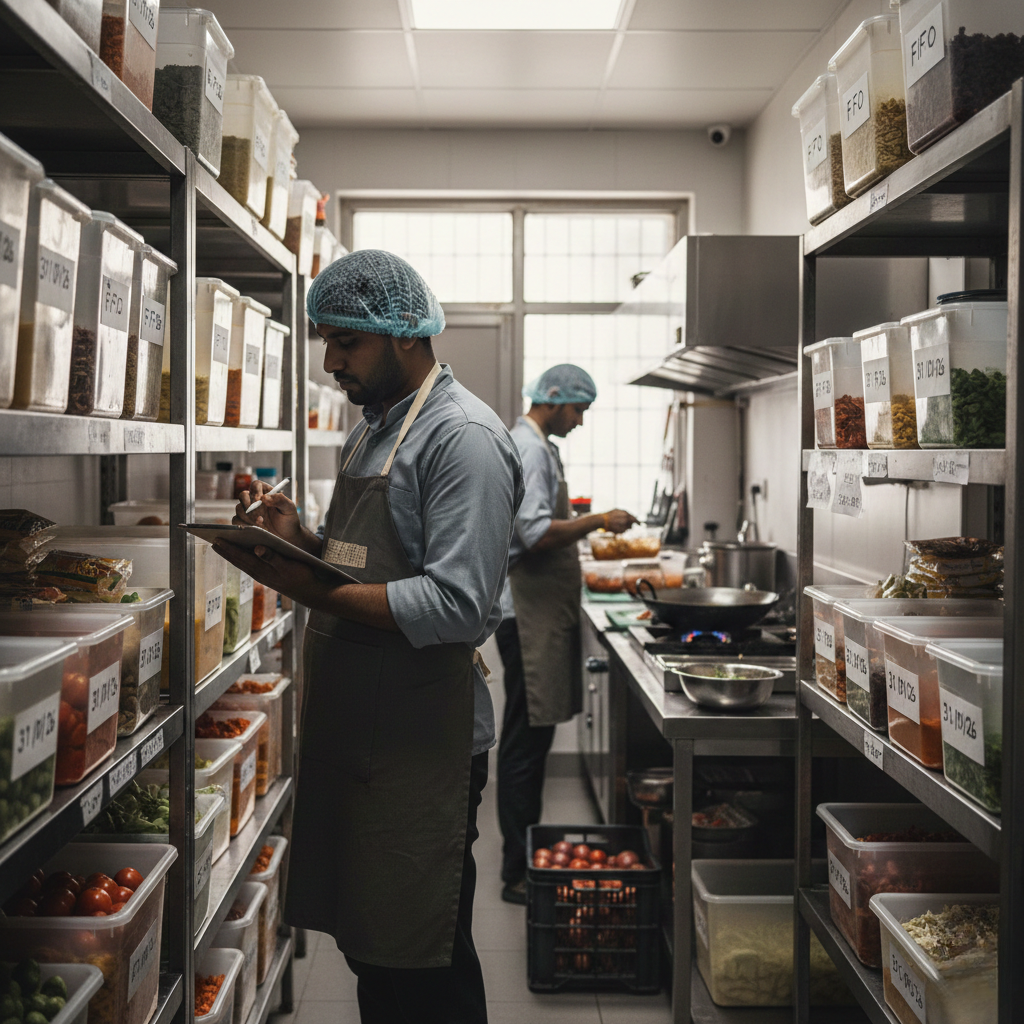
Cloud Kitchen Inventory Management in India-Inventory is one of the biggest silent profit killers in cloud kitchens. Most founders focus on sales, marketing, and aggregators, but ignore how daily inventory decisions quietly decide profit or loss. Poor inventory management leads to wastage, expiry, theft, stockouts during peak hours, and inflated food costs. This detailed guide explains how cloud kitchen inventory management works in India, why most kitchens get it wrong, and how profitable kitchens build tight inventory control systems.
Why Inventory Management Is Critical for Cloud Kitchens
Cloud kitchens operate on thin margins and fast-moving inventory. Unlike traditional restaurants, there is no dine-in buffer to absorb mistakes. Every gram of excess usage or expired stock directly reduces profit.
Most loss-making kitchens do not realize how much money they lose through poor inventory discipline until it is too late.
If you are new to delivery-first food businesses, start with Cloud Kitchen Business in India and Cloud Kitchen Operations Consultant. to understand the overall ecosystem.
What Is Cloud Kitchen Inventory Management?
Cloud kitchen inventory management is the system of planning, tracking, controlling, and auditing raw materials, semi-prepared items, packaging, and consumables.
It ensures that the right quantity of ingredients is available at the right time without excess wastage or stockouts.

How Poor Inventory Management Destroys Profit
Inventory losses rarely appear as one big number. They accumulate silently through daily operational leakage.
- Over-purchasing without demand forecasting
- Expiry and spoilage of perishables
- Over-portioning during prep and cooking
- Untracked wastage during rush hours
- Pilferage and internal misuse
- Emergency buying at higher prices
These issues are common reasons explained in Why Cloud Kitchens Fail in India.
Types of Inventory in Cloud Kitchens
Effective inventory control starts with understanding what exactly needs to be tracked.
- Raw ingredients: vegetables, meats, grains, dairy
- Semi-prepared items: sauces, gravies, marination
- Packaging: containers, bags, cutlery, seals
- Consumables: oil, gas, cleaning supplies
Each category requires different control methods based on shelf life and usage patterns.
Demand Forecasting: The Foundation of Inventory Control
Inventory problems usually start with poor demand forecasting. Kitchens either overstock or understock.
- Historical order data analysis
- Day-of-week sales patterns
- Festival and event demand spikes
- Weather and local factors
Accurate forecasting reduces emergency purchases and unnecessary wastage.
Procurement Discipline in Cloud Kitchens
Buying more does not mean buying better. Procurement must balance price, quality, and shelf life.
- Approved vendor list
- Standard buying quantities
- Fixed reorder levels
- Price benchmarking
- Quality checks at receiving
Procurement discipline directly impacts food cost and consistency.
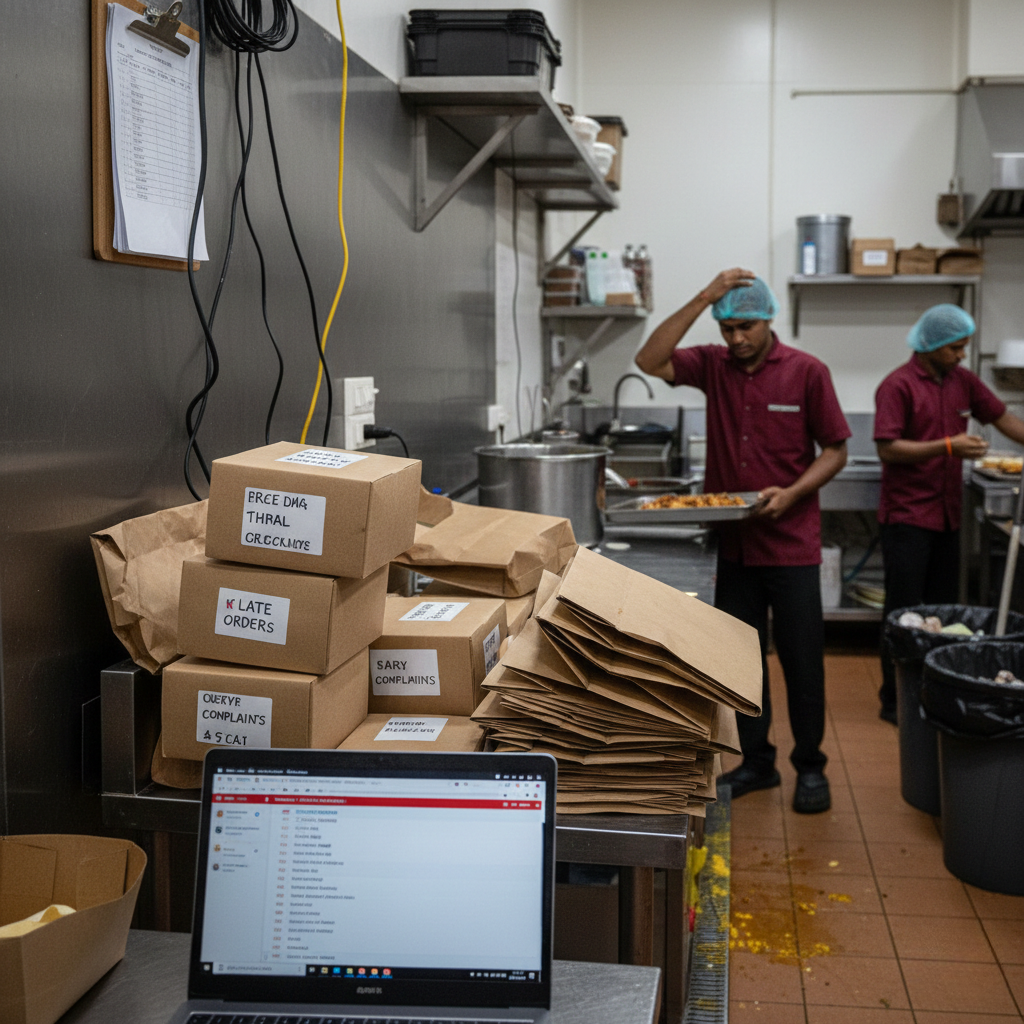
Storage and Shelf-Life Management
Even perfect buying decisions fail if storage practices are weak.
- FIFO (First In, First Out) implementation
- Proper labeling with date and batch
- Cold storage temperature logs
- Separate raw and cooked zones
Poor storage leads to spoilage and contamination risks.
Usage Control and Portion Discipline
Inventory loss often happens during cooking, not purchasing.
- No weighing during prep
- “Andaz” cooking instead of recipes
- Different cooks, different portions
- No daily variance tracking
Portion control systems are detailed in the Cloud Kitchen SOP Checklist.
Wastage Tracking: The Most Ignored Control
Wastage is often treated as unavoidable. In reality, most wastage is preventable.
- Over-prep wastage
- Expired raw materials
- Rejected dishes
- Spillage and mishandling
Daily wastage logging creates accountability and highlights root causes.
Daily Stock Reconciliation
Daily reconciliation compares expected stock vs actual stock.
- Opening stock
- Purchases
- Ideal consumption
- Actual closing stock
Variances highlight leakage immediately, not at month-end.
Inventory Dashboards That Protect Margins
Profitable kitchens track inventory using dashboards.
- Food cost percentage
- Wastage percentage
- Stock variance
- High-risk SKUs
Dashboards convert inventory into a controllable system.
How Inventory Impacts Aggregator Profitability
Poor inventory planning leads to:
- Stockouts during peak hours
- Order cancellations
- Lower ratings
- Reduced visibility
This directly impacts profitability on Swiggy and Zomato. Learn more in How to Reduce Swiggy Commission.
How Consultants Fix Inventory Problems
Cloud kitchen consultants build inventory systems, not just spreadsheets.
- SKU-wise consumption mapping
- Standard reorder levels
- Wastage accountability frameworks
- Daily reconciliation SOPs
These systems are part of the Cloud Kitchen Operations Framework.
Final Thoughts: Inventory Control Is Profit Control
Cloud kitchens do not lose money in one day. They lose money gradually through poor inventory discipline.
Strong inventory management protects margins, stabilizes operations, and enables scaling.
Systems from GrowKitchen help founders replace guesswork with control.
FAQs: Cloud Kitchen Inventory Management in India
How often should inventory be tracked?
Daily. Weekly tracking is too late.
What is the biggest inventory mistake?
Over-purchasing without demand forecasting.
Does inventory control really improve profit?
Yes. Inventory discipline directly reduces food cost and wastage.
Can small kitchens implement inventory systems?
Yes. Small kitchens benefit the most from tight control.