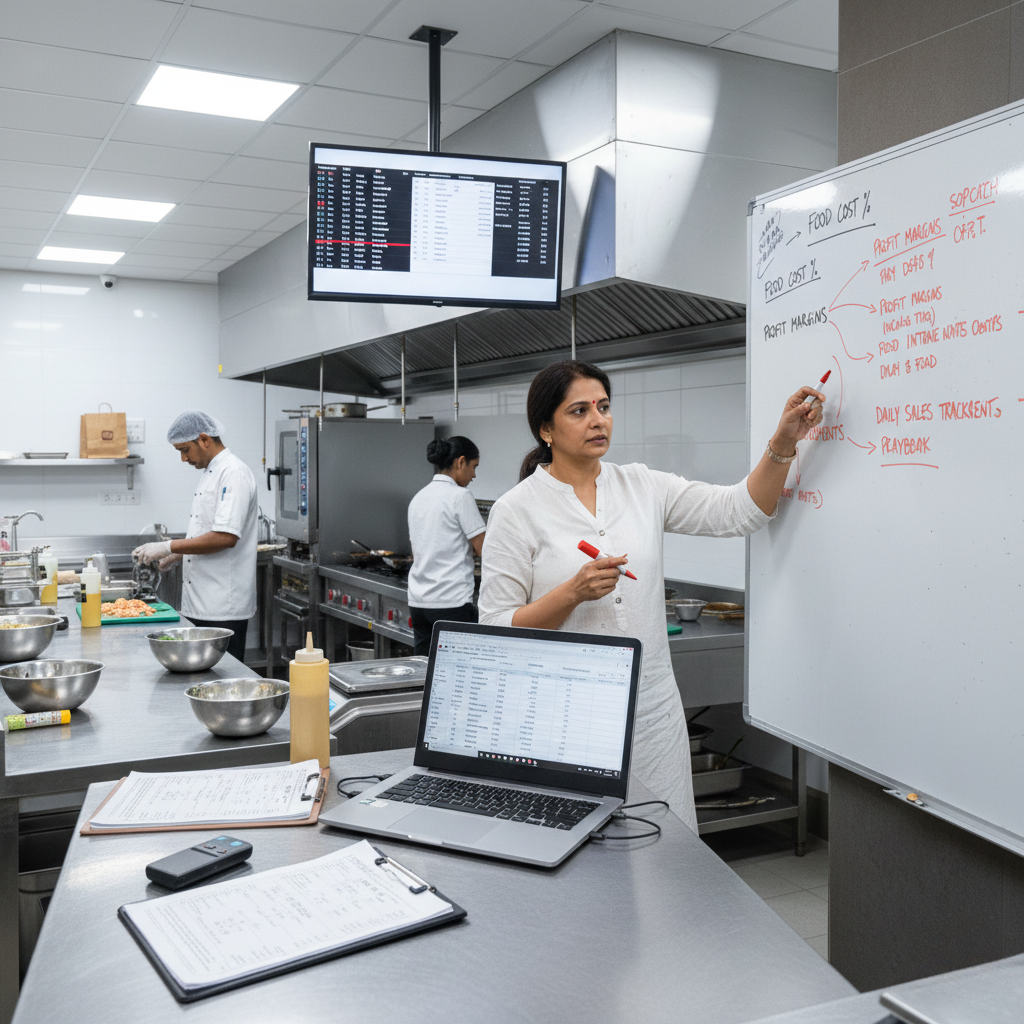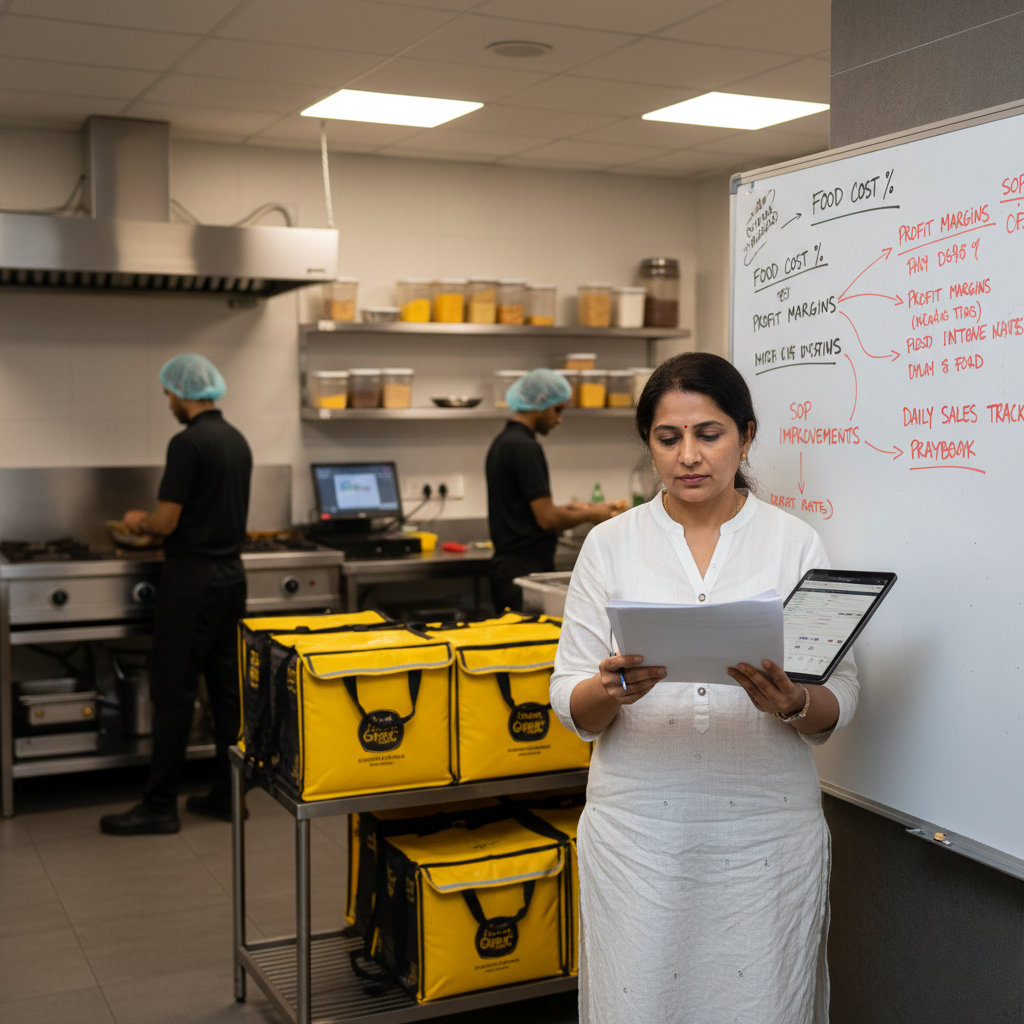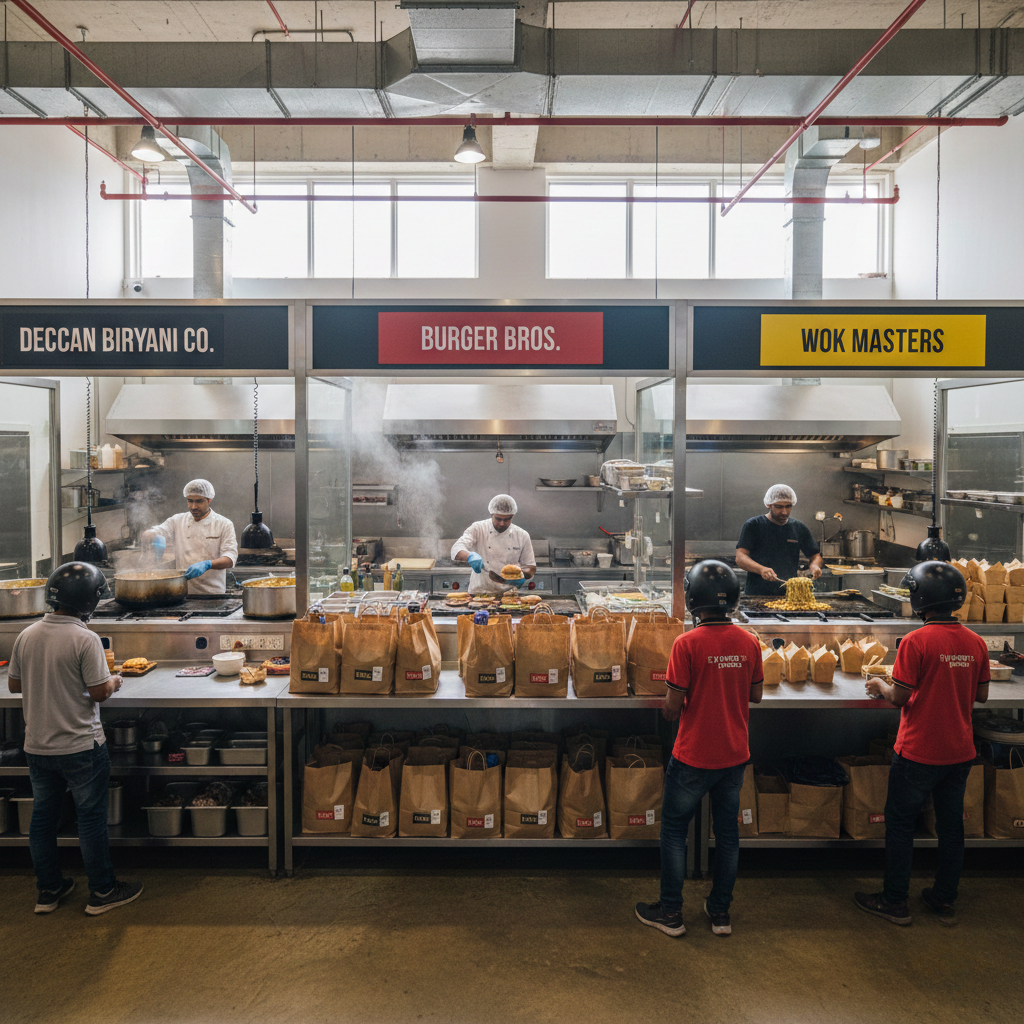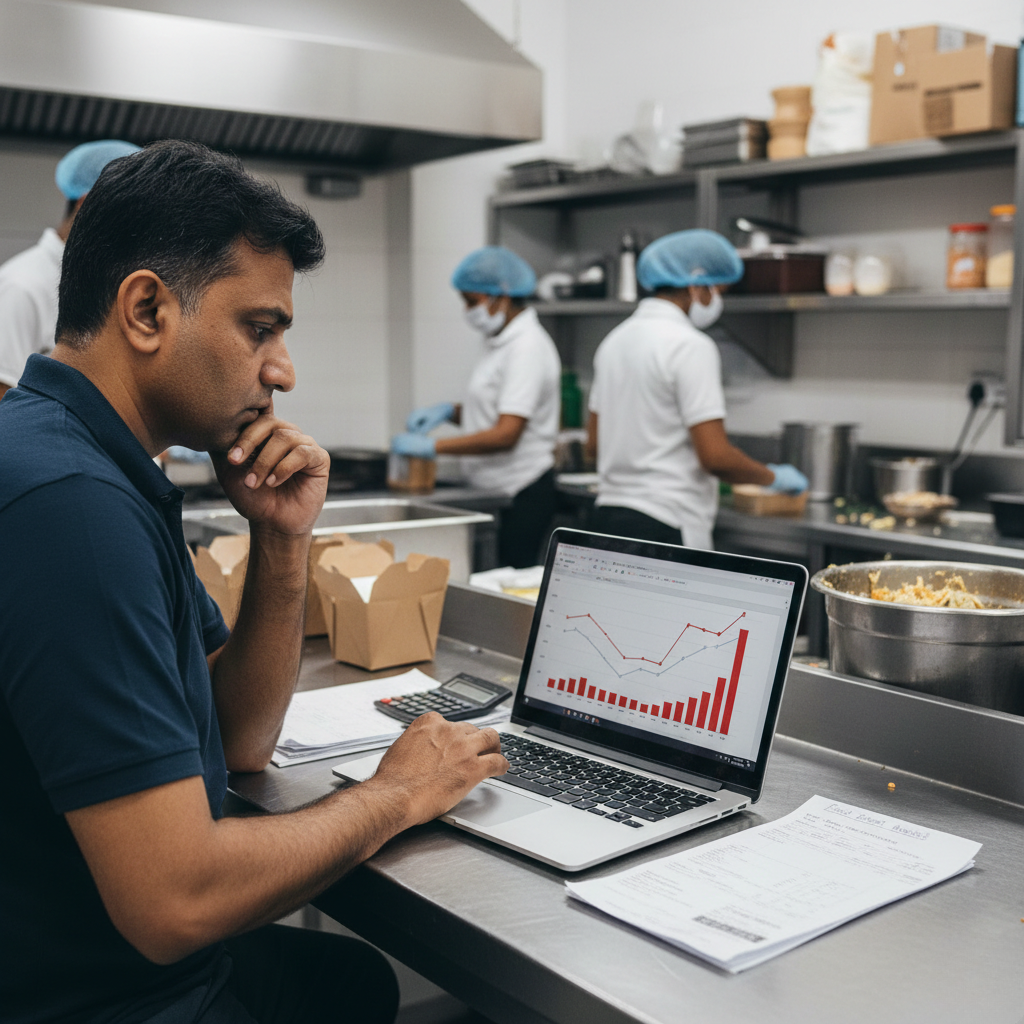
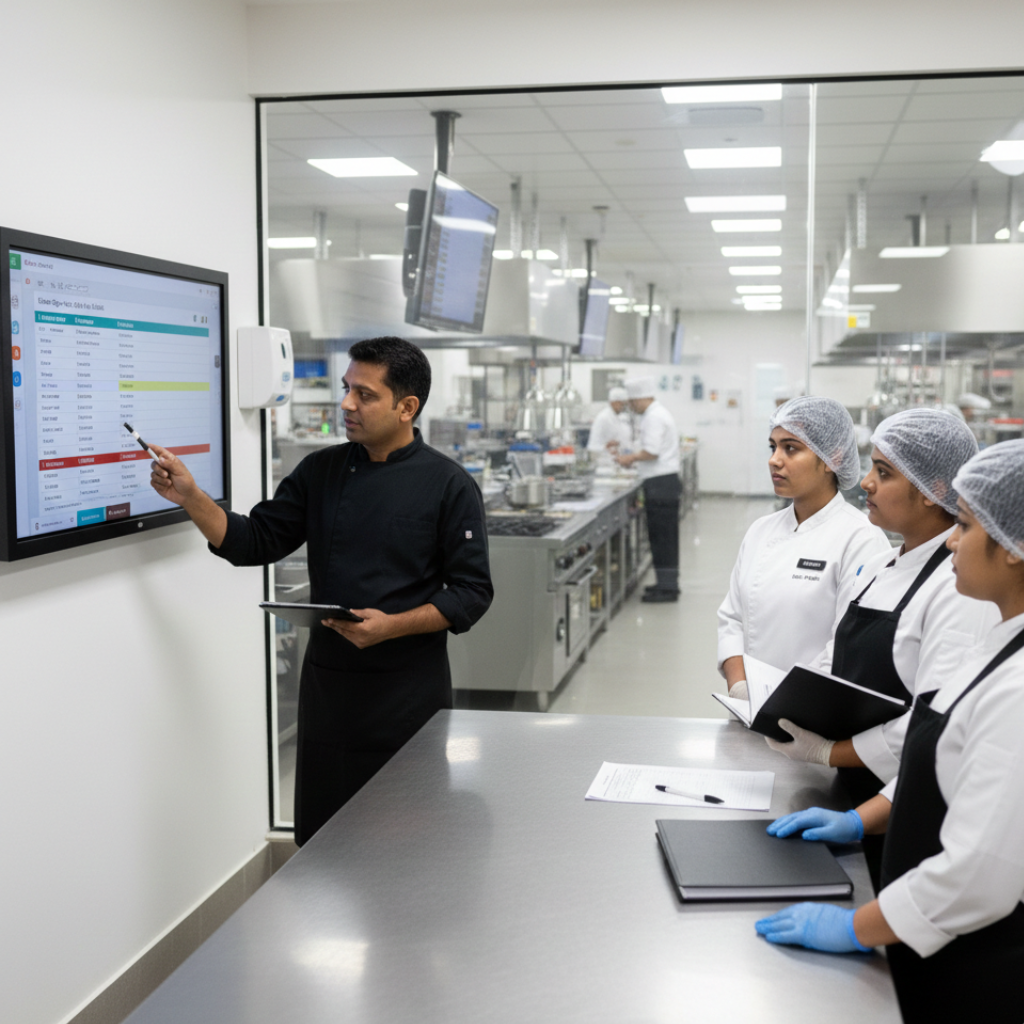
Cloud Kitchen consulting worth it for Small food brands in India often ask one simple question: is cloud kitchen consulting worth it? The honest answer: it depends on whether you want “more orders” or “more profit with stability.” Consulting becomes worth it when your kitchen is bleeding money silently through portion drift, refunds, inventory leakage, slow dispatch, and inconsistent ratings. This guide breaks down when cloud kitchen consulting is worth it for small brands, what outcomes you should expect, what deliverables matter (SOPs, menu engineering, costing, packaging, KPI dashboards), and how to choose the right consulting model without wasting money.
Start Here Before Deciding If Cloud Kitchen Consulting Is Worth It
This article is part of GrowKitchen’s profitability + operations learning series. If you want the full baseline on delivery-first kitchens first, start here: Cloud Kitchen Business in India.
Your decision should also consider compliance and process maturity. Small brands that ignore hygiene documentation and billing discipline get fragile fast. Align with FSSAI, structured training via FoSTaC, and correct tax workflows through the GST Network.
Is Cloud Kitchen Consulting Worth It for Small Food Brands?
Small brands usually have one constraint: cash. That’s why consulting feels risky-“why pay someone when I can try myself?” But cloud kitchens don’t fail only due to low orders. They fail due to untracked leakage: wastage, refunds, inconsistent portioning, unstable ratings, and unstructured decision-making.
Cloud kitchen consulting is worth it when it upgrades your kitchen from “founder-driven” to “system-driven.” The goal is: predictable contribution margin + stable ratings + repeat orders. If a consultant can build systems that deliver this, consulting pays for itself.
What Cloud Kitchen Consulting Actually Fixes (Not the Marketing Myth)
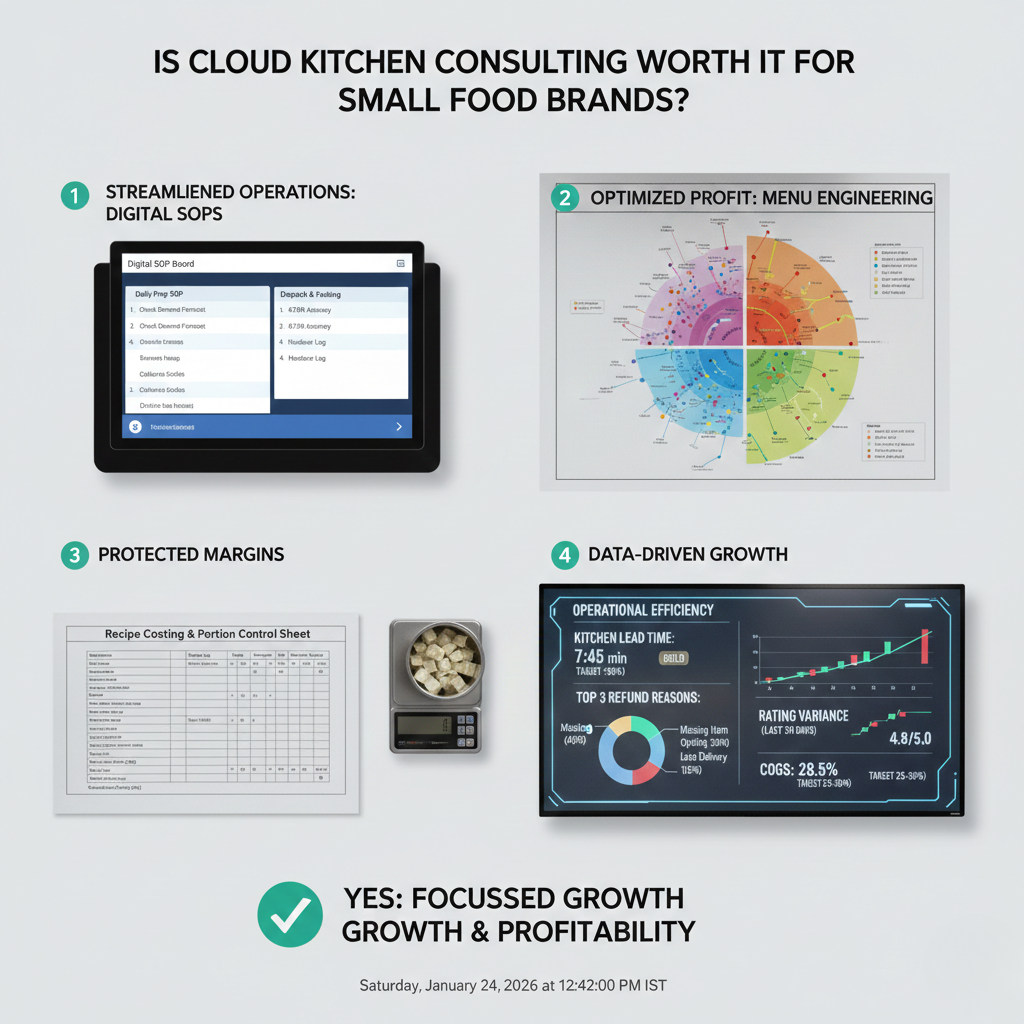
Most founders think consulting means “run ads and get orders.” That’s agency work. Real cloud kitchen consulting is operations + profitability + repeatability. It fixes the core reasons small brands bleed money even with decent sales.
- Menu engineering: remove slow/low-margin SKUs, build repeatable bestsellers, set AOV ladders.
- Costing + margin clarity: contribution margin per order, packaging costs, commission impact.
- Portion control: recipe cards, ladle rules, weigh points for expensive ingredients.
- Inventory discipline: RM master, par levels, reorder points, variance checks.
- Packing + dispatch control: checklist, sealing rules, ticket aging limits, rider staging.
- KPI rhythm: weekly reviews so problems are caught before ratings collapse.
If you want the blueprint of what “systems” look like, read: Cloud Kitchen Operations Framework.
When Cloud Kitchen Consulting Is Worth It (Small Brand Checklist)
Consulting is worth it when you already have some traction-or when your launch needs to be structured from Day 1. Use this checklist to decide. If you say “yes” to 3 or more points, consulting usually pays back quickly.
- Ratings fluctuate week to week and you don’t know why.
- Refunds are increasing (missing items, leakage, cold food, late delivery).
- Food cost feels random and margins don’t match sales.
- Peak-hour operations collapse and ticket delays rise.
- Inventory runs out suddenly, or wastage feels “normal.”
- You are the system (kitchen performance depends on you).
- You want to expand to a second location but current ops are unstable.
If you’re facing these, study the most common failure patterns: Why Cloud Kitchens Fail in India.
What You Should Demand From a Consultant (Deliverables That Matter)
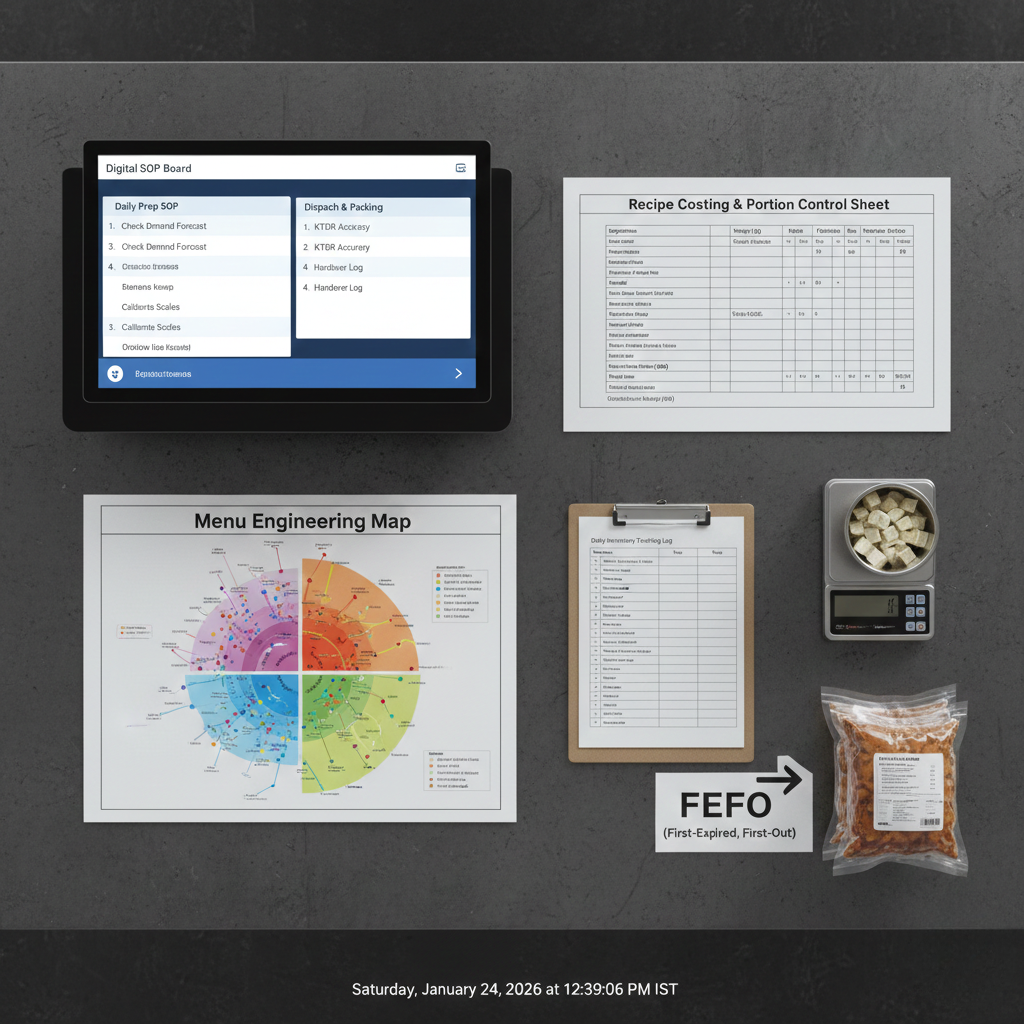
Small brands waste money when consulting is vague: “strategy calls” without implementation. A good consultant should leave behind assets your team can run daily-without the consultant present.
- Menu structure + SKU discipline: what to sell, what to remove, what to push.
- Recipe cards + portion tools: grams/ml, substitute rules, plating/packing steps.
- Costing sheet per SKU: food cost + packaging + commission + net contribution.
- Packing + dispatch SOP: checklist, labels, seals, aging limits, escalation triggers.
- Inventory system: RM master, par levels, purchase rhythm, variance checks.
- KPI dashboard: refunds, ratings variance, delays, CM/order, stock variance.
If you want a baseline checklist format, start here: Cloud Kitchen SOP Checklist.
Cost vs Payback: How Consulting Pays Back for Small Kitchens
Consulting becomes “worth it” when it reduces leakage faster than its fee. Small kitchens often underestimate how much money leaks in daily operations. Here are common payback levers:
- Portion drift control: 3–7% food cost reduction through weigh points + recipe discipline.
- Refund reduction: packing checklist + dispatch discipline reduces avoidable refunds.
- Menu trimming: removing slow SKUs reduces inventory complexity and wastage.
- AOV lift: combos and add-ons increase basket value without adding ops load.
- Rating stability: stable ratings improve conversion and repeat ordering.
Want to set expectations on profitability levers? Read: Cloud Kitchen Profit Margin in India.
Which Consulting Model Works Best for Small Brands?
Not every small brand needs the same engagement. Choose a model that matches your stage and cash constraints.
- Launch consulting (2–4 weeks): best when you’re starting and want systems from Day 1. Focus: menu engineering, SOPs, packaging, costing, staff training.
- Stabilization consulting (2–6 weeks): best when orders exist but ratings/margins are unstable. Focus: refunds, dispatch control, portion discipline, variance checks, KPI rhythm.
- Ongoing operator support (monthly): best when you are scaling or opening a second location. Focus: audits, KPI reviews, SOP enforcement, menu iteration, team coaching.
If your next step is multi-location expansion, use: How to Scale Cloud Kitchens.
How to Choose the Right Cloud Kitchen Consultant in India
Small brands should select consultants like operators, not like motivational speakers. The best filter is simple: can they show you systems, not just slides?
- Ask for sample deliverables: SOP format, costing sheet, dashboard examples.
- Check if they understand aggregators: commission, ads, discounts, ranking, packaging impact.
- Look for implementation: training staff + setting station flows, not only “advice.”
- Measure by outcomes: refunds down, CM up, ratings stable, dispatch delays reduced.
You can also learn the basics of digital compliance and safe food handling through FoSTaC to evaluate consultants who claim “food safety expertise.”
Red Flags: When Consulting Is NOT Worth It
Consulting is not worth it if it becomes vague, non-implementable, or focused only on “growth hacks.” Avoid these red flags:
- They promise “guaranteed orders” without fixing operations.
- No deliverables-only calls and generic advice.
- They ignore costing and contribution margin math.
- They don’t address refunds, dispatch delays, and packaging performance.
- They can’t explain how they measure improvement (KPIs).
If you want a reality-check on what fails kitchens most, read: Why Cloud Kitchens Fail in India.
Final Thoughts: Is Cloud Kitchen Consulting Worth It?
For small food brands, cloud kitchen consulting is worth it when it builds systems that reduce leakage and stabilize outcomes. If consulting helps you control portion drift, reduce refunds, tighten the menu, improve dispatch, and track KPIs weekly, it pays back faster than founders expect.
If you want to see what “professional operations” looks like step-by-step, start with: Cloud Kitchen Operations Framework.
FAQs: Cloud Kitchen Consulting for Small Brands
Is cloud kitchen consulting worth it if I have low orders?
Yes, if the consulting focuses on menu, pricing, packaging, and operations that improve conversion and repeat rate. But avoid consultants who only sell “ads” without fixing systems.
What is the best outcome to expect from consulting?
Better contribution margin, fewer refunds, stable ratings, faster peak execution, and a repeatable SOP-driven kitchen.
How quickly can consulting show results?
Operational improvements like packing errors, portion drift, and dispatch delays can show changes within weeks if SOPs and audits are implemented.
What should I check before paying a consultant?
Ask for sample deliverables: SOP templates, costing sheets, KPI dashboard examples, and a clear implementation plan.
- Cloud Kitchen Business in India
- Cloud Kitchen Operations Framework
- Cloud Kitchen SOP Checklist
- Cloud Kitchen Setup Cost in India
- Cloud Kitchen Profit Margin in India
- How to Reduce Swiggy Commission
- How to Scale Cloud Kitchens
- Why Cloud Kitchens Fail in India
- Cloud Kitchen Consultant in India
- CKaaS Explained