Cloud Kitchen Consultant in India (2026 Guide): Costs, SOPs, Profitability | GrowKitchen
Home / Cloud Kitchen Consultant In India
Consulting · Cloud Kitchen Growth & Operations

Cloud Kitchen Consultant in India: What They Do, Fees & The Exact Deliverables That Drive Profit

A cloud kitchen doesn’t fail because founders don’t work hard. It fails when operations stay “memory-based”. A cloud kitchen consultant builds a repeatable system: menu engineering, SOPs, costing, procurement rhythm, and platform execution so ratings, speed and margins stay stable as orders scale.

Last updated: January 2026 Reading time: 10–12 minutes Ideal for founders, restaurants & multi-brand kitchens

Who is a Cloud Kitchen Consultant in India?

A cloud kitchen consultant in India is an operator-focused expert who helps founders, restaurants, and multi-brand kitchens build a delivery-first business that can scale without quality drops. Unlike “generic restaurant consulting,” cloud kitchen consulting is designed around aggregator reality: Swiggy/Zomato discovery, prep-time discipline, packaging performance, cancellation control, and contribution margin.

The best consultants don’t just give advice. They build systems you can run daily: menu engineering, SOPs, BOM sheets, inventory rhythm, staff structure, and a performance review cadence. In short consulting exists to turn chaos into repeatability.

A strong cloud kitchen consultant builds an “operating system” not a one-time checklist. Systems protect ratings and margins.

If you’re still understanding the base model first, read: Cloud Kitchen Business in India.

Why Hire a Cloud Kitchen Consultant in India?

In India, delivery demand is huge but so is competition. The winning kitchens are not always the ones with “best food”, but the ones with fast dispatch, consistent taste, predictable portions, and reliable packaging. That’s why consulting is valuable: it reduces expensive trial-and-error.

When a consultant gives the highest ROI

Consulting makes the biggest difference at three moments: (1) before launch, (2) during a ratings drop, and (3) before multi-location expansion. In these moments, small operational fixes create outsized impact.

  • You’re launching your first kitchen: you need menu engineering + SOPs + setup discipline to avoid early 1-star reviews.
  • Orders are coming, but profits are missing: food cost drift, wastage and packaging leakage often hide in plain sight.
  • Ratings or cancellations are rising: prep time, missing items, and packaging failures quietly kill ranking and conversion.
  • You want to expand to another cluster/city: you need standardization before scaling, or you multiply problems.
  • You run multiple brands from one kitchen: complexity needs station SOPs, batch planning, and a strict dispatch workflow.

If your current issue is profitability, start here: Can a Cloud Kitchen be Profitable in India?

What a Cloud Kitchen Consultant Actually Does (Operator View)

1) Market + micro-cluster feasibility

India is not one market each delivery cluster behaves differently. A consultant maps your cuisine to micro-demand, competitor density, price bands, and delivery radius realities. This prevents the #1 beginner mistake: launching a good menu in the wrong cluster.

2) Menu engineering for delivery conversion

A consultant engineers your menu for: faster prep, fewer steps, consistent portions, and higher AOV. This includes building hero items, add-ons, combos, and category design to boost discovery on apps. It’s not about “more items.” It’s about fewer, stronger items that sell daily and travel well.

3) SOPs + kitchen rhythm

SOPs are the heart of cloud kitchens. A consultant creates station-wise SOPs: prep, batch cycles, holding times, portion rules, packing flow, and rider handoff. This protects ratings during peak hours and staff changes.

4) Costing + contribution margin control

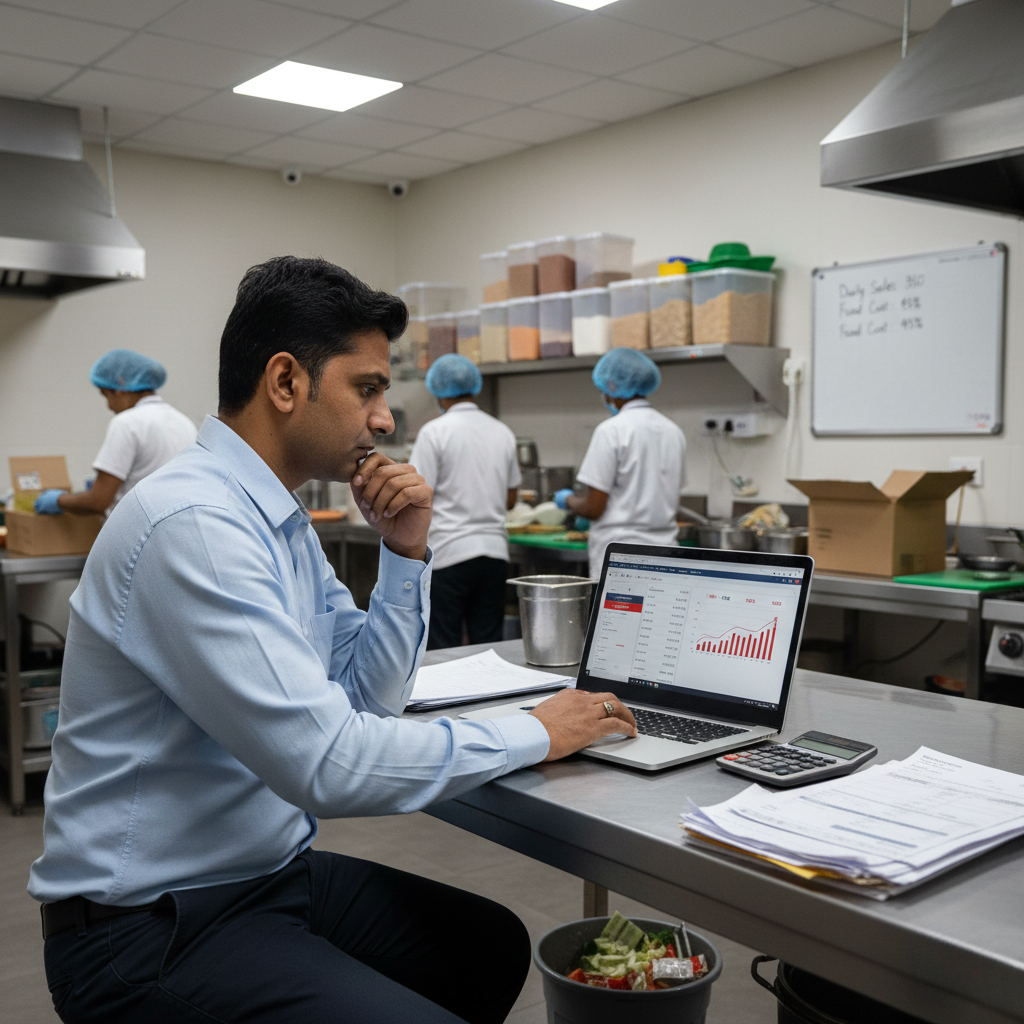
The real profit engine is not sales it’s contribution margin after food, packaging, and platform costs. Consultants build BOMs, costing sheets, and target food-cost bands. They also identify leakage: over-portioning, wastage, inconsistent purchase rates, and packaging mismatches.

5) Swiggy/Zomato listing optimization

Your listing is your storefront. Consultants fix menu naming, descriptions, category placement, hero visibility, and operational settings like prep time and packaging instructions. The goal is to increase conversion without relying on discounts.

For an operations foundation reference, read: Cloud Kitchen Operations Framework.

Cloud Kitchen Consulting Deliverables Checklist (What You Should Demand)

Many founders pay for “calls” but don’t get execution assets. A good consultant gives you deliverables you can run daily. Use this checklist to judge any consulting proposal.

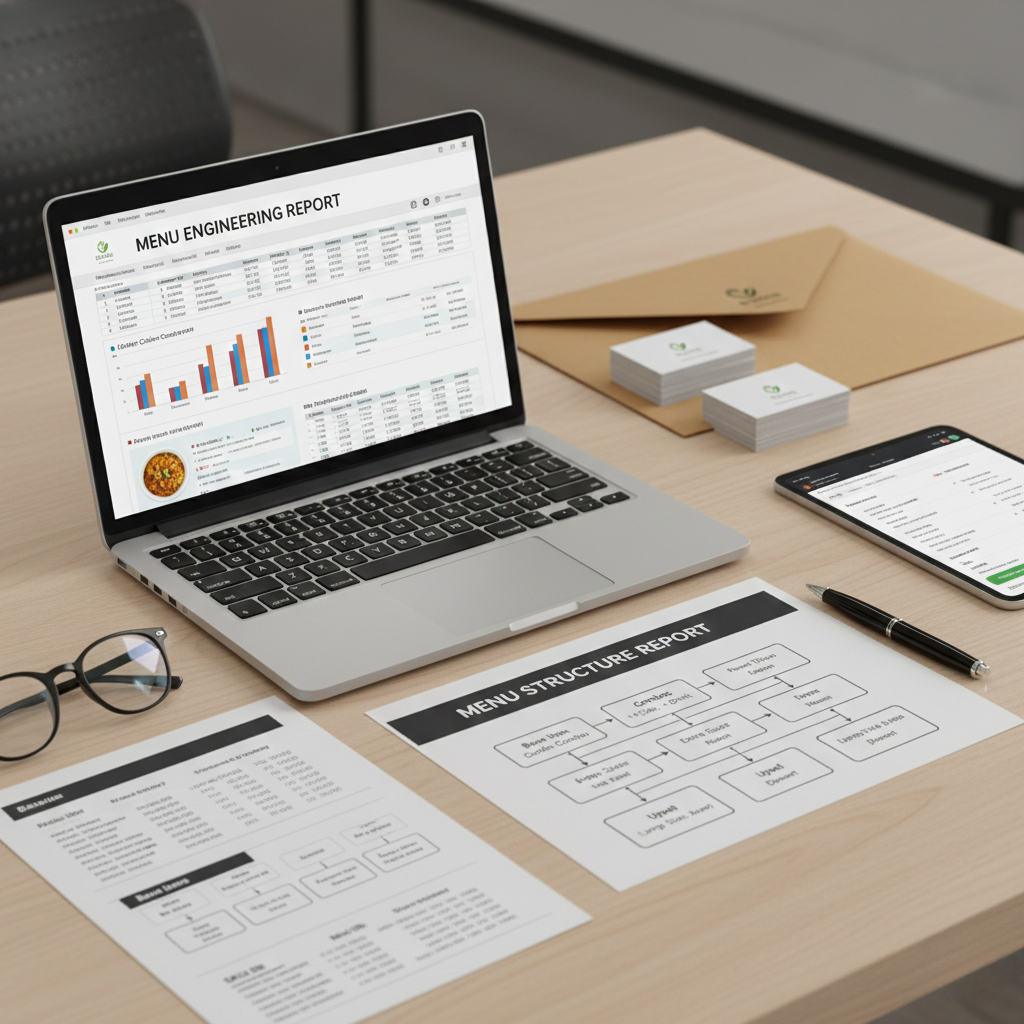
  • Menu engineering sheet: hero items, category structure, combos, add-ons, and remove/replace list.
  • Recipe SOP pack: standardized steps, timings, portion rules, and plating logic for delivery.
  • BOM & costing: raw material mapping, yield, portion size, packaging cost, and margin per SKU.
  • Procurement plan: vendor list, ordering rhythm, par levels, and stock rotation rules.
  • Packaging guide: what box for what item, sealing SOP, anti-soggy rules, and labeling.
  • Kitchen layout guidance: stations, packing line, staging shelf, and rider pickup zone.
  • Staffing plan: minimum viable team, shift schedule, role clarity, and training plan.
  • Aggregator execution: go-live checklist, prep-time discipline, peak hour plan, escalation SOP.
  • Weekly KPI dashboard: ratings, prep time, cancellations, refund rate, AOV, contribution margin.
If your consultant cannot provide a costing + SOP pack + KPI rhythm, you are paying for opinions, not a system.

If you’re considering a fully managed route instead of DIY execution, read: What is CKaaS (Cloud Kitchen as a Service)?

Cloud Kitchen Consultant Fees in India (What Models Exist)

Consulting fees in India vary by scope, number of brands, and whether the consultant is only advising or also building your entire operating system. The right question is not “cheapest,” but “what deliverables am I getting and what business outcome do they drive?”

Common engagement models

  • Setup project fee: one-time engagement for menu, SOPs, costing, launch checklist, and go-live support.
  • Monthly retainer: weekly review rhythm, ongoing optimization, team training, and growth controls.
  • Audit + fix sprint: short engagement to diagnose a failing kitchen (ratings, cancellations, food cost) and stabilize.
  • Multi-kitchen rollout: standardization + deployment plan across multiple locations and teams.

A good consultant will define scope clearly: how many SKUs, how many SOPs, how many training sessions, and what KPIs will be tracked. If the scope is vague, you’ll get vague outcomes.

Want to benchmark your setup planning first? Read: Cloud Kitchen Setup Cost in India and How Much Does It Cost to Start a Cloud Kitchen?
See this - linkedIn

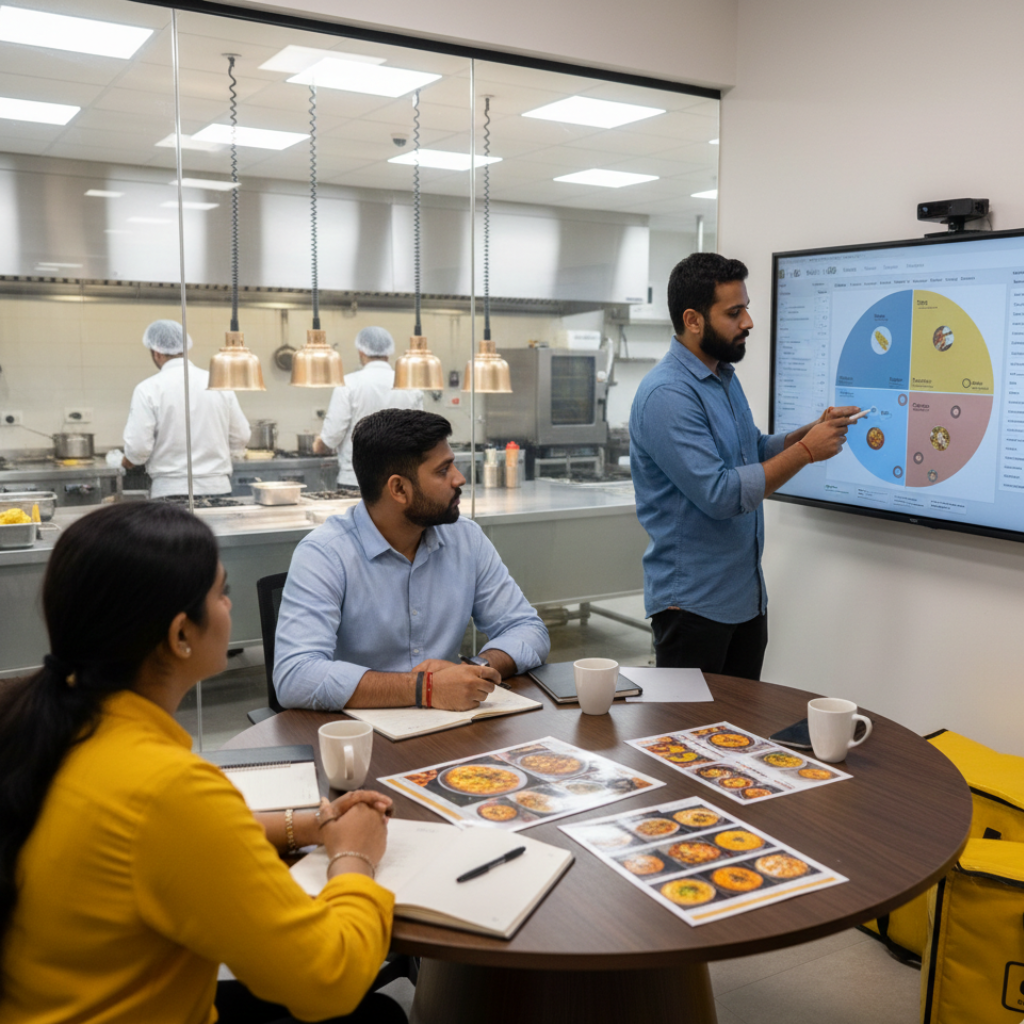
Image Option: What “Operator-Level” Consulting Looks Like

Use this visual on the page (or as a mid-article image) to communicate what consulting builds: systems, stations, and KPI discipline not just advice.

How to Choose the Right Cloud Kitchen Consultant

Ask these 7 questions before hiring

  1. Do you build SOPs + costing sheets, or only strategy calls?
  2. Will you redesign my menu for delivery (prep-time + packaging), or keep my current menu?
  3. How will you protect ratings in the first 100 orders?
  4. What KPIs will you track weekly?
  5. How do you reduce food cost drift? (portion control + yield + purchase rhythm)
  6. What is your approach to Swiggy/Zomato listing structure?
  7. Can you show examples of dashboards, SOPs, and menu engineering outputs?

Green flags

  • They talk about station SOPs, prep-time, packaging and rider handoff daily operations details.
  • They provide templates: BOM, costing, recipe SOPs, and weekly KPI review formats.
  • They understand multi-brand kitchens and the complexity of peak hours.

Red flags

  • They promise “ranking guaranteed” without discussing ratings/refunds/cancellations.
  • They push “more SKUs” instead of building hero items and simplicity.
  • They don’t ask for data: order mix, reviews, prep time, cancellation reasons, food cost.

30–60 Day Cloud Kitchen Consulting Roadmap (Practical)

Days 1–7: Diagnose + decide the real problem

The first week should identify whether your bottleneck is product-market fit, operations, or listing conversion. Consultants should audit reviews, cancellation reasons, kitchen flow, and SKU contribution.

  • Menu audit: hero items vs dead items
  • Operations audit: prep time, packing, missing items
  • Cost audit: portion drift, packaging leakage, high-cost SKUs
  • Listing audit: category structure, naming, descriptions

Days 8–21: Build the system

This is where real work happens: SOPs, costing, packaging rules, staffing rhythm, and revised menu structure. Aim for fewer SKUs with better repeatability and higher conversion.

  • Finalize the “winning menu”: remove, merge, standardize
  • Create recipe SOP pack + batch plan
  • Implement packing line + sealing SOP
  • Build BOM + pricing framework to hit margin targets

Days 22–45: Stabilize metrics + protect ratings

Stabilization is about discipline: training staff to follow SOPs, running daily checks, and removing recurring complaint causes. This phase should reduce refunds and cancellations first then growth becomes easier.

  • Daily QC checklist + peak-hour check
  • Missing-item prevention (label + packing checklist)
  • Prep-time discipline and staging shelf rules
  • Weekly KPI review: what changed, what improved, what to fix

Days 46–60: Scale decisions

After metrics stabilize, scaling becomes a deployment problem not a reinvention. You expand into new clusters with the same SOP pack, menu structure, and training system.

If you plan multi-brand scaling, read: Multi-Brand Cloud Kitchen Model.

Common Mistakes Kitchens Make Without Consulting (And How to Avoid Them)

If you want the shortest path to profitability, avoid the common mistakes that destroy rating + margin. Most of these are not “marketing issues.” They’re operational leaks.

  • Everything-on-the-menu syndrome: too many items create slow dispatch and inconsistent taste.
  • Underestimating packaging: leaks and sogginess cause 1-star reviews faster than taste issues.
  • No portion discipline: “andaza” cooking leads to food cost drift and random reviews.
  • Discount addiction: offers without a strong hero item burn margin and attract low-retention customers.
  • No weekly rhythm: if you don’t review KPIs weekly, problems repeat until they compound.

If you want a deep-dive on failure patterns, read: Why Cloud Kitchens Fail in India.

FAQ: Cloud Kitchen Consultant in India

What does a cloud kitchen consultant do?

A cloud kitchen consultant builds your delivery business system: menu engineering, SOPs, costing, procurement rhythm, staffing plan, packaging rules, and aggregator listing execution. The outcome is stable ratings and predictable margins.

Is consulting better than hiring a full-time manager?

Consulting is best when you need systems and structure quickly. A strong manager is great for daily execution, but without systems, execution becomes founder-dependent. Many kitchens use consulting to build the system and then hire managers to run it.

Can consulting help my Swiggy/Zomato sales?

Yes when the consultant fixes conversion levers: hero items, listing structure, rating protection, prep-time discipline, and cancellation/refund control. Growth becomes easier when the operational base is stable.

Is cloud kitchen consulting useful for existing restaurants?

Absolutely. Restaurants expanding into delivery often struggle with packaging, prep-time, and menu conversion. Consulting adapts your menu for delivery performance without destroying dine-in quality.

How do I know if I need consulting or CKaaS?

If you already have a kitchen and team but need systems, choose consulting. If you want a managed kitchen + staff + operations execution layer, explore CKaaS. You can read: What is CKaaS?

Want Operator-Level Clarity for Your Cloud Kitchen?

If your kitchen is running orders but profits, systems, and decisions feel unclear you don’t need another experiment. You need a consulting-led operating system: SOPs, costing, menu engineering and weekly KPI rhythm.

Book a Free Strategy Call
You’ll get a quick audit direction + a clear 30-day stabilization plan.

Get a Custom Cloud Kitchen Plan for Your Brand

Not sure how to start or scale your cloud kitchen in India? Share a few details about your brand and we’ll send you a personalised setup and growth roadmap.

  • City-wise kitchen and location suggestions
  • Approximate investment & profit estimates
  • Menu and positioning recommendations
  • Whether CKaaS or own kitchen suits you better

Fill the form and our team will get in touch within one working day.