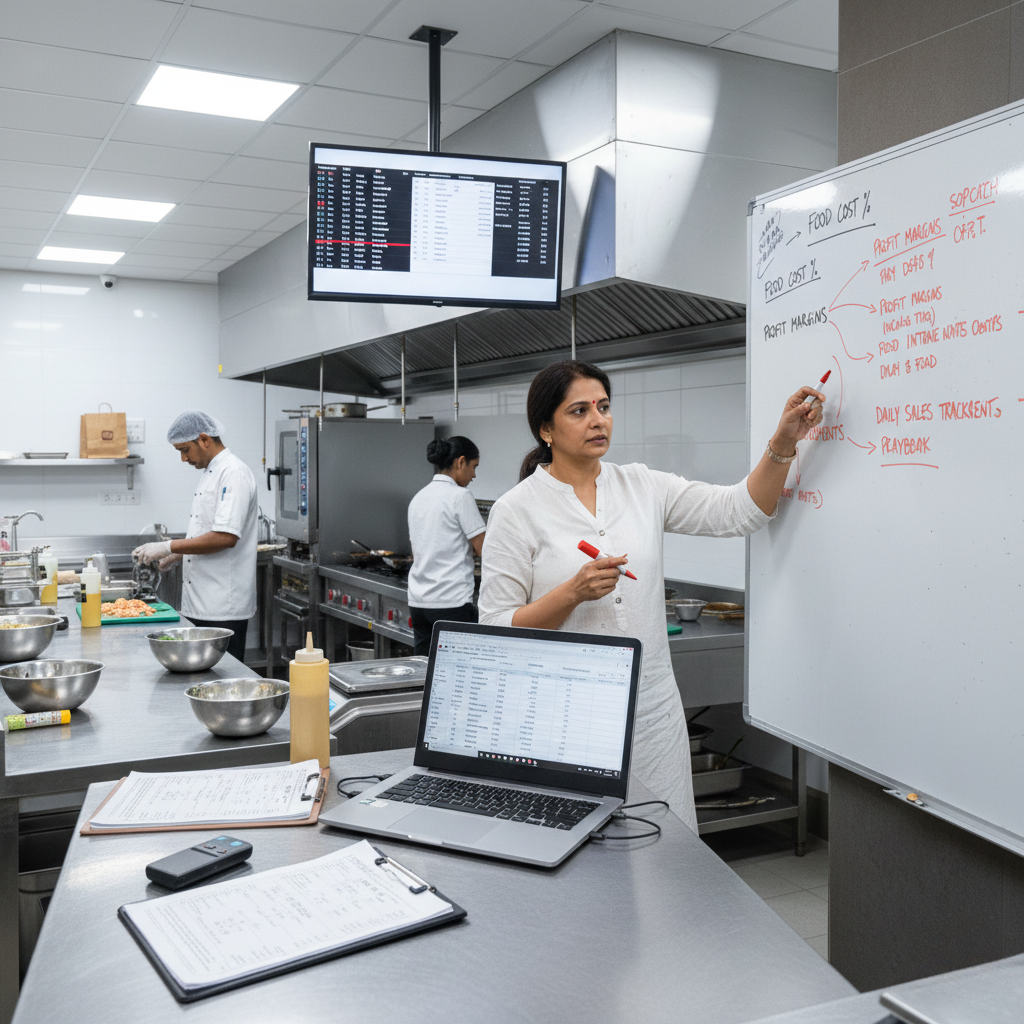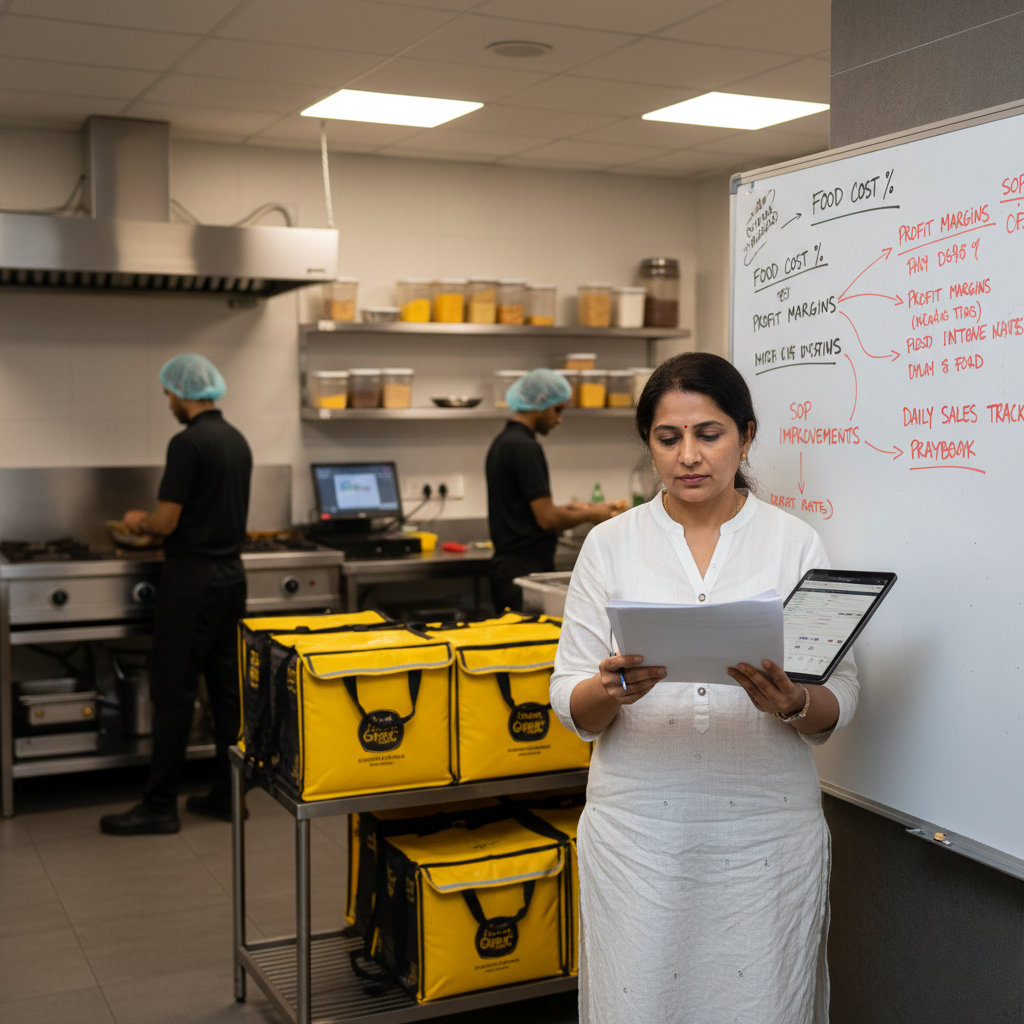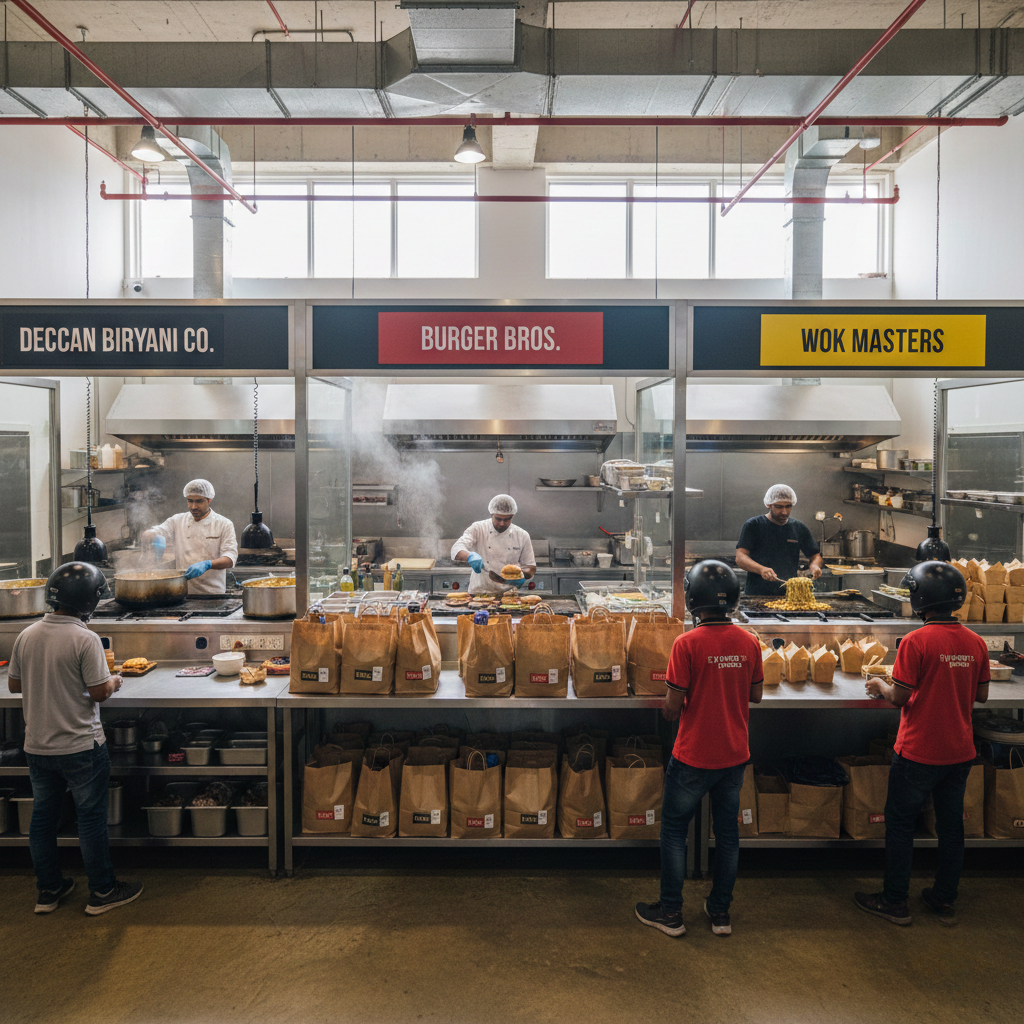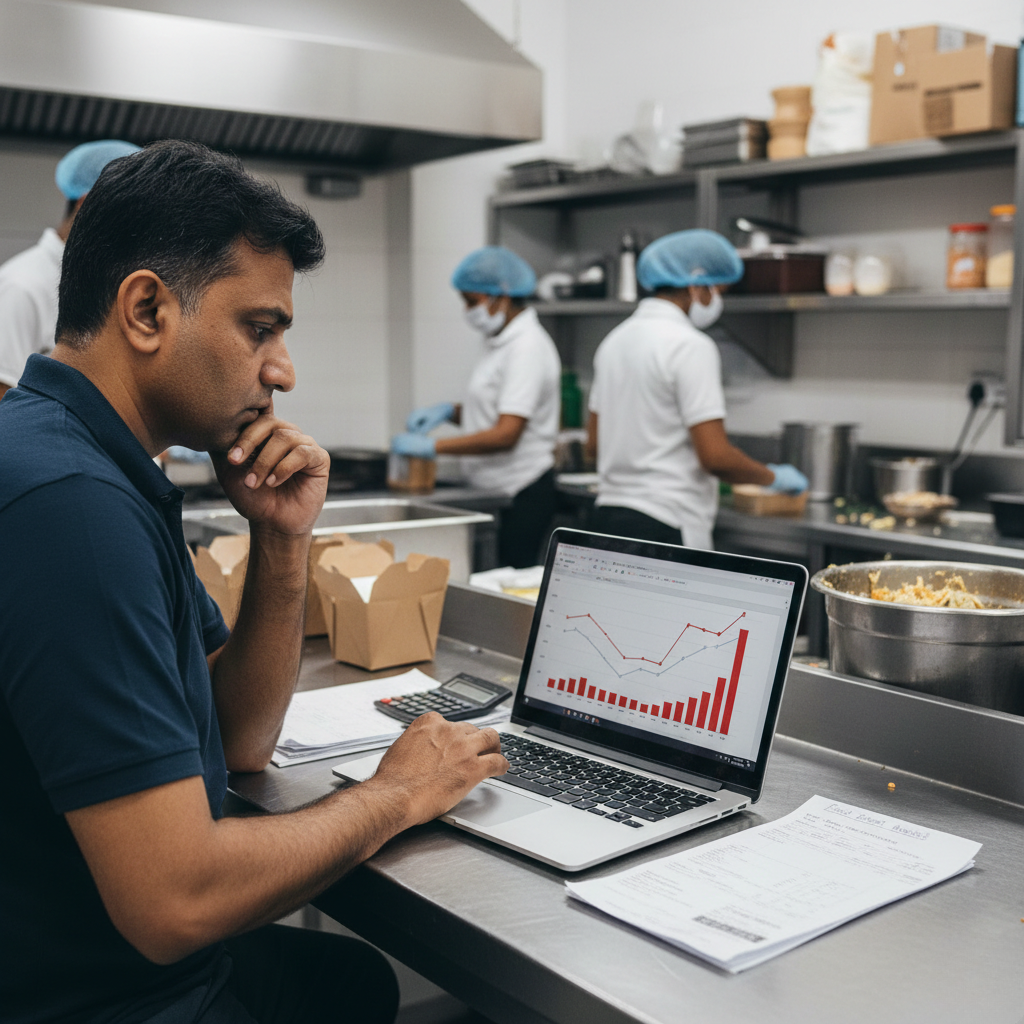
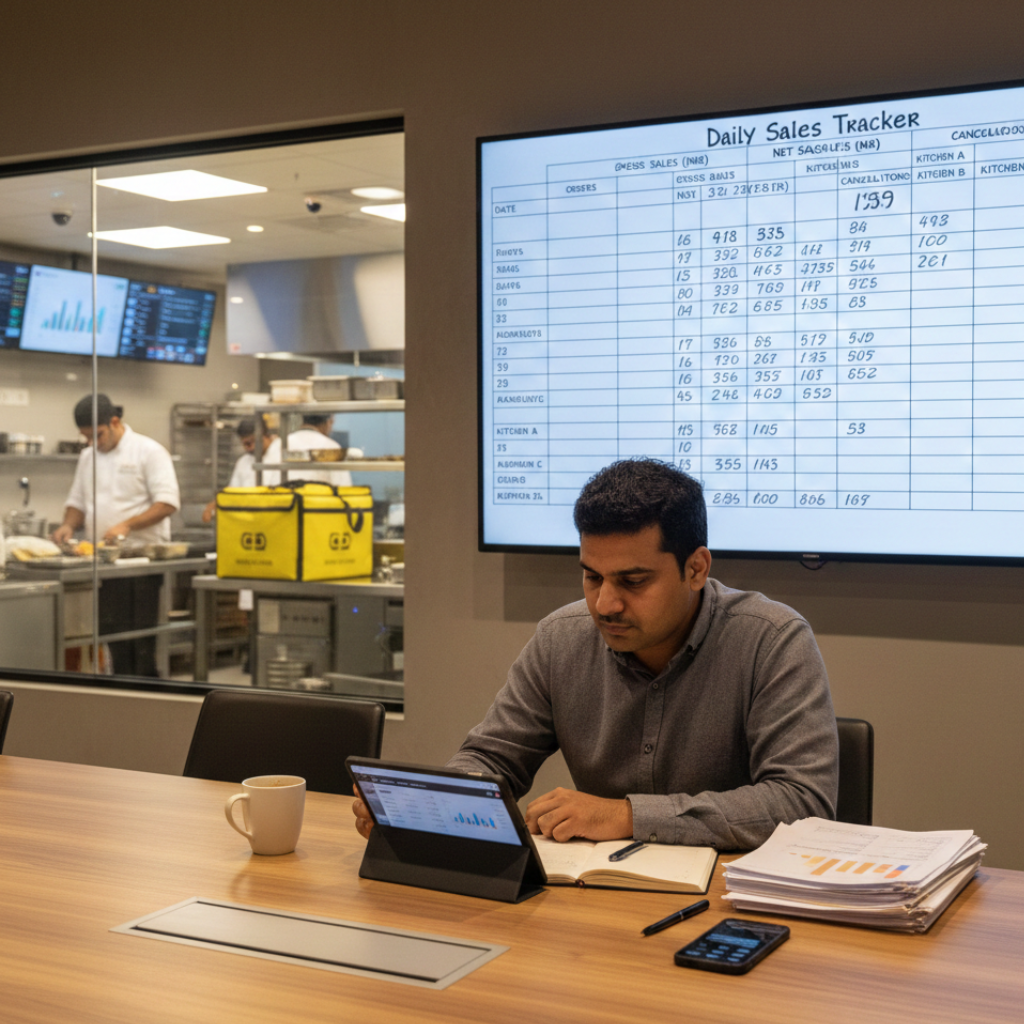
The CKaaS Model in India (Cloud Kitchen as a Service) is not “rent a kitchen and list on Swiggy.” It’s an execution-first operating partnership where a central operator runs infrastructure, SOPs, procurement, staffing discipline, hygiene, packing, dispatch control, and performance dashboards so brands can scale without building ops from scratch. Most cloud kitchen brands fail because operations break before demand stabilises: portion drift, vendor chaos, dispatch delays, packaging failures, and ratings collapse. This guide explains how the CKaaS model works in India, what’s included, how pricing structures typically work, what KPIs matter, how onboarding is done, and how to scale from 1 kitchen to 10+ locations without becoming a refund machine.
Start Here Before You Evaluate the CKaaS Model in India
This article is part of GrowKitchen’s operations and scalability series. If you’re still learning how delivery-first kitchens work, start with: Cloud Kitchen as a Service (CKaaS) and Cloud Kitchen Business in India.
Any CKaaS model must also stay aligned with compliance basics such as FSSAI licensing and hygiene, structured billing + taxation via the GST Network, and workforce compliance where applicable through EPFO and ESIC. If compliance is weak, operations become fragile (fines, shutdown risk, reputation loss).
CKaaS Model India Explained
CKaaS (Cloud Kitchen as a Service) is an operator-led model where kitchen operations are delivered as a managed service. Instead of the brand building a kitchen, hiring an ops team, and discovering mistakes through rating damage, a CKaaS operator provides a ready operating engine: infrastructure, staffing structure, SOPs, procurement discipline, inventory systems, packaging + dispatch controls, and daily performance monitoring.
In simple terms: the brand drives demand and positioning; the operator protects contribution margin, ratings, and repeat orders. In India, that matters because aggregator economics punish inconsistency late dispatch, leakage, cold food, missing items, and poor photos quickly turn into low ranking and higher ad dependency.
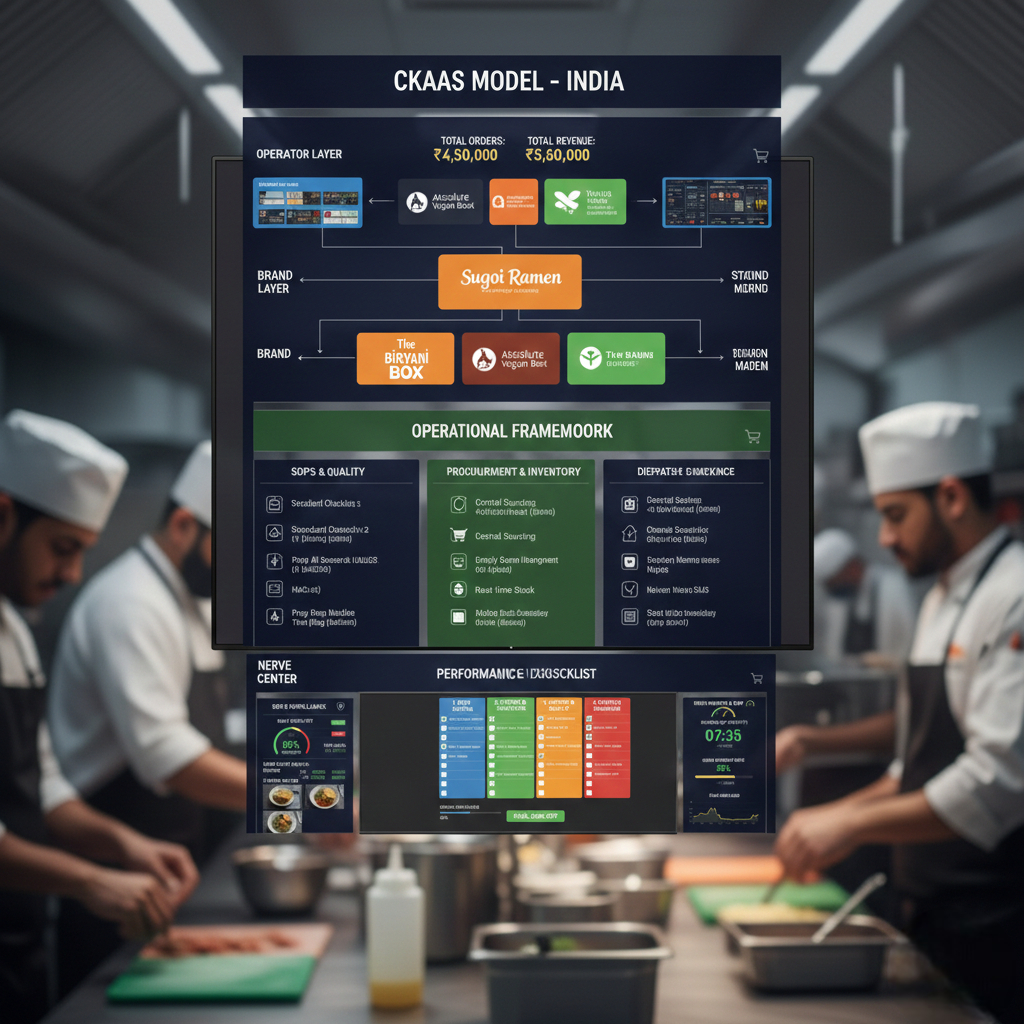
What the CKaaS Model Includes (Real Operator vs Simple Rental)
Not every provider calling themselves CKaaS is actually running an operating system. Many are just giving you a room, some equipment, and a cook. A real CKaaS operator provides control systems that protect quality and unit economics daily.
- Infrastructure readiness: production stations, storage zones, dispatch area, utilities, maintenance.
- Menu engineering: SKU discipline, shared bases, speed-first design, add-on and combo logic.
- Recipe + portion control: recipe cards, gram/ml portions, ladle rules, weigh points for high-cost items.
- Prep planning: batch cycles, yields, labeling, FIFO, cold chain discipline.
- Procurement + vendor control: approved vendor master, quality specs, substitutes, reorder points.
- Inventory discipline: stock movement, wastage log, variance checks, shrinkage controls.
- Packing + dispatch control: packaging SOPs, ticket aging rules, rider handover discipline.
- Hygiene + audits: cleaning schedules, temperature logs, internal audits, corrective actions.
- Performance reporting: food cost, delays, refunds, rating variance, repeat rate.
If you want a strong baseline for process control, cross-check with: Cloud Kitchen Operation Framework and Cloud Kitchen SOP Checklist.
Why the CKaaS Model Works in India
CKaaS works when execution discipline is more valuable than ownership. In India, many founders can market well, but operations quietly destroy growth: portion drift increases food cost, vendor inconsistency changes taste, dispatch delays kill ratings, and refunds become a daily leakage.
CKaaS reduces those risks by centralising operational expertise and standardising execution. It’s especially useful for:
- Chef-led brands that don’t want to build an ops team.
- Influencer/celebrity brands where speed-to-market matters more than kitchen ownership.
- Multi-city expansion where replication and control are the real bottlenecks.
- Brands scaling on Swiggy/Zomato where dispatch + packaging control impact ranking.
If you want to see why uncontrolled expansion fails, read: Why Cloud Kitchens Fail in India.

CKaaS Pricing Models in India: What’s Common
CKaaS pricing varies by city, kitchen size, cuisine complexity, and order volume. But the best models align incentives: operators should earn more when performance improves not only when the brand spends more on ads or discounts.
Common CKaaS pricing structures include:
- Fixed monthly management fee: ops retainer for systems, staffing, audits, and daily control.
- Revenue share: % of net sales; works only if reporting is transparent and refunds are controlled.
- Contribution margin share: best alignment operator benefits only when margins improve.
- Hybrid model: base fee + performance incentives (ratings, refunds, CM/order targets).
- Onboarding fee: SOP setup, menu engineering, vendor onboarding, training, launch playbook.
If you’re planning costs and break-even, pair this with: Cloud Kitchen Setup Cost in India and Cloud Kitchen ROI in India.
Unit Economics in CKaaS: What Improves (and What Can Break)
A strong CKaaS operator can materially improve unit economics by controlling the three biggest silent leakages: portion drift, wastage, and refunds. But CKaaS can also fail if the brand depends on discounting or if the operator lacks SKU-level discipline.
What typically improves under a serious operator:
- Food cost stability: portioning rules + recipe cards + yield tracking reduce drift.
- Lower wastage: FIFO, labeling, batch planning, and par levels reduce expiry losses.
- Better dispatch performance: ticket aging limits + staging reduces late deliveries.
- Lower refund leakage: pack checks and packaging mapping reduce missing/leakage complaints.
The biggest risk: if pricing is not commission-aware, margins collapse under aggregator fees and ads. Keep this strategy ready: How to Reduce Swiggy Commission. For margin fundamentals, use: Cloud Kitchen Profit Margin in India.
CKaaS Onboarding: A Practical 14-Day Go-Live Plan
Great CKaaS operators don’t “launch and pray.” They use a go-live sequence that protects ratings and reduces chaos. Here is a practical onboarding rhythm you can insist on:
- Days 1–2: menu finalization, SKU trimming, pricing logic, packaging mapping.
- Days 3–5: recipe cards + BOM + portion rules, batch prep plan, yield benchmarks.
- Days 6–7: vendor onboarding, substitutes, storage rules, RM master setup.
- Days 8–10: staff training by station, daily tests, mock service runs.
- Days 11–12: aggregator listing readiness (photos, descriptions, add-ons, combos).
- Days 13–14: soft launch (limited radius + limited SKUs) with strict QC and daily review.
For official onboarding references, use: Swiggy Partner and Zomato Partner.
Scaling With CKaaS: Replication Without Taste Drift
The real promise of CKaaS is replication. But replication only works if the system is stable and audited. Without audits, every location becomes a new “personality” and brand consistency dies.
A clean scaling approach uses launch waves and performance gates:
- Wave 1 (Kitchen #2): replication test. Same menu, same SOPs. Prove copyability.
- Wave 2 (#3–#4): strengthen vendor redundancy, audits, and training systems.
- Wave 3 (#5–#7): introduce centralized prep/hub components only if menu supports it.
- Wave 4 (#8–#10+): optimize network radius and dispatch points without breaking SOPs.
To design expansion properly, use: Cloud Kitchen Expansion Strategy in India and How to Scale Cloud Kitchens.
KPIs to Track in a CKaaS Partnership
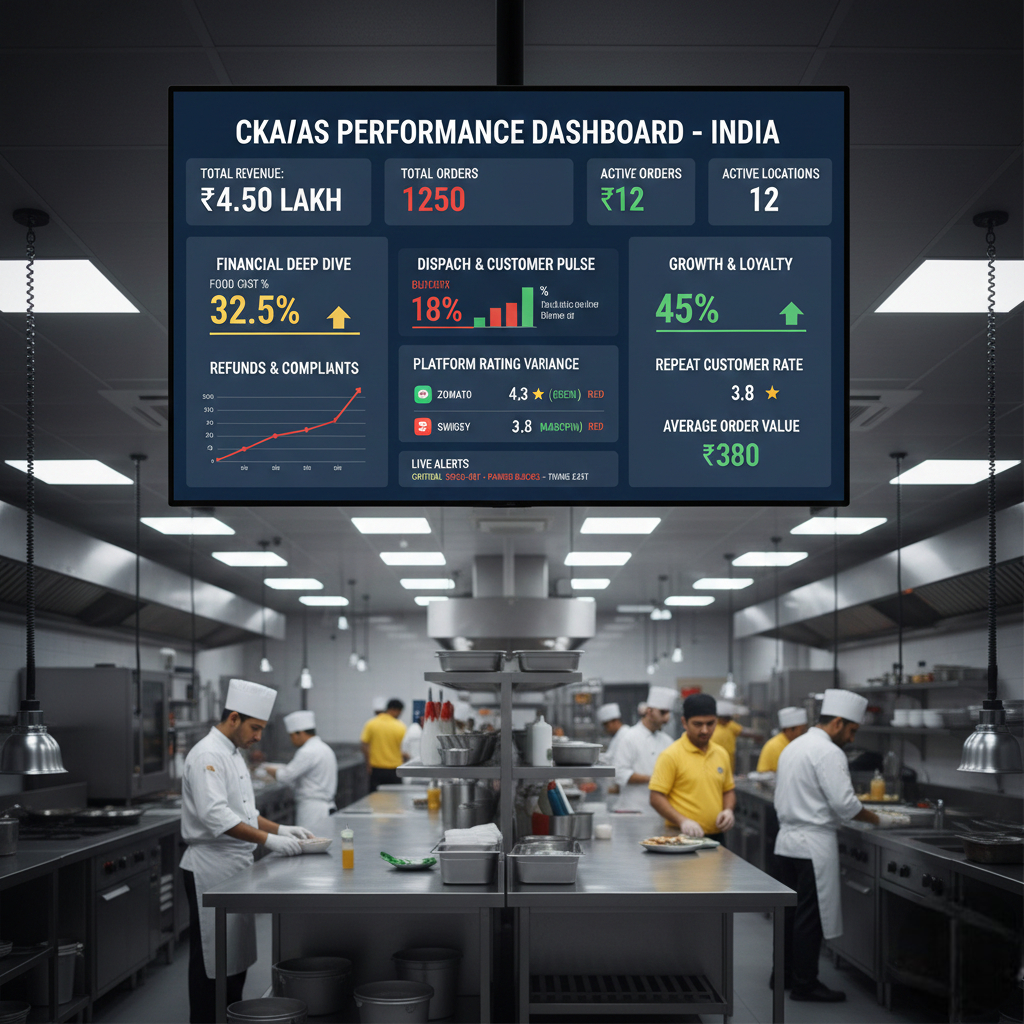
If a CKaaS operator cannot show you these KPIs every week, the model becomes “trust-based” instead of system-based. Track KPI trends, not just single numbers.
- Contribution margin per order (by SKU + by channel)
- Food cost % overall + weekly drift on top SKUs
- Dispatch delay % during peaks + average ticket aging
- Refund/complaint rate and top reasons (missing, cold, leakage, late)
- Rating variance (stability matters more than one good week)
- Repeat rate (week 1 → week 4 cohort retention)
- Stock variance (purchased vs consumed vs expected)
For deeper operations KPIs, reference: Cloud Kitchen Operation Framework.
Red Flags: When CKaaS Becomes a Trap
CKaaS becomes a trap when the provider sells convenience instead of control. If they can’t show SOPs, audits, dashboards, and SKU-level costing, you’re not buying an operating system you’re renting uncertainty.
- No SKU-level costing: pricing becomes guesswork; margins drift silently.
- No portion system: food cost creeps up without anyone noticing.
- No dispatch rules: late deliveries rise; ratings fall; ads increase to compensate.
- No audits: problems are discovered only after damage is visible.
- No accountability: “staff issue” becomes the default excuse for everything.
If you want to see the common failure mechanics, read: Why Cloud Kitchens Fail in India.
Final Thoughts: CKaaS Model India
The CKaaS model in India is one of the fastest ways for food brands to scale when it is truly system-driven. The best operators protect margins with portion control, protect ratings with packaging + dispatch discipline, and protect scalability with SOP replication and audits.
If you’re evaluating CKaaS, don’t ask only “how much is the fee?” Ask “what systems will run my brand every day?” Because in cloud kitchens, execution is the business.
FAQs: CKaaS Model India
What does CKaaS mean in India?
CKaaS means Cloud Kitchen as a Service an operator-led model where infrastructure, SOPs, procurement, staffing, hygiene, packing, dispatch, and performance monitoring are delivered as a managed service for brands.
How is CKaaS different from a kitchen rental?
A rental gives space and equipment. CKaaS provides an operating system: SOPs, inventory control, training, audits, packaging rules, dispatch discipline, and KPI reporting.
Is CKaaS profitable for brands?
It can be highly profitable if the operator controls portioning, wastage, refunds, and dispatch delays, and if pricing is commission-aware. Without those systems, scale increases revenue but not profit.
What should be included in a CKaaS agreement?
Clear deliverables, KPI definitions, audit frequency, SOP ownership, reporting cadence, escalation rules, and how performance incentives or penalties work.