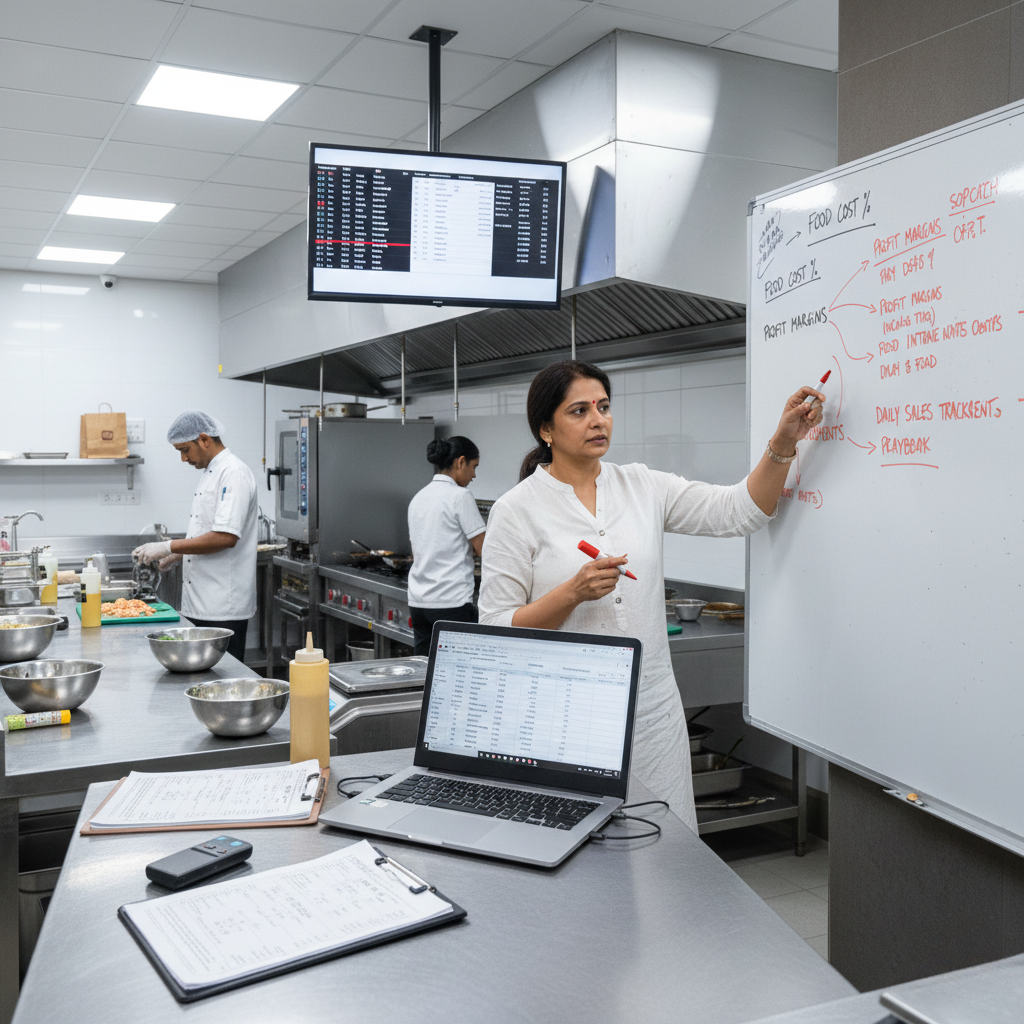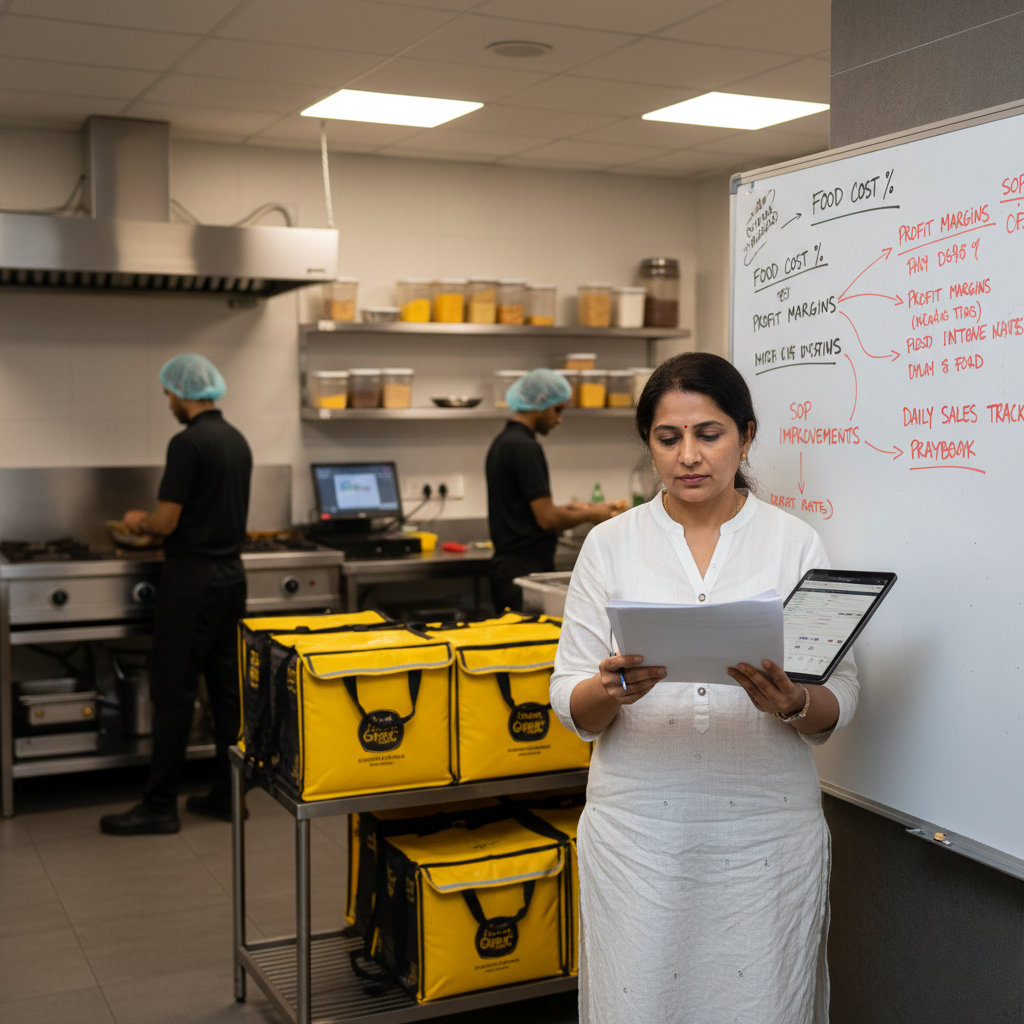
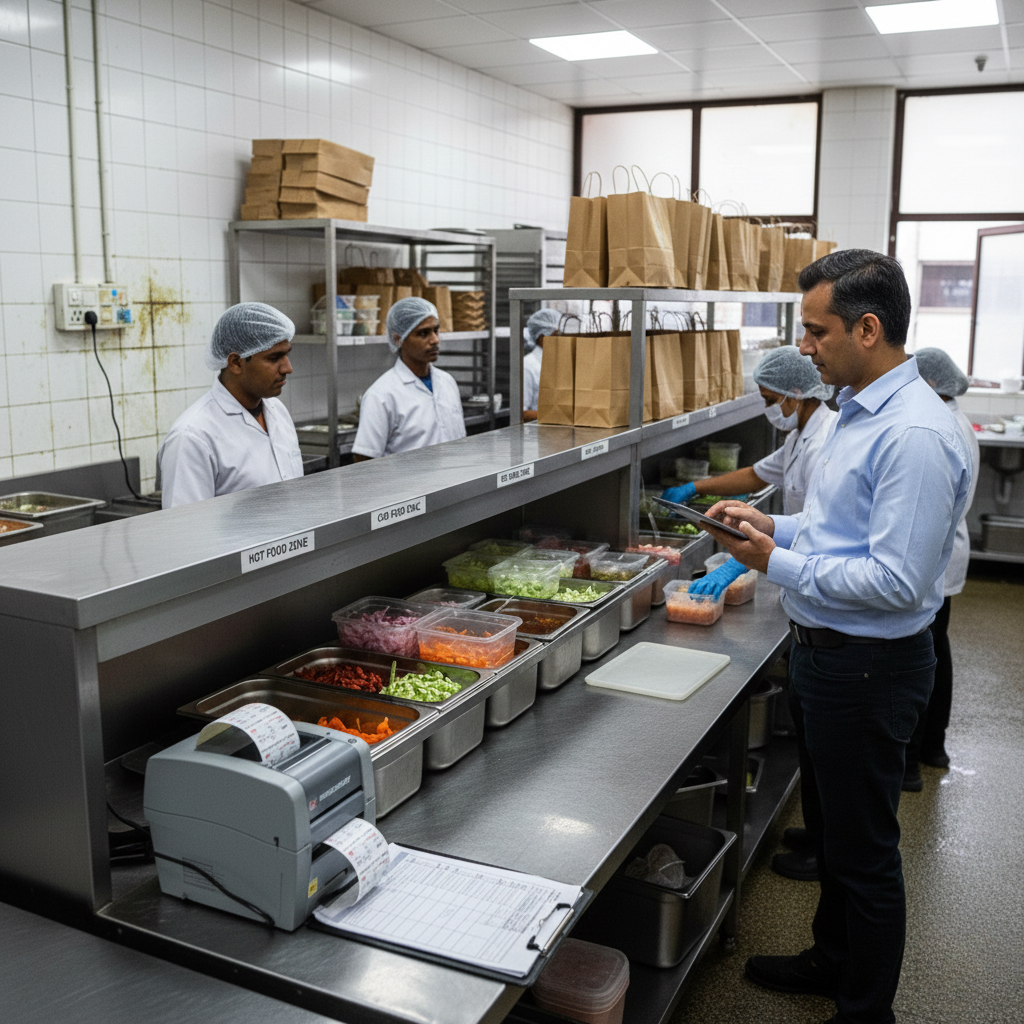
Hiring a cloud kitchen consultant is a strategic decision that can directly influence profitability, operational stability, and long-term scalability. However, not all consultants bring structured systems, measurable frameworks, or data-driven execution models. This guide explains what founders and operators should evaluate before hiring a cloud kitchen consultant, including operational depth, financial clarity, execution systems, and scalability experience. Choosing the right consultant is not about credentials alone it is about whether they can install repeatable systems that drive sustainable growth.
What Should You Look for in a Cloud Kitchen Consultant?
The cloud kitchen industry has expanded rapidly across India, driven by aggregator platforms, delivery-first models, and lower capital requirements compared to dine-in restaurants. However, while launching a kitchen has become easier, building a profitable and scalable operation remains complex. Many founders turn to consultants to accelerate growth or fix operational inefficiencies. The challenge lies in selecting a consultant who delivers structured value rather than surface-level advice.
A reliable consultant should not simply suggest marketing campaigns or recommend menu additions. They should analyze unit economics, identify leakage patterns, install operational systems, and create measurable frameworks that stabilize profitability. Before evaluating consultants, founders should understand the financial and operational foundations of a delivery-first business. You can review core profitability principles in Cloud Kitchen Profitability Consultant in India and explore recurring operational pitfalls through Common Operational Mistakes in Cloud Kitchens .
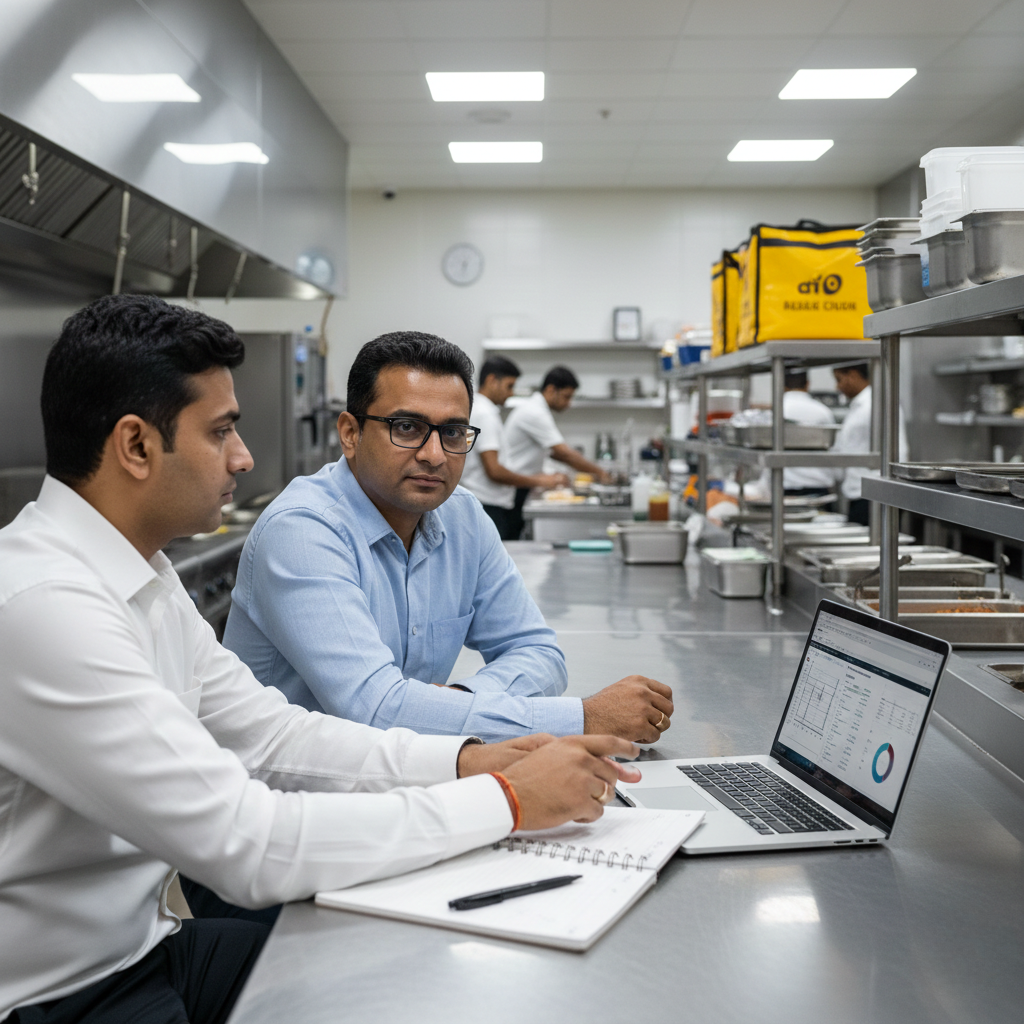
Operational Experience Beyond Theory
The first and most important factor to evaluate is operational experience. A credible cloud kitchen consultant should have hands-on exposure to managing delivery-first kitchens, handling aggregator dynamics, supervising dispatch systems, and maintaining margin stability under volume pressure. Consultants who rely solely on theoretical frameworks without operational execution experience often overlook ground realities such as rush-hour portion drift, dispatch bottlenecks, or vendor inconsistencies.
Experience across multiple cuisines and locations is particularly valuable. Multi-location exposure demonstrates an understanding of procurement variability, staff inconsistency, and rating stability challenges. If a consultant has experience designing scalable operating models, it significantly reduces execution risk during expansion.
Clear Understanding of Unit Economics
A cloud kitchen consultant must possess deep clarity around contribution margin per order. Without unit economics visibility, scaling simply amplifies losses. Consultants should analyze food cost percentage, commission structure, packaging cost, discount burn, and refund leakage before recommending expansion.
Understanding aggregator commission dynamics is essential. Founders should ensure the consultant can evaluate commission impact using frameworks similar to Aggregator Commission Impact in India . Additionally, familiarity with policy structures from platforms such as Swiggy Refund Policy and Zomato Online Ordering Terms demonstrates platform literacy.
Ability to Install Structured Operational Systems
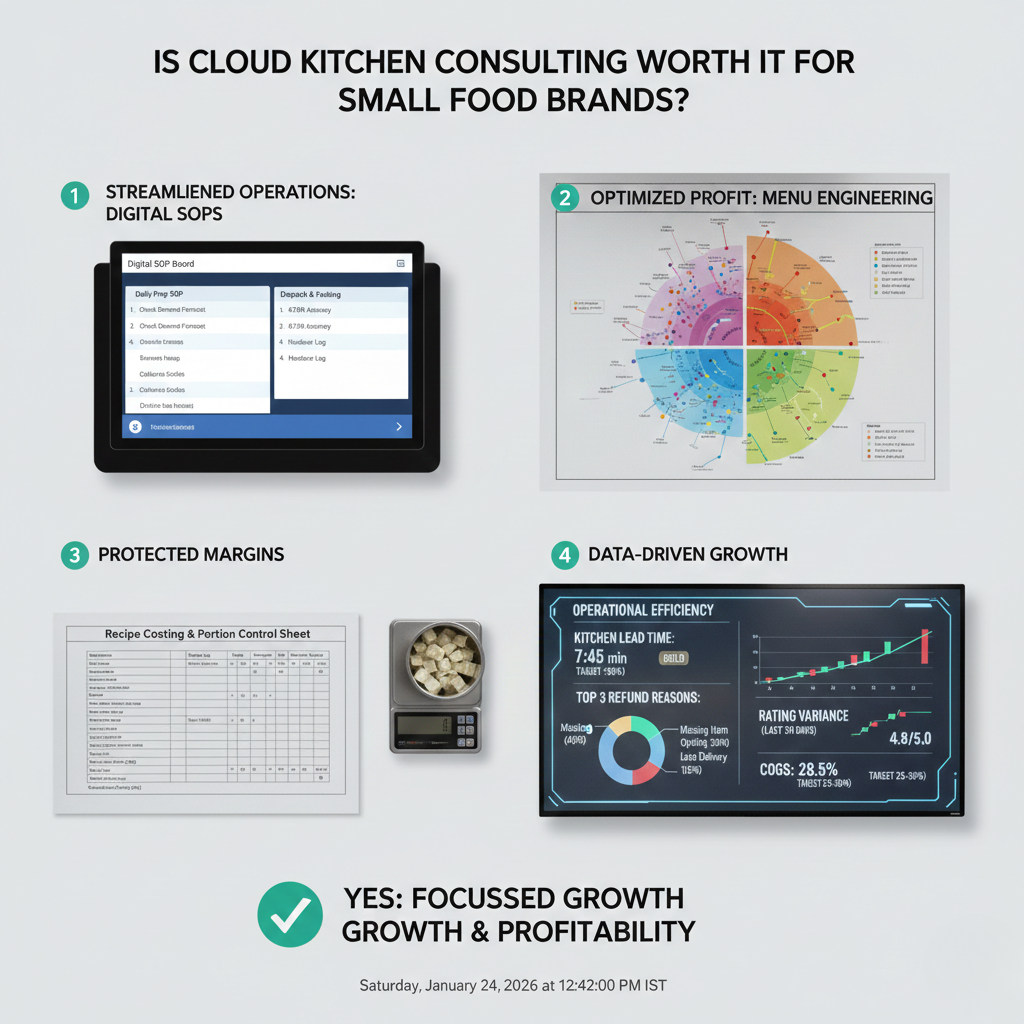
Strong consultants focus on system installation rather than temporary fixes. This includes structured SOPs, dispatch gates, role-based execution models, procurement checklists, and structured weekly review loops. A consultant who cannot demonstrate documented SOP frameworks may struggle to create repeatable outcomes.
Dispatch errors and refund spikes are common operational challenges. A qualified consultant should be able to implement packing controls similar to those described in Cloud Kitchen Dispatch SOP . System maturity is a better indicator of consultant value than presentation slides.
Role-Based Execution and Team Structuring
Many kitchens suffer from ambiguous role ownership, especially during scaling. A capable consultant designs clear role-based execution systems where prep, cooking, packing, and dispatch have defined accountability. This reduces operational variability and improves execution stability.
Founders should assess whether the consultant can design role clarity structures similar to frameworks explained in Role-Based Kitchen Operations Explained .
Scalability and Multi-Location Experience
If expansion is the objective, the consultant must demonstrate experience with system replication. Scaling requires stabilizing outcomes in one unit before replicating systems in another. Consultants should provide documented frameworks for structured expansion.
Expansion methodology can be evaluated against Cloud Kitchen Expansion Strategy in India . Without replication fidelity, expansion often fragments ratings and profitability.
Data-Driven Review and Accountability Frameworks
Consultants should establish measurable KPIs and recurring review cycles. Weekly tracking of refunds, cancellation reasons, dispatch time variance, rating trends, and SKU-level margin drift is essential.
If growth is currently destabilizing operations, founders should ensure the consultant can diagnose patterns similar to those outlined in When Growth Is Hurting Your Cloud Kitchen Operations .
Conclusion: Choose a Consultant Who Builds Systems, Not Dependence
The right cloud kitchen consultant should build independence, not long-term dependency. Their role is to install operational systems, create financial clarity, define execution discipline, and prepare the business for stable scaling.
When evaluating consultants, founders should prioritize operational depth, unit economics clarity, dispatch control systems, procurement discipline, role ownership models, and measurable review structures. Sustainable scaling depends on system maturity, not advisory language.
To explore structured operating frameworks, visit GrowKitchen. Operating brands such as Fruut and GreenSalad follow system-led scaling principles.
FAQs: Hiring a Cloud Kitchen Consultant
How do I verify a consultant’s experience?
Request case studies, operational frameworks, and measurable impact metrics.
Should a consultant focus on marketing first?
No. Profitability and operational stability should be stabilized before aggressive marketing.
Is multi-location experience important?
Yes. Replication experience significantly reduces expansion risk.