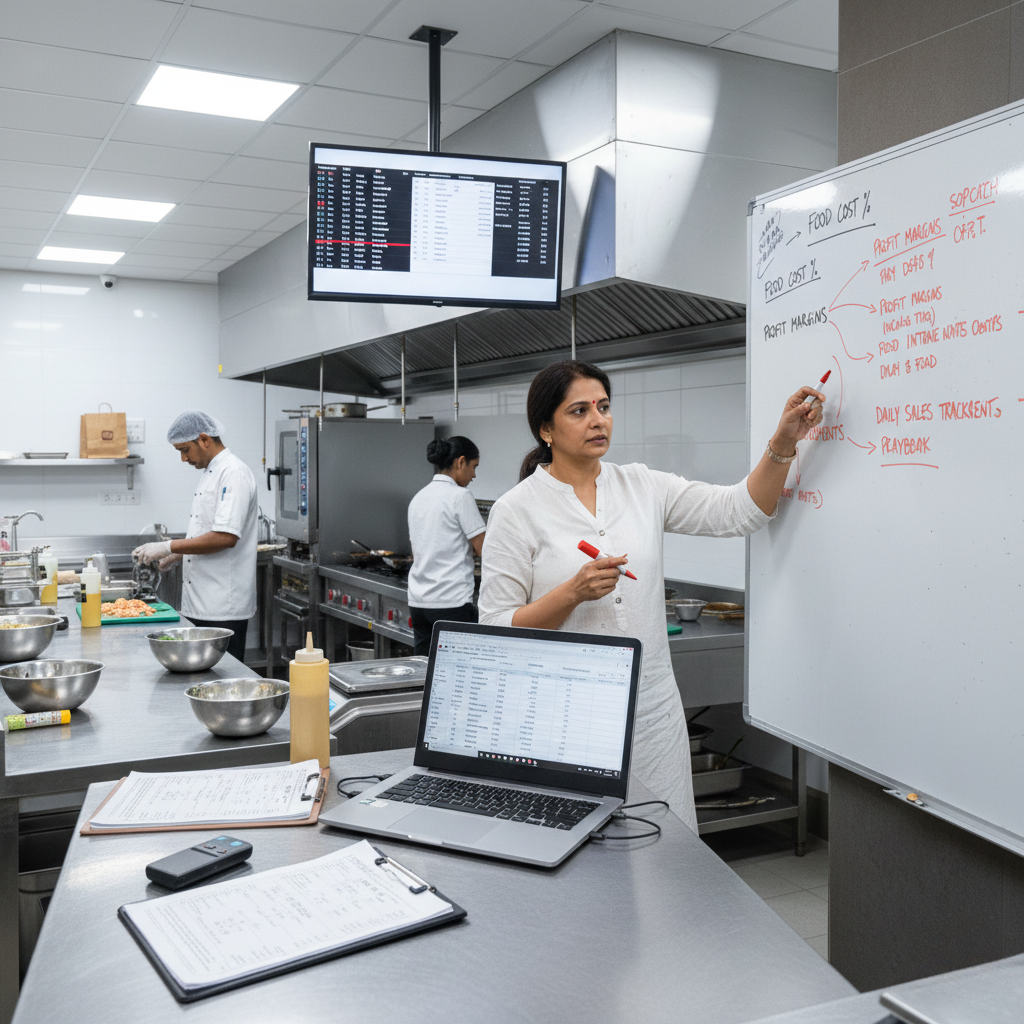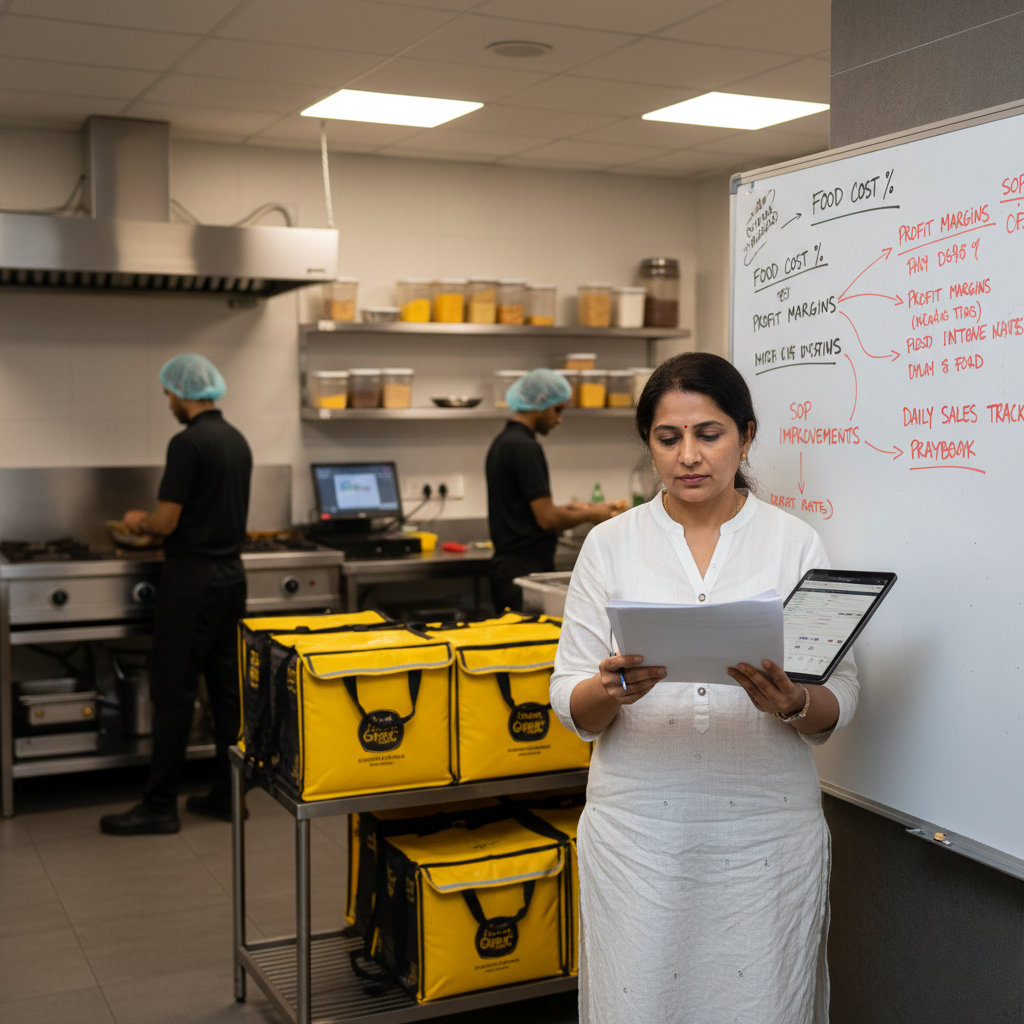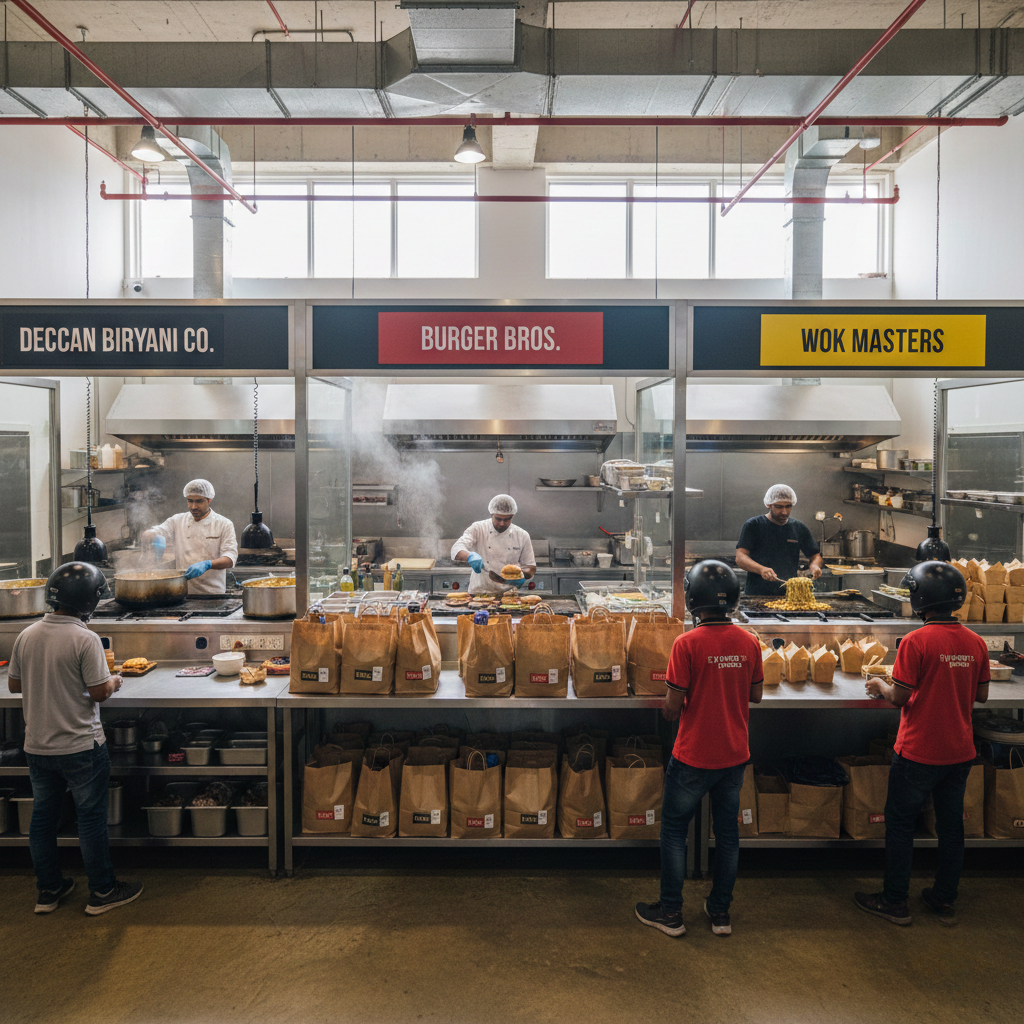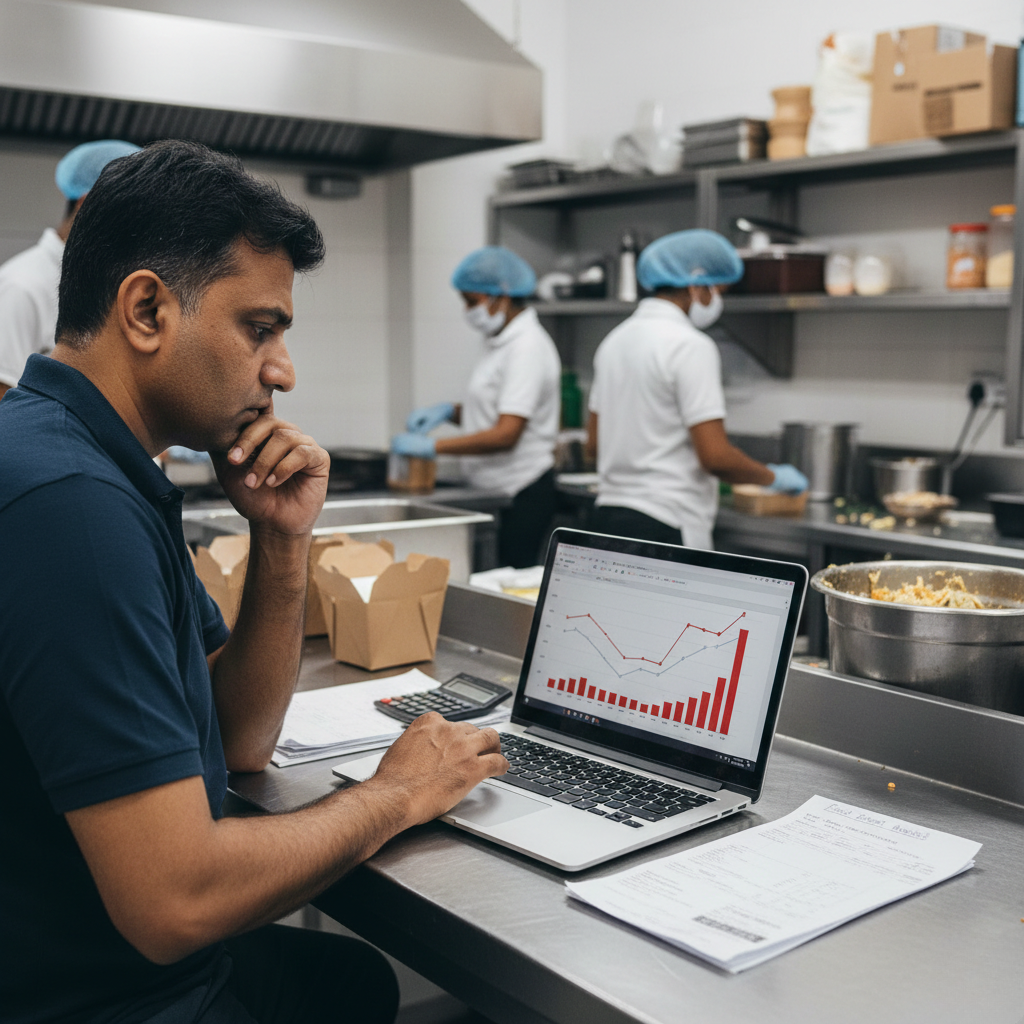
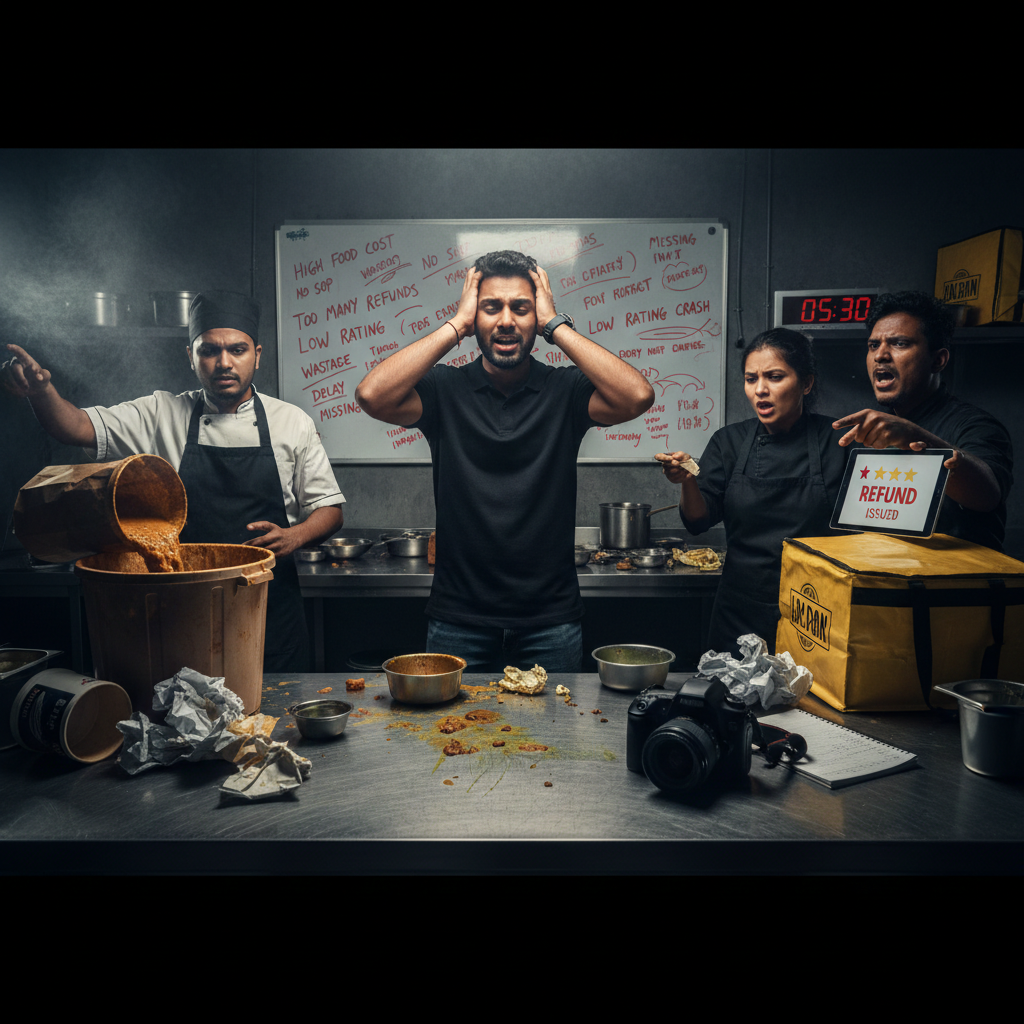
Why Most cloud kitchens fail because the food is bad ? They fail because execution is unmanaged. Founders try to solve operational problems with discounts, ads, and “more menu,” but the real leaks are inside: portion drift, stock variance, late dispatch, packing errors, inconsistent prep, and zero KPI discipline. Professional consulting fixes the root system so growth becomes sustainable instead of expensive. This guide explains why cloud kitchens fail without professional consulting, what goes wrong behind the scenes, and what an operator-style consulting engagement actually changes in 30–60 days.
Start Here Before You Diagnose “Failure” in a Cloud Kitchen
This article is part of GrowKitchen’s operations and profitability series. If you’re new to delivery-first fundamentals, start with: Cloud Kitchen Business in India.
Failure is often triggered by weak compliance + weak documentation. Make sure your basics are aligned with FSSAI hygiene and licensing and structured billing via the GST Network. When compliance is weak, operations become fragile (fines, shutdown risk, reputation loss).
Why Most Cloud Kitchens Fail Without Professional Consulting
A cloud kitchen can look “busy” and still be failing. Orders might come in, but profit doesn’t show up, ratings become unstable, refunds rise, and staff turnover increases. This is the most dangerous stage because founders assume the problem is marketing so they spend more on ads and discounts.
Professional consulting prevents this spiral by installing an operating system: SOPs, costing discipline, packaging and dispatch controls, inventory structure, and KPI tracking. Without that, founders run kitchens through memory and WhatsApp until the system collapses.

The #1 Reason Cloud Kitchens Fail: “Invisible Leaks”
Most cloud kitchen failures are not one big event. They are 8–12 small leaks happening daily. Each leak looks small in isolation, but together they kill contribution margin and ratings. Consulting matters because it forces you to measure and control what founders usually ignore.
- Portion drift: small over-portioning across 200 orders becomes a monthly loss.
- Packaging mistakes: spillage, sogginess, missing add-ons → refunds + low ratings.
- Late dispatch: peak-hour chaos → rider waiting → order cancellations and bad ETA.
- Stock variance: overbuying, expiry, staff pilferage, weak FIFO.
- Menu bloat: too many SKUs → slow prep → inconsistent taste → poor repeat rate.
If you want a hard breakdown of failure patterns, read: Why Cloud Kitchens Fail in India.
The Failure Cycle: How Kitchens Die in 5 Predictable Steps
In India, the cloud kitchen failure cycle is surprisingly consistent. Once the cycle begins, the kitchen either installs systems quickly or it slowly bleeds out through discounts and refunds.
- Founder runs everything: taste, prep, hiring, vendor orders, and customer escalations.
- Orders increase: but SOPs and station discipline do not increase with demand.
- Ratings become unstable: late dispatch, missing items, inconsistent taste.
- Discount dependence starts: to “maintain orders,” margin collapses further.
- Burnout + breakdown: high staff turnover, vendor issues, customer complaints, and cash stress.
A consultant breaks this cycle by building structure first, then scaling demand safely.
What Professional Consulting Actually Fixes
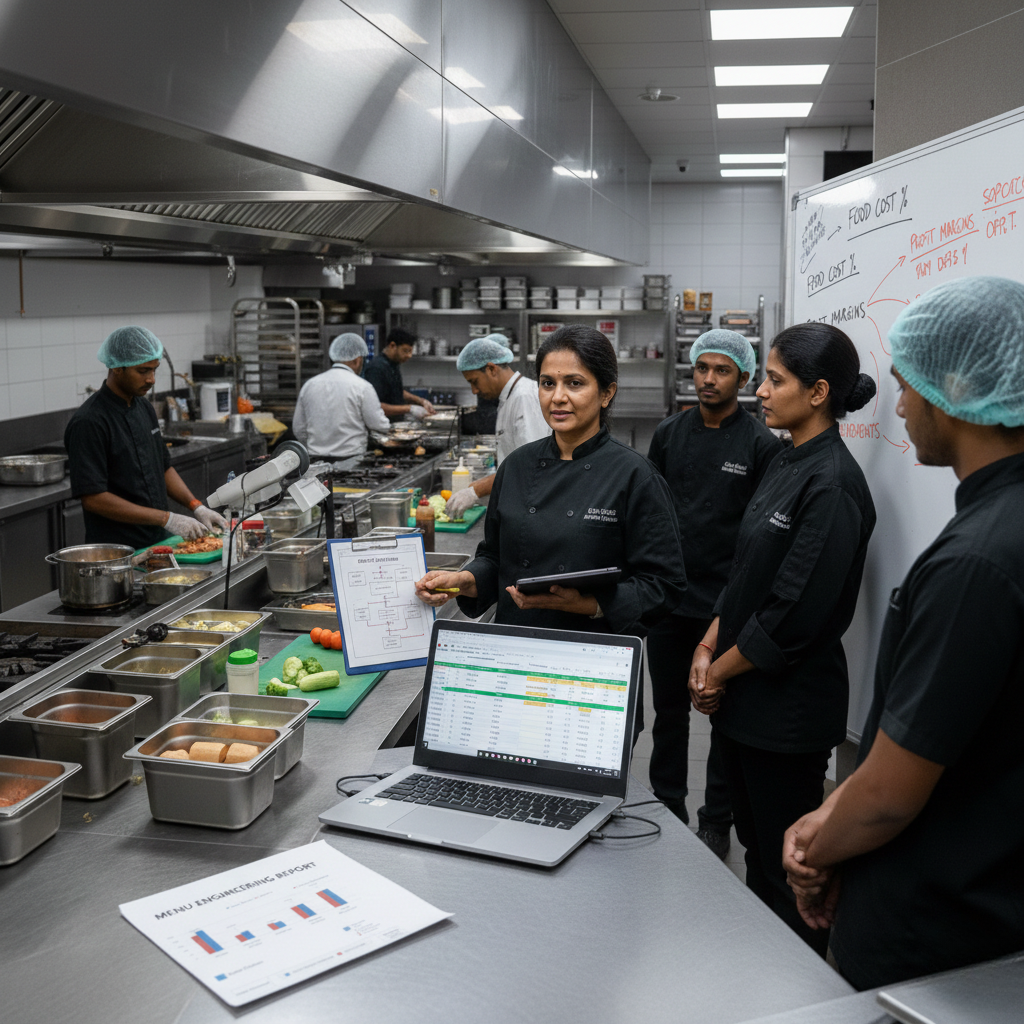
The best consulting is not motivational. It is mechanical. It installs controls that improve output even when the founder is absent. Here are the most common fixes that deliver visible impact.
- Menu engineering: reduces SKUs, increases prep speed, improves repeat ordering and AOV.
- Recipe costing + CM targets: fixes pricing, discounts, and profitability per order.
- Station SOPs: makes production repeatable across staff shifts.
- Packing + dispatch control: improves ratings by reducing spillage, late delivery, and missing items.
- Inventory discipline: par levels, FIFO, yield tracking, variance checks.
- KPI dashboard: catches drift early before it becomes refunds and rating collapse.
For the SOP base that most kitchens skip, use: Cloud Kitchen SOP Checklist.
Common Founder Mistakes When They Skip Consulting
When founders don’t have an operator framework, they try “surface-level fixes” that look logical but worsen the problem. These mistakes are extremely common in Swiggy/Zomato-first kitchens.
- Running ads too early: demand rises before SOPs exist → ratings crash faster.
- Adding more SKUs: complexity increases, execution slows, quality becomes inconsistent.
- Discounting to grow: contribution margin collapses → cash stress becomes permanent.
- No portion tools: staff over-portions “to be safe” → food cost spikes.
- Inventory as memory: reordering is emotional → expiry and shortages become routine.
If you’re stuck in commission + discount pressure, study: How to Reduce Swiggy Commission and margin fundamentals here: Cloud Kitchen Profit Margin in India.
Metrics That Reveal Failure Early (Before It Shows in Sales)
Most kitchens track revenue and think they are “doing fine.” Real operators track early-warning metrics. Consulting installs these metrics and makes them non-negotiable in weekly reviews.
- Contribution margin per order (SKU-wise + platform-wise)
- Refund rate and top complaint reasons (missing, leakage, cold, late)
- Late dispatch % during peak hours
- Food cost % weekly (with portion checks)
- Stock variance weekly (purchased vs consumed vs expected)
- Rating variance (stability beats one good week)
- Repeat rate (week 1 → week 4 cohort retention)
To build the operating structure behind these metrics, connect it with: Cloud Kitchen Operations Framework.
External Standards Kitchens Must Align With
Professional consulting also ensures your systems don’t break compliance. These are external references every serious kitchen should align with.
What To Do If You’re Already Struggling
If your kitchen is already facing unstable ratings, refunds, and discount dependence, don’t try to “out-market” the problem. Fix the system first. The simplest rescue plan is:
- Freeze the menu: cut low-selling SKUs and stabilize production speed.
- Install portion controls: scoops, ladles, weigh points for high-cost inputs.
- Fix packing: redesign packaging for leaks and sogginess; introduce pack-check steps.
- Run weekly audits: food cost %, stock variance, refund reasons, dispatch delays.
- Scale demand only after stability: ads and offers come after SOP discipline.
If you’re planning to scale after stabilizing, use: How to Scale Cloud Kitchens.
Final Thoughts: Why Kitchens Fail Without Consulting
Professional consulting isn’t about fancy strategy. It’s about installing systems that remove chaos. When SOPs, costing discipline, inventory control, and dispatch checks become daily habits, the kitchen becomes predictable. Predictability is what creates profit, ratings stability, and repeat demand.
If you feel “orders are coming but profit isn’t,” or “ratings are random,” it’s not bad luck. It’s missing structure. Fix the structure, and the kitchen becomes scalable.
FAQs: Cloud Kitchen Consulting & Failure
Do cloud kitchens fail mostly due to marketing?
No. Marketing may be weak, but most failures come from operations: portion control, dispatch delays, refunds, and inventory leakage.
Can discounts save a failing cloud kitchen?
Discounts can temporarily increase orders but usually worsen margins and attract low-loyalty customers. Systems must be fixed first.
What is the biggest early-warning sign of failure?
Rating instability and rising refunds. These appear before revenue collapses and usually indicate SOP and packing/dispatch issues.
What should I build first: SOPs or ads?
SOPs first. Ads amplify both good execution and bad execution. Without SOPs, ads accelerate failure.
- Cloud Kitchen Business in India
- Cloud Kitchen SOP Checklist
- Cloud Kitchen Profit Margin in India
- Cloud Kitchen Setup Cost in India
- Cloud Kitchen Operations Framework
- How to Reduce Swiggy Commission
- How to Scale Cloud Kitchens
- Why Cloud Kitchens Fail in India
- Cloud Kitchen Consultant in India
- CKaaS Explained