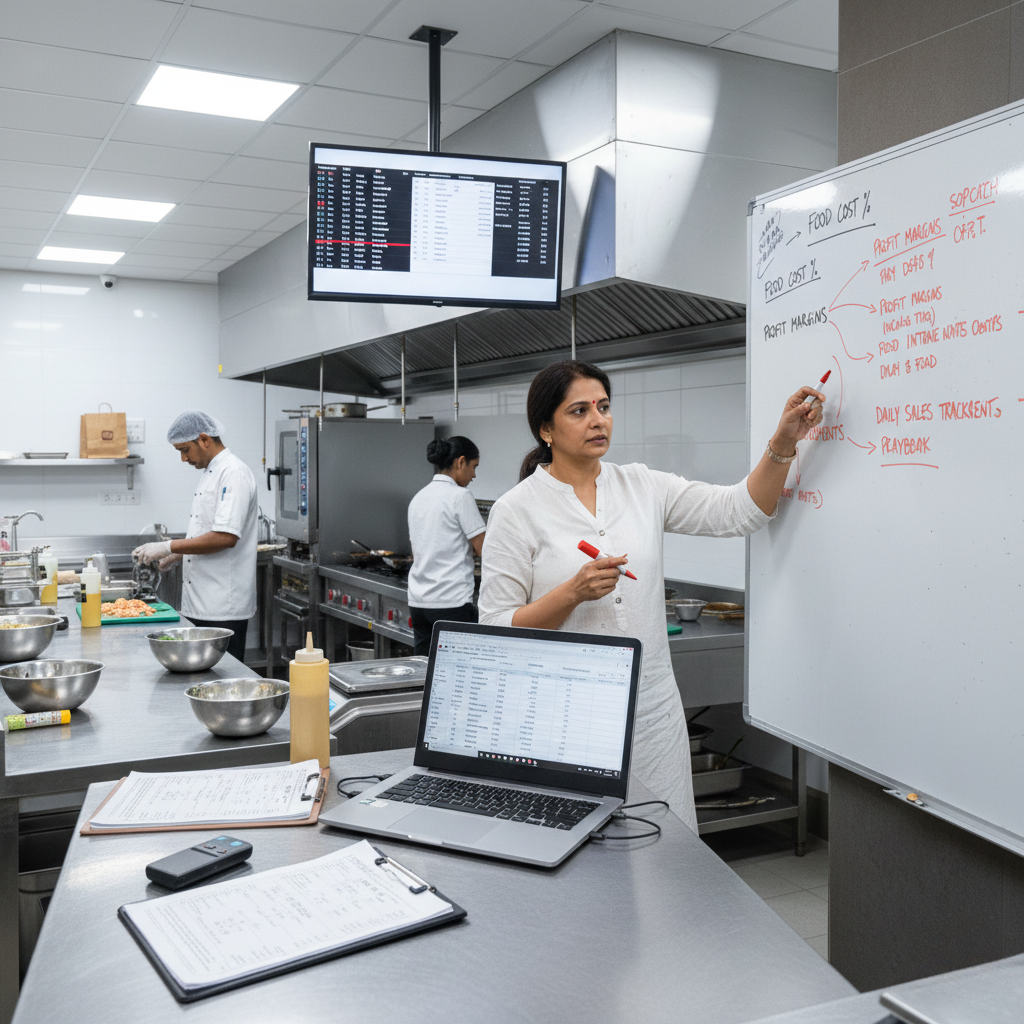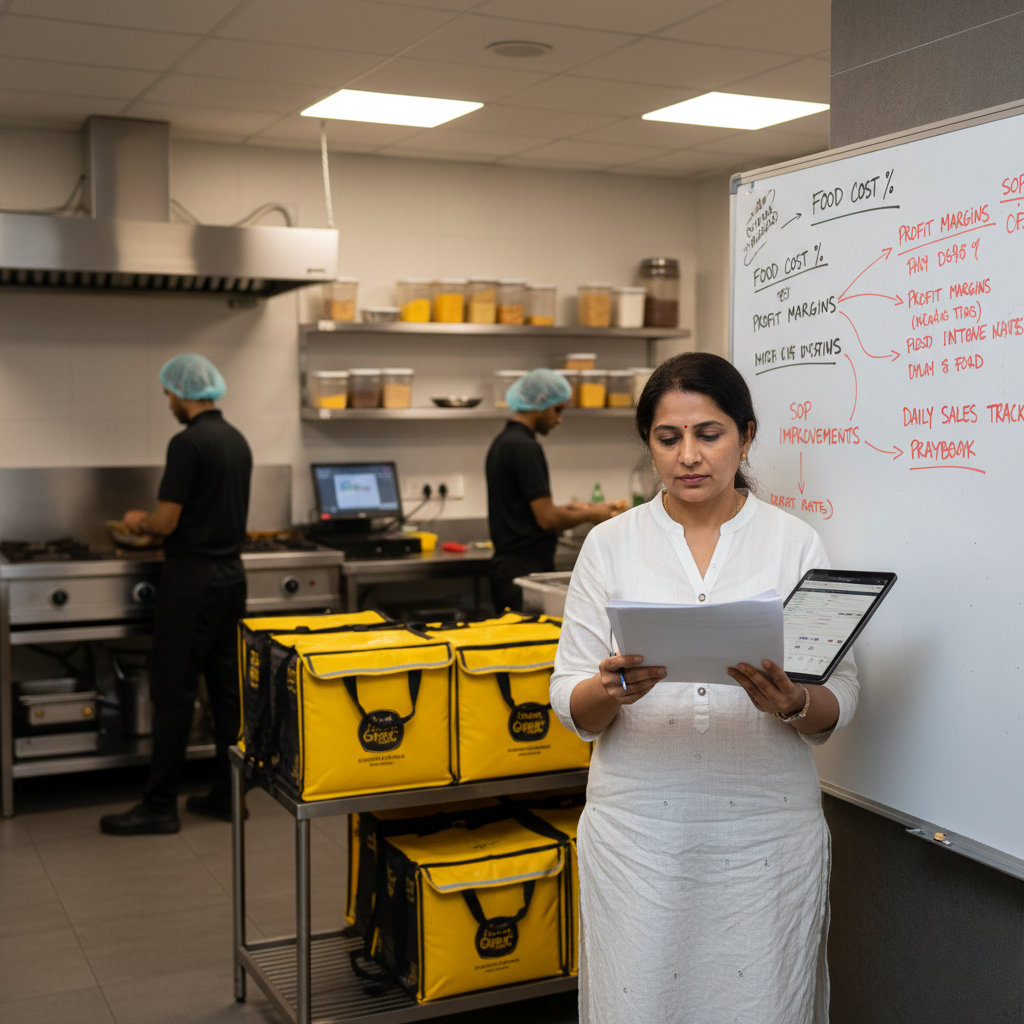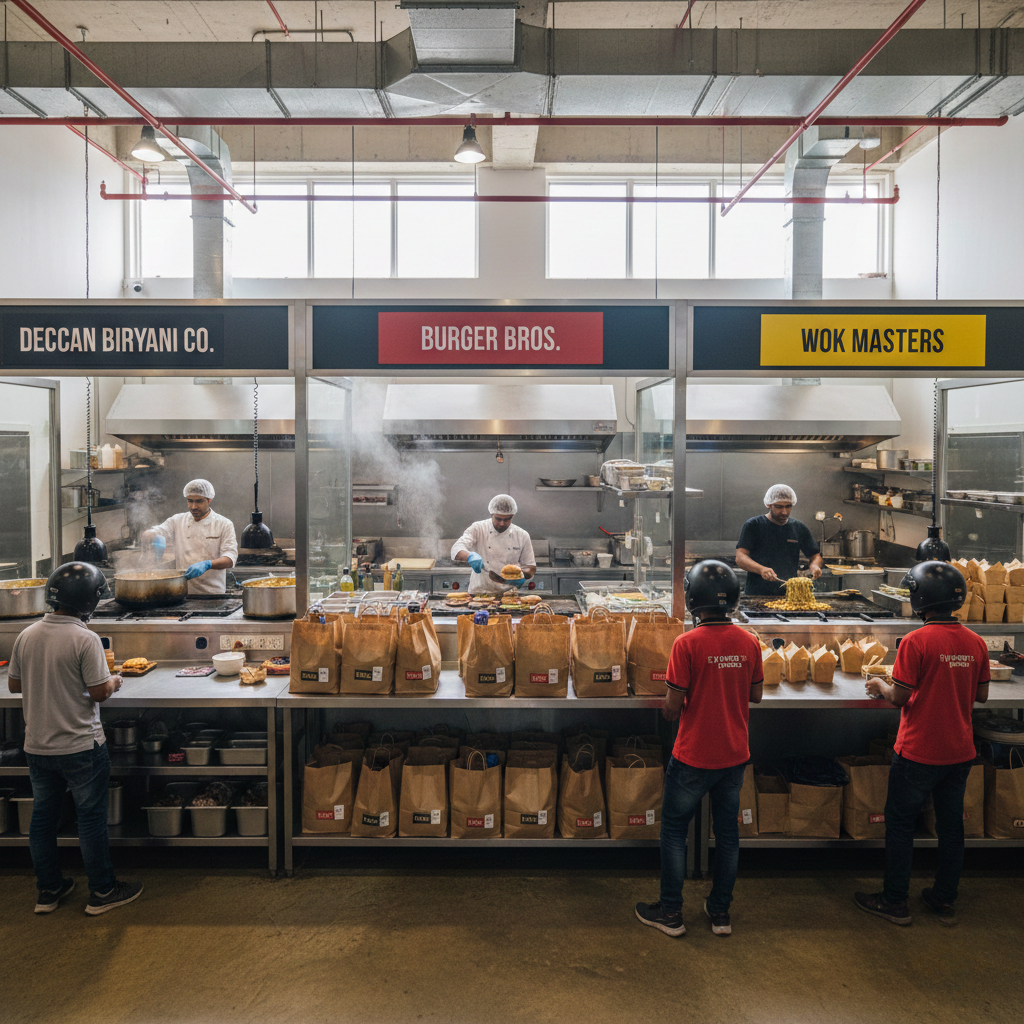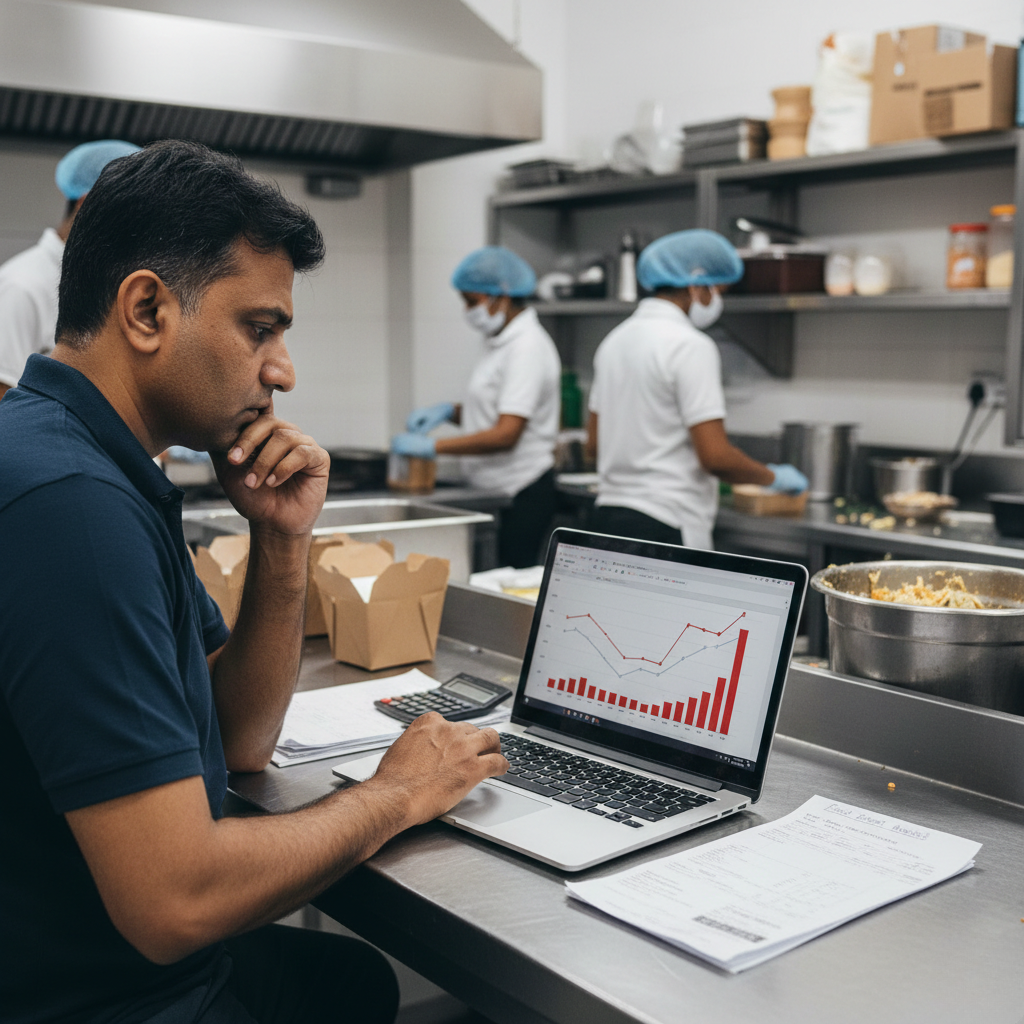
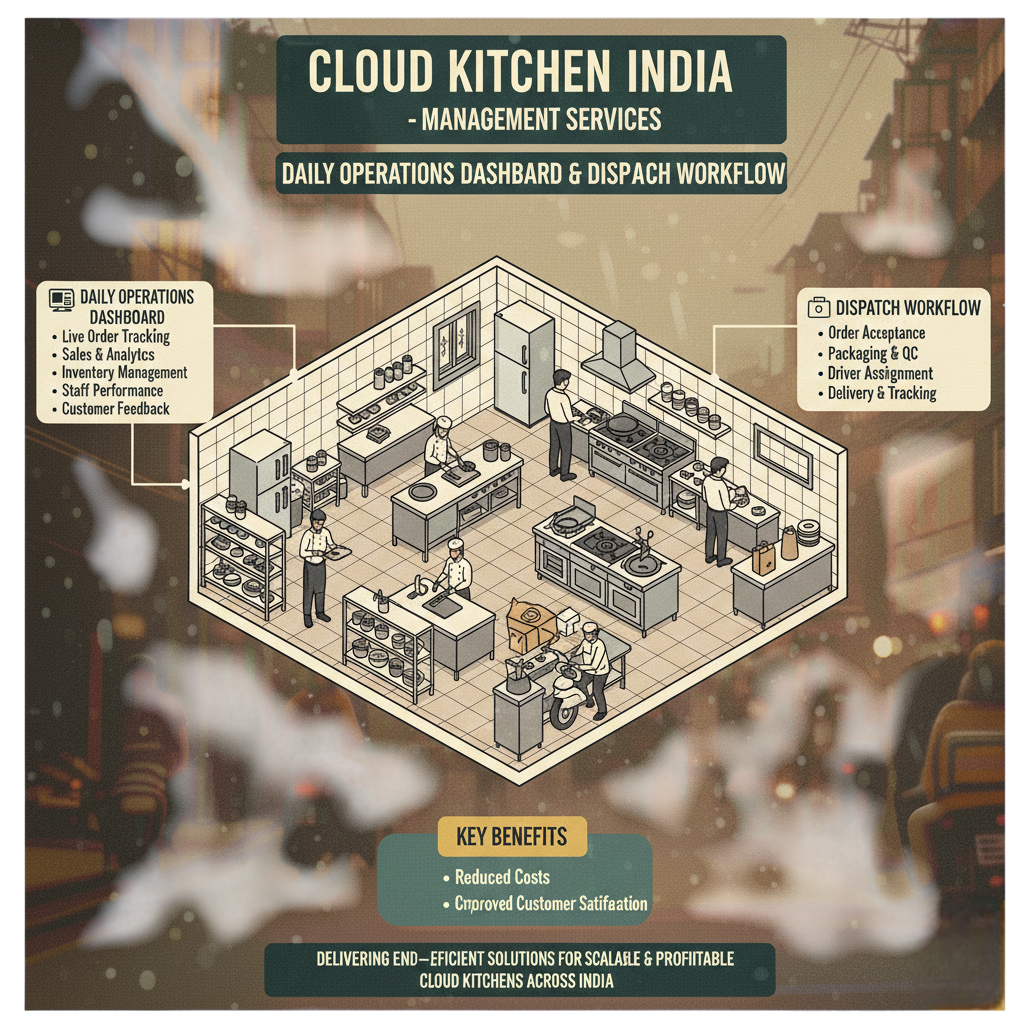
Cloud kitchen management services in India help founders run smoother operations, reduce wastage, protect ratings, and scale without losing control. Most delivery-first brands don’t fail because demand is low-they fail because daily execution breaks: prep delays, stock-outs, inconsistent taste, wrong packaging, and weak team discipline. This guide explains what cloud kitchen management services include, how they work, what deliverables you should expect, typical pricing models, and how to choose a partner that actually improves margins and repeat orders.
Start Here Before Hiring Cloud Kitchen Management Services
This article is part of GrowKitchen’s operations, scalability, and unit economics series. If you want the full foundation of how delivery-first businesses work in India, start here: Cloud Kitchen as a Service (CKaaS) and here for the full business model breakdown: Cloud Kitchen Business in India.
For compliance and operational legitimacy, cloud kitchens should follow food safety and registration norms issued by FSSAI, maintain tax compliance via GST Network, and follow local municipal requirements where applicable.
Cloud Kitchen Management Services in India Explained
Cloud kitchen management services are operational support systems that help you run your kitchen daily with discipline. Unlike setup services (which focus on launch), management services focus on performance improvement after launch-ensuring the kitchen hits targets for speed, consistency, cost control, and customer experience.
In India, delivery-first brands operate under constant pressure from prep-time SLAs, ratings, commission costs, discount wars, and staff churn. Management services exist to stabilize these moving parts using SOPs, reporting, audits, and daily control systems.

What Cloud Kitchen Management Services Typically Include
A strong management partner should cover execution, reporting, audits, and improvement loops. If a provider can’t explain how they improve contribution margins and ratings, they’re not doing real management.
- Daily SOP enforcement (prep, hygiene, cooking, packaging, dispatch)
- Inventory and purchase planning (PAR levels, reorder triggers, wastage control)
- Food cost control (portion audits, recipe adherence, variance tracking)
- Staff productivity + shift planning (role clarity, output tracking, training refreshers)
- Quality control checkpoints (taste consistency, packing checks, complaint prevention)
- Aggregator operations support (menu hygiene, prep-time tuning, cancellations reduction)
- Weekly performance reporting (sales, AOV, COGS, refunds, ratings, ad efficiency)
- Monthly ops audit + action plan (leakage fixes, SOP upgrades, SKU pruning)
If you want the baseline SOP framework, use: Cloud Kitchen SOP Checklist.
How Cloud Kitchen Management Works (Week-by-Week)
A proper management model runs in cycles-not random suggestions. Here’s a practical structure used by high-performing kitchens.
- Week 1: Operations audit (workflow, SKUs, wastage points, team structure, dispatch issues)
- Week 2: SOP tightening + retraining (portion control, prep sequencing, packaging checks)
- Week 3: Cost control loop (food cost variance, inventory shrinkage, supplier corrections)
- Week 4: Growth stabilization (ratings, repeat order tactics, menu improvements, ads hygiene)
The goal is stability first, scale second. If you scale before fixing operations, you multiply chaos.
KPIs That Management Services Should Improve
Cloud kitchen management is measurable. If your partner cannot show KPI movement, you’re paying for activity, not outcomes.
- Food cost % (COGS) and recipe variance
- Prep time and on-time dispatch rate
- Order cancellations and refund rate
- Customer ratings and repeat rate
- Packaging complaints (spillage, sogginess, missing items)
- Staff productivity (orders per staff-hour, prep output per shift)
- Contribution margin per order (after commission + ads)
For margin fundamentals, read: Cloud Kitchen Profit Margin in India.
Swiggy/Zomato Operations: The Hidden Management Layer
In India, most cloud kitchens depend heavily on aggregator demand. That means your “operations” also include how you perform on the platform. Management services should actively control:
- Prep-time tuning to reduce late orders and cancellations
- Menu hygiene (clear naming, modifiers control, SKU visibility)
- Packaging SOP + item checklist to reduce missing items
- Discount strategy discipline (avoid margin-killing offers)
- Ad spend efficiency (focus on winners, not full-menu boosting)
If you keep losing money despite orders, your commission exposure is usually the culprit. Pair this with: How to Reduce Swiggy Commission.
Inventory, Wastage, and Purchase Planning
Most kitchens leak profits through wastage and over-purchasing. A management system should implement daily stock logging, weekly variance checks, and strict reorder triggers (PAR levels).
The most common wastage sources in Indian cloud kitchens:
- Over-prepping during slow days
- Poor FIFO discipline (older stock expires)
- Inconsistent portioning (ladle creep)
- Packaging damage and spillage
- Supplier inconsistency causing rework
Strong inventory systems reduce panic buying, stabilize food cost, and improve ROI.
Staffing, Training, and Kitchen Discipline
Kitchen performance drops when roles are unclear. A management partner should establish: station-wise accountability (prep, hot kitchen, packing, dispatch), shift SOPs, and training refreshers.
The real objective is simple: your kitchen should run well even when the founder is not present. If the kitchen collapses without you, you don’t have a system-you have a dependency.
If your brand is still struggling with execution, read: Why Cloud Kitchens Fail in India.
When Should You Hire Cloud Kitchen Management Services?
Management services are most useful when your kitchen has demand but lacks control. Consider hiring when:
- Your ratings are stuck or dropping despite good food
- Food cost keeps increasing month over month
- You face frequent stock-outs or wastage
- Dispatch delays cause cancellations and bad reviews
- You want to scale but fear replication mistakes
If you’re planning multi-location expansion, use: How to Scale Cloud Kitchens.
How Cloud Kitchen Management Services Are Priced in India
Pricing models vary. The best structure depends on your stage and risk appetite. Common models include:
- Fixed monthly retainer: predictable, good for stability-focused kitchens
- Performance-linked fees: incentives aligned, but requires clean reporting
- Hybrid model: smaller retainer + KPI-based bonus (often the most balanced)
Avoid partners who only talk about “growth” and ignore contribution margin. Growth without margin is a cash burn plan.
How to Choose the Right Management Partner
Ask direct questions. A serious partner will answer with systems, not buzzwords.
- What KPIs do you track weekly, and what tools do you use?
- Do you provide SOP documents and retraining modules?
- How do you control food cost variance and portion drift?
- How do you reduce cancellations and improve ratings?
- What does your first 30-day takeover plan look like?
If the answers are vague, you’ll get vague results.
Final Thoughts: Cloud Kitchen Management Services in India
Cloud kitchen management services in India are valuable when they create control: consistent food quality, stable dispatch speed, predictable food cost, and healthier margins.
The right management system turns a founder-dependent kitchen into a scalable operation. If your goal is multi-location expansion, management is not optional-it’s the core layer that makes scale possible.
FAQs: Cloud Kitchen Management Services India
What is included in cloud kitchen management services?
Usually: SOP enforcement, cost control, inventory planning, staff training, quality checks, aggregator ops support, weekly reporting, and monthly audits.
Can management services improve ratings?
Yes-by reducing dispatch delays, improving packing accuracy, and maintaining taste consistency through SOP discipline.
Are management services useful for single kitchens?
Yes, especially if you have demand but struggle with cost control, refunds, cancellations, or staff dependency.
How do I evaluate if management services are working?
Track KPI movement: food cost %, cancellations, ratings, refunds, contribution margin per order, and repeat rate.
- Cloud Kitchen Business in India
- Cloud Kitchen SOP Checklist
- Cloud Kitchen Profit Margin in India
- How to Scale Cloud Kitchens