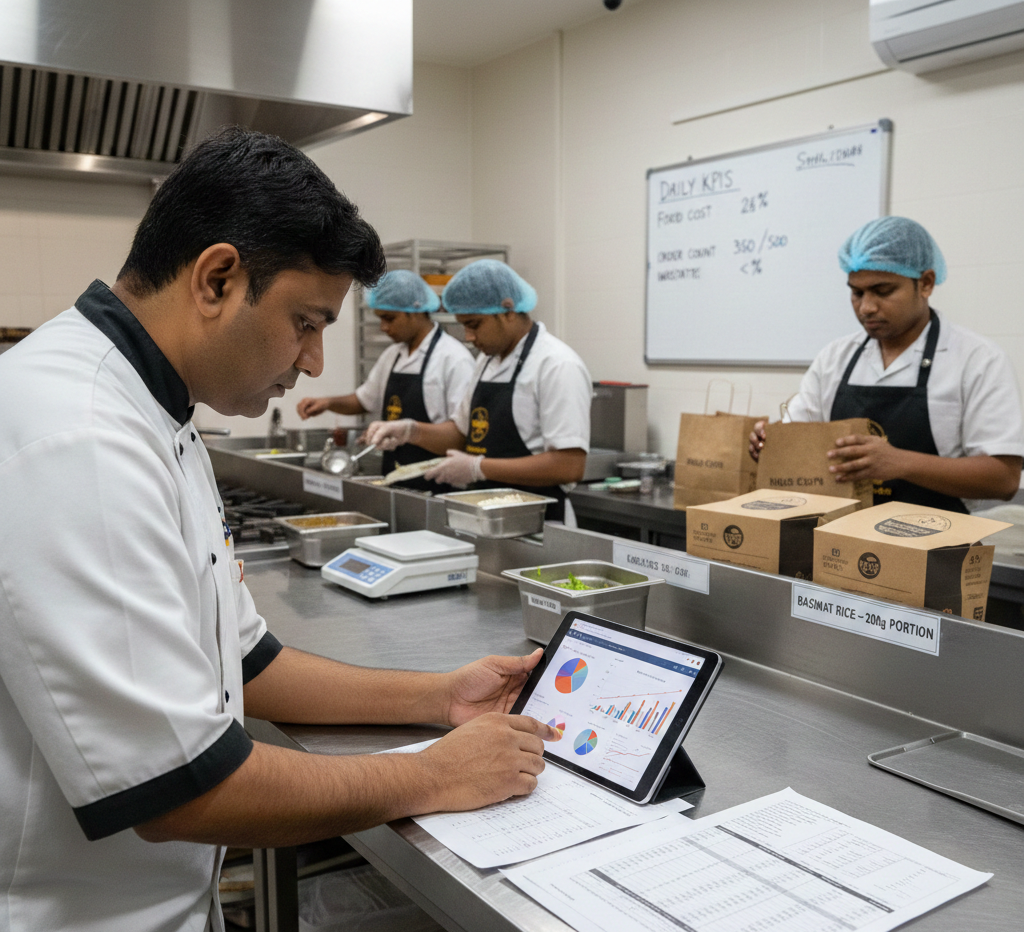
Is CKaaS Profitable? Truth You Must Know Before Starting
Cloud Kitchen as a Service (CKaaS) promises zero capex and plug-and-play kitchens. But is the model actually profitable after platform fees, food cost and marketing? In this guide, we break down the numbers, scenarios and risks in the Indian context.
What Does “CKaaS Profitability” Really Mean?
When people ask, “Is CKaaS profitable?” they usually compare it to setting up their own cloud kitchen. CKaaS (Cloud Kitchen as a Service) removes your:
- Kitchen setup cost (rent deposit, interiors, equipment)
- Full-time staff hiring and management
- Utility management, vendor coordination and daily operations
In exchange, you pay a fixed monthly fee (or fee + revenue share, depending on provider). Profitability then depends on:
- Your average order value (AOV)
- Daily order volume (consistent, not festival spikes)
- Food cost % and packaging cost
- Aggregator commissions (Swiggy/Zomato)
- Your CKaaS fee and any revenue share
How CKaaS Brands Make Money
Whether you’re an influencer, food founder or FMCG brand, your CKaaS brand has three main levers of profit:
1. Healthy Contribution Margin per Order
After deducting raw material, packaging and aggregator fee, your contribution margin ideally should be in the 30–60% range (before CKaaS fee and marketing).
Example (illustrative only):
- Customer pays: ₹400 (incl. GST & platform charges)
- Food + packaging cost: ₹120-₹140
- Aggregator commission & taxes: ~₹80-₹100
- Contribution margin: ₹160-₹200 per order
2. Consistent Order Volume
Even a great margin is useless without volume. In CKaaS, most brands aim for:
- 20-30 orders/day as survival stage
- 40-60 orders/day as comfort zone
- 70+ orders/day as growth & scale stage
3. Smart Marketing & Ratings
Your ratings, photos, offers and reviews drive discovery and repeat orders. CKaaS reduces operational headache so you can spend time on:
- Brand story and positioning
- Influencer content, reels and ads
- Menu engineering and AOV-boosting combos
CKaaS vs Your Own Kitchen: How the Cost Structure Changes
Let’s simplify the comparison between a self-owned kitchen and a CKaaS model in a city like Mumbai or Pune.
See this-LinkedIn
Self-Owned Kitchen (Typical Cost Heads)
- Rent + deposit (often 6-10 months)
- Basic interiors & exhaust setup
- Equipment (burners, fridges, freezer, prep tables)
- Chefs, helpers, cleaning staff salaries
- Utilities (gas, electricity, water)
- Maintenance, breakages, AMC
Even for a modest kitchen, total initial capex + working capital can easily touch ₹10-25 lakhs if you factor a 6–9 month runway.
CKaaS Model (Typical Cost Heads)
- Flat CKaaS fee per month (kitchen + staff + utilities bundled)
- Food & packaging cost (your raw material)
- Aggregator commissions
- Marketing budget (offers, ads, creatives)
You shift from heavy upfront capex to a more predictable Opex model.
Profit Scenarios: Low, Medium & High Order Volume
These are illustrative scenarios to understand directionally how CKaaS profit can look. Use your own actual numbers before making decisions.
Scenario 1: Low Volume (10-15 Orders/Day)
At this stage, you’re usually in testing & brand-building mode:
- Orders may not fully cover CKaaS fee + ads
- Objective: validate menu, pricing, audience fit
- Expect break-even or small loss in the initial months
Scenario 2: Medium Volume (30-40 Orders/Day)
This is where CKaaS usually starts making sense:
- Contribution margin per order × volume can cover:
- CKaaS fee
- Basic marketing spend
- Leave room for net profit
- Good ratings (4.3★+) become critical to maintain volume
Scenario 3: High Volume (50–70+ Orders/Day)
Here CKaaS can be very profitable if:
- Food cost is under control (ideally 28-35%)
- Strong AOV (combos, sides, add-ons)
- Repeat customers reduce discount dependency
At this stage, some brands consider multi-kitchen expansion or a hybrid model (mix of CKaaS + own kitchens) in future.
Who Should Use CKaaS (And Who Shouldn’t)
CKaaS is not “one size fits all”. It is powerful for some profiles and wrong for others.
CKaaS Works Best For:
- Influencers & creators who already have audience but no operations team.
- Existing food brands testing new cities or micro-cuisines.
- First-time founders who want to validate concept without burning capex.
- FMCG / D2C brands testing hot food formats (sauces, condiments, frozen products).
CKaaS May Not Be Ideal If:
- You want to own and control every inch of kitchen operations.
- Your model needs heavy dine-in experience or theatrics.
- You are extremely cost-sensitive and want to squeeze every rupee of Opex yourself.
Risks & Red Flags to Watch Out For
Like any model, CKaaS has its own risks. Watch out for:
- Unrealistic sales promises: “We guarantee 100 orders/day in 30 days” is a red flag.
- No transparency on raw material, wastage or cancellation handling.
- Poor existing ratings of other brands in the same kitchen.
- No clear breakup of what your monthly CKaaS fee includes.
Always ask for:
- Kitchen tour (virtual or physical)
- Sample P&L or benchmark numbers
- Responsibilities split: what you handle vs what CKaaS handles
FAQ: Is CKaaS Actually Profitable?
Can I make profit from month one with CKaaS?
It’s possible but not guaranteed. Most brands spend the first 2-3 months building: menu, ratings, photos, offers and awareness. Treat it as a test + ramp-up period.
What is a good profit margin target in CKaaS?
Aim for a healthy contribution margin first (30-60%). After CKaaS fee and marketing, many stable brands try to reach 15-25% net profit, depending on scale.
Is CKaaS cheaper than starting my own kitchen?
In terms of upfront cost and risk, yes. In terms of long-term rupees spent, it depends on your order volume, efficiency and expansion plans. CKaaS is often used as a launch and scale-testing model.
Can I move from CKaaS to my own kitchen later?
Many founders do exactly this: validate brand using CKaaS, understand real demand, then plan their own kitchen or hybrid model once numbers are strong. Ideally, structure your agreement so this path is clear.
Want to See If CKaaS Can Be Profitable for Your Brand?
Share your concept, cuisine and target city, and we’ll run through a simple CKaaS profitability model based on real kitchen numbers from Mumbai & Pune.
Book a Free 30-Minute CKaaS Profitability CallGet a Custom Cloud Kitchen Plan for Your Brand
Not sure how to start or scale your cloud kitchen in India? Share a few details about your brand and we’ll send you a personalised setup and growth roadmap.
- City-wise kitchen and location suggestions
- Approximate investment & profit estimates
- Menu and positioning recommendations
- Whether CKaaS or own kitchen suits you better
Fill the form and our team will get in touch within one working day.
About Us
Ckaas Sloutions
Contact
Follow On
© 2025 Grow Kitchen. All rights reserved.
WhatsApp us