
Why Cloud Kitchen Fails in India: Real Reasons Most Kitchens Shut Down
Why Cloud Kitchen Fail In India look simple from the outside-low rent, delivery demand, fast setup. But behind the scenes, most cloud kitchens in India shut down within 12-18 months. Not because of food quality alone, but because of execution gaps, weak unit economics, and operational blind spots. This guide explains the real reasons cloud kitchens fail in India-and how successful operators avoid them.
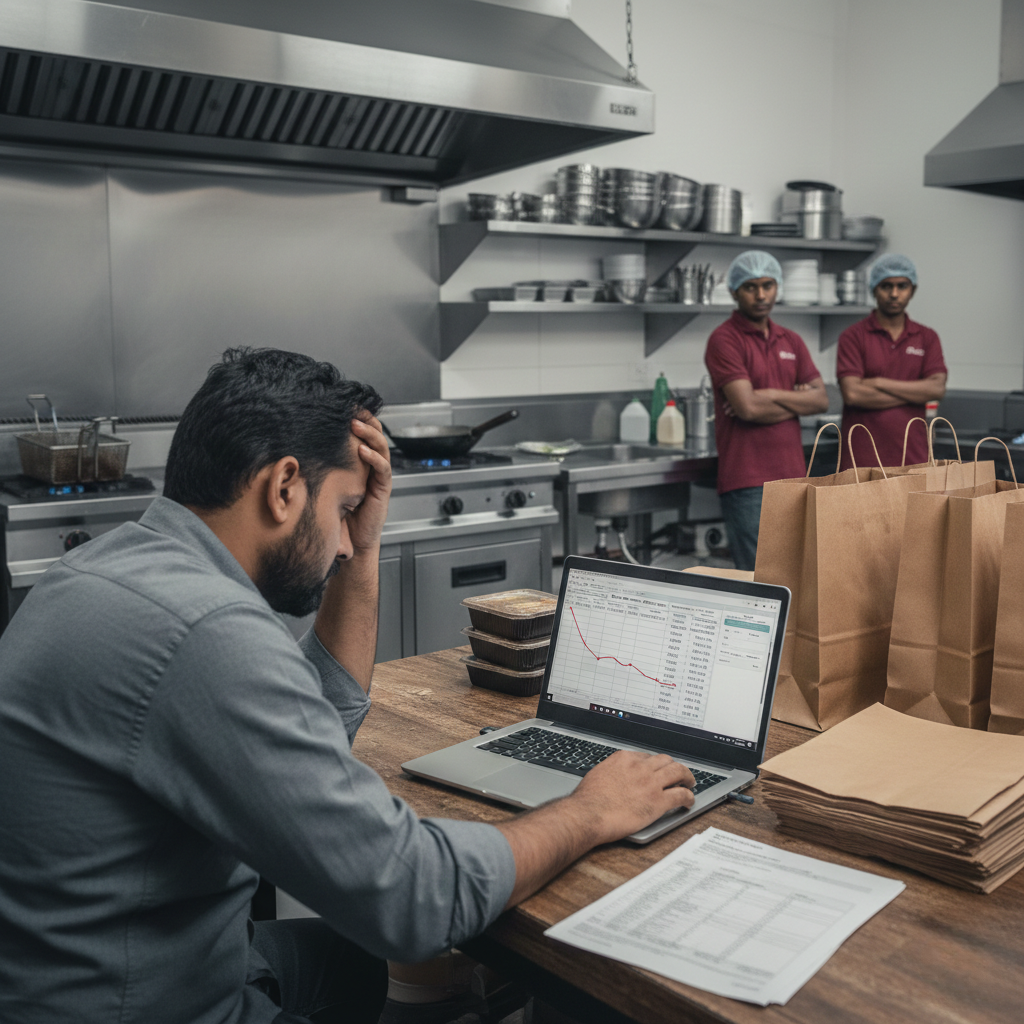
The Truth About Cloud Kitchen Failure in India
India has seen thousands of cloud kitchens launch over the last few years. Yet, a large percentage quietly shut down without public attention. The reason is simple: most founders underestimate how execution-heavy this business really is.
Cloud kitchens are not passive income models. They demand discipline across prep, packing, inventory, staffing, and daily reviews. When systems are missing, chaos replaces consistency-and losses follow.
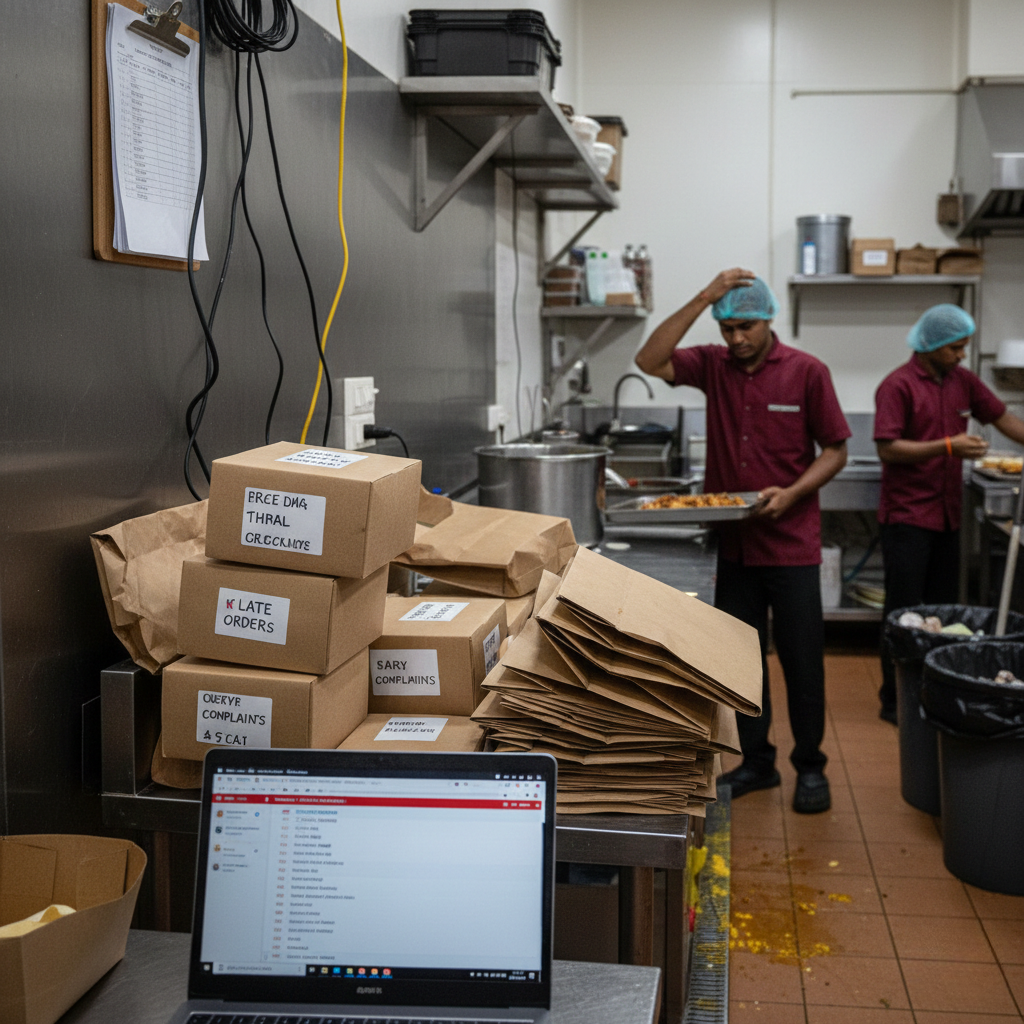
Expectation vs Reality of Cloud Kitchens
Many founders enter the cloud kitchen space believing it is an “easy food business”. The expectation is low rent, few staff, and automatic orders from Swiggy and Zomato.
The reality is very different. Delivery platforms reward consistency, speed, and ratings-not effort. A small dip in execution can reduce visibility and order flow dramatically.
Broken Unit Economics
One of the biggest reasons cloud kitchens fail in India is poor unit economics. Founders focus on gross revenue instead of contribution margin.
- High aggregator commissions (18–30%)
- Underestimated packaging costs
- Discount-led customer acquisition
- No buffer for refunds and wastage
Cost planning reference: Cloud Kitchen Setup Cost in India
Weak Kitchen Operations
Most failed cloud kitchens operate on memory instead of systems. When a key cook or manager leaves, quality collapses.
- No prep SOPs or batch planning
- Inconsistent portion control
- Chaotic packing and dispatch
- No daily review discipline
Operational framework: Cloud Kitchen Operations Management
Over-Dependence on Swiggy & Zomato
Swiggy and Zomato are demand engines, not business partners. Kitchens that rely only on aggregators are exposed to algorithm changes, commission hikes, and paid visibility pressure.
Channel strategy: Swiggy vs Zomato vs Own Website
Staff & SOP Failures
High staff turnover is common in cloud kitchens. Without SOPs, every resignation resets quality to zero.
- No station-wise responsibility
- Training done verbally
- No shift handover checklist
SOP framework: Cloud Kitchen SOPs
Scaling Too Early
Many founders open multiple outlets before stabilising one kitchen. Scaling chaos multiplies losses.
Scaling guide: How to Scale Cloud Kitchens
How Successful Cloud Kitchens Avoid Failure
- Strong SOP-driven operations
- Daily KPI tracking
- Menu simplicity
- Contribution margin focus
- Gradual, disciplined scaling
FAQ: Why Cloud Kitchens Fail in India
Learn more: GrowKitchen LinkedIn, GrowKitchen Facebook, Rahul Tendulkar
Want to Avoid Cloud Kitchen Failure?
Share your city, cuisine, and current challenges. We’ll help you build systems that survive beyond the hype.
Get Expert Help