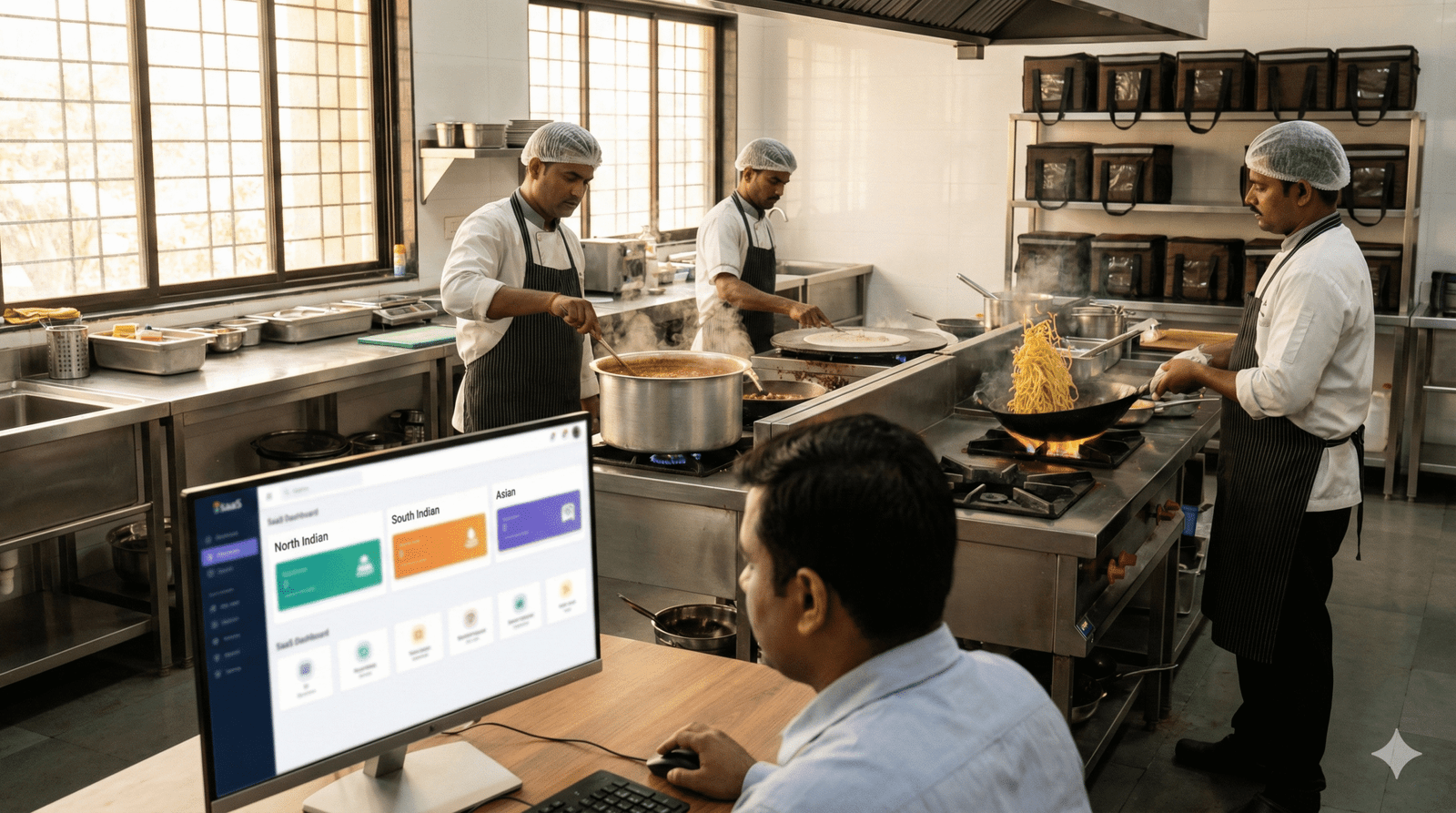
CKaaS (Cloud Kitchen as a Service) lets you launch your own food brand without opening a kitchen or buying a franchise. In this guide, we break down what CKaaS is, how it works, and why founders, influencers and restaurant owners are choosing it over traditional food franchise models.
What Is CKaaS (Cloud Kitchen as a Service)?
CKaaS (Cloud Kitchen as a Service) is an asset-light food business model where you own the brand and a specialist operator runs the backend kitchen for a fixed monthly fee or revenue share.
Instead of renting a space, setting up a kitchen and hiring staff, you plug your food brand into a ready-to-run cloud kitchen network. The CKaaS partner handles daily operations, while you focus on brand, menu and marketing.
CKaaS vs Traditional Food Franchise
CKaaS is often confused with food franchises, but the two models are completely different. Here’s how they compare on ownership, risk and flexibility.
1. Brand Ownership & Control
In a food franchise, you pay fees to operate someone else’s brand. You follow their menu, pricing and marketing guidelines. You run their playbook.
In CKaaS, you own the brand IP-name, logo, recipes, social media, website and customer relationships. The CKaaS operator is a service provider who runs your kitchen infrastructure and staff.
2. Investment & Risk
A typical franchise cloud kitchen can easily require ₹20-40 lakh+ in deposits, interiors, equipment, franchise fees and working capital. You carry the full risk if demand does not pick up.
With CKaaS, you avoid heavy setup capex. You usually pay a fixed monthly management fee plus a small revenue share. Your risk moves from “big upfront capex” to “controlled monthly opex”.
3. Contract Flexibility
Franchise agreements often lock you in for 5-9 years. Exiting early can mean penalties and sunk cost.
CKaaS agreements are typically shorter (e.g. 6-12 months minimum commitment) with clearer paths to scale up, pivot or exit locations based on performance.
4. Scaling Across Cities
Adding new franchise outlets means fresh capex, new hires and fresh local management.
With CKaaS, once your brand playbook works in one kitchen, it can be cloned across multiple kitchens in the same network, making expansion faster and more asset-light.
How the CKaaS Business Model Works
From a founder’s perspective, this is what a typical CKaaS journey looks like:
Step 1-Brand & Positioning
You define the brand concept: cuisine, TG, pricing band and city. A good CKaaS partner will review this against aggregator demand, competition and margins before locking the concept.
Step 2-Menu Engineering & SOPs
Together, you co-create a delivery-friendly menu with 15-30 high-potential SKUs. Portions, recipes and plating are standardised into SOPs to ensure consistency across kitchens.
Step 3-Kitchen Mapping & Coverage
The CKaaS operator assigns your brand to one or more existing kitchens in high-demand micro-markets (for example, Mahim, Bhandup, Kothrud, Wadgaon Sheri, etc.). You instantly get access to their local coverage radius.
Step 4-Swiggy & Zomato Onboarding
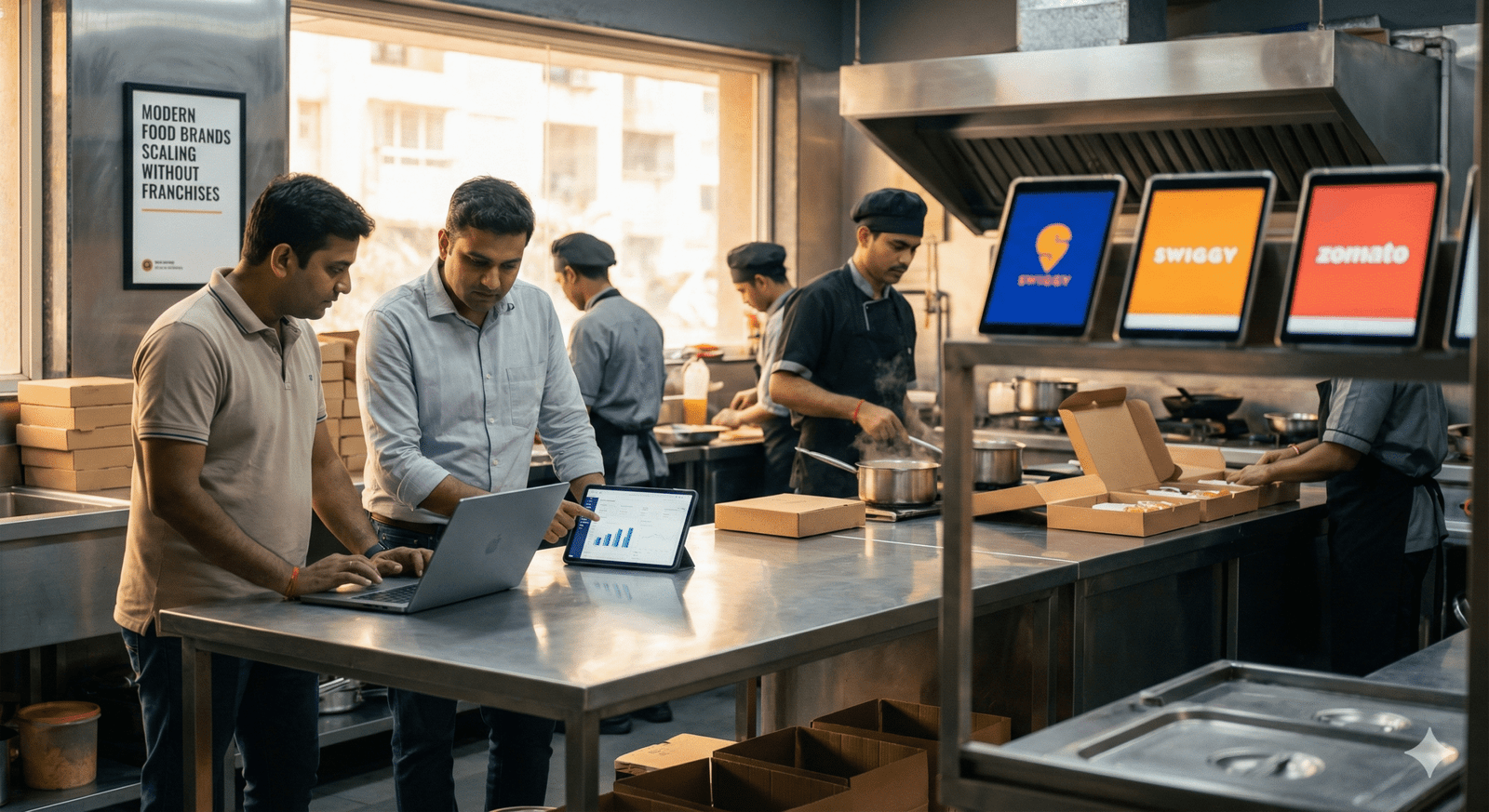
The CKaaS team creates your listings, uploads the menu, sets photos, tags and add-ons, and manages documents for Swiggy and Zomato onboarding. You get live dashboards, reviews and ratings like any other restaurant partner.
Step 5-Daily Operations & Reporting
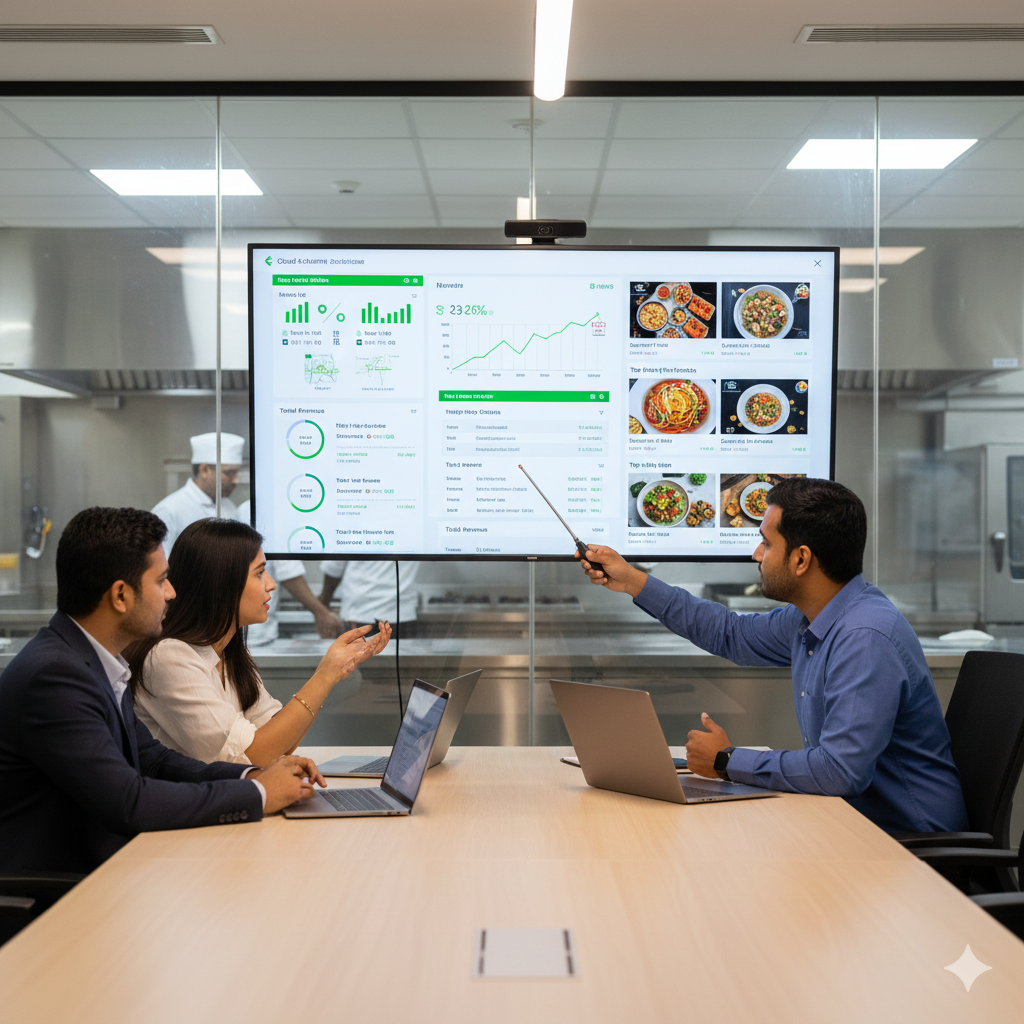
Day-to-day kitchen work-prep, cooking, packing, order acceptance and handover to riders-is managed by the CKaaS staff. You receive periodic reports on orders, ratings, top SKUs, contribution margins and marketing ROI.
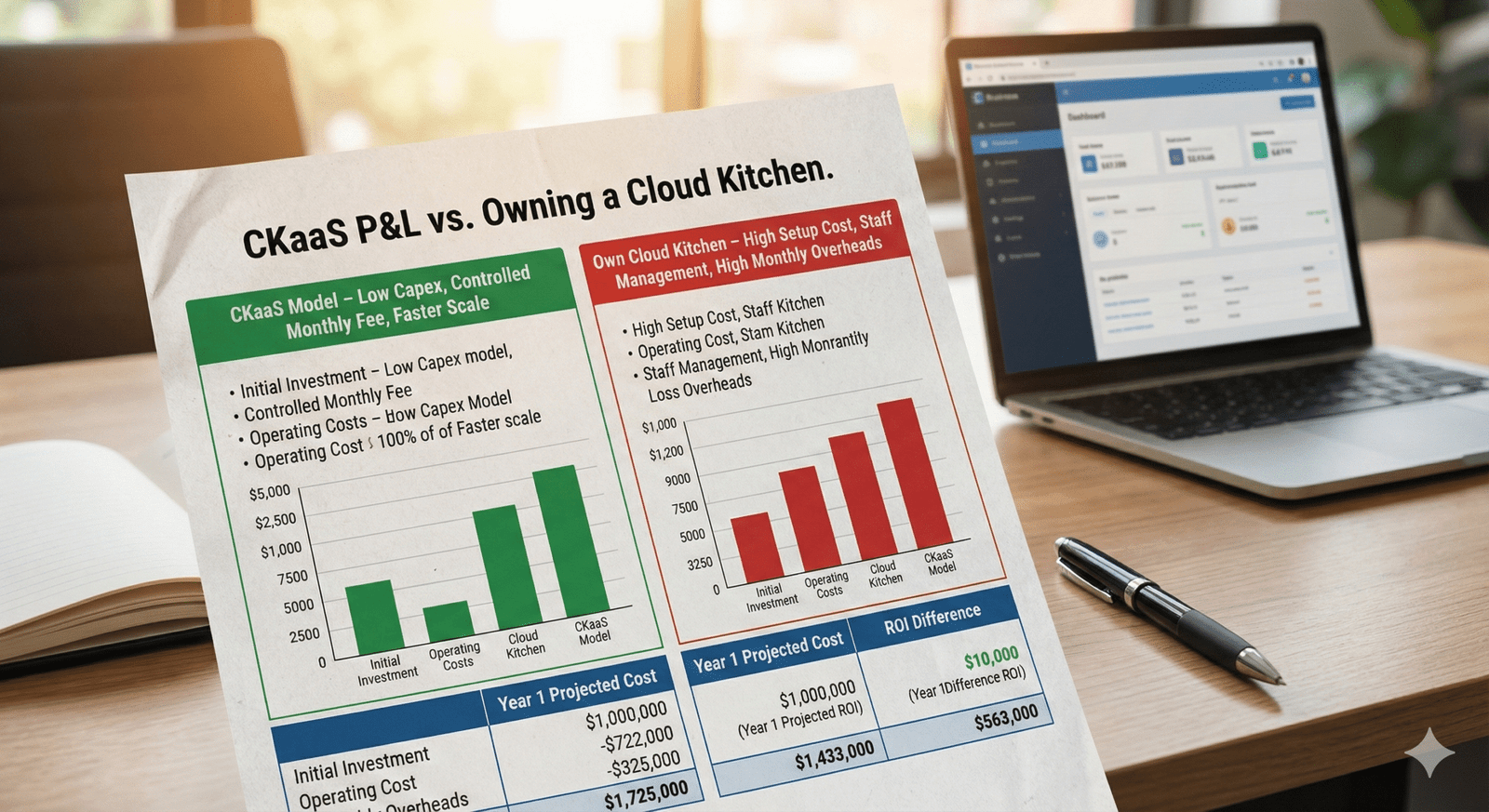
CKaaS vs Franchise-Cost Comparison (Illustrative)
Actual numbers vary by city and brand, but this simple comparison shows how different the cost structures are.
Owning a Food Franchise Cloud Kitchen
- Franchise fee: ₹5-10 lakh
- Kitchen setup & equipment: ₹10-20 lakh
- Interiors, branding, POS: ₹3-7 lakh
- Licenses, deposits, contingency: ₹2-5 lakh
Total upfront investment can easily hit ₹20-40 lakh+, plus ongoing royalties and mandatory marketing fees.
Partnering via CKaaS
- Upfront capex: usually very low or nil (branding, photos, menu work)
- Monthly management fee per kitchen
- Optional revenue share / performance incentive
- Flexible marketing budget you control
Here, your main risk is the monthly operating fee, not sunk capex. If a micro-market underperforms, you can optimise, relaunch or relocate more easily than a franchise outlet.
Who Is CKaaS Best Suited For?
Influencers & Creators
Influencers can launch food brands that match their personality without handling kitchens. CKaaS turns their audience trust into a scalable food business with professional operations in the background.
Home Chefs & Regional Specialists
Talented home chefs often have great recipes but no infrastructure. CKaaS gives them a plug-and-play kitchen backbone so they can focus on taste, authenticity and fan communities.
Existing Restaurants
Dine-in brands can create delivery-only virtual brands via CKaaS without confusing the main brand identity. It’s a fast way to monetise unused capacity in delivery hotspots.
FMCG & Packaged Food Brands
FMCG companies can use CKaaS to test ready-to-eat or limited-time formats in real conditions, collect data on flavour acceptance and iterate faster than traditional retail.
Key Benefits of the CKaaS Model
Low Capex, High Experimentation
Because you don’t lock capital into leases and equipment, you can experiment with multiple concepts, kill what doesn’t work and scale up winners – all while staying asset-light.
Faster Go-to-Market
Instead of waiting months for setup and hiring, CKaaS typically takes you from idea to live Swiggy/Zomato listings in a matter of weeks (subject to menus and aggregator approvals).
Professional Operations from Day One
You get access to teams who already manage order flow, prep lists, vendor management and rating improvement. This reduces the trial-and-error burn most first-time founders face.
Easy Multi-Kitchen & Multi-City Scaling
Once a brand playbook works in one kitchen, it can be rolled out across multiple CKaaS kitchens, giving you scale without heavy local overheads each time.
Common Myths & Concerns About CKaaS
“Will I lose control of my brand?”
No. In a proper CKaaS setup, you own the brand, recipes and customer communication. The operator manages backend execution. Make sure IP and data ownership are clearly written into your agreement.
“Is CKaaS only for small brands?”
CKaaS works for early-stage brands, mid-sized regional chains and even celebrity or FMCG collaborations. The common factor is a preference for asset-light, delivery-first scaling.
“Are margins lower in CKaaS?”
Contribution margins per order can be similar to any well-run cloud kitchen. The difference lies in how costs are structured: CKaaS replaces large fixed capex with a clearer, more predictable service fee model.
How to Evaluate a CKaaS Partner
Before signing, do a basic CKaaS due diligence:
- Kitchen network strength and locations
- Live brands and success stories
- Operational depth-SOPs, training, vendor control
- Clarity on commercials and revenue sharing
- Quality of dashboards and reporting
- Contract terms, lock-in, exit and brand/IP clauses
A transparent, data-driven CKaaS partner should be comfortable sharing numbers, case studies and on-ground realities-not just glossy pitch decks.
FAQ: People Also Ask About CKaaS
Is CKaaS a type of food franchise?
No. CKaaS is a service model, not a franchise. You are not buying the operator’s brand; you are renting their kitchen and operations layer to run your own brand.
How much does it cost to start with CKaaS?
Costs depend on city, cuisine and commercial structure. Typically you pay a monthly fee and optional revenue share instead of investing ₹20-40 lakh in setup. Your main variable spend is marketing.
Can I move my brand out of CKaaS later?
Yes, provided your contract is written correctly. Because you own the brand IP, you can eventually migrate your brand to your own kitchens or additional partners once it reaches scale and stability.
Is CKaaS only for cloud kitchens?
CKaaS is designed around cloud kitchens and delivery-first formats, but the same playbook can support virtual brands inside dine-in restaurants or hybrid takeaway hubs.
Want to Launch Your Own Food Brand with CKaaS?
GrowKitchen’s CKaaS network in Mumbai & Pune gives you ready cloud kitchens, trained staff and complete operational support-so you can focus on building a powerful food brand, not running a kitchen.
Book a Free CKaaS Discovery Call