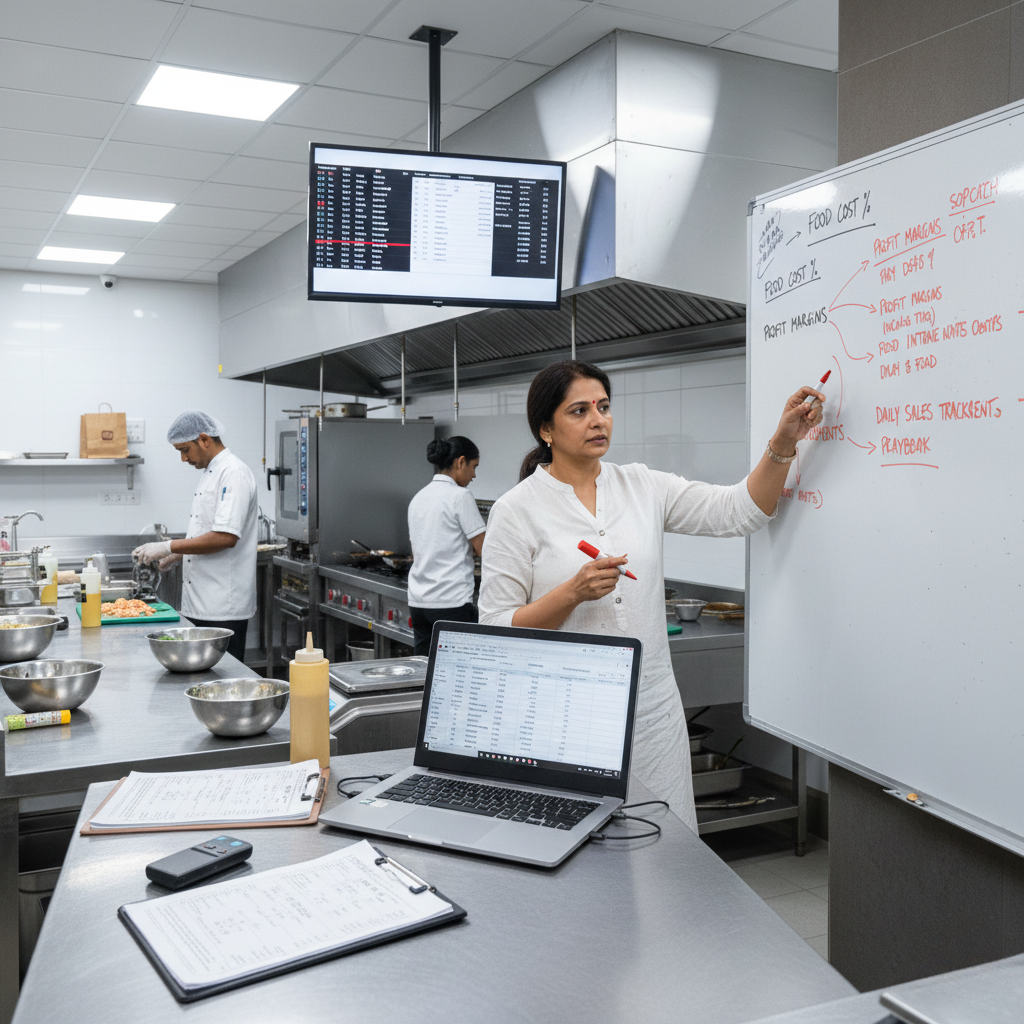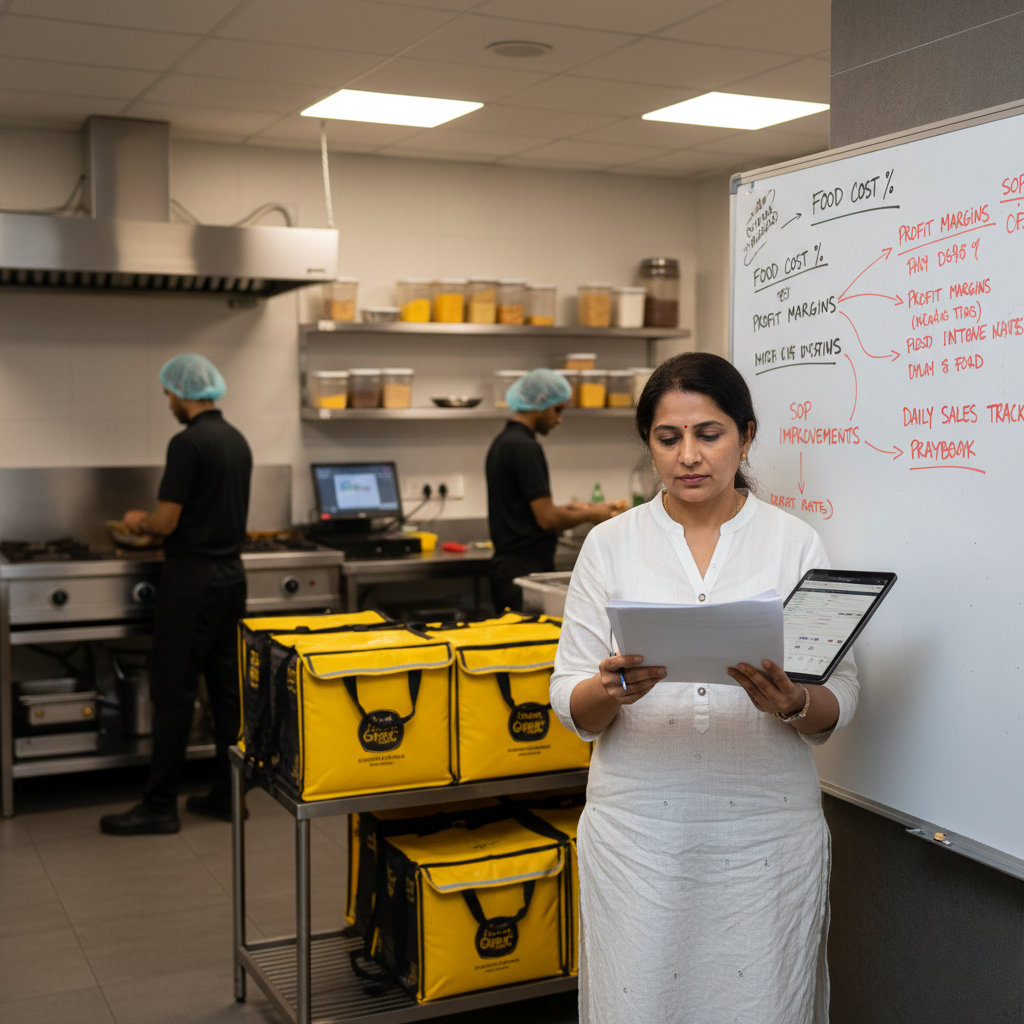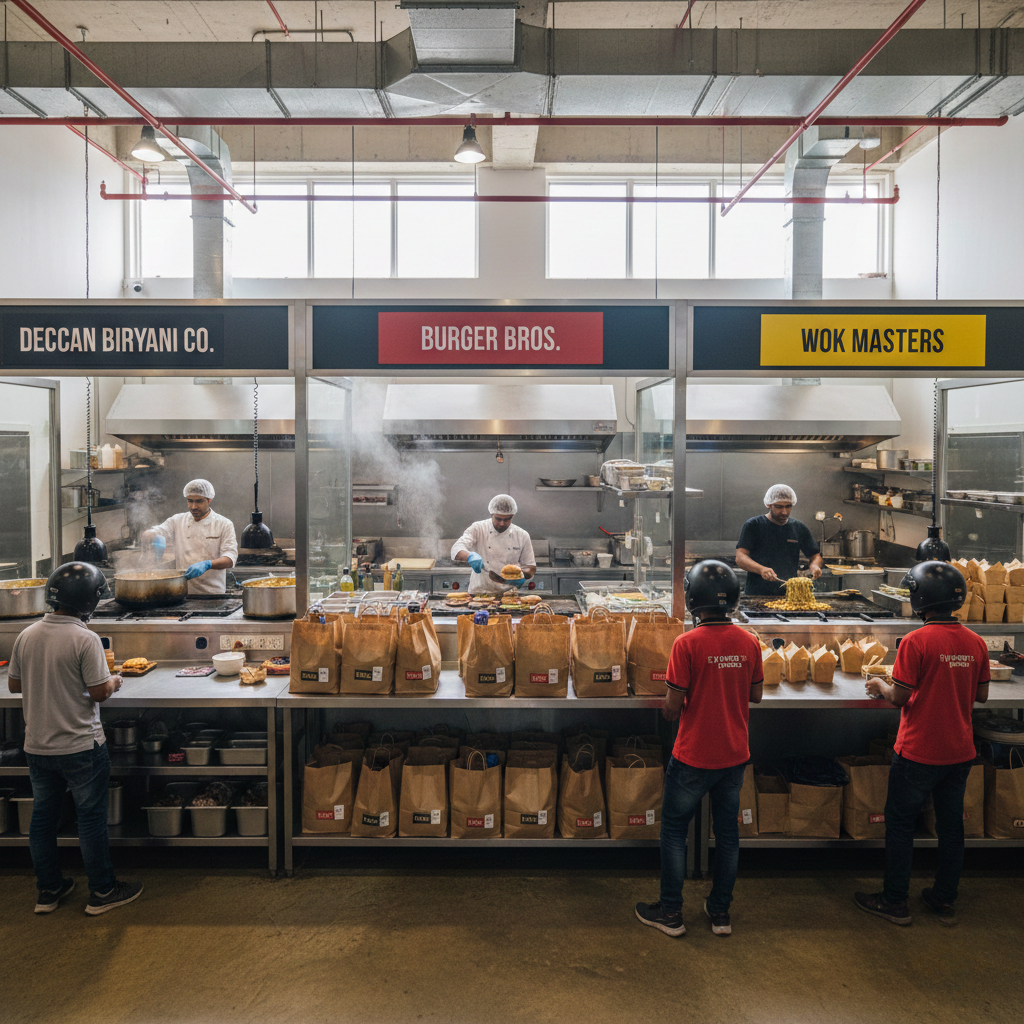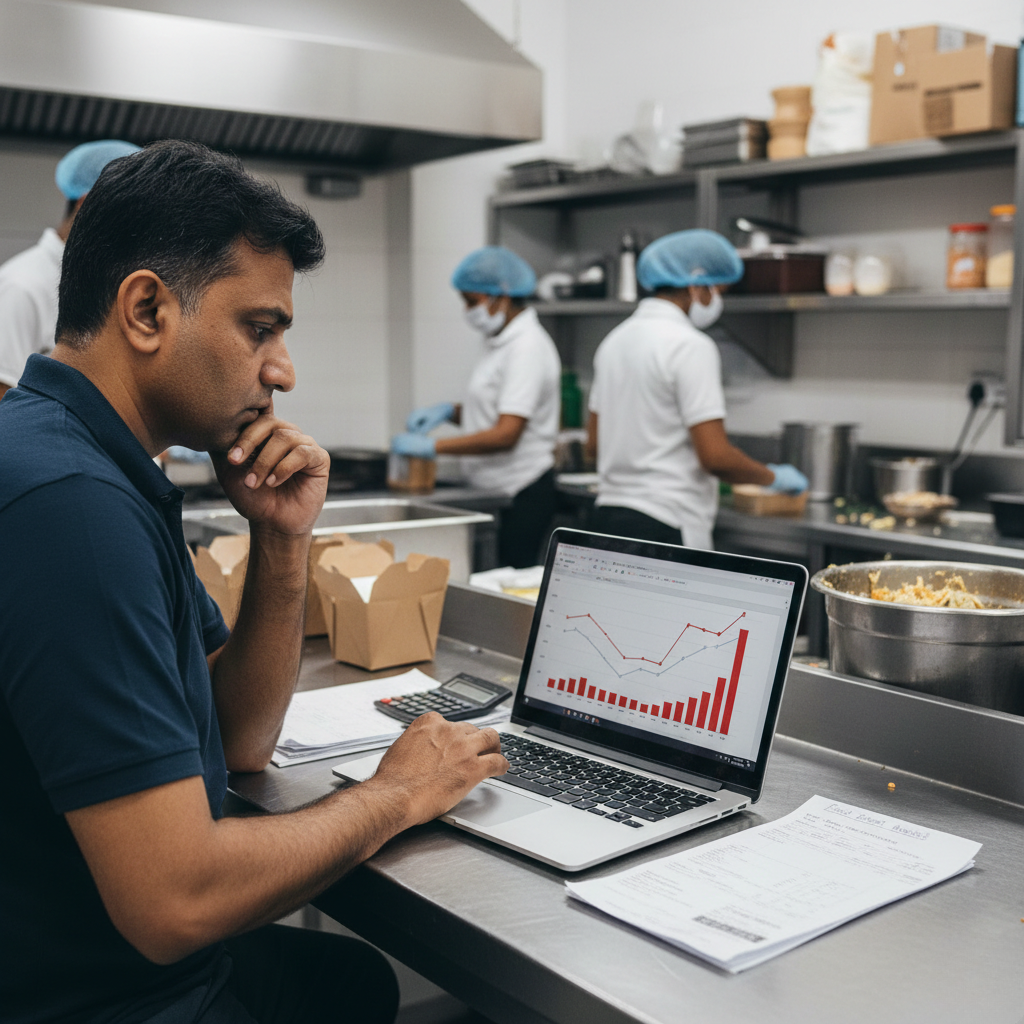
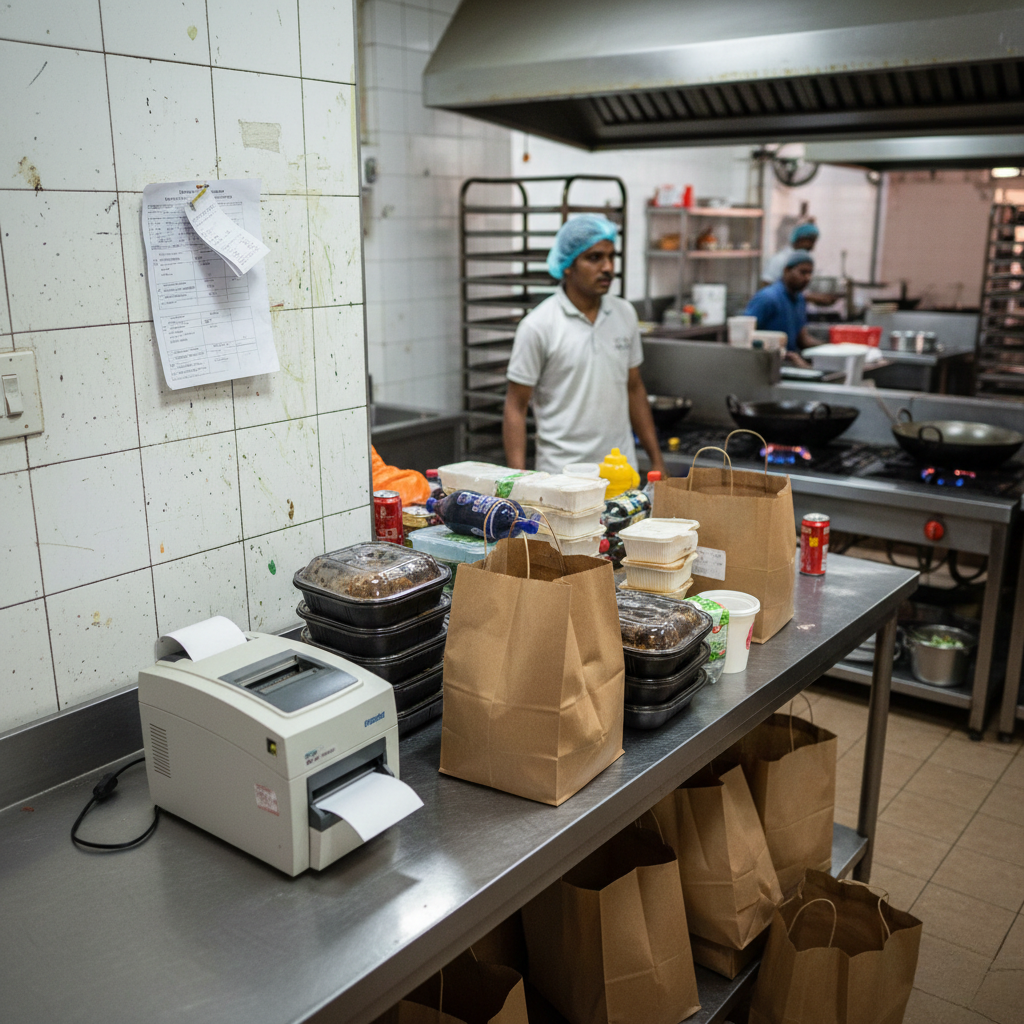
Why am I busy all day but still losing money cloud kitchen? is not a “work harder” problem. It is the difference between a kitchen that feels active all day and a kitchen that keeps contribution margin after every order. Most cloud kitchens stay busy because activity increases when systems are weak: staff runs, founders firefight, orders move, but leakage compounds through rework, wastage, portion drift, refunds, late dispatch, and discount burn. This guide explains why “busy” kitchens still lose money in delivery-first businesses in India and how to fix it end-to-end from station design to SOPs to payout control using systems, not hustle.
Why Am I Busy All Day but Still Losing Money? The Activity Trap Behind Cloud Kitchen Losses
Many founders reach a stage where the kitchen never feels “free.” The phone rings. Aggregator tablets keep pinging. Staff keeps calling for decisions. Packing happens in a rush. Riders complain about delays. A few customers escalate. And by the end of the day you’re exhausted but unsure what you actually earned.
This happens because cloud kitchens can be operationally busy while financially broken. Activity creates movement, but movement is not margin. When systems are weak, work increases in the wrong areas: rework increases, complaints increase, remakes increase, refund risk increases, and discount burn becomes the only way to keep conversion stable. The kitchen becomes “busy” because it is repeatedly fixing the same preventable errors.
If you want the profitability foundation lens first, start with Cloud Kitchen Profitability Consultant in India and map your recurring leak patterns using Common Operational Mistakes in Cloud Kitchens.
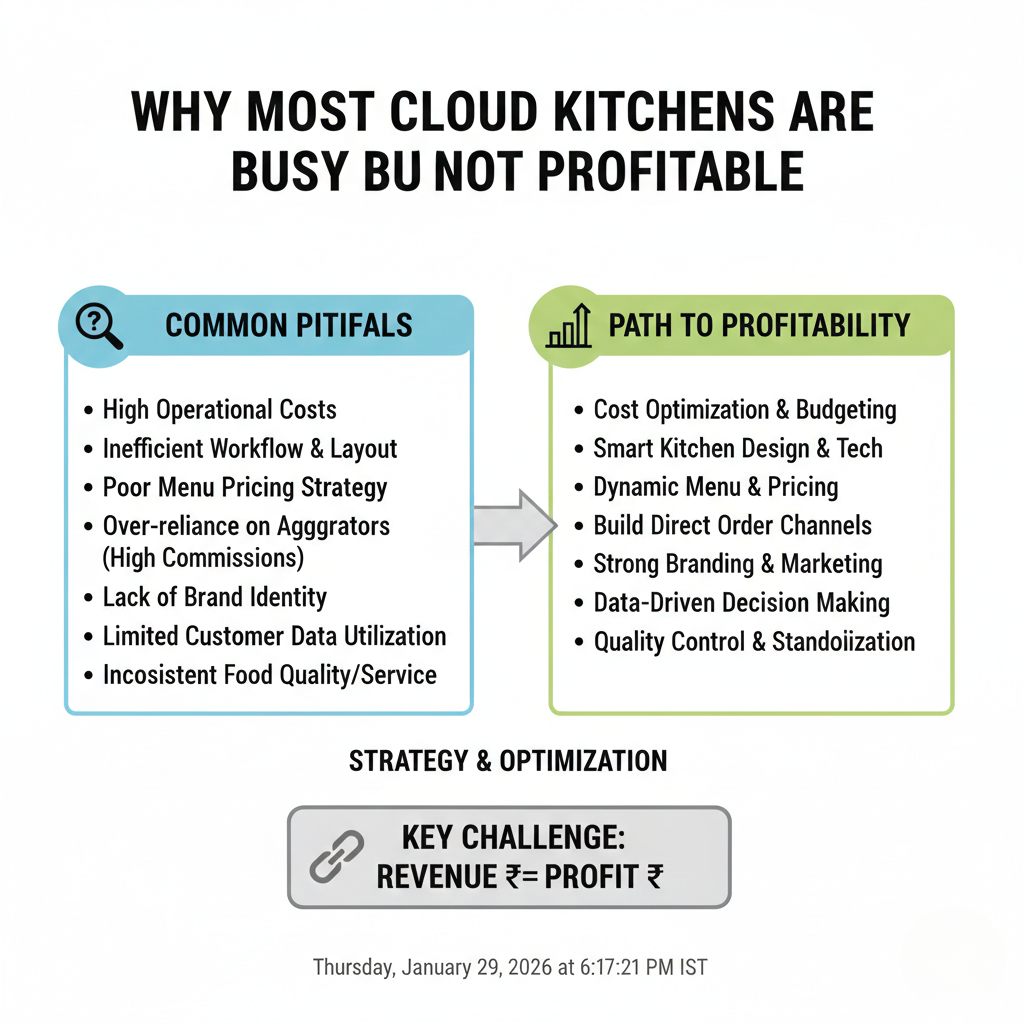
What “Busy All Day” Actually Means in a Delivery Kitchen
In a delivery kitchen, being busy can mean two very different things: you are producing high-output orders with predictable execution, OR you are repeatedly doing non-productive work caused by instability. Most loss-making kitchens are busy because of instability.
Here’s the clearest diagnostic: if your day feels like constant interruptions, it usually means your kitchen has no stable rhythm for prep, cooking sequence, packing flow, and dispatch control. The founder becomes the system. When the founder becomes the system, the kitchen feels busy even at medium order volumes.
The goal is not to reduce work. The goal is to remove rework. Rework is the invisible cost that makes you feel busy and still lose money.
The Profitability Reality: How a Busy Kitchen Still Loses Money
Cloud kitchen profitability is decided at the order level. If contribution margin per order is thin or negative, being busy simply accelerates losses. More orders do not fix a leaking system. More orders multiply the leak.
A typical “busy but losing money” kitchen has a stack of small daily leaks: extra portions to avoid complaints, over-prep that expires, one or two wrong items, a few spillage cases, late dispatch penalties, refunds that hit payouts, and discounts used to recover conversion after rating drops. Each leak seems small. Together they erase margin.
If you want a station-by-station leakage checklist, use Common Operational Mistakes in Cloud Kitchens and identify which leak repeats every day.
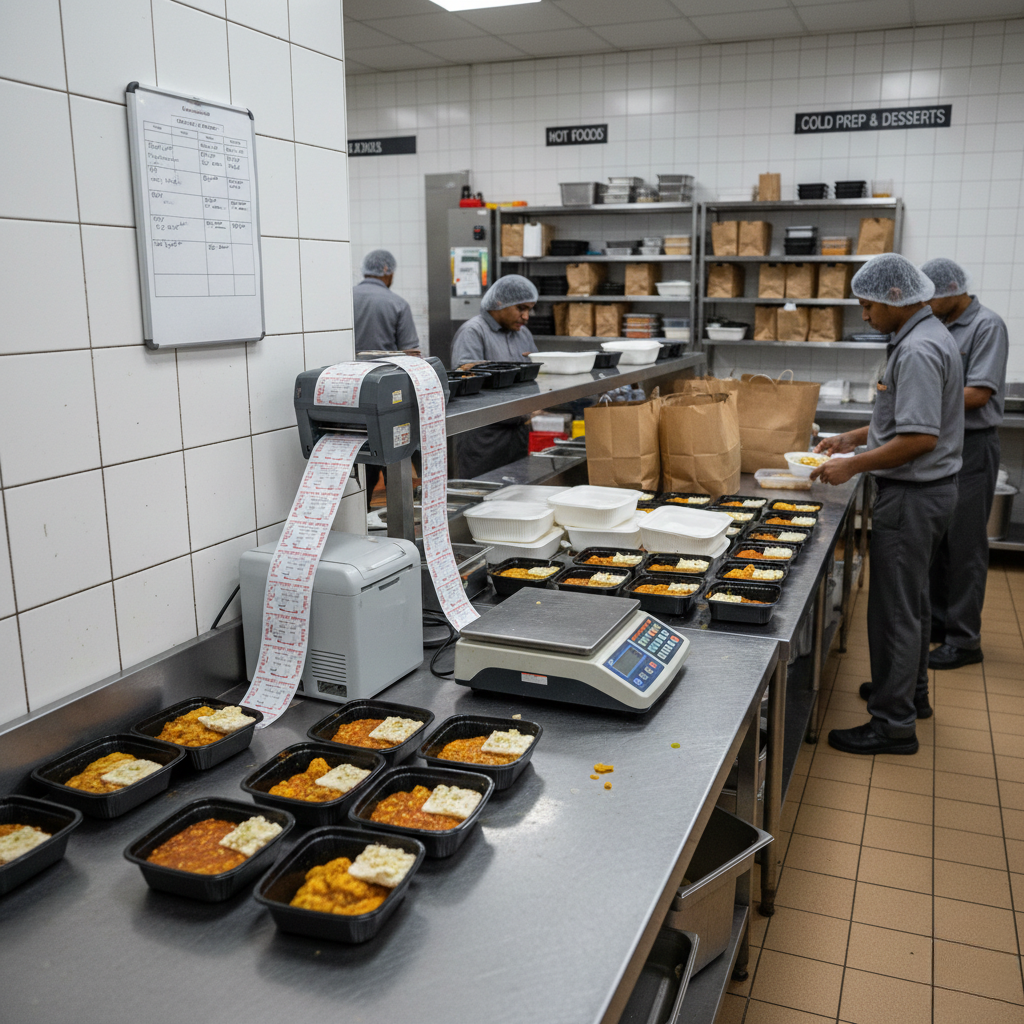
The 7 Reasons You Feel Busy All Day (And Why Each One Costs Money)
Below are the most common reasons cloud kitchen founders feel busy all day while the business still loses money. Each reason is an “activity creator,” not a “profit creator.”
1) You are doing decisions, not running a system. If staff needs approvals for every substitution, every escalation, every stock issue, every packaging choice, your day becomes a decision queue. Decisions during peak create delays. Delays create cancellations and refunds. Refunds hit payout.
2) Prep is not demand-based, so service becomes chaotic. When prep targets are not linked to expected demand, the kitchen oscillates: over-prep and waste on some days, stockouts and substitutions on other days. Both patterns increase food cost and complaint risk.
3) Cooking sequence breaks during peak, so throughput collapses. When stations don’t have a fixed sequence, cooks multitask randomly. Random multitasking increases errors and increases ticket time. Ticket time increases rider escalations and late dispatch risk.
4) Packing is rushed, so rework becomes normal. Packing is a profit station. If packing is not checklist-driven, you will miss add-ons, mix items, forget cutlery, and seal poorly. One packing mistake triggers a chain: refund, replacement, rating drop, discount burn.
5) Portion drift increases because “avoiding complaints” becomes the default. In busy kitchens, staff adds a little extra to prevent complaints. That “extra” becomes permanent. Permanent extra becomes daily margin leakage.
6) Inventory isn’t controlled, so stockouts create panic. If your store does not run FIFO, reorder points, and a daily critical-item check, you’ll face mid-service stockouts. Stockouts trigger substitutions and delays. Both increase refunds and reduce repeat orders.
7) Discounts become your recovery lever, so margin disappears quietly. When operations create rating volatility, conversion drops. Many kitchens respond with heavier discounts. Discounts may bring orders back, but they destroy contribution margin. You remain busy, but you keep less cash.
Payout Reality: Why You Can Be Busy and Still See Low Payouts
Many founders blame commission, but platform economics includes performance deductions. Late dispatch, cancellations, wrong items, missing add-ons, and refunds reduce payout quality. If operational instability increases, your effective margin reduces even if sales looks stable.
To understand why payouts feel inconsistent, read Aggregator Commission Impact in India.
External reference links (policy context): Swiggy Refund & Cancellation Policy and Zomato Online Ordering Terms.
Packing + Dispatch: The Fastest Place Where Busy Kitchens Lose Money
Dispatch is where profitability often collapses. A busy kitchen tends to rush dispatch. Rushed dispatch creates wrong orders, spillage, missing add-ons, and delays. The kitchen then spends more time on rework: remakes, calls, replacements, escalations. That is why the day feels busy.
The fastest fix is to make dispatch predictable: define a stage-wise SLA, implement a dual verification step, standardize packaging by item type, and use a simple add-on checklist.
Implement the standard using Cloud Kitchen Dispatch SOP.
Role Confusion: When Everyone Works, but Nobody Owns Outcomes
Most “busy but losing money” kitchens are not understaffed. They are mis-structured. When roles are unclear, work expands: two people touch the same task, packing interrupts cooking, prep is done mid-service, and dispatch is handled by whoever is free. This creates delays and mistakes.
Margin improves when roles are fixed:
Prep ownership: prep targets, labels, holding times, discard rules.
Cook ownership: station sequence, yield checks, reheat rules.
Pack ownership: checklist, seals, labels, add-ons verified.
Dispatch ownership: SLA checks, rider handover, escalation rules.
Use Role-Based Kitchen Operations Explained to implement this structure.
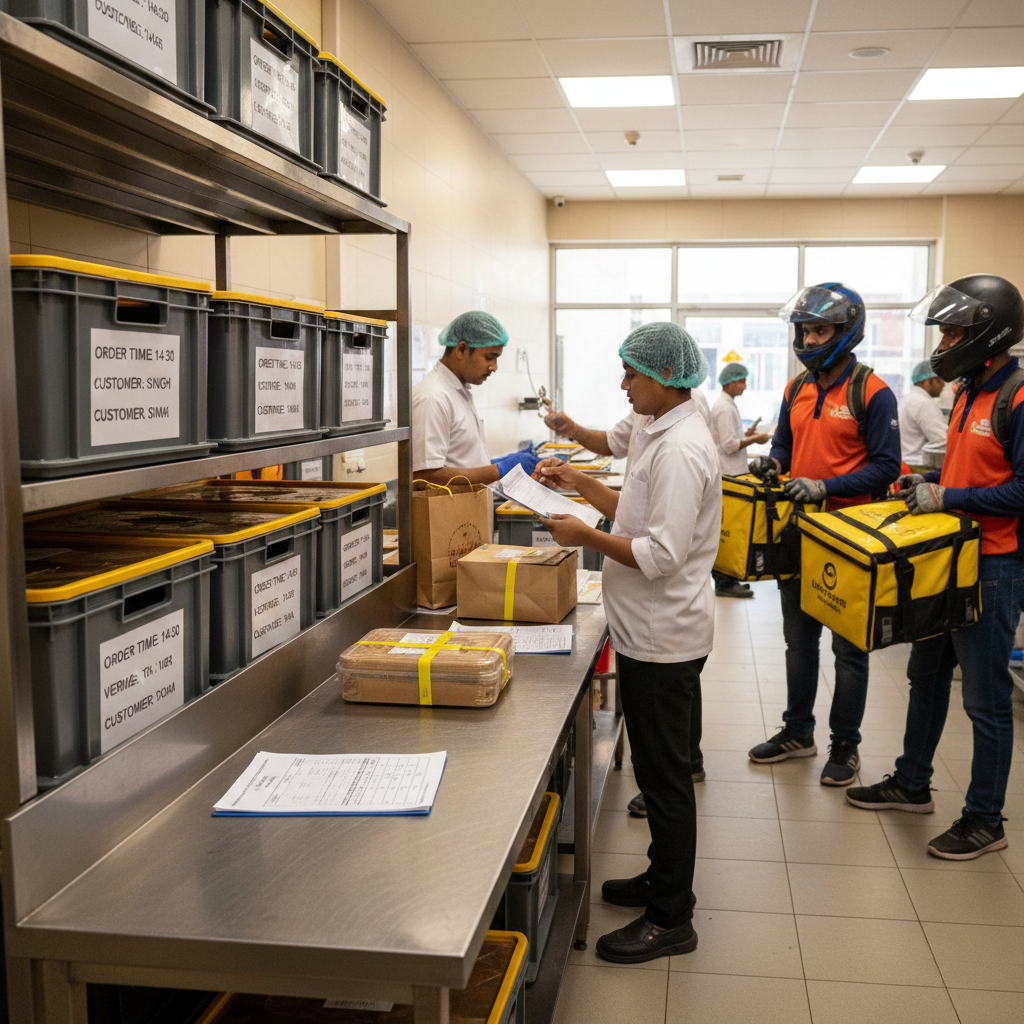
How to Stop Losing Money Even When You’re Busy: A 7-Day to 30-Day Fix Sequence
The biggest mistake founders make is trying to fix losses with more work: longer hours, more staff, more ads, more discounts, or more menu items. These actions increase activity, not stability. To stop losing money, you need to remove rework and stabilise contribution margin.
Step 1 (Day 1–2): Calculate contribution margin for 20–30 recent orders. Selling price minus platform costs minus packaging minus food cost minus refunds/penalties share. If contribution is thin, the kitchen will lose money no matter how busy it is.
Step 2 (Day 1–7): Start a “rework log.” Track daily: remakes, wrong items, missing add-ons, spillage, refunds, delays, cancellations. The kitchen is usually busy because of 2–3 repeating rework reasons.
Step 3 (Day 3–7): Lock portions for top-selling SKUs. Define grams/ml and enforce portion tools during peak. Portion drift is the easiest daily leakage in busy kitchens.
Step 4 (Week 2): Implement packing + dispatch dual verification. Packer checklist AND dispatch checklist. This reduces refunds and replacement work fast.
Step 5 (Week 2): Make prep demand-based. Create batch targets, holding times, label rules, and discard rules. This reduces over-prep wastage and mid-service stockouts.
Step 6 (Week 3): Fix role ownership and remove interruptions. Assign station owners. Stop letting prep interrupt service. Stop letting packing interrupt cooking. Predictable flow reduces chaos.
Step 7 (Week 3–4): Simplify the menu where it creates errors. Remove low-margin complexity. Push hero items with stable execution. Keep add-ons profitable and easy to pack correctly.
If you want the discipline lens that ties operational stability to profitability, map this with How Process Discipline Improves EBITDA.
External hygiene + process standards (useful while standardising SOPs): FSSAI Hygiene Requirements (Schedule 4 reference), ISO 22000 overview, and Standardized Work (Lean lexicon).
Final Takeaway: Busy Is Not a Business Model. Repeatability Is
If you are busy all day but still losing money, your kitchen is likely spending its energy on rework, not output. The solution is not more hustle. The solution is fewer repeats of the same mistakes. When portions are controlled, prep is demand-based, roles are owned, packing is checklist-driven, dispatch is predictable, and refunds reduce, you will still be busy but the business will finally keep cash.
Operational frameworks from GrowKitchen, and operating partner brands like Fruut and GreenSalad are built to turn “busy kitchens” into “profitable kitchen networks.”
FAQs: Why Am I Busy All Day but Still Losing Money?
What is the most common reason busy cloud kitchens still lose money?
Rework + leakage: portion drift, wastage, remakes, refunds, and discount burn. Activity increases while contribution margin stays weak.
What is the fastest fix I can do in 7 days?
Start a rework log AND lock portions for top-selling items. You’ll quickly see the repeating leak that makes you busy and unprofitable.
Does hiring more staff solve the problem?
Only if roles and station ownership are clearly defined. Otherwise, more staff often increases cost without reducing rework.
Why do I feel like I’m always firefighting?
Because the kitchen lacks predictable SOPs for prep, packing, dispatch, and escalations. When the system is unclear, the founder becomes the system.
- Cloud Kitchen Profitability Consultant in India
- Common Operational Mistakes in Cloud Kitchens
- How SOPs Reduce Food Cost & Complaints
- Aggregator Commission Impact in India
- Cloud Kitchen Dispatch SOP
- Role-Based Kitchen Operations Explained
- When Growth Is Hurting Your Cloud Kitchen Operations
- How Process Discipline Improves EBITDA
- Grow Kitchen on X