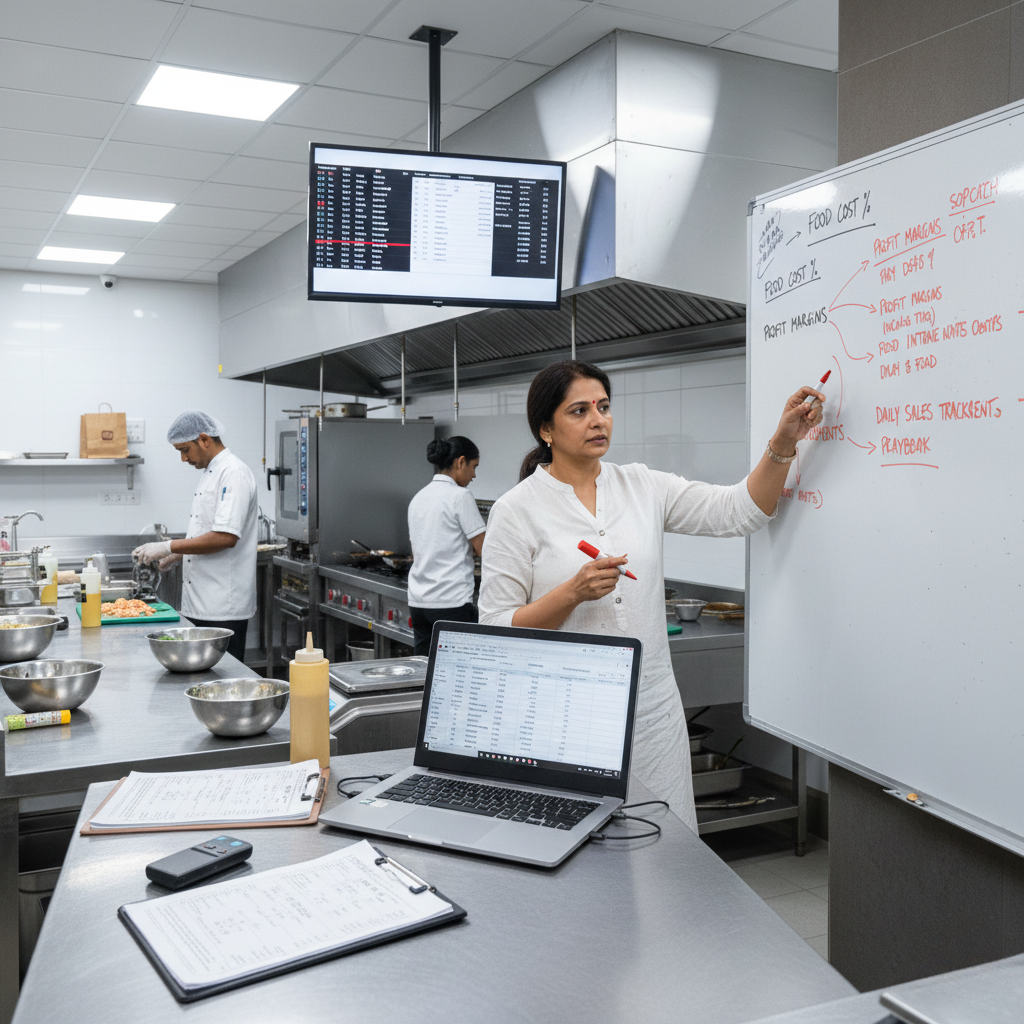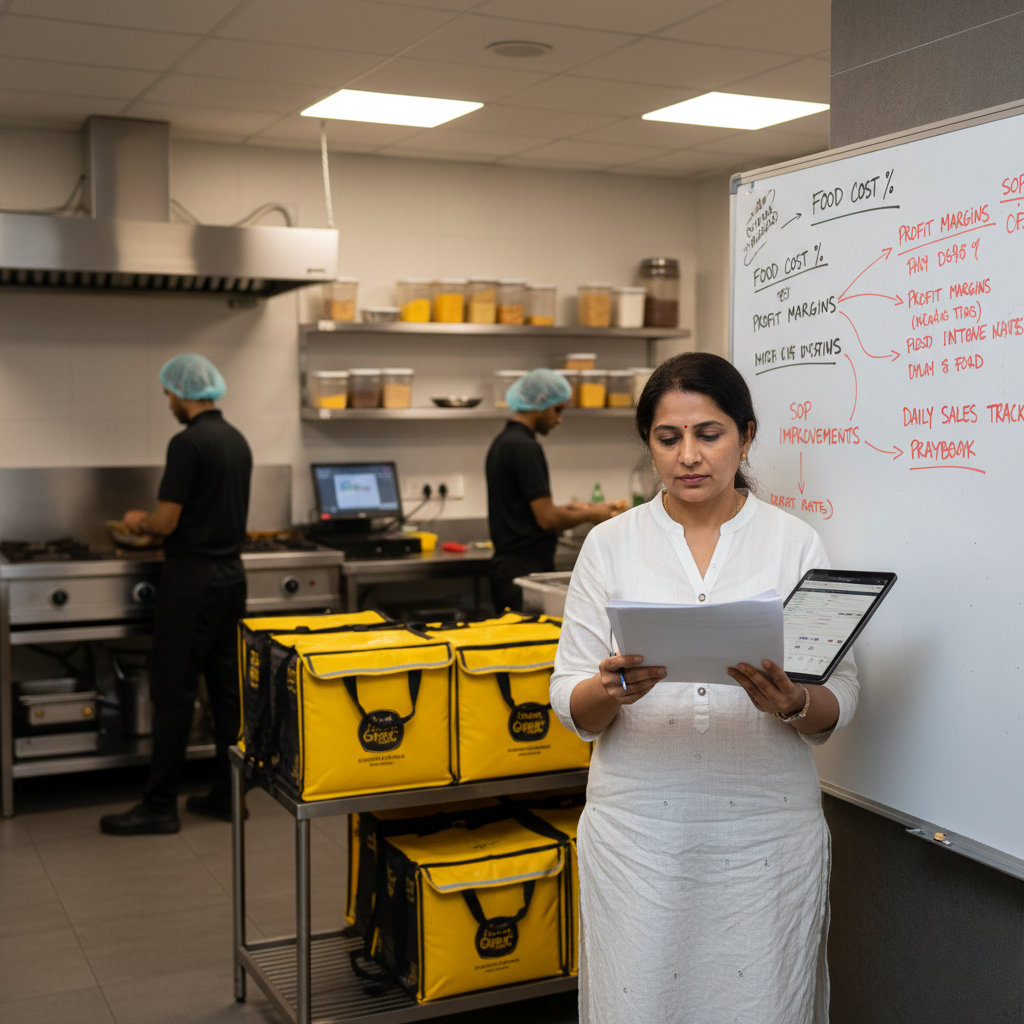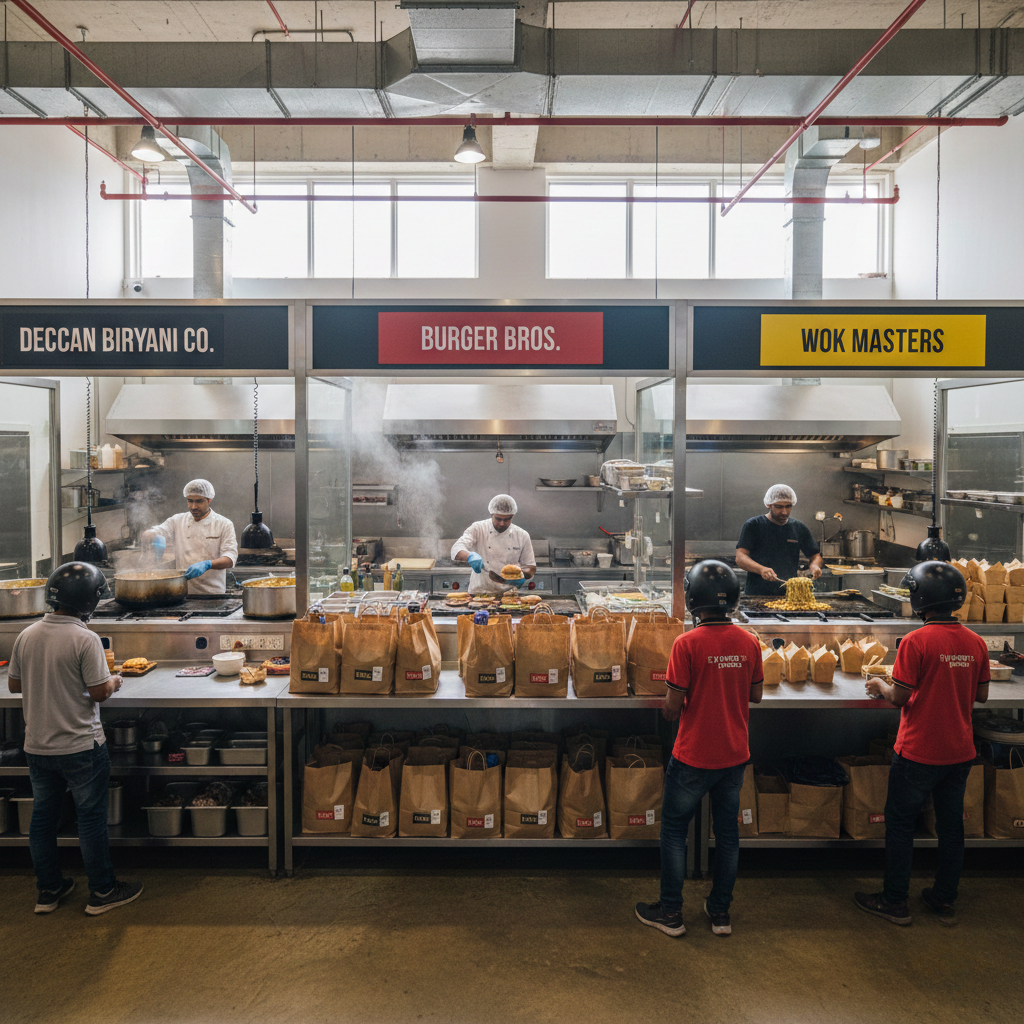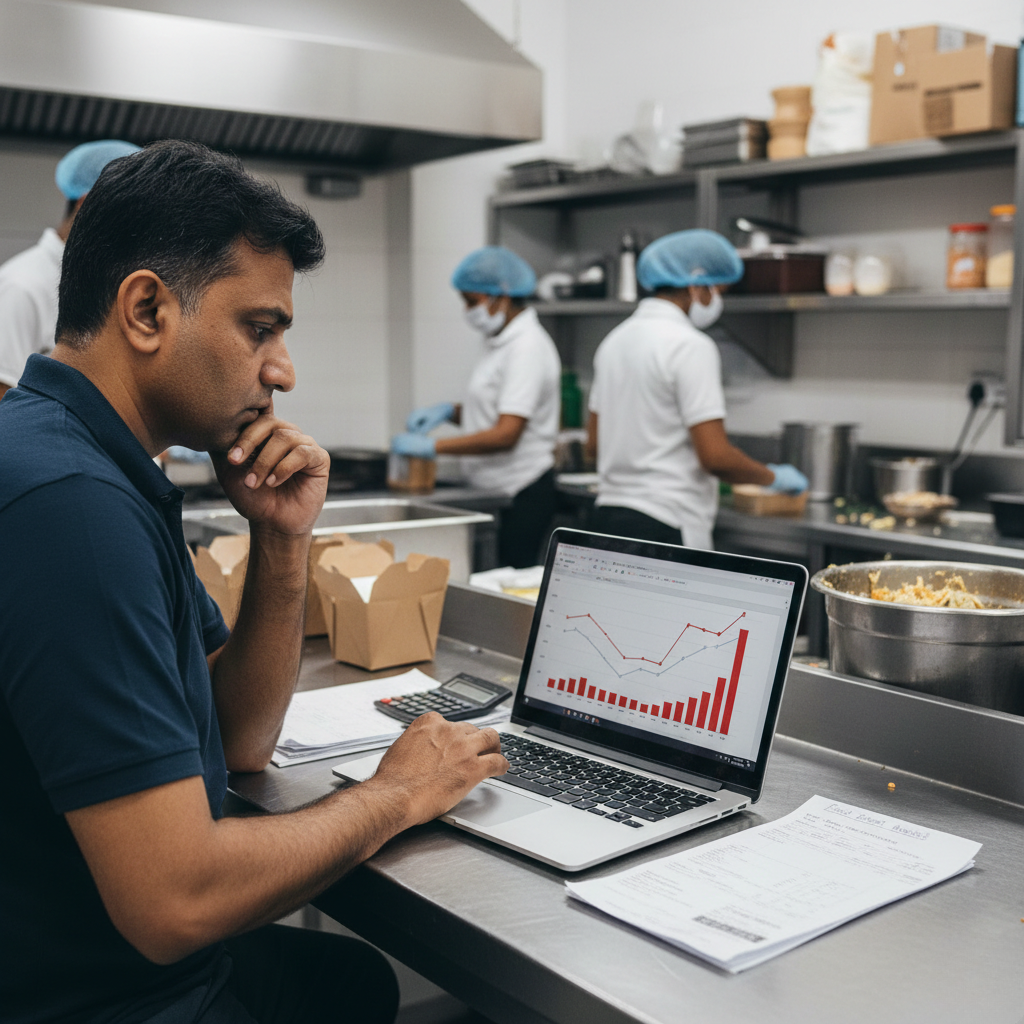
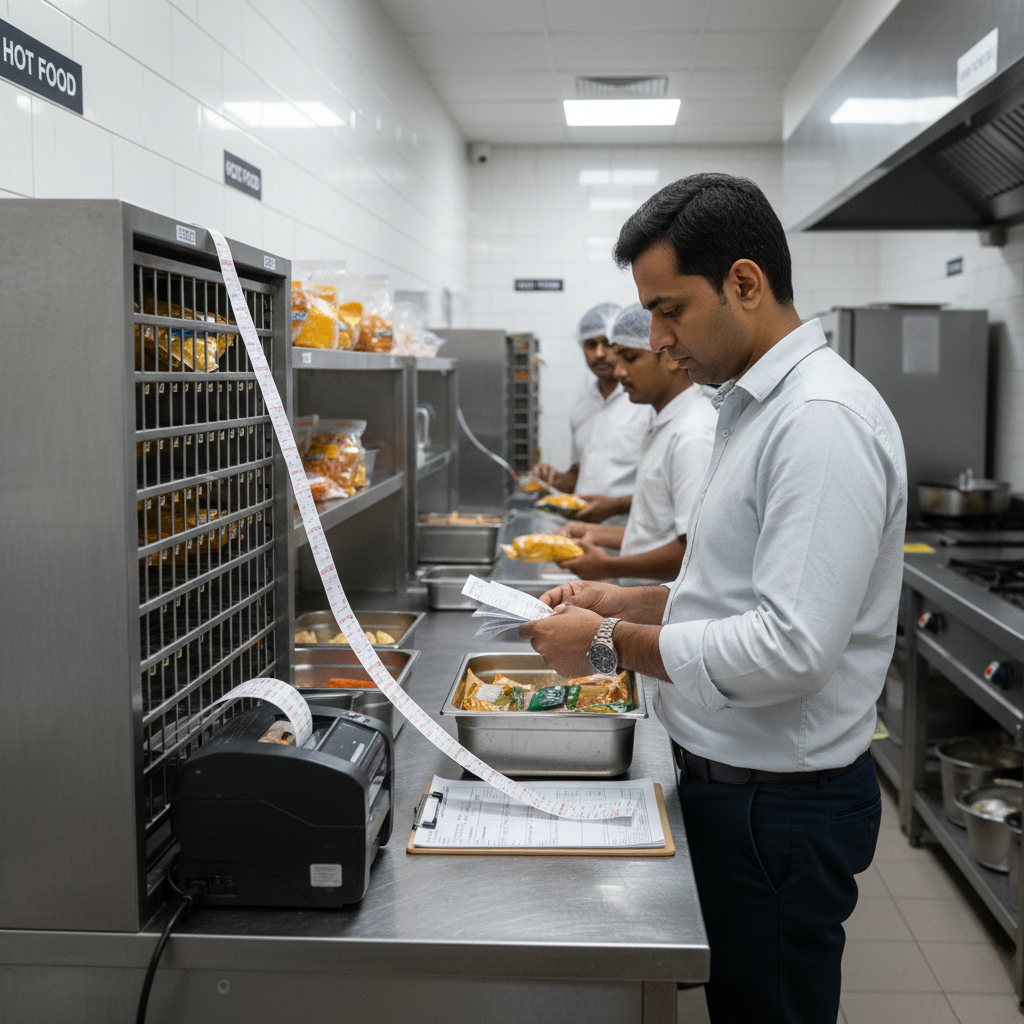
Founder Dependency Cost Impact is not a “leadership mindset” topic. It is the difference between a kitchen that scales through systems and a kitchen that survives through the founder’s daily presence. Most cloud kitchens don’t fail because the founder is not hardworking. They fail because the founder becomes the operating system. When the founder is the SOP, the QC team, the dispatch manager, the purchaser, and the complaint handler, every order is profitable only as long as the founder is available. Founder dependency creates hidden costs: portion drift, dispatch chaos, staff confusion, vendor manipulation, delayed decisions, higher refunds, rating instability, and stalled growth. This guide explains how founder dependency silently kills margins end-to-end from prep to pack to payout, and how to replace founder effort with a repeatable operating system.
Founder Dependency and Its Cost Impact: The Silent Reason Profits Never Stabilise
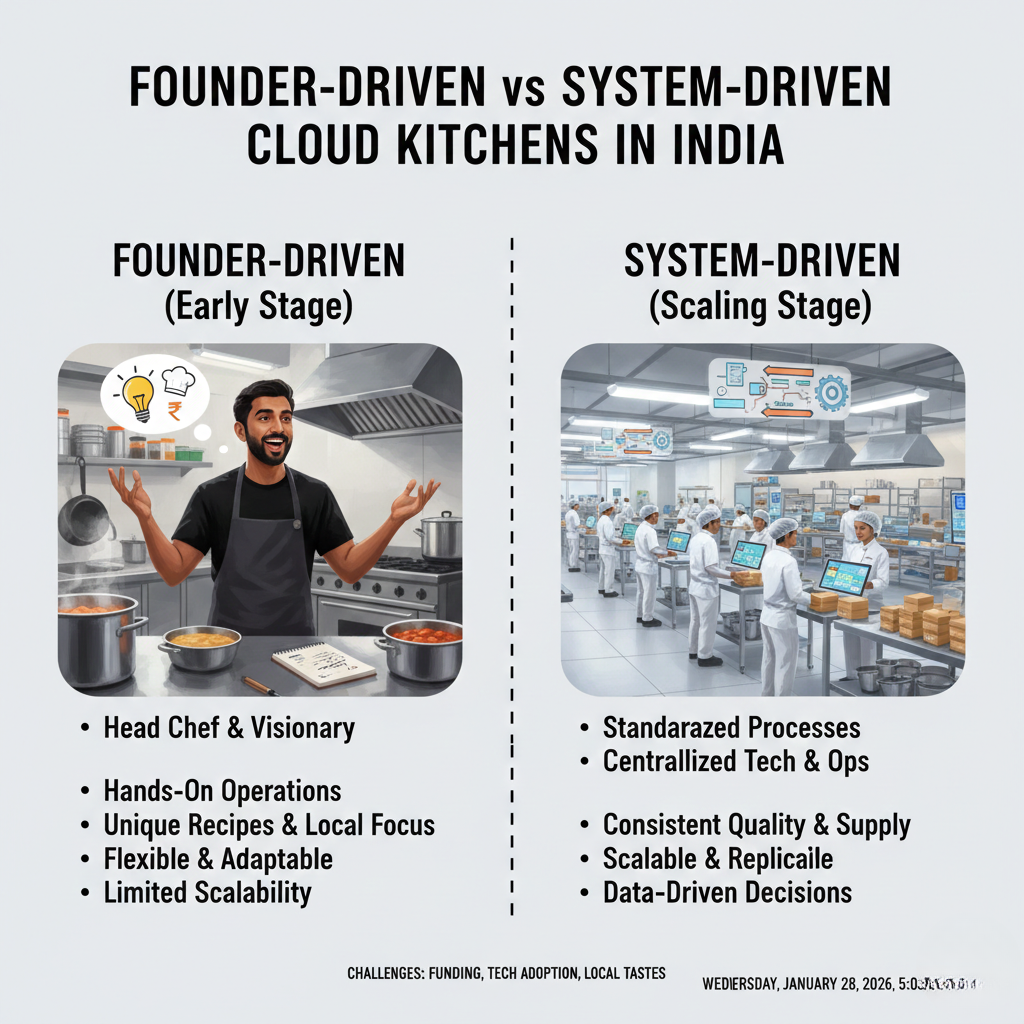
Many cloud kitchen founders reach a confusing stage: sales look steady, the kitchen is running every day, staff is present, brands are live across aggregators, but profitability feels fragile. One week is “okay” and the next week feels like a loss. This happens because the business is not system-driven. It is founder-driven.
Founder dependency looks like control, but it is usually expensive control. The founder catches mistakes before they reach customers, pushes staff during peak, fixes inventory gaps, and negotiates last-minute purchases. The kitchen looks “active” and “managed.” But margins leak daily because the same actions are not repeatable without the founder.
Founder dependency has a direct cost impact because it creates variation. When execution varies by who is present, costs vary by day. When costs vary by day, profit becomes unpredictable. Predictable profit only happens when the kitchen runs on systems, not on founder energy.
If you want the profitability foundation first, start with Cloud Kitchen Profitability Consultant in India and identify the operational leaks via Common Operational Mistakes in Cloud Kitchens.
What Founder Dependency Actually Means in a Cloud Kitchen
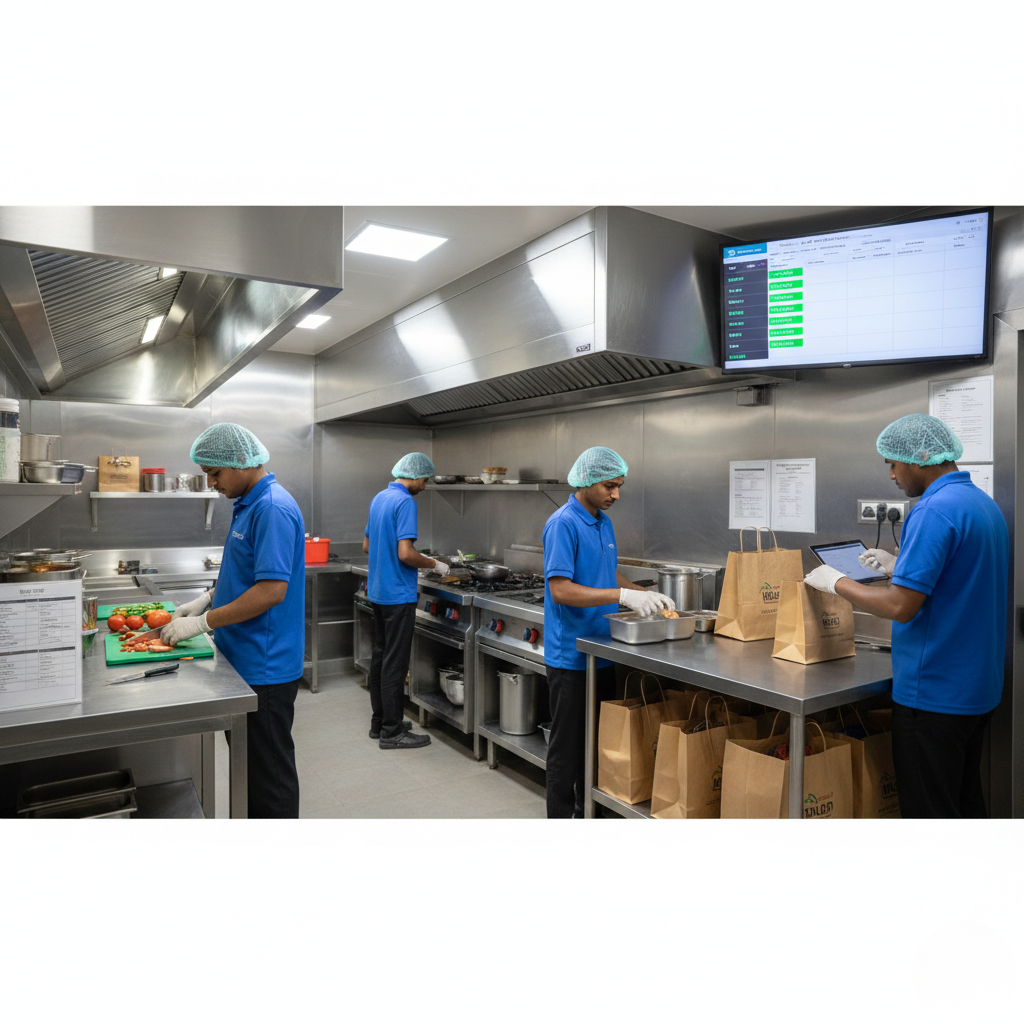
Founder dependency is not “the founder works hard.” Founder dependency means the kitchen performs correctly only when the founder is present. It means the founder’s presence is the quality system, the dispatch system, and the decision system.
In cloud kitchens, dependency forms faster because the business is built under pressure: the founder launches quickly, recipes evolve on the fly, staffing is lean, and daily issues require instant decisions. The founder solves problems in real-time. Over time, the team learns one thing: “Founder will handle it.” That belief becomes the operating model.
The goal is not to remove the founder from operations overnight. The goal is to remove founder-critical dependence. A profitable kitchen is not one where the founder does everything. A profitable kitchen is one where the founder designs the system that does everything.
Why Founder Dependency Increases Costs by Breaking the Operating Structure
Founders usually track visible costs: rent, staff salary, commissions. The real damage of founder dependency happens in invisible variable costs that compound daily: over-portioning when the founder is not watching, wastage from poor prep planning, remakes because recipes are not standardised, refunds because packing checks are not followed, delays because roles are unclear, and emergency buying because inventory is not controlled.
Founder-managed kitchens often look “high control” but operate on informal rules: “Do it like yesterday,” “Ask sir,” “We’ll decide during peak,” “Adjust according to feel.” These rules create daily variation. Variation is expensive because it multiplies across orders.
A system-driven kitchen creates repeatable outcomes. Repeatable outcomes reduce mistakes. Reduced mistakes lower refunds, wastage, penalties, and rework. That is what stable profitability looks like in delivery kitchens.
If you want the bigger picture on why kitchens bleed cash while looking busy, refer Common Operational Mistakes in Cloud Kitchens.
Food Cost Drift: Founder Dependency Makes Portion Control a Daily Gamble
The most direct cost impact of founder dependency is food cost drift. Many founders assume food cost drift happens because market rates change. In reality, drift often happens because execution changes when the founder is absent. Portions become inconsistent, substitutes get introduced casually, and recipe steps get skipped.
In a founder-dependent kitchen, “quality control” means the founder checks plates, bowls, and packs. But checking output is not the same as building control. Control is created when portion sizes, ladles, weights, and batch yields are standardised and audited daily.
Founder dependency increases food cost in five predictable ways:
1) Portion drift during peak: Staff prioritises speed over accuracy when there is pressure. Without a measured portion SOP, “a little extra” becomes normal.
2) Recipe shortcuts: Staff skips steps to finish faster. Shortcuts change taste and lead to customer complaints, causing refunds or remakes.
3) Uncontrolled substitutions: When stock is short, someone substitutes ingredients without costing updates. This breaks consistency and breaks margins.
4) Batch yield mismatch: If a gravy yields 18 portions today and 15 tomorrow, that variance is cost leakage. The founder often “feels” the difference, but the system doesn’t catch it.
5) No daily variance review: In system kitchens, daily checks detect drift early. In founder kitchens, drift is noticed only when payouts feel low.
If you want the SOP-led link between food cost control and complaint reduction, read How SOPs Reduce Food Cost & Complaints.
Staff Productivity: Founder Dependency Converts Teams into “Waiters for Decisions”
Founder dependency does not only increase food cost. It also destroys productivity. In many kitchens, staff is present but output per person stays low. The reason is simple: staff waits for decisions.
When processes are not documented, staff cannot act confidently. They keep asking questions. They keep escalating small issues. They pause when something unexpected happens. During peak hours, this becomes chaos: prep halts, packing becomes rushed, dispatch slips, and ratings take a hit.
Founder-dependent kitchens create productivity loss through: unclear roles, unclear handoffs, unclear escalation, and unclear ownership. Everyone becomes “busy,” but throughput stays low.
A system-driven kitchen replaces dependence with role clarity:
Prep roles: who batches, who labels, who stores, who updates stock.
Cook roles: sequence, pan allocation, batch timing, reheat rules.
Pack roles: packing order, seals, add-ons checklist, labeling.
Dispatch roles: verification, rider handover timing, escalation rules.
The founder stops being the workflow coordinator. The workflow coordinates itself. That is where scale becomes possible.
For role clarity frameworks, use Role-Based Kitchen Operations Explained.
Aggregator Penalties: Founder Dependency Makes Payouts Unpredictable
Many founders calculate profitability using commissions only. But aggregator payouts are impacted by operational performance: cancellations, customer complaints, wrong items, packaging failures, delays, and refund patterns. Founder dependency increases all of these because control is not embedded into the process.
On founder days, refunds reduce. On non-founder days, refunds spike. That variability is the biggest signal of founder dependency. The business is not stable. It is founder-stabilised.
To understand how platform economics impacts margin reality, read Aggregator Commission Impact in India.
External reference links (for platform policy context): Swiggy Refund & Cancellation Policy and Zomato Online Ordering Terms.
Dispatch Failures: Founder Dependency Turns Last-Mile Accuracy into Luck
Dispatch is where profitability dies silently. A kitchen can cook good food and still lose money if dispatch is inconsistent. Founder dependency often shows up most clearly at dispatch: when the founder is present, checks happen; when the founder is absent, checks become optional.
One wrong order triggers: refund, complaint, rating drop, and future conversion loss. These are not just “service issues.” These are margin issues.
Founder dependency increases dispatch loss through four predictable mechanisms:
1) No time discipline: staff accepts delays as normal because there is no time SLA per stage.
2) No dual verification: packer checks once and assumes it’s fine. Missing second check creates repeat errors.
3) Packaging inconsistency: seals, labels, cutlery, and add-ons become irregular. Customers experience it as “careless brand.”
4) No escalation playbook: rider delay, stockout, or substitution triggers panic. Founder gets called. Peak slips further.
For a dispatch-ready workflow, implement Cloud Kitchen Dispatch SOP.
Scaling Myth: Founder Dependency Multiplies Losses Faster Than Orders
Many founders assume: “Once we do more orders, we’ll become profitable.” That is only true if the kitchen is already controlled. Founder dependency creates a dangerous pattern: revenue grows but the founder becomes busier. Busy founders cannot be everywhere. So quality becomes inconsistent.
At 40–60 orders/day, a founder can manually protect performance. At 120–200 orders/day, manual protection fails. At multiple kitchens, manual protection is impossible. That is why many businesses grow and still bleed.
Scaling amplifies: portion drift, staff confusion, dispatch chaos, vendor manipulation, complaint cycles, and cash burn. The founder feels like the business is growing, but the system is collapsing under the surface.
If growth is currently hurting your kitchen, read When Growth Is Hurting Your Cloud Kitchen Operations.
How to Reduce Founder Dependency Without Losing Control
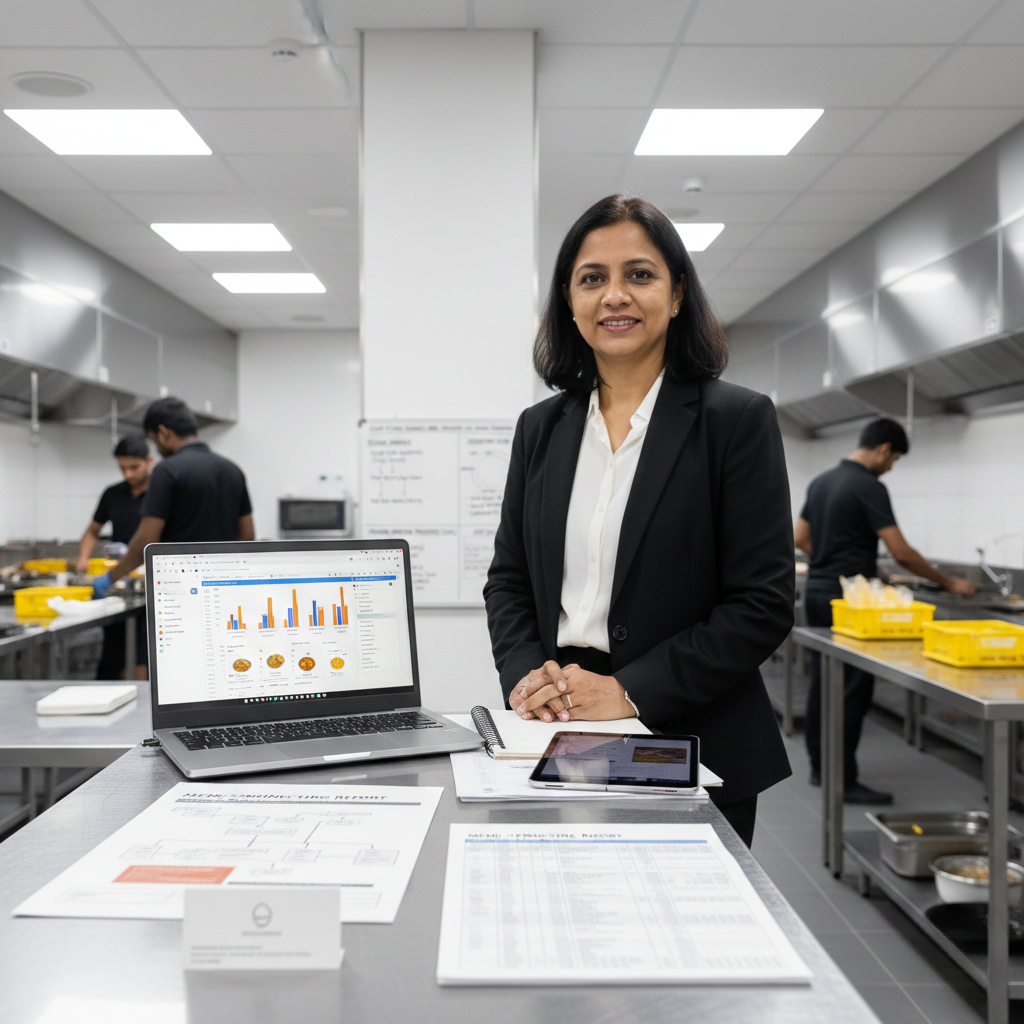
The biggest mistake founders make is trying to “delegate everything” without building systems. Delegation without standards creates more chaos. The right approach is to convert founder knowledge into a repeatable operating system. The founder’s job shifts from “doing” to “designing control.”
Here is a practical implementation sequence that works in running kitchens:
Step 1: Identify founder-touch moments. Track 7 days and list every moment where the team needed the founder: purchasing approvals, substitutions, recipe decisions, customer escalations, dispatch issues, staff disputes, or inventory gaps. These are your “dependency hotspots.”
Step 2: Build the profit SOP stack first. Don’t SOP everything at once. SOP the highest ROI areas first: Recipe SOPs → Portion SOPs → Packing SOPs → Dispatch SOPs → Receiving SOPs. This reduces refunds and food cost drift quickly.
Step 3: Create role-based ownership with handoff rules. Dependency reduces when ownership is clear. Define who owns: prep completion, station readiness, stock checks, pack accuracy, and dispatch SLA. Add simple handoff checklists so work doesn’t “float.”
Step 4: Make SOPs station-based and visual. SOPs cannot live only in Google Drive. Put them on the wall: prep table, cooking station, packing station, dispatch desk. If the SOP is not visible during peak, it does not exist.
Step 5: Replace “founder checking” with “daily compliance checks.” Checks create discipline. Implement simple, measurable checks: ladle/portion check, batch yield check, label + seal check, dispatch time check, and daily variance check. What gets checked gets followed.
Step 6: Build an escalation ladder. Most founder calls happen because staff doesn’t know what to do when something breaks. Create a ladder: station lead → shift supervisor → ops manager → founder (only for true exceptions). Define exceptions clearly so “everything” doesn’t become an exception.
Step 7: Use dashboards to make performance visible. Founder dependency reduces when the system shows reality. Track daily: refunds, remakes, dispatch time, food cost variance, stock variance, and complaints. Visibility replaces emotional management with factual management.
External hygiene + safety standards (useful when standardising SOPs): FSSAI Hygiene Requirements (Schedule 4 reference), ISO 22000 overview, and FAO/Codex General Principles of Food Hygiene.
Optional external reference (execution discipline mindset): Standardising work is a known way to reduce variability in operations. If you want a broader process lens, you can explore Standardized Work (Lean lexicon) as a concept reference.
Final Takeaway: Founder Dependency Doesn’t Create Control. It Creates Hidden Cost
Cloud kitchen profitability is not only a marketing problem. It is a system problem. If your kitchen runs well only when you are present, you don’t have control. You have founder dependency.
Founder dependency increases costs because it creates variation: portions drift, prep becomes inconsistent, dispatch errors rise, refunds increase, penalties increase, staff productivity falls, and payouts become unstable. The founder becomes the band-aid that hides operational wounds.
A founder-dependent kitchen is founder-stabilised. A system-dependent kitchen is profit-stabilised. And profit-stabilised kitchens are the ones that scale across brands and locations.
Operational frameworks from GrowKitchen, and operating partner brands like Fruut and GreenSalad help founders turn “founder-run kitchens” into “system-run kitchen networks.”
FAQs: Founder Dependency and Its Cost Impact
Is founder dependency normal in early-stage cloud kitchens?
Yes. It is common early on. The problem is when the business stays dependent even after the menu and operations are stable. That is where cost leakage becomes permanent.
What is the biggest financial sign of founder dependency?
Variability. If refunds, food cost, and ratings swing depending on whether the founder is present, the system is not stable.
How do I reduce founder dependency without losing quality?
Convert founder knowledge into SOPs, station checklists, daily compliance checks, and an escalation ladder. Replace “founder supervision” with “process verification.”
Which area should I systemise first for quick impact?
Recipe + portion SOPs and packing/dispatch verification. These reduce food cost drift and refunds the fastest.
- Cloud Kitchen Profitability Consultant in India
- Cloud Kitchen Profitability Consultant in India
- CKaaS Explained
- Common Operational Mistakes in Cloud Kitchens
- How SOPs Reduce Food Cost & Complaints
- Role-Based Kitchen Operations Explained
- Cloud Kitchen Dispatch SOP
- Aggregator Commission Impact in India
- When Growth Is Hurting Your Cloud Kitchen Operations
- Grow Kitchen on X