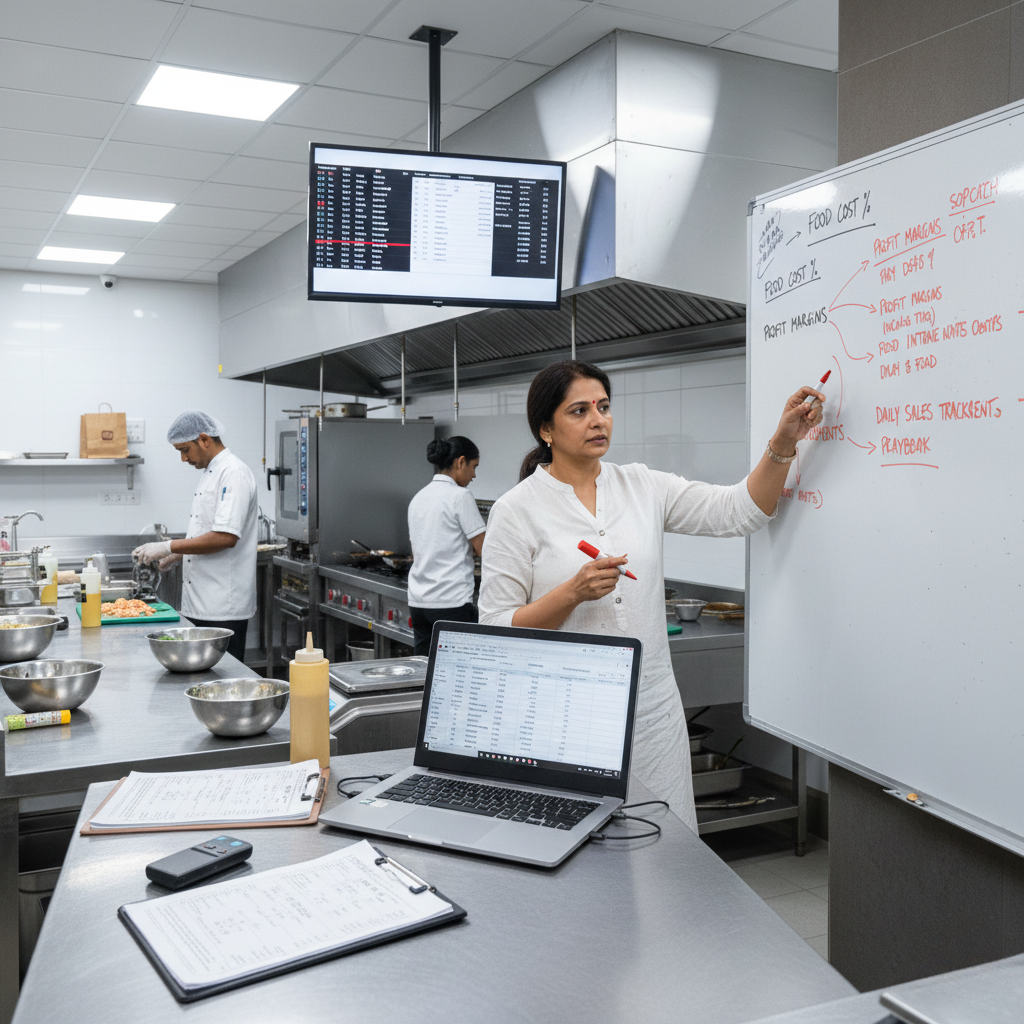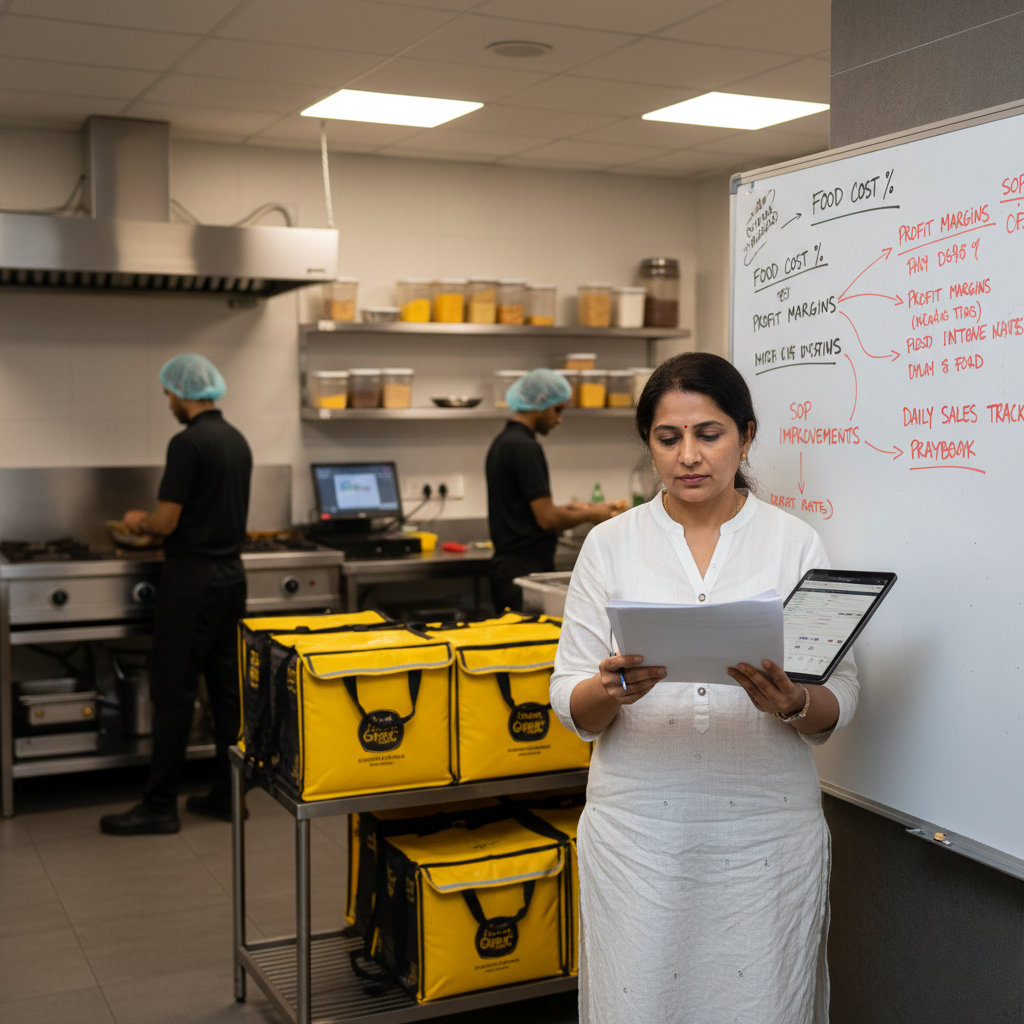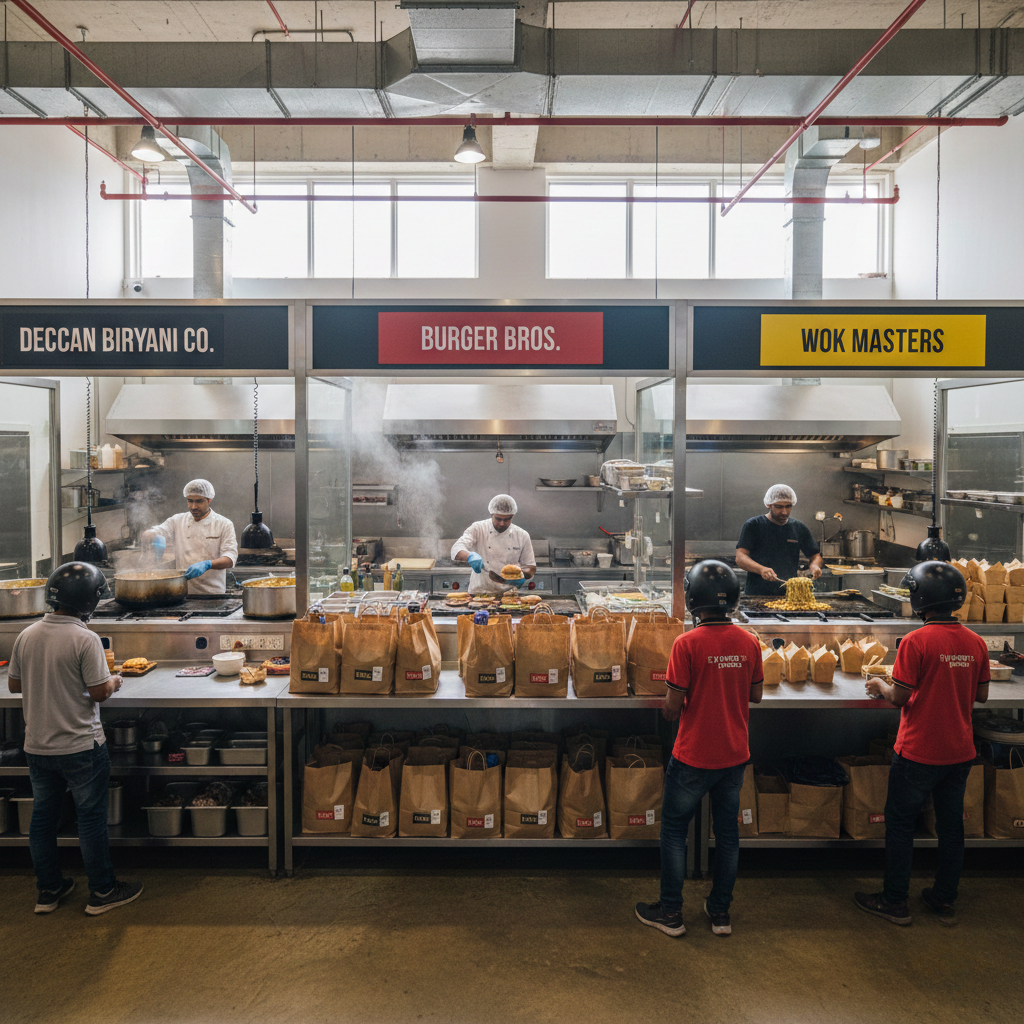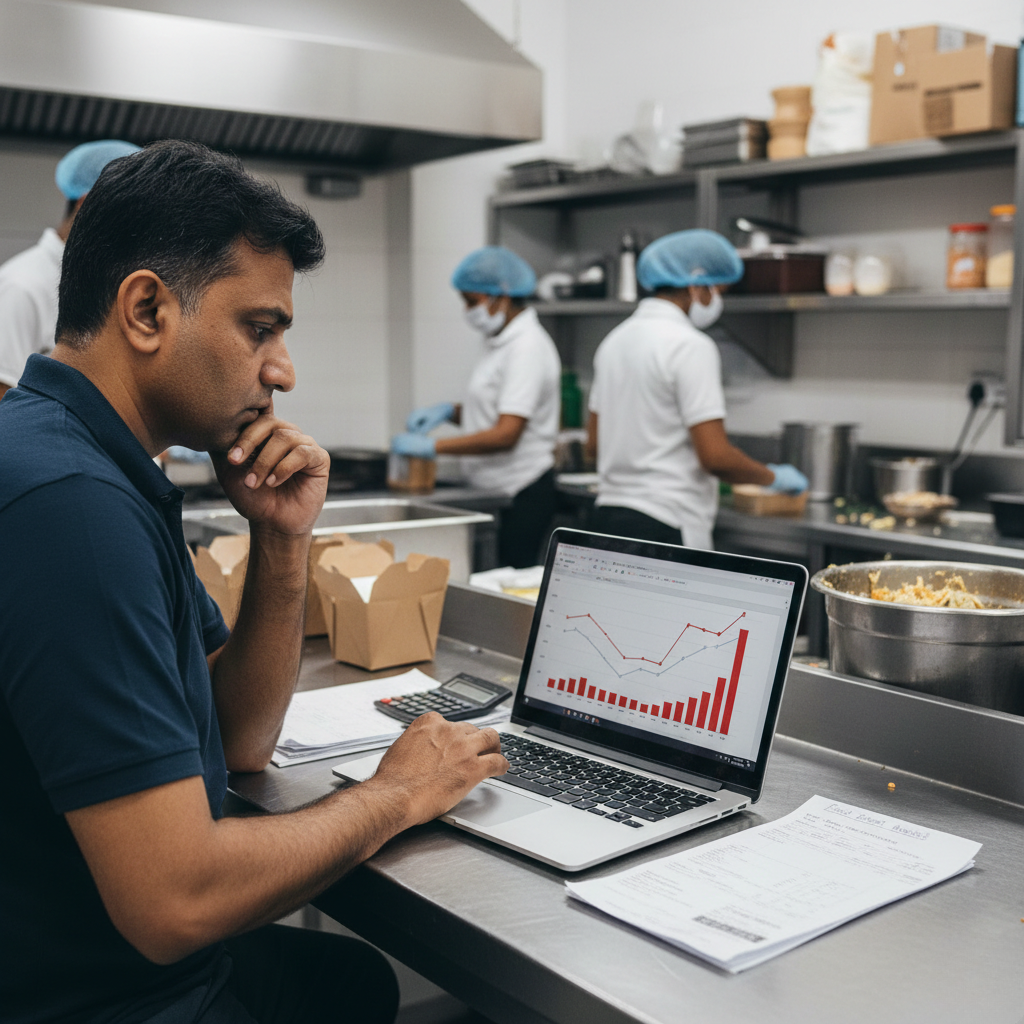
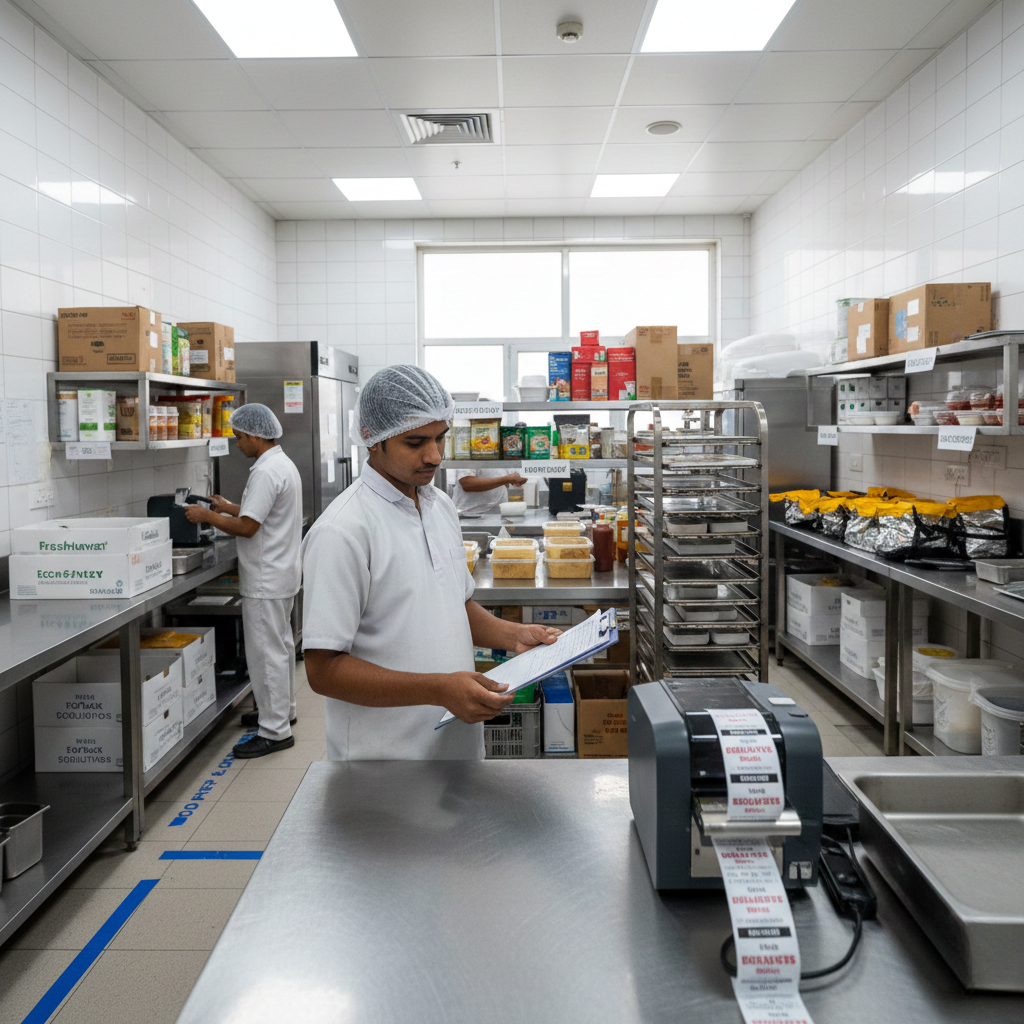
Why Centralised Purchasing Saves Money is not a “procurement theory” topic. It is the difference between a kitchen that negotiates profit and a kitchen that pays for chaos. Most cloud kitchens don’t lose money only because commissions are high. They lose money because raw material costs drift daily through inconsistent buying, rate variance, over-ordering, stock expiry, and last-minute vendor dependence. Centralised purchasing is not about bulk buying blindly. It is a control system that locks rates, standardises quality, reduces stockouts, improves inventory accuracy, and stabilises food cost across brands and kitchens. This guide explains how centralised purchasing protects margins end-to-end from vendor selection to receiving to payouts.
Why Centralised Purchasing Saves Money: The Silent Leakage Most Kitchens Ignore
Many cloud kitchen founders reach a confusing stage: orders look steady, the kitchen is running daily, staff is working hard, but profit never becomes consistent. This happens because purchasing is treated like a daily operational chore, not a profit lever. When each kitchen (or each supervisor) buys independently, costs drift through: rate variance, quality inconsistency, emergency buying premiums, duplicate ordering, stock expiry, and missing vendor accountability.
Centralised purchasing saves money because it reduces variation. When buying becomes repeatable, rates become controllable. When rates and quality become controllable, food cost becomes predictable. And predictable food cost is the base layer of profitability in delivery kitchens.
If you want the profitability foundation first, start with Cloud Kitchen Profitability Consultant in India and identify the hidden leakage points via Common Operational Mistakes in Cloud Kitchens.

What Centralised Purchasing Actually Means in a Cloud Kitchen Network
In cloud kitchens, centralised purchasing does not mean “one person buys everything.” It means one system controls buying decisions. The system defines: what items are approved, which vendors can supply them, what the negotiated rate should be, what the quality spec is, what the ordering frequency should be, and how receiving is verified.
The goal is not to reduce flexibility. The goal is to stop cost leakage caused by last-minute decisions. A kitchen that buys “as per need” daily looks agile, but that agility is usually expensive. Purchasing discipline is what makes multi-brand kitchens profitable at scale.
Without central control, every kitchen becomes its own mini-business. With central control, all kitchens operate on one profit logic: stable rates, stable quality, stable costing.
Why Centralised Purchasing Saves Money by Fixing the Cost Structure
Most founders track visible costs like rent and salaries. Purchasing leakage happens in variable costs that compound silently. Even a ₹2–₹5 rate drift per unit on a high-velocity item (oil, packaging, chicken, paneer, cheese, sauces) becomes a monthly profit killer when multiplied across orders and kitchens.
Decentralised buying creates predictable damage: one kitchen buys at a higher rate, another buys a cheaper grade, a third buys extra “to avoid running out,” and the fourth does emergency buying when stockouts happen. The network looks busy, but the P&L becomes unstable.
Centralised purchasing fixes this by standardising decisions: one negotiated rate list, one approved vendor list, one specification sheet, one purchase calendar, and one receiving checklist. This creates fewer stockouts, fewer emergency orders, and fewer returns. The outcome is simple: lower rate variance, lower wastage, and higher margin predictability.
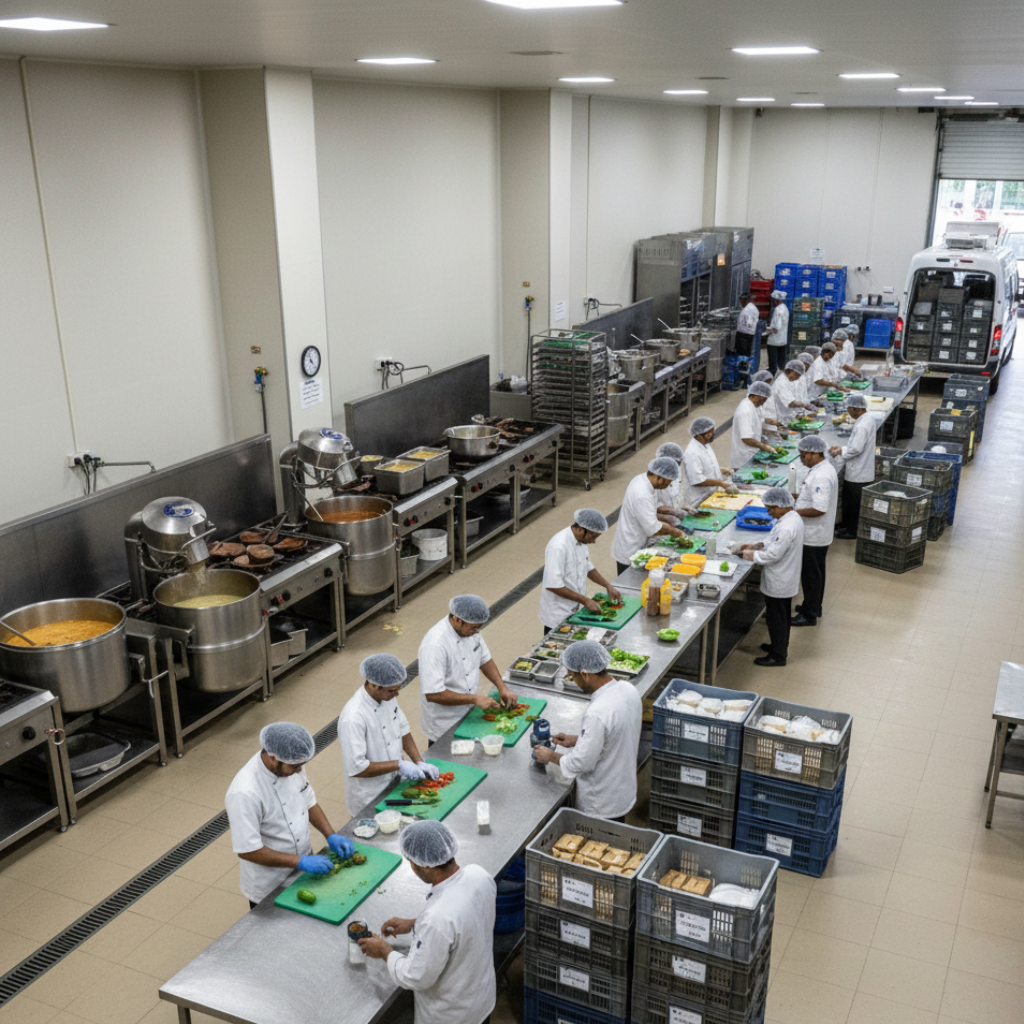
Food Cost Control: Centralised Purchasing Locks Rates and Recipe Integrity
Food cost is the biggest variable in cloud kitchen profitability. Most kitchens assume food cost drift happens because “market rates increased.” In reality, drift often happens because purchasing is inconsistent: different grades enter the kitchen, pack sizes change, substitutes are bought without costing updates, and recipe outcomes vary because raw material quality varies.
Centralised purchasing fixes food cost in five practical ways:
1) Rate contracts for high-velocity items: Lock weekly or fortnightly rates for top 30 high-usage SKUs. This alone stabilises costing and reduces daily negotiation chaos.
2) Standardised specs: “Chicken breast 1 kg” is not a spec. A spec includes trim level, size range, freshness, and replacement rules. When specs are fixed, recipe output becomes consistent and complaints reduce.
3) Approved substitutions only: Centralised purchasing creates a controlled substitution list. Random substitutions are one of the fastest ways to destroy repeatability and food cost accuracy.
4) Pack-size discipline: Switching from a 5 kg pack to a 1 kg pack changes yield, storage, and per-portion cost. Central control prevents silent pack-size drift that breaks costing sheets.
5) Receiving verification: Purchasing savings are real only when receiving is strict. Weight checks, temperature checks, and damage checks are where money is either protected or lost.
If you want the direct link between controls and customer outcomes, read How SOPs Reduce Food Cost & Complaints.
Staff Productivity: Centralised Purchasing Reduces Daily Firefighting
One of the hidden benefits of centralised purchasing is staff productivity. Decentralised purchasing turns supervisors into buyers, and buyers into firefighters. Every “item not available” moment during peak hours creates: menu blocks, last-minute substitutions, delayed dispatch, and staff stress.
Centralised purchasing improves productivity by creating operational certainty: predictable delivery schedules, fixed reorder points, and a clean daily receiving routine. When stock is stable, prep is stable. When prep is stable, dispatch becomes stable.
In practice, centralised control reduces: time spent on calling vendors, time wasted on negotiating, time lost in returns and corrections, and time lost in “who ordered this?” blame loops.
For a deeper breakdown of role clarity and station systems, use Role-Based Kitchen Operations Explained.
Aggregator Margins: Purchasing Control Protects Ratings, Not Just Costs
Centralised purchasing is not only about cheaper raw material. It is also about stable customer experience. When quality varies across days and kitchens, complaints increase. When complaints increase, ratings drop. And when ratings drop, conversion falls and visibility becomes unstable.
In delivery businesses, purchasing errors create platform consequences: missing packaging components cause spillage, low-grade ingredients cause taste inconsistency, and substitute buying causes SKU mismatch and complaints. The damage does not always appear in “daily sales.” It appears in refunds, cancellations, and weekly payout reality.
If you want to understand how platform economics crush margins, read Aggregator Commission Impact in India.
External reference links (useful for platform context): Swiggy Refund & Cancellation Policy and Zomato Online Ordering Terms.
Dispatch & Packing: Centralised Purchasing Prevents Packaging Failures
Most founders treat packaging as a small line item. In cloud kitchens, packaging is a margin protector. Cheap packaging that fails creates: spillage, replacement orders, refunds, and rating damage. And “emergency packaging buying” is often overpriced and inconsistent.
Centralised purchasing improves dispatch performance in four ways:
1) Standard packaging specs: Define container type, GSM, sealing method, and usage per SKU. When packaging is standard, packing SOPs become predictable.
2) Batch procurement for packaging: Packaging rates fluctuate and vendors change quality frequently. Central contracts reduce rate variance and quality drift.
3) Controlled add-on inventory: Cutlery, tissues, stickers, seals, and gravy cups cause “missing item” complaints. Central planning prevents peak-hour shortages.
4) Receiving checks for packaging: Crack tests, leak tests, and lid-fit checks prevent future refunds. Without checks, you discover failure only after customers complain.
For a dispatch-ready workflow, implement Cloud Kitchen Dispatch SOP.
Scaling Without Centralised Purchasing Multiplies Losses, Not Profit
Many founders assume: “Once we do more orders, rates will automatically improve.” That is only true if purchasing is already centralised and controlled. If each kitchen buys independently, scaling increases: rate variance, emergency purchases, wastage, and quality inconsistency. More volume without control does not create profit. It creates bigger leakage.
Centralised purchasing allows safe scaling because it creates replicability. When one system controls procurement, you can: add new kitchens faster, maintain costing accuracy, train teams on one receiving process, and protect brand consistency across locations.
If growth is currently hurting your kitchen, read When Growth Is Hurting Your Cloud Kitchen Operations.

How to Build a Centralised Purchasing System That Actually Saves Money
The biggest mistake founders make is thinking centralised purchasing is only “buying in bulk.” Buying in bulk without controls increases expiry and wastage. A profitable purchasing system is not a WhatsApp order list. It is a repeatable process with measurable checkpoints. If it cannot be verified, it will not be followed.
Here is a practical implementation sequence that works in running kitchens:
Step 1: Build an ABC list of SKUs. Identify your top 30 SKUs by value and velocity. These are your “profit control SKUs.” Centralise these first.
Step 2: Create vendor tiers. Tier 1 vendors for critical items (protein, dairy, packaging), Tier 2 vendors as backups, and emergency vendors only as last resort. Centralising without backup vendors creates operational risk.
Step 3: Lock specs before locking rates. Rate negotiation without specs is meaningless. Define quality specs first, then negotiate rates for that spec.
Step 4: Implement receiving SOPs. Receiving is where leakage is either caught or accepted. Use weight checks, temperature checks, expiry checks, and damage checks. Make receiving non-negotiable.
Step 5: Use reorder points and a purchase calendar. Central systems work when ordering becomes predictable: daily for produce, alternate-day for dairy, weekly for packaging, and fortnightly for dry goods (depending on shelf life and velocity).
Step 6: Track variance weekly. Measure: rate variance, yield variance, stock variance, and wastage variance. Purchasing improves when you measure leakage, not when you “hope vendors behave.”
External hygiene + safety standards (useful while building receiving SOPs): FSSAI Hygiene Requirements (Schedule 4 reference), ISO 22000 overview, and FAO/Codex General Principles of Food Hygiene.
Optional external reference (procurement ecosystem): If you are exploring structured procurement in India, Government e-Marketplace (GeM) is a reference point for how catalogue-based buying and vendor compliance works at scale.
Final Takeaway: Centralised Purchasing Doesn’t Create Profit. It Stops Cost From Drifting
Cloud kitchen profitability is not only a marketing problem. It is a control problem. You can increase orders, but if rates and quality drift daily, your margins will never stabilise.
Centralised purchasing saves money because it reduces variation: rates become consistent, quality becomes predictable, receiving becomes strict, stockouts reduce, emergency buying reduces, wastage reduces, and food cost becomes stable across brands and kitchens.
A kitchen network without purchasing control is vendor-dependent. A kitchen network with purchasing control is system-dependent. And system-dependent kitchens are the ones that scale profitably.
Operational frameworks from GrowKitchen, and operating partner brands like Fruut and GreenSalad help founders turn “running kitchens” into “controlled kitchen networks.”
FAQs: Why Centralised Purchasing Saves Money
Does centralised purchasing work for a single kitchen?
Yes. Even one kitchen benefits when purchasing becomes spec-based and repeatable. It reduces emergency buying, rate variance, and wastage.
Will centralised purchasing increase wastage because of bulk buying?
Only if you bulk buy without reorder points and shelf-life discipline. Centralised purchasing is about controlled frequency, not blindly buying more.
What should I centralise first to see quick savings?
Start with your top 30 high-value SKUs: proteins, dairy, packaging, oils, and sauces. These create the biggest rate variance and margin leakage.
How do I ensure vendors don’t cheat on quality?
Lock specs, implement strict receiving checks, and track variance weekly. Vendor accountability is built through verification, not trust.
- Cloud Kitchen Profitability Consultant in India
- Cloud Kitchen Profitability Consultant in India
- CKaaS Explained
- Common Operational Mistakes in Cloud Kitchens
- How SOPs Reduce Food Cost & Complaints
- Aggregator Commission Impact in India
- Cloud Kitchen Dispatch SOP
- When Growth Is Hurting Your Cloud Kitchen Operations
- Grow Kitchen on X