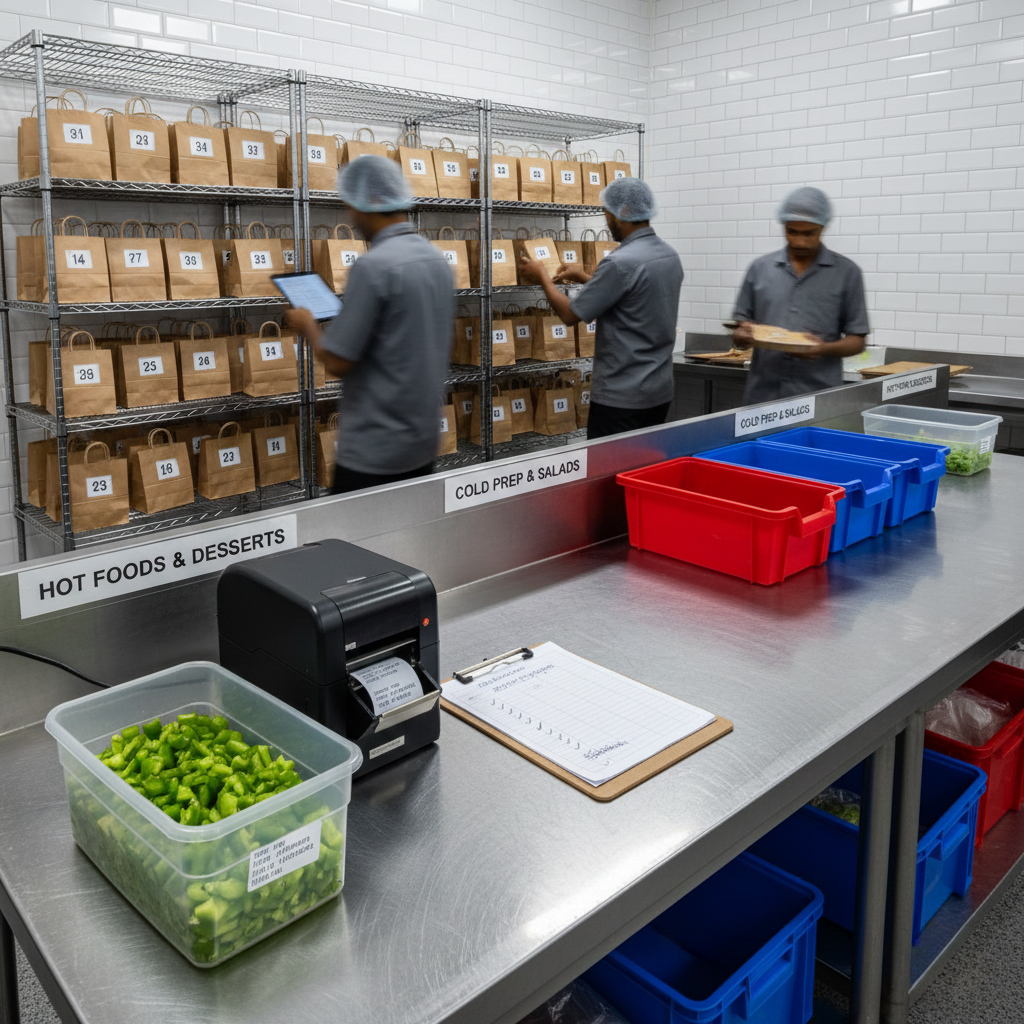
Inventory Control Systems for Cloud Kitchens are not about counting stock. They are about protecting cash. Most cloud kitchens don’t lose money on sales. They lose money in inventory that never converts into revenue. Over-purchasing locks cash. Under-purchasing creates delays. Poor tracking causes wastage, theft, emergency buying, and panic prep. Inventory control is not an admin task. It is a profit protection system. This guide explains how structured inventory control stabilizes food cost, improves prep planning, reduces wastage, and makes cloud kitchen margins predictable.
Inventory Control Systems for Cloud Kitchens: Where Most Profits Quietly Disappear
Many cloud kitchen founders track sales daily but cannot clearly answer a simple question: “How much inventory converted into revenue this week?” This gap is where margins silently disappear.
Inventory issues rarely look dramatic. They show up as: excess stock expiring, sudden shortages during peak, frequent emergency purchases, unexplained food cost drift, and rising wastage without obvious reasons.
If profitability feels unstable despite decent sales, start with Common Operational Mistakes in Cloud Kitchens and understand how inventory mismanagement amplifies every other operational leak.
What Inventory Control Really Means in a Cloud Kitchen
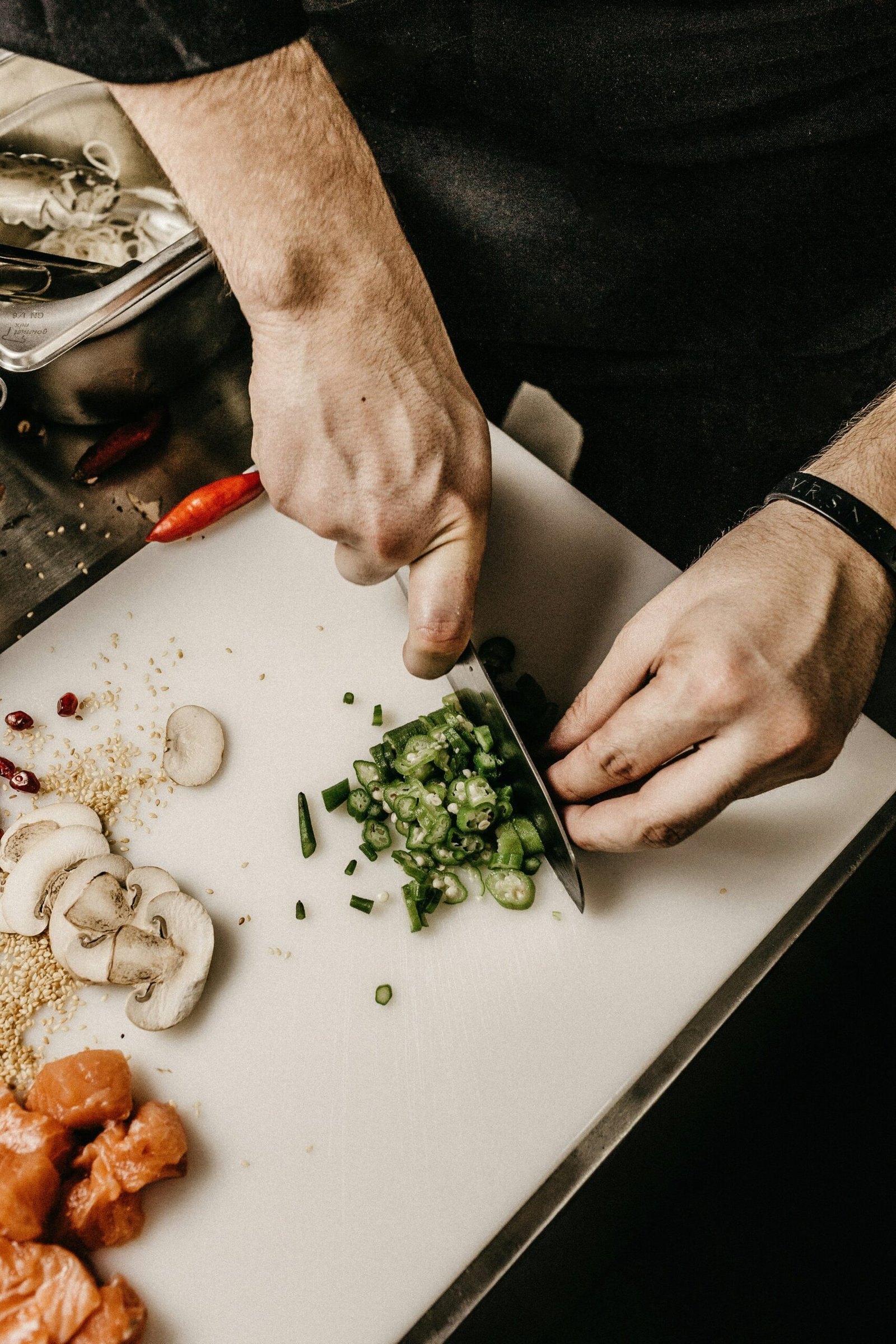
Inventory control is not just maintaining a stock register. It is a system that defines: what to buy, how much to buy, when to buy, how much to hold, how much to issue, and when to discard.
Without inventory control, kitchens operate on instinct. Instinct leads to bulk buying “to be safe” and panic buying “to survive service.” Both destroy margins differently.
Profitable kitchens treat inventory as controlled capital, not raw material lying on shelves.
How Inventory Control Systems Stabilize the Silent Cost Structure
Most founders track rent and salaries carefully. Inventory-related losses hide inside: excess purchases, spoilage, pilferage, inaccurate yields, recipe drift, and emergency vendor pricing.
Inventory control systems reduce these losses by: linking purchases to consumption, linking consumption to prep, and linking prep to sales.
When inventory movement becomes visible, food cost stops drifting silently.
Inventory Control Is the Backbone of Food Cost Control
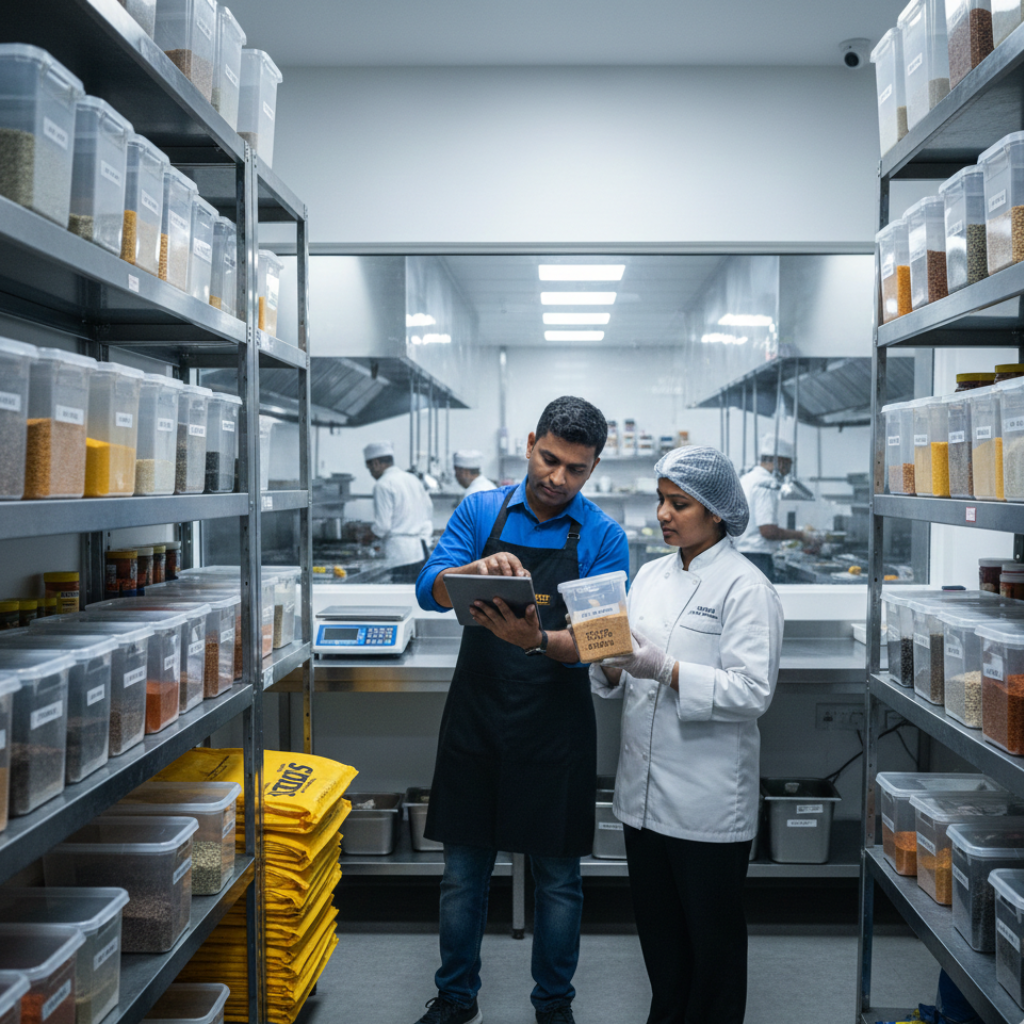
Food cost cannot be controlled at the cooking stage alone. It must be controlled at the purchase and issue stage. Without inventory discipline, kitchens lose track of: how much was bought, how much was issued, how much was actually used, and how much was wasted.
Inventory control improves food cost by:
1) Purchase discipline: Buying based on sales data and prep plans, not guesswork.
2) Issue tracking: Raw material is issued per prep batch, not freely accessed.
3) Yield accountability: Expected yield vs actual yield highlights losses early.
4) Expiry control: FIFO (First In First Out) becomes enforceable, not optional.
Inventory systems support SOP-driven food cost control. For deeper linkage, read How SOPs Reduce Food Cost & Complaints.
Inventory Control Reduces Staff Dependency and Chaos
In poorly controlled kitchens, senior staff becomes the “inventory memory.” When they are absent, stock decisions collapse.
Inventory control systems improve productivity by: removing guesswork, standardizing issue quantities, and reducing time spent searching or improvising.
Staff spends less time managing shortages and more time executing service.
This directly improves output per staff hour and reduces burnout.
Role clarity improves further when inventory systems support Role-Based Kitchen Operations.
Inventory Control Protects Aggregator Performance Indirectly
Aggregators don’t penalize inventory issues directly. They penalize outcomes caused by inventory failure: unavailable items, substitutions, delayed orders, cancellations, and inconsistent quality.
Inventory control systems reduce these risks by ensuring: menu availability matches stock, prep planning aligns with inventory, and emergency shortages reduce.
Stable inventory creates stable service and stable service protects payouts.
To understand margin impact further, read Aggregator Commission Impact in India.
External policy references: Swiggy Refund Policy, Zomato Ordering Terms.
Inventory Accuracy Enables Faster and Cleaner Dispatch
Dispatch delays often start with missing ingredients. When inventory data is unreliable, kitchens discover shortages mid-service.
Inventory control improves dispatch by: aligning menu availability with actual stock, preventing last-minute substitutions, and avoiding order cancellations.
Combined with a Cloud Kitchen Dispatch SOP, inventory control removes last-minute firefighting.

How to Build an Inventory Control System That Actually Improves Margins
Inventory systems fail when they are too complex. Profitable inventory systems are simple, consistent, and enforced daily.
Step 1: Define opening stock clearly.
Step 2: Track purchases with quantities and rates.
Step 3: Issue stock per prep batch, not freely.
Step 4: Track closing stock daily for key items.
Step 5: Review variance weekly and fix root causes.
Inventory control must integrate with SOPs, prep plans, and menu engineering. Isolated systems always fail.
External food safety & storage references: FSSAI Schedule 4, ISO 22000.
Final Takeaway: Inventory Control Doesn’t Increase Profit. It Prevents Loss
Inventory control is not glamorous. It doesn’t increase orders. It protects margins silently.
When inventory is controlled, food cost stabilizes, prep planning becomes accurate, service becomes predictable, and cash stops leaking.
Kitchens that ignore inventory eventually lose control of everything else.
Operational frameworks from GrowKitchen, along with partner brands like Fruut and GreenSalad, help founders convert inventory chaos into controlled profitability.
FAQs: Inventory Control Systems for Cloud Kitchens
Do small cloud kitchens need inventory systems?
Yes. Smaller kitchens benefit the most because margins are tight.
How often should inventory be checked?
Critical items daily, non-critical items weekly.
Can inventory control reduce theft?
Yes. Visibility and accountability reduce pilferage significantly.