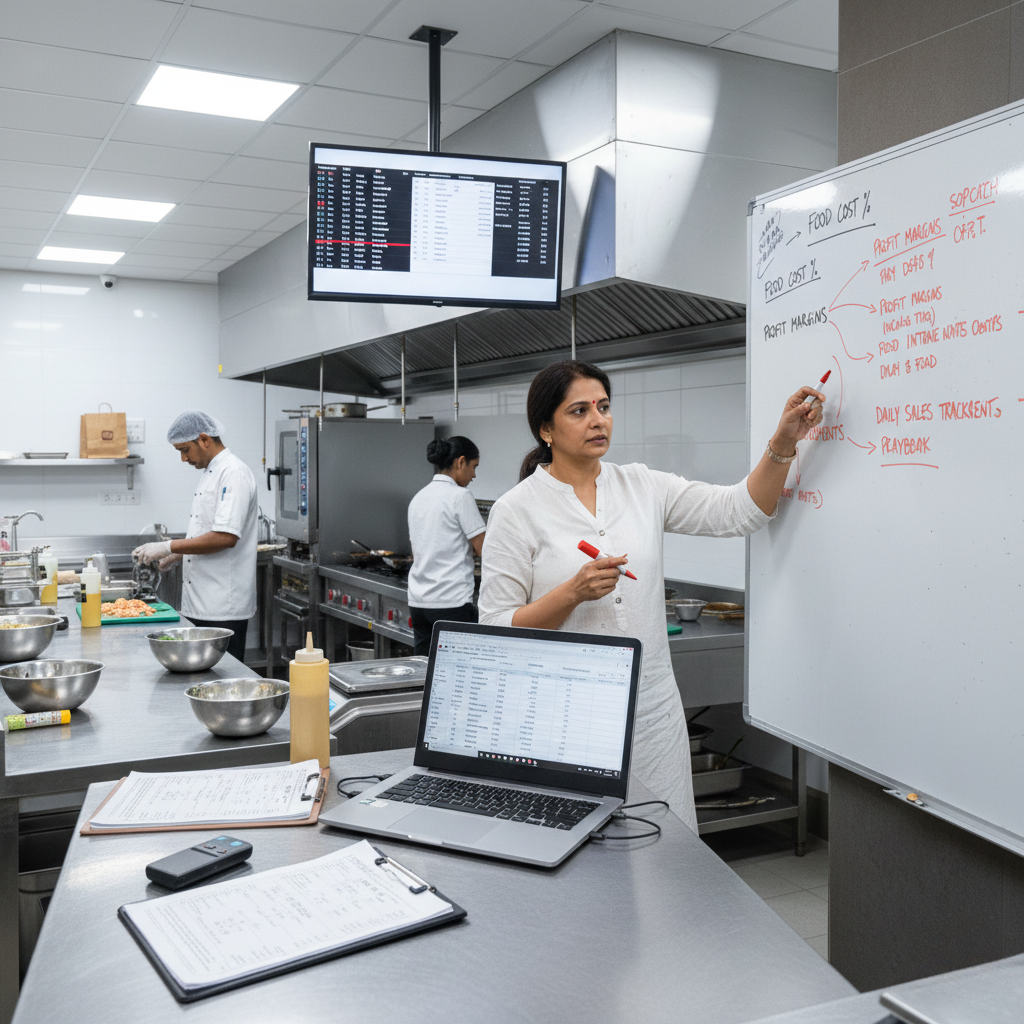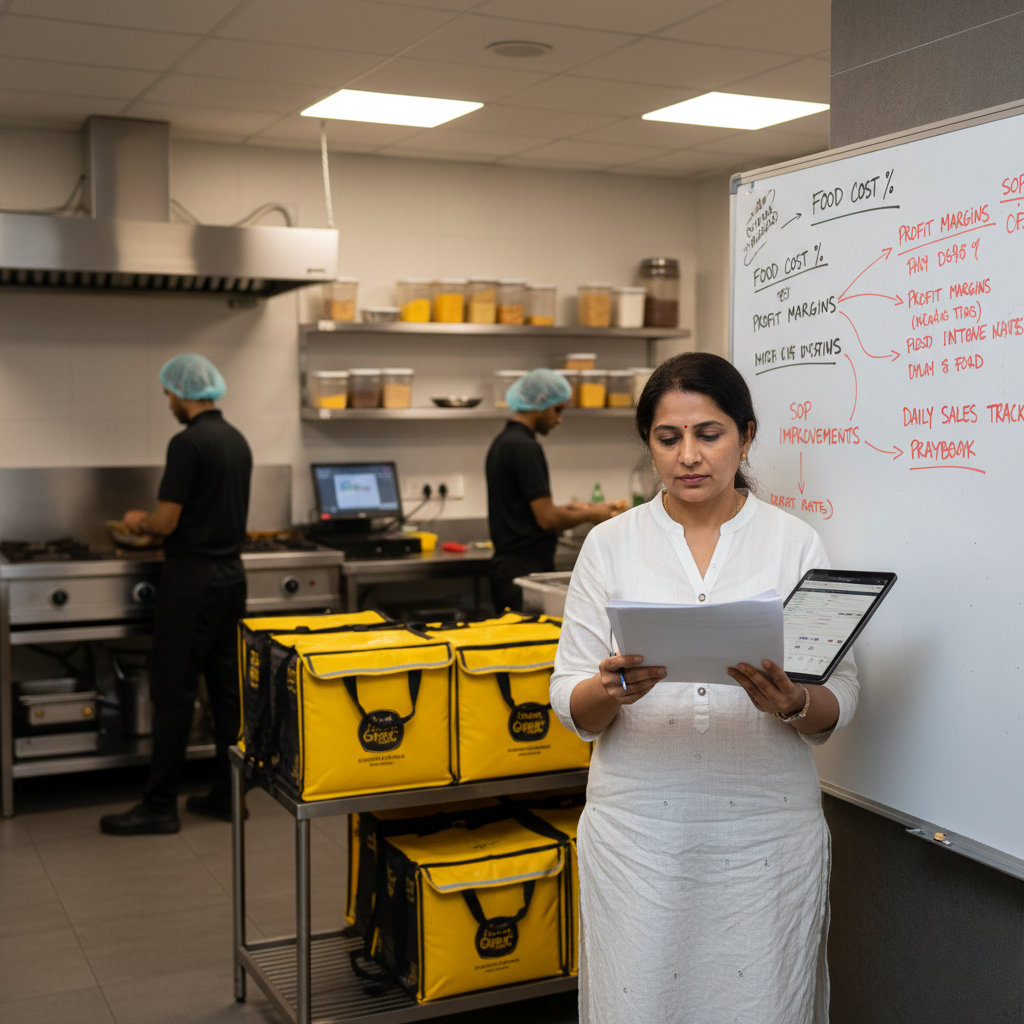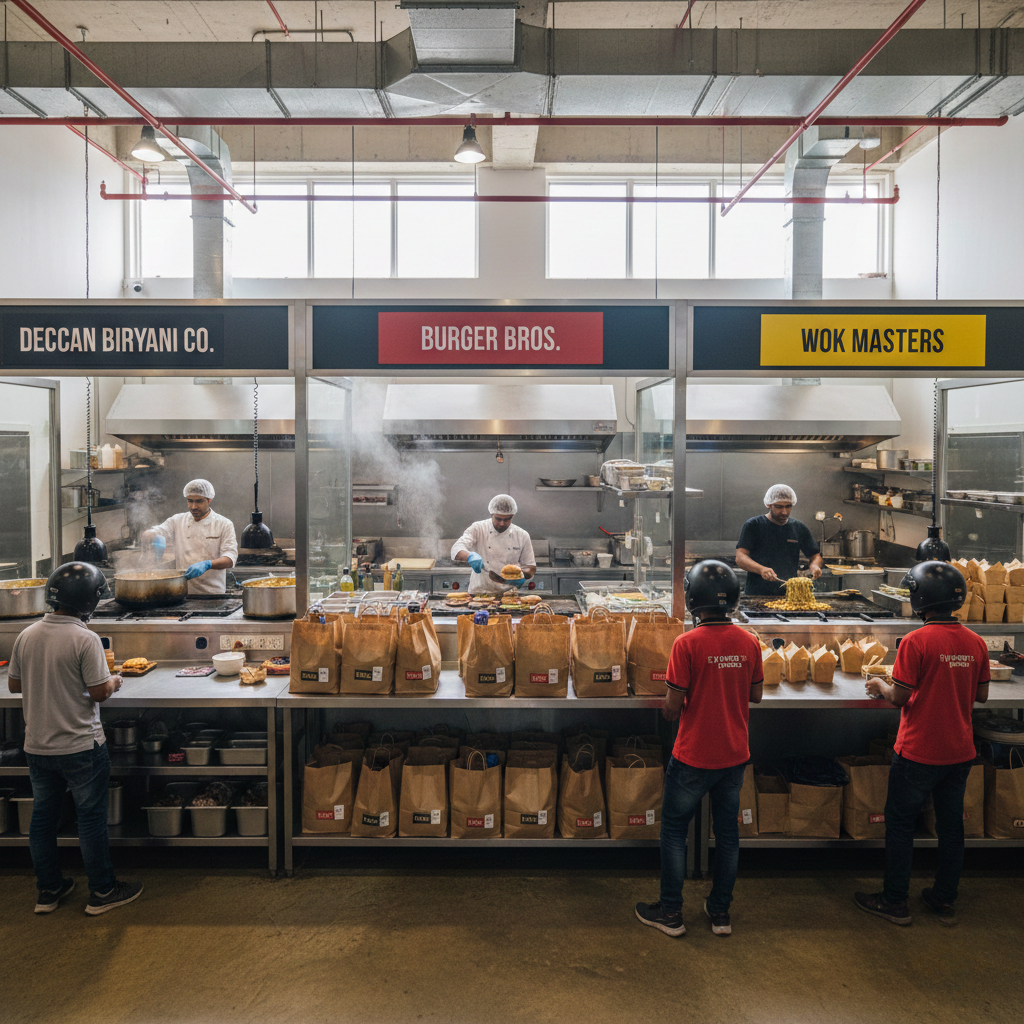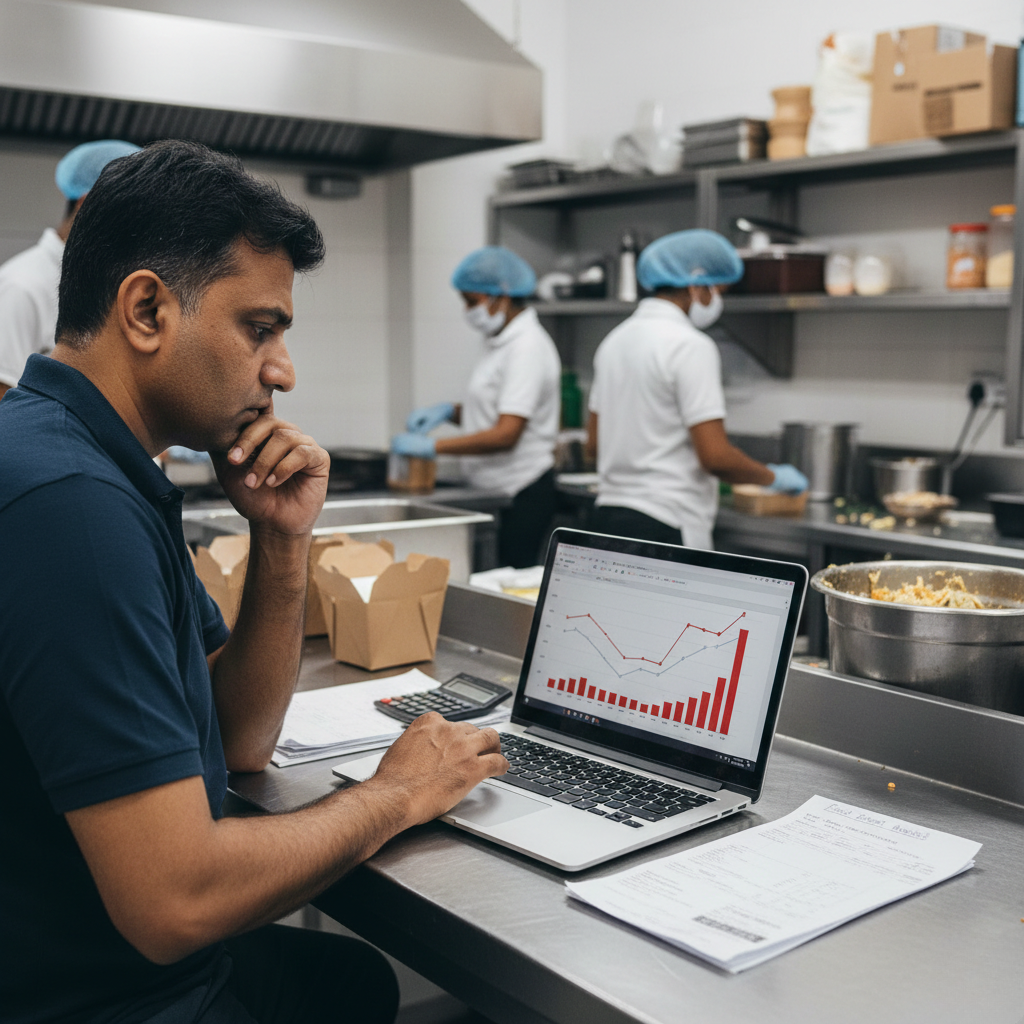
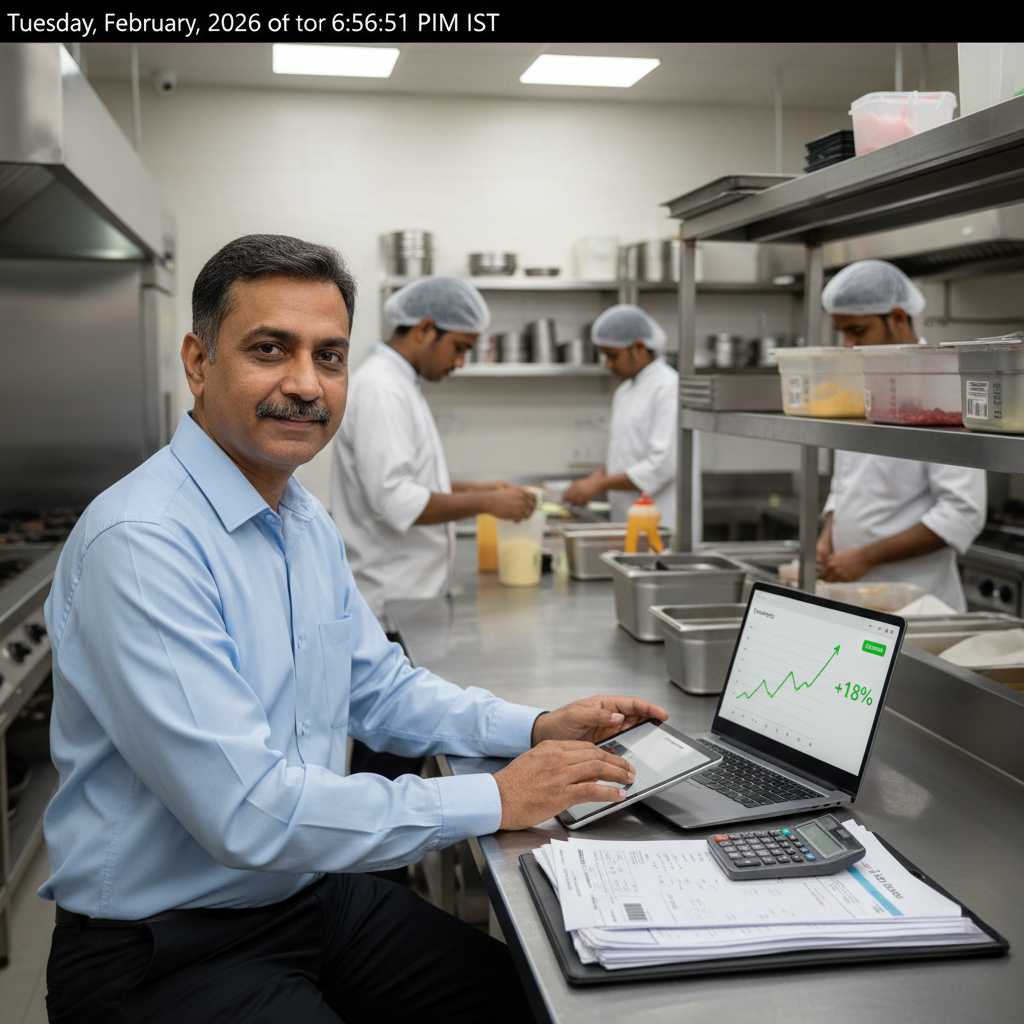
Zero Profit to Sustainable Margins in Cloud Kitchens describes the journey most founders do not plan for but eventually face. Orders may be flowing, brands may be visible on Swiggy and Zomato, and kitchens may stay busy every day, yet the business ends each month with zero or negligible profit. This stage is not failure, but it is a warning. This guide explains why cloud kitchens get stuck at ₹0 profit, what keeps margins fragile, and how founders can move toward predictable, sustainable profitability without sacrificing growth.
Why Most Cloud Kitchens Plateau at ₹0 Profit
Many cloud kitchens reach operational stability before they reach financial stability. Daily sales cover rent, staff salaries, and raw material purchases, but little money remains after expenses. This situation creates a dangerous comfort zone where kitchens survive but do not grow.
To understand how this happens, revisit the fundamentals of Cloud Kitchen Business in India and identify Common Operational Mistakes in Cloud Kitchens.
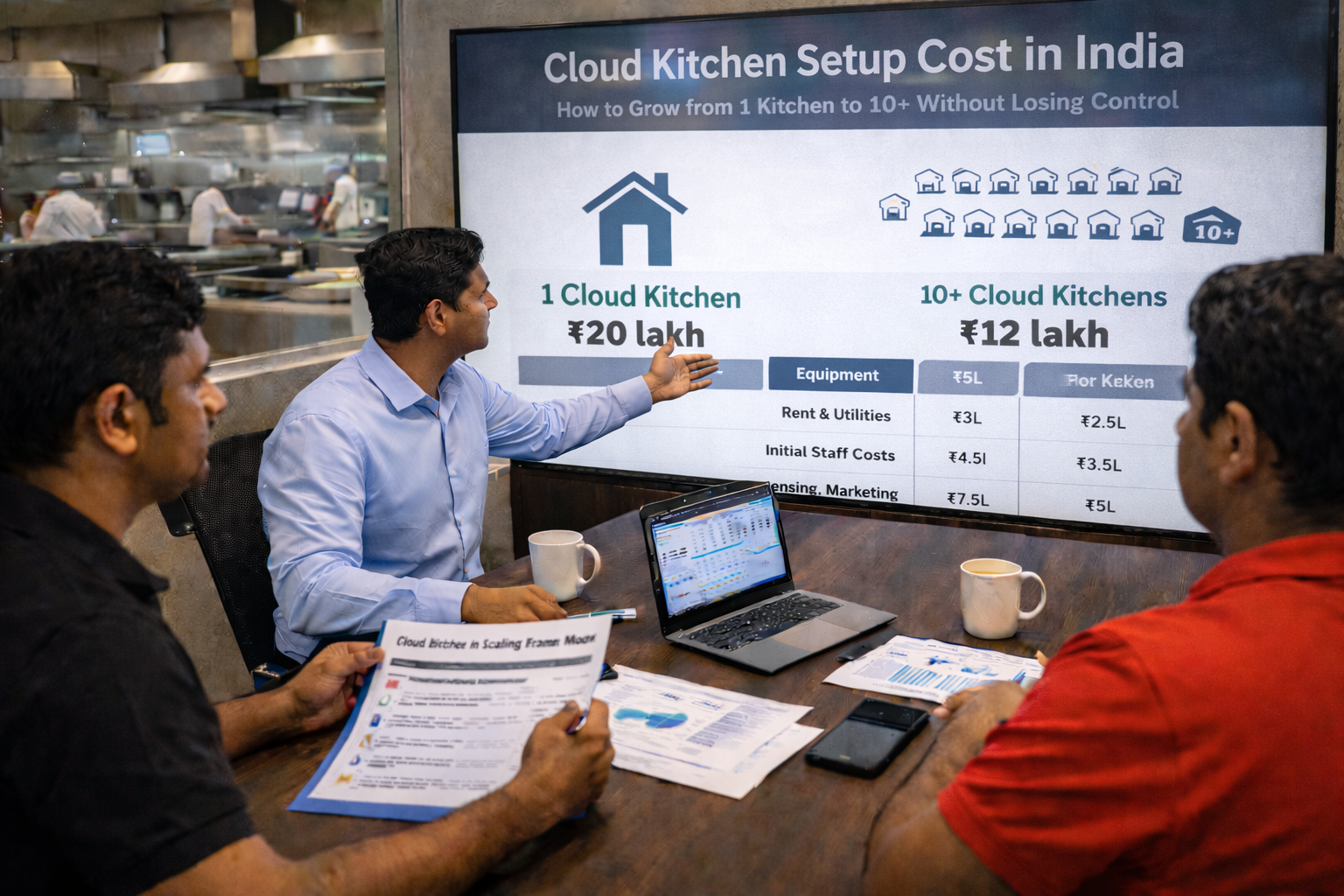
₹0 Profit Is a Structural Problem, Not a Temporary Phase
Founders often assume zero profit is part of the early journey. In reality, kitchens that stay at ₹0 profit for too long usually have structural weaknesses.
Weak Unit Economics Keep Margins Fragile
Sustainable profit begins with unit economics. Many kitchens do not know how much they truly earn per order after food cost, packaging, commissions, discounts, and refunds. When contribution margin is unclear, decisions are made blindly.
Food Cost Discipline Is the First Step to Margins
Kitchens stuck at ₹0 profit almost always struggle with food cost control. Portion drift, recipe inconsistency, and untracked wastage quietly erode margins. Without strict portioning and recipes, profit remains accidental.
Learn how systems control food cost in How SOPs Reduce Food Cost & Complaints.
Staff Efficiency Determines Margin Stability
Kitchens often add staff to manage pressure instead of fixing systems. This increases payroll without increasing output. Sustainable margins require higher productivity per person, not higher headcount.
This shift is achieved through Role-Based Kitchen Operations Explained.
Dispatch Control Protects Invisible Margins
Dispatch errors rarely shut kitchens down, but they silently kill margins. Refunds, late penalties, and order mismatches add up daily. Kitchens that stabilise dispatch see immediate margin improvement.
Learn how to protect dispatch margins in Cloud Kitchen Dispatch SOP.
Aggregator Payout Leakage Keeps Profits at Zero
Many founders focus only on commission percentages. In reality, penalties, acceptance delays, and preparation inefficiencies reduce payouts significantly. Fixing internal execution improves aggregator economics automatically.
Understand this impact in Cloud Kitchen Aggregator Commission Impact in India.
Why Discounts Trap Kitchens at ₹0 Profit
Discounts increase activity, not sustainability. Kitchens stuck at zero profit often rely on offers to maintain order flow. This keeps contribution margins low and prevents profit accumulation.
Understand this trap in Why Discounts Are Not Solving Your Profit Problem.
Inventory Discipline Turns Survival Into Profit
Inventory losses never appear in ratings but directly hit margins. Expiry, over-ordering, and pilferage prevent profit accumulation. Kitchens that track inventory daily move faster toward sustainable margins.
Learn inventory control in Cloud Kitchen Inventory Management in India.
Why Margins Must Come Before Scaling
Many founders attempt to scale while still at ₹0 profit. This multiplies weak margins across more orders, brands, or locations.
Sustainable scaling begins only after margin stability, as explained in Cloud Kitchen Scaling Strategy.
Moving From Survival to Sustainable Profit
The shift from ₹0 profit to sustainable margins is gradual but measurable. It begins with visibility, discipline, and daily operational control. Kitchens that commit to systems stop chasing revenue and start building profit.
Final Takeaway: ₹0 Profit Is a Turning Point
Zero profit is not success, but it is not failure either. It is a signal that operations must evolve.
Proven frameworks from GrowKitchen, along with operating brands like Fruut and GreenSalad, show how disciplined execution transforms survival kitchens into sustainably profitable businesses.
FAQs: From ₹0 Profit to Sustainable Margins in Cloud Kitchens
Is ₹0 profit normal in early cloud kitchens?
Temporarily yes, but prolonged zero profit indicates structural issues.
How long does it take to build sustainable margins?
With strong systems, improvement is visible within weeks.
Should founders prioritise margins over growth?
Yes. Sustainable growth depends on stable margins.
Can small kitchens achieve strong margins?
Yes. Margins depend on control, not size.