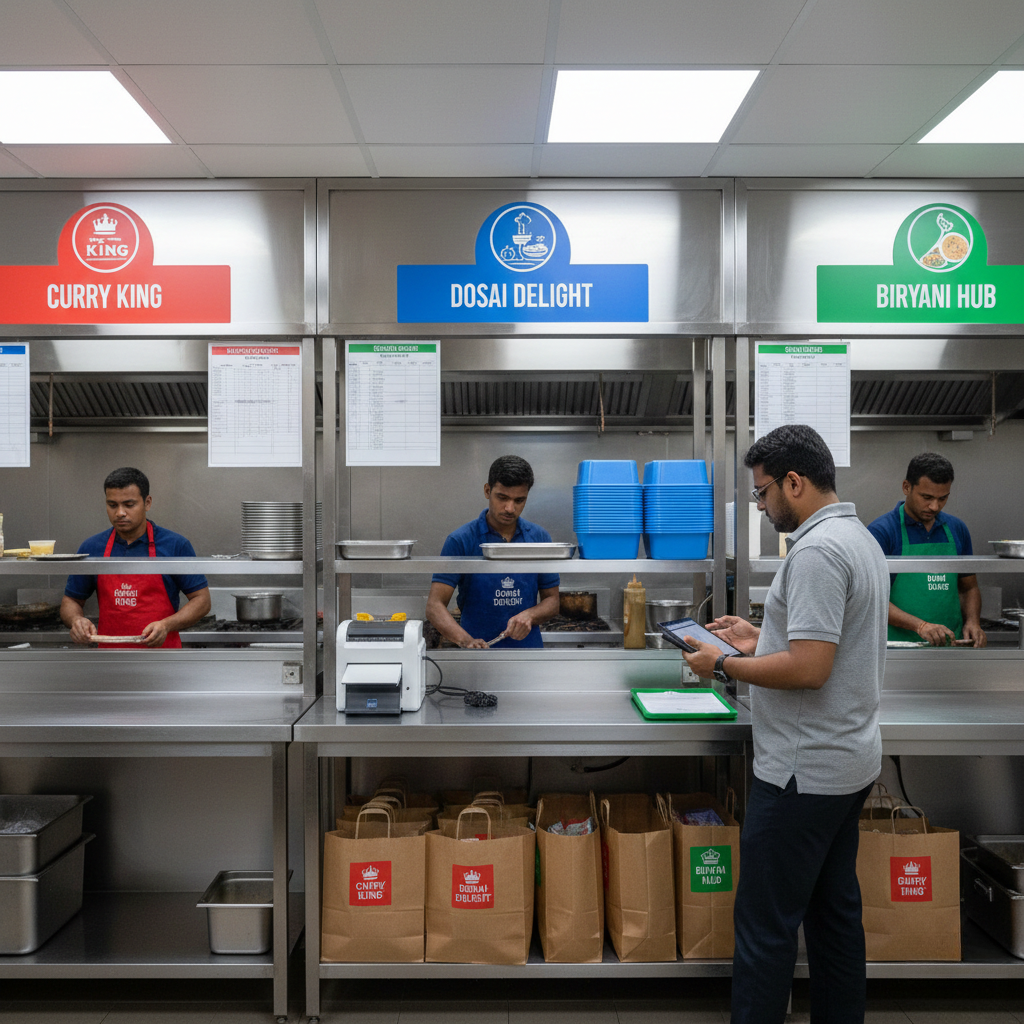
Build SOPs for Multi-Brand Cloud Kitchens-How to Build SOPs for Multi-Brand Cloud Kitchens becomes critical the moment a single kitchen runs more than one brand. While adding brands feels like a revenue strategy, it often becomes the fastest way to create operational chaos. This guide explains why multi-brand kitchens fail without SOPs, how SOPs must be structured differently for shared kitchens, and how strong systems allow multiple brands to coexist profitably under one roof without confusion, inconsistency, or losses.
Why Multi-Brand Cloud Kitchens Are Operationally Fragile
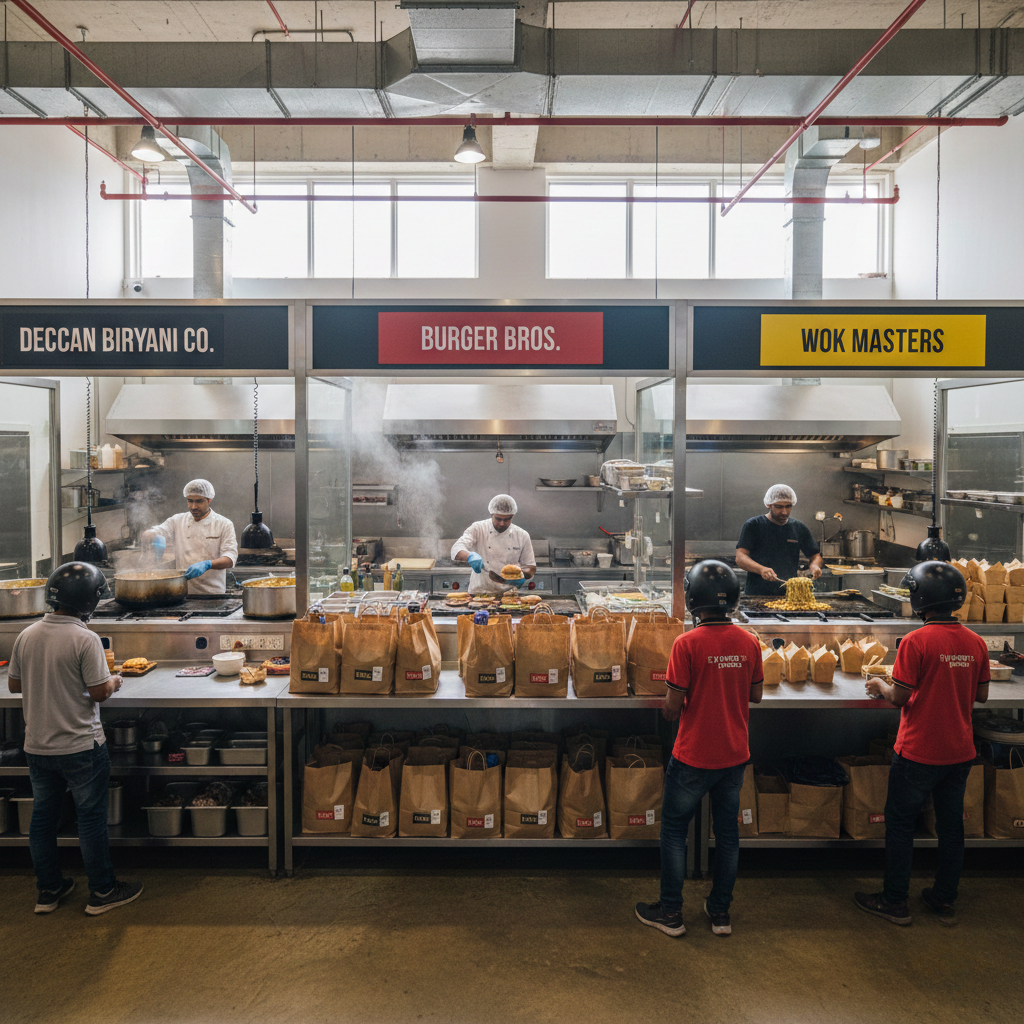
Multi-brand cloud kitchens look efficient on paper. Shared rent, shared staff, shared equipment, and multiple revenue streams.
In reality, they are far more complex than single-brand kitchens. Each brand brings its own menu logic, prep style, pricing, and customer expectations.
Without structured SOPs, brands start cannibalizing resources, confusing staff, and damaging customer experience.
If you are still building fundamentals, start with Cloud Kitchen Business in India and Cloud Kitchen Operations Consultant.
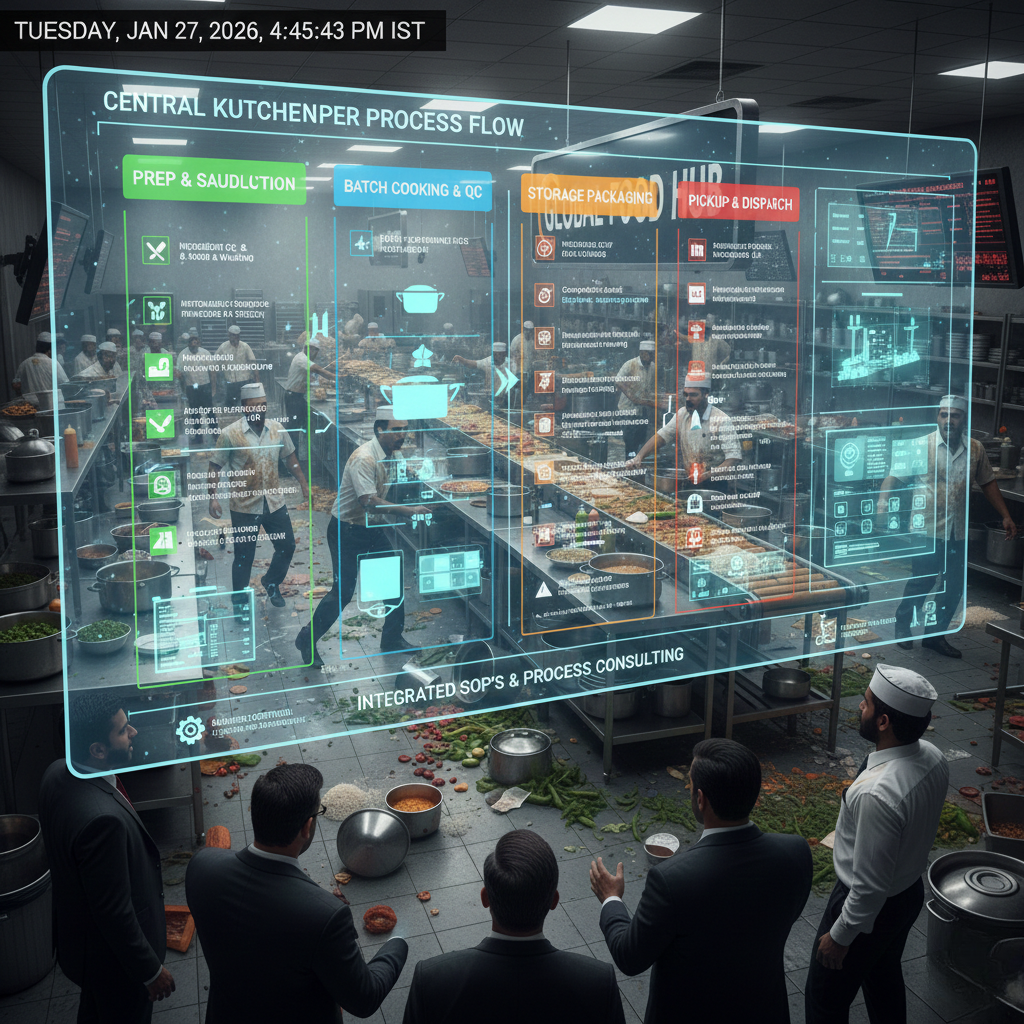
Why SOPs Are Non-Negotiable in Multi-Brand Kitchens
In single-brand kitchens, informal coordination can survive longer. In multi-brand kitchens, it breaks immediately.
Staff must switch between brands, ingredients overlap, and prep areas are shared. Without SOPs, mistakes multiply rapidly.
How SOPs Differ in Multi-Brand Cloud Kitchens
SOPs for multi-brand kitchens cannot be generic. They must clearly separate what is shared and what is brand-specific.
Common areas like procurement, inventory storage, hygiene, and dispatch require unified SOPs.
Brand-specific SOPs must cover recipes, portioning, plating, packaging, and brand tone.
Building Brand-Wise Operational SOPs
Each brand must operate as if it were an independent business. This mindset is critical.
SOPs should define prep timelines, cooking steps, batch sizes, and quality checks separately for each brand.
Without this separation, taste inconsistency becomes unavoidable.
This issue often appears in Common Operational Mistakes in Cloud Kitchens.

Inventory SOPs for Shared Ingredients
Inventory is the most dangerous overlap area in multi-brand kitchens.
Shared raw materials must have allocation logic. Otherwise, one brand silently subsidizes another.
Inventory SOPs should define brand-wise consumption, stock issuance, and daily reconciliation.
This structure is explained in Cloud Kitchen Inventory Management in India.
Dispatch SOPs Across Multiple Brands
Dispatch errors increase exponentially when multiple brands operate together.
Wrong branding, incorrect packaging, or menu mismatch leads to immediate negative reviews.
Dispatch SOPs must include brand verification steps before handover.
Learn structured dispatch control in Cloud Kitchen Dispatch SOP.
Training SOPs for Multi-Brand Staff
Staff in multi-brand kitchens juggle multiple menus and workflows.
Without training SOPs, errors are blamed on staff capability instead of system design.
SOPs should define role clarity, shift allocation, and brand-switching rules.
Protecting Unit Economics Brand-Wise
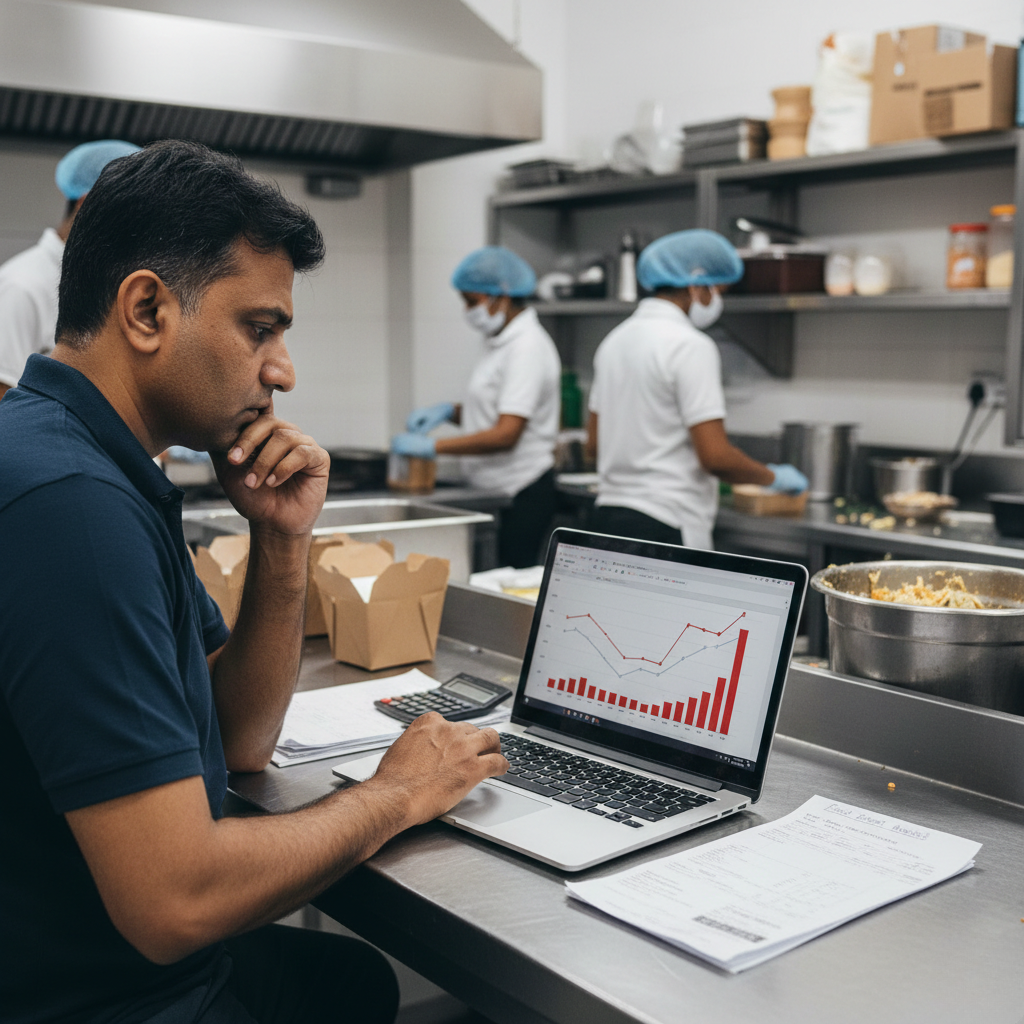
Multi-brand kitchens often misjudge profitability by looking at combined revenue.
Each brand must have independent unit economics. SOPs should enforce pricing, portion control, and discount logic per brand.
This mistake is common in Cloud Kitchen Profit Margin in India.
Managing Aggregators Across Multiple Brands
Aggregators treat each brand independently. Your kitchen cannot afford to treat them casually.
SOPs should define menu uploads, pricing updates, discount approvals, and ad spending brand-wise.
Insights from GreenSaladin and brands like Green Salad and Fruut show how discipline protects margins.
SOPs as the Foundation for Multi-Location Expansion
Multi-brand kitchens that scale successfully do so only after SOPs are stable.
SOPs enable replication. Without them, each new kitchen becomes a new problem.
This is why SOPs anchor the Cloud Kitchen Operations Framework.
Final Thoughts: SOPs Are the Glue Holding Brands Together
Multi-brand cloud kitchens are not inherently risky. Poorly designed systems are.
SOPs bring clarity, accountability, and predictability to complex operations.
Founders who invest early in SOPs build kitchens that scale without chaos.
Structured SOP frameworks from GrowKitchen help multi-brand kitchens grow with control instead of confusion.
FAQs: SOPs for Multi-Brand Cloud Kitchens
Do multi-brand kitchens need separate SOPs?
Yes. Shared SOPs for common processes and brand-specific SOPs for execution.
What is the biggest SOP mistake in multi-brand kitchens?
Mixing brand processes without clear separation.
Can SOPs reduce staff errors?
Yes. SOPs reduce decision fatigue and confusion.
When should SOPs be built?
Before adding the second brand, not after.