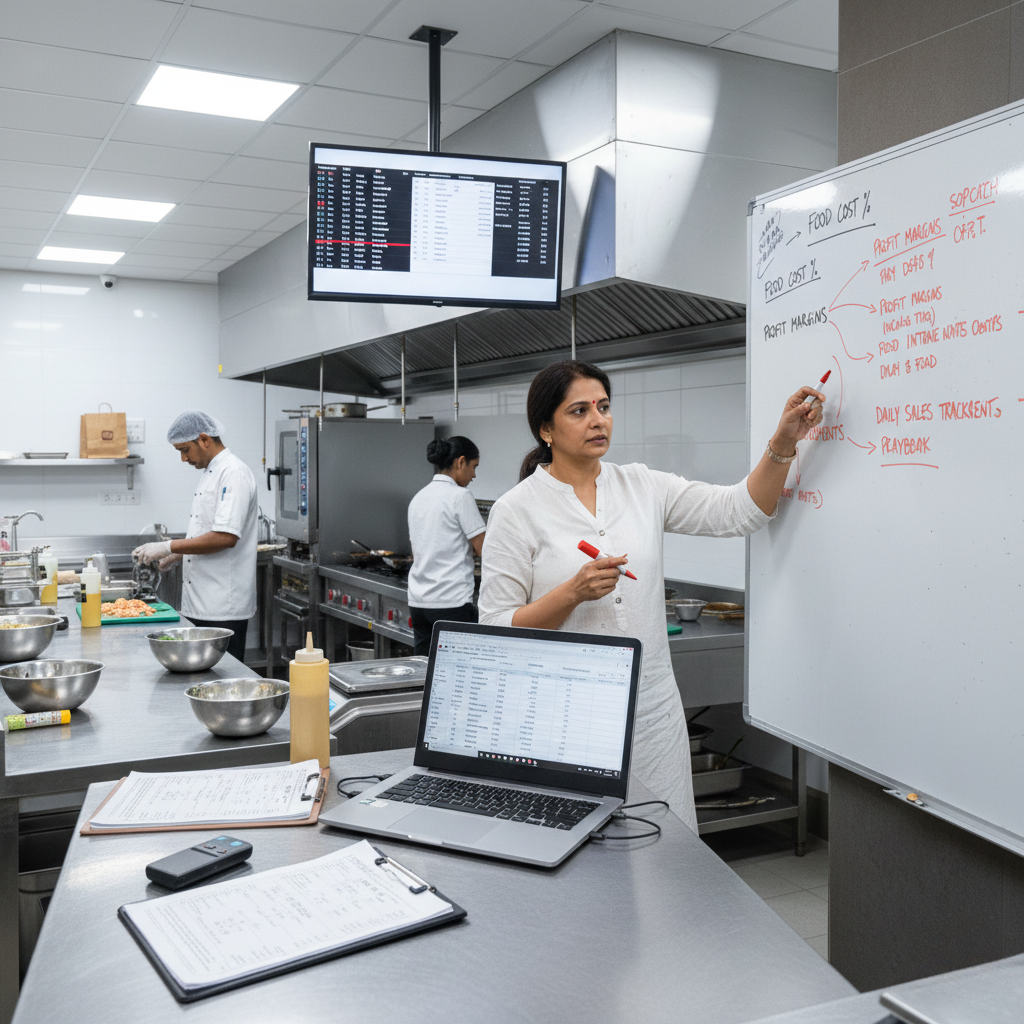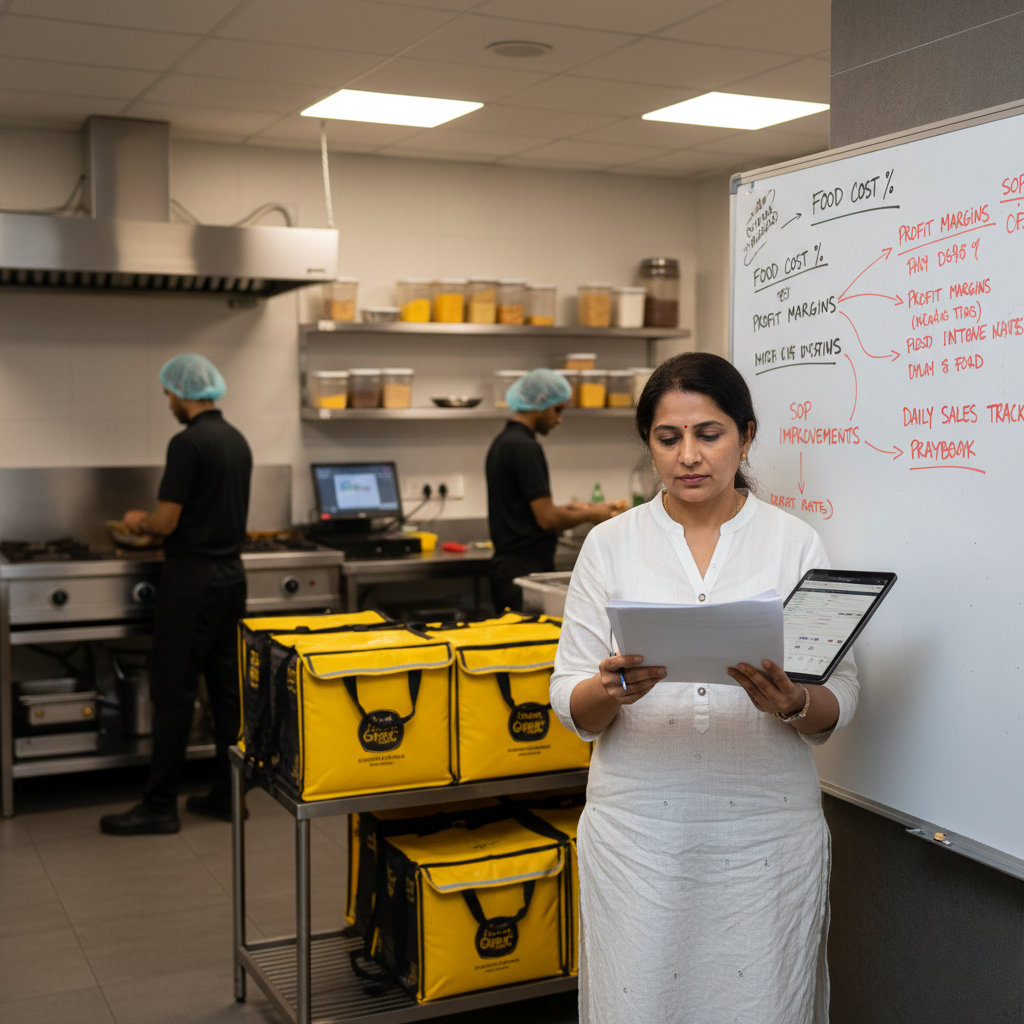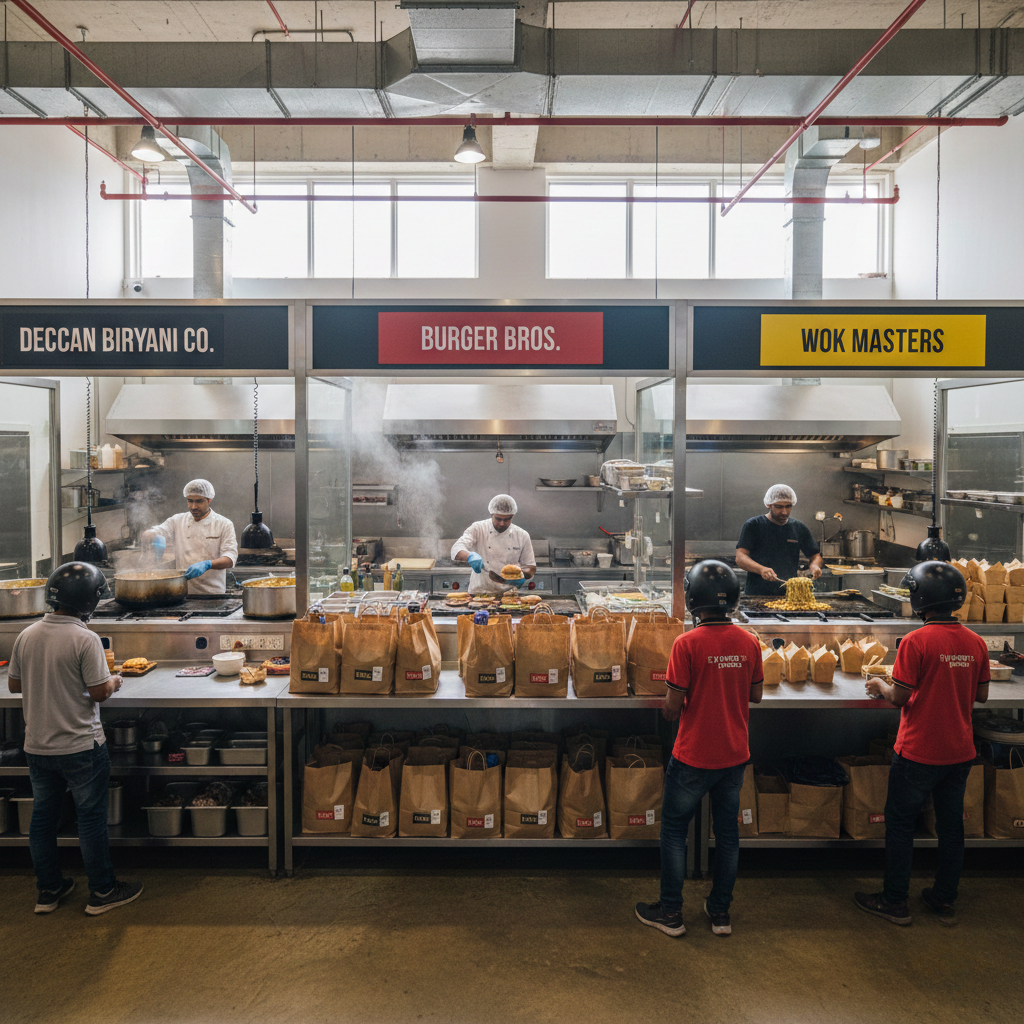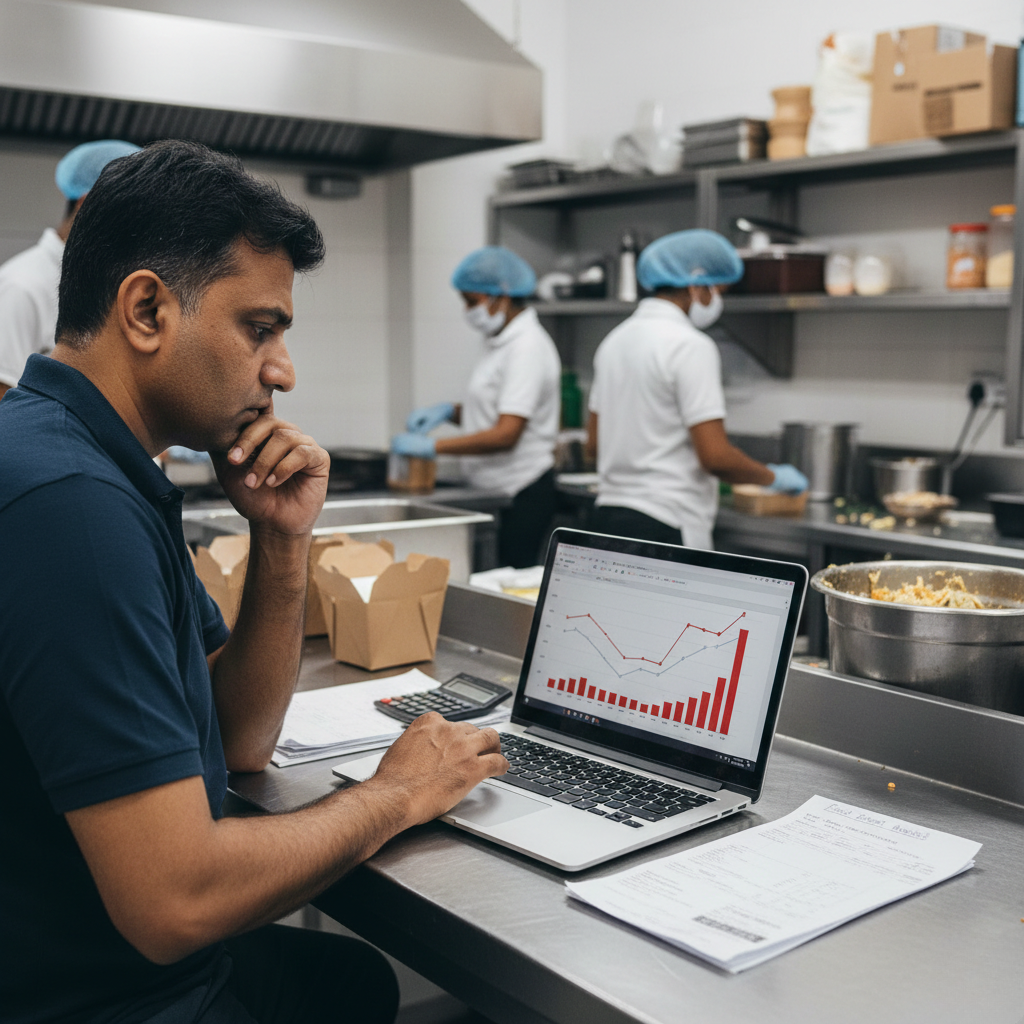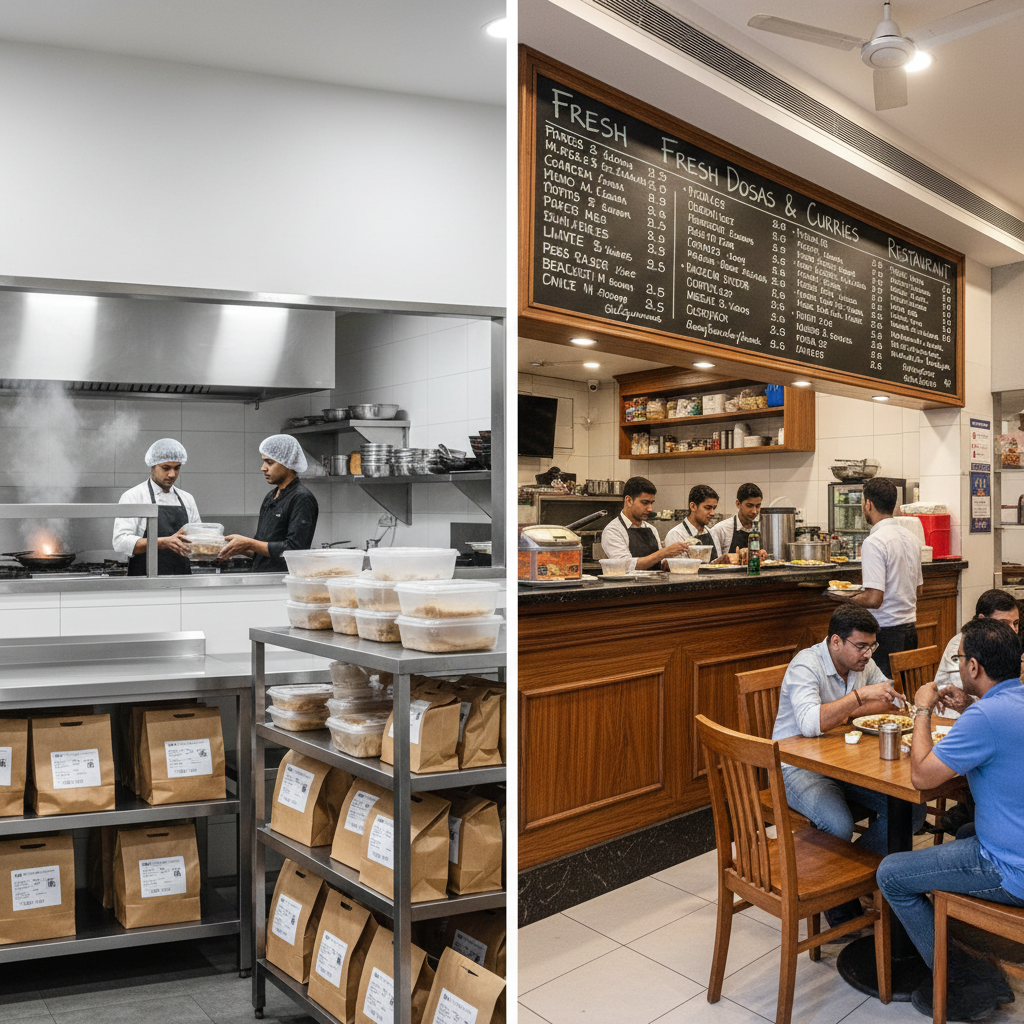
How Cloud Kitchen Operations Differ Restaurants Many first-time food founders assume that running a cloud kitchen is simply running a restaurant without seating. This assumption causes operational failures, margin loss, and rapid burnout. In reality, cloud kitchens and traditional restaurants are fundamentally different operational businesses. This guide explains how cloud kitchen operations differ from restaurants, why restaurant-style thinking fails in delivery-first models, and what founders must change to operate cloud kitchens profitably in India.
Why Restaurant Experience Does Not Translate to Cloud Kitchens
Many cloud kitchens in India are started by restaurant owners or chefs with dine-in experience. While food knowledge helps, operational assumptions from restaurants often damage cloud kitchen performance.
Restaurants are customer-facing, service-driven businesses. Cloud kitchens are backend, process-driven businesses. Confusing the two leads to cost overruns, inconsistent execution, and poor scalability.
If you are still understanding delivery-first models, start with Cloud Kitchen Operation Consultant and Cloud Kitchen Business in India.
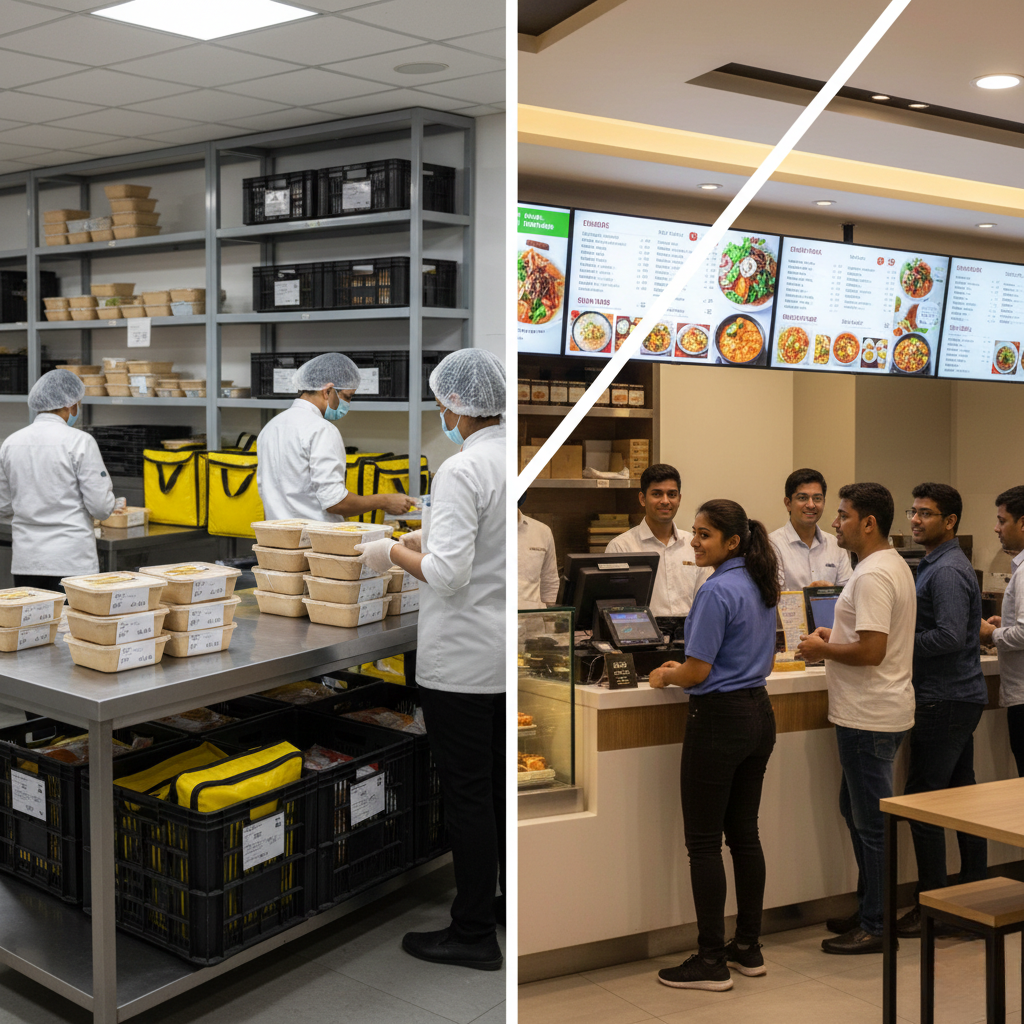
The Core Operational Difference
Traditional restaurants are designed around experience. Ambience, service, seating flow, and customer interaction play a major role in success.
Cloud kitchens remove the dining room entirely. This shifts the entire operational focus to speed, accuracy, cost control, and repeatability.
In cloud kitchens, customers never see effort. They only experience outcomes.
Order Flow: Predictable vs Burst-Driven
Restaurants experience relatively predictable order flow. Peak hours are known, and customers wait physically inside the outlet.
Cloud kitchens face burst-driven demand. Orders arrive in spikes depending on aggregator algorithms, discounts, weather, and promotions.
This requires tighter coordination, faster handoffs, and zero tolerance for confusion. Restaurant-style flexible workflows collapse under this pressure.
Kitchen Design and Space Utilization
Restaurant kitchens are often built for variety and presentation. Multiple cuisines, plating stations, and visual appeal matter.
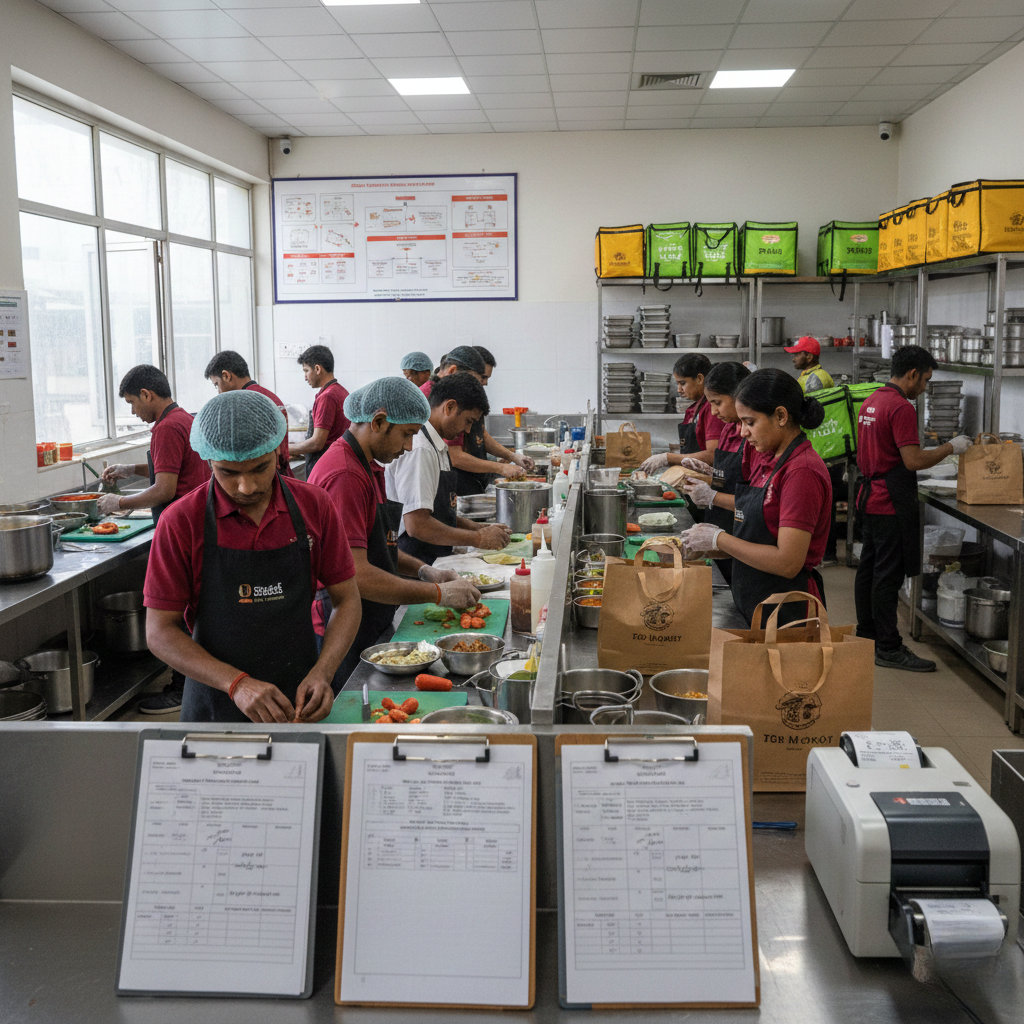
Cloud kitchens are optimized for throughput. Movement paths, prep sequencing, and station layout directly affect speed and error rates.
Poor kitchen layout increases delays, food cooling, and dispatch errors.
Manpower Roles and Dependency
Restaurants rely heavily on front-of-house staff. Service quality, greetings, and table management drive satisfaction.
Cloud kitchens eliminate front-of-house roles. This concentrates pressure on kitchen staff and dispatch coordination.
Without clearly defined roles and SOPs, manpower inefficiency escalates quickly.
Dispatch Replaces Service
In restaurants, service staff recover mistakes in real time. In cloud kitchens, dispatch is the final interaction.
A single dispatch error leads directly to refunds and negative reviews. There is no opportunity to explain or correct the experience.
This makes dispatch systems non-negotiable, as detailed in Cloud Kitchen Dispatch SOP.
Inventory Risk Is Higher in Cloud Kitchens
Restaurants can adjust inventory through daily specials and in-person upselling.
Cloud kitchens lack this flexibility. Unsold inventory becomes wastage quickly, especially perishables.
This makes daily inventory tracking critical, as explained in Cloud Kitchen Inventory Management in India.
Aggregator Dependency vs Walk-In Control
Restaurants control footfall through location, ambience, and service.
Cloud kitchens depend heavily on aggregators. Visibility, commissions, and platform rules shape demand.
Restaurant-style pricing strategies fail here. Cloud kitchens must price with commission and discounts built in.
Learn platform economics in How to Reduce Swiggy Commission and ecosystem trends from GreenSaladin.
Scaling Works Differently
Restaurants scale slowly due to high capex and service complexity.
Cloud kitchens can scale faster, but only if operations are standardized. Without systems, expansion multiplies chaos.
This difference is why many restaurant brands fail when converting to cloud kitchens.
Why Cloud Kitchens Need Operationally Different Thinking
Cloud kitchen consultants focus on execution systems, not hospitality aesthetics.
They redesign workflows, menus, dispatch, and dashboards specifically for delivery-first economics.
This structured approach is part of the Cloud Kitchen Operations Framework.
Final Thoughts: Cloud Kitchens Are Not Restaurants
Cloud kitchens are not simplified restaurants. They are entirely different operational businesses.
Applying restaurant logic to cloud kitchen operations leads to margin erosion and failure.
Founders who respect this difference build scalable, profitable brands.
Systems from GrowKitchen help founders transition from restaurant thinking to cloud kitchen execution.
FAQs: Cloud Kitchens vs Restaurants
Are cloud kitchens easier to run than restaurants?
No. They are operationally stricter and less forgiving.
Can restaurant SOPs be reused for cloud kitchens?
Only partially. Most need redesign.
Why do restaurant owners struggle with cloud kitchens?
Because service-driven thinking fails in delivery-first models.
Which model is more scalable?
Cloud kitchens are more scalable if operations are strong.