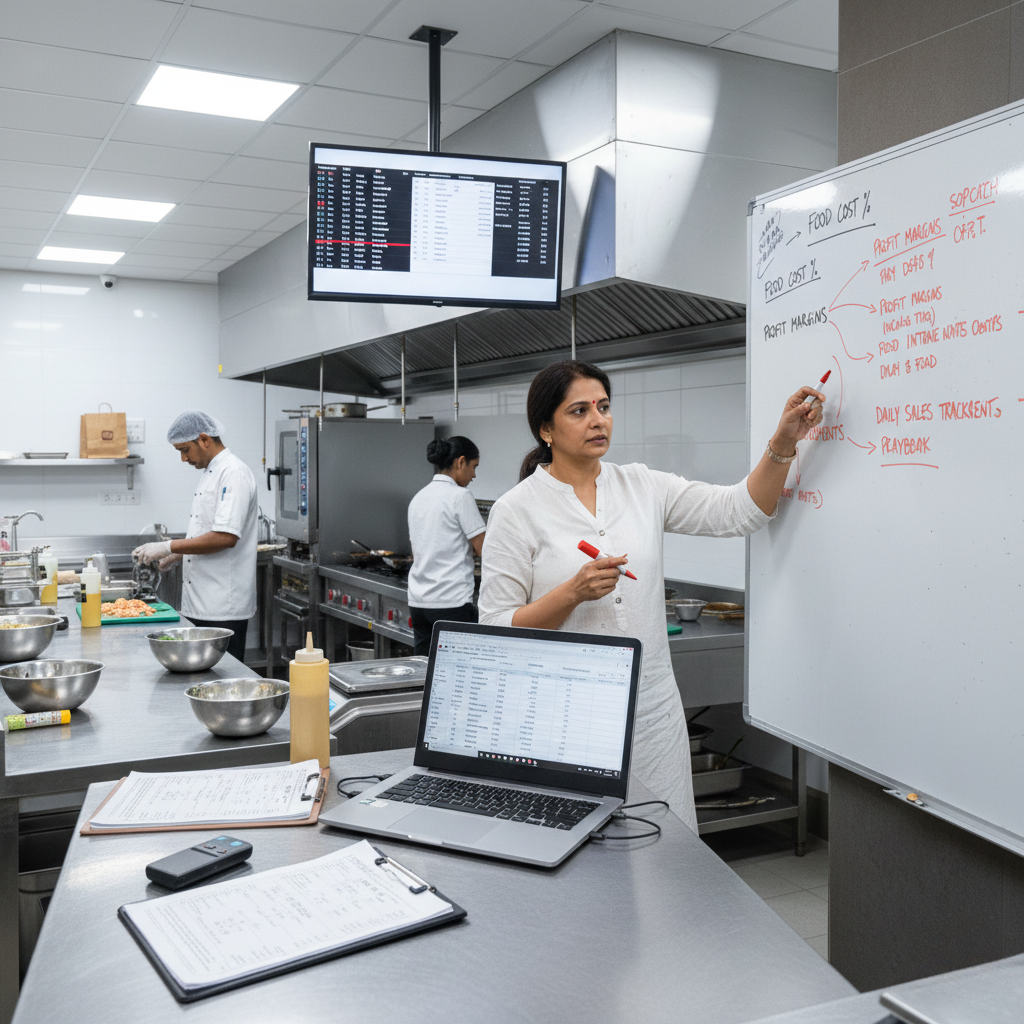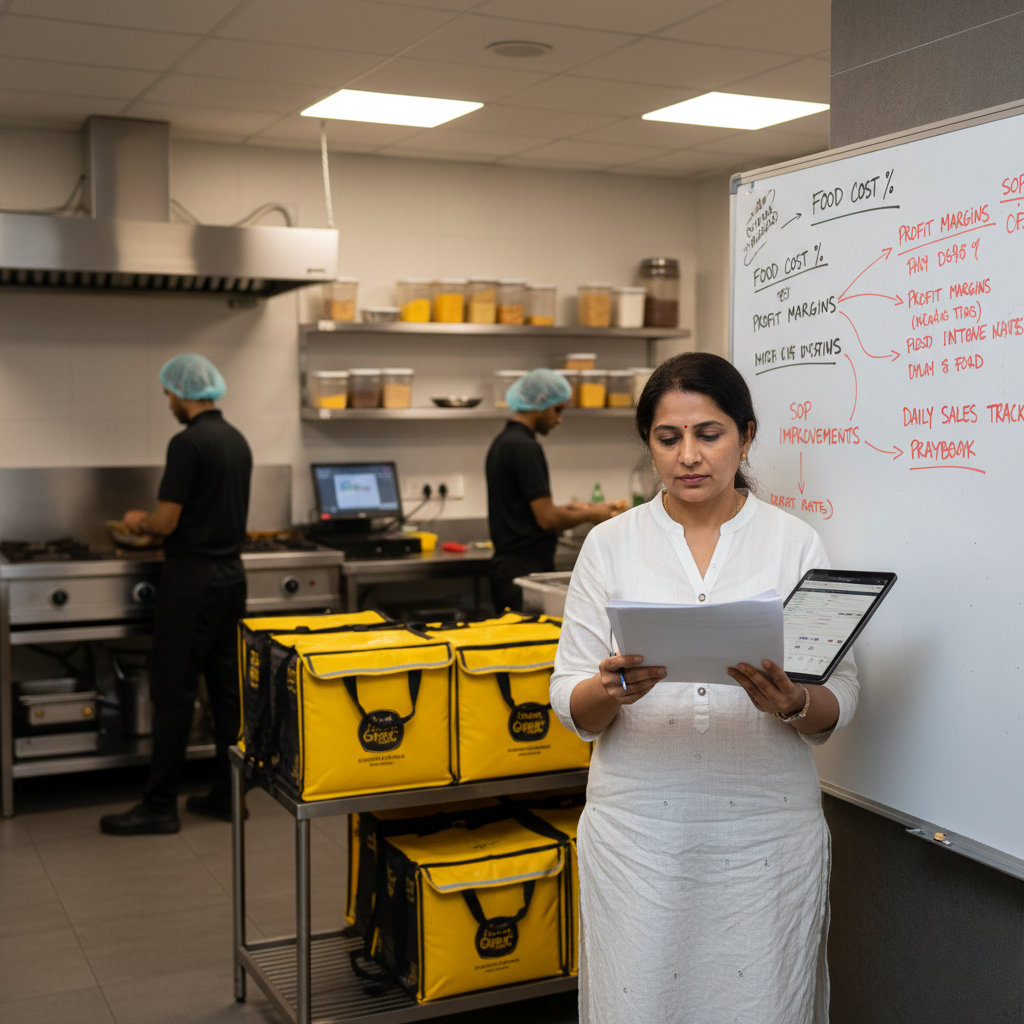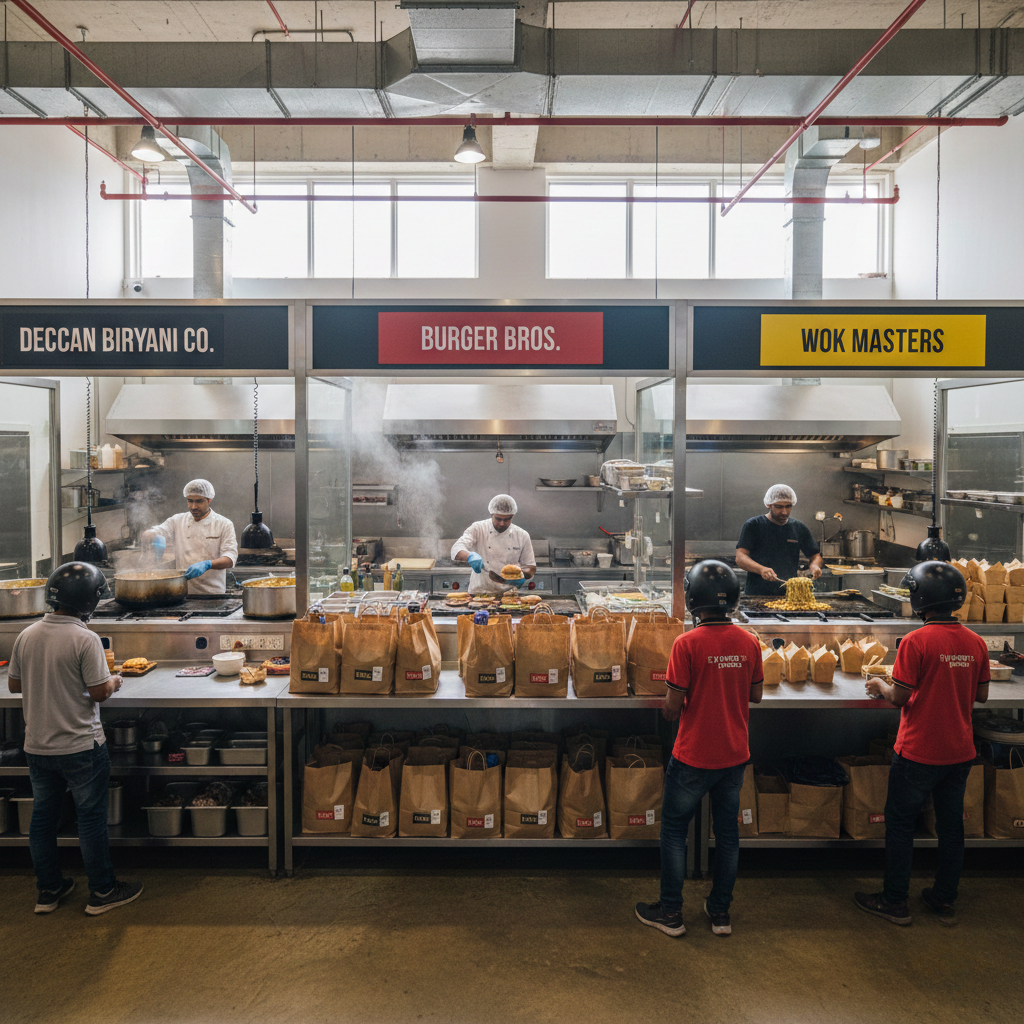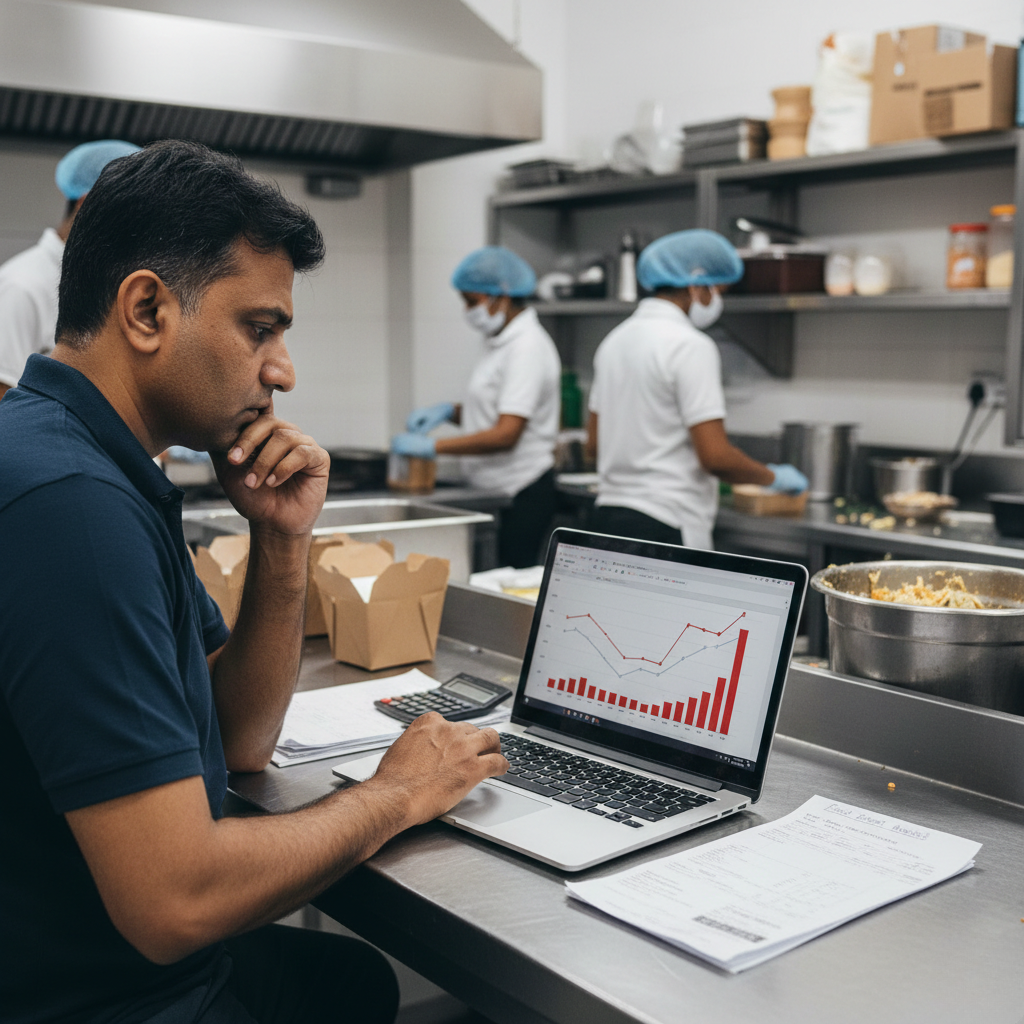
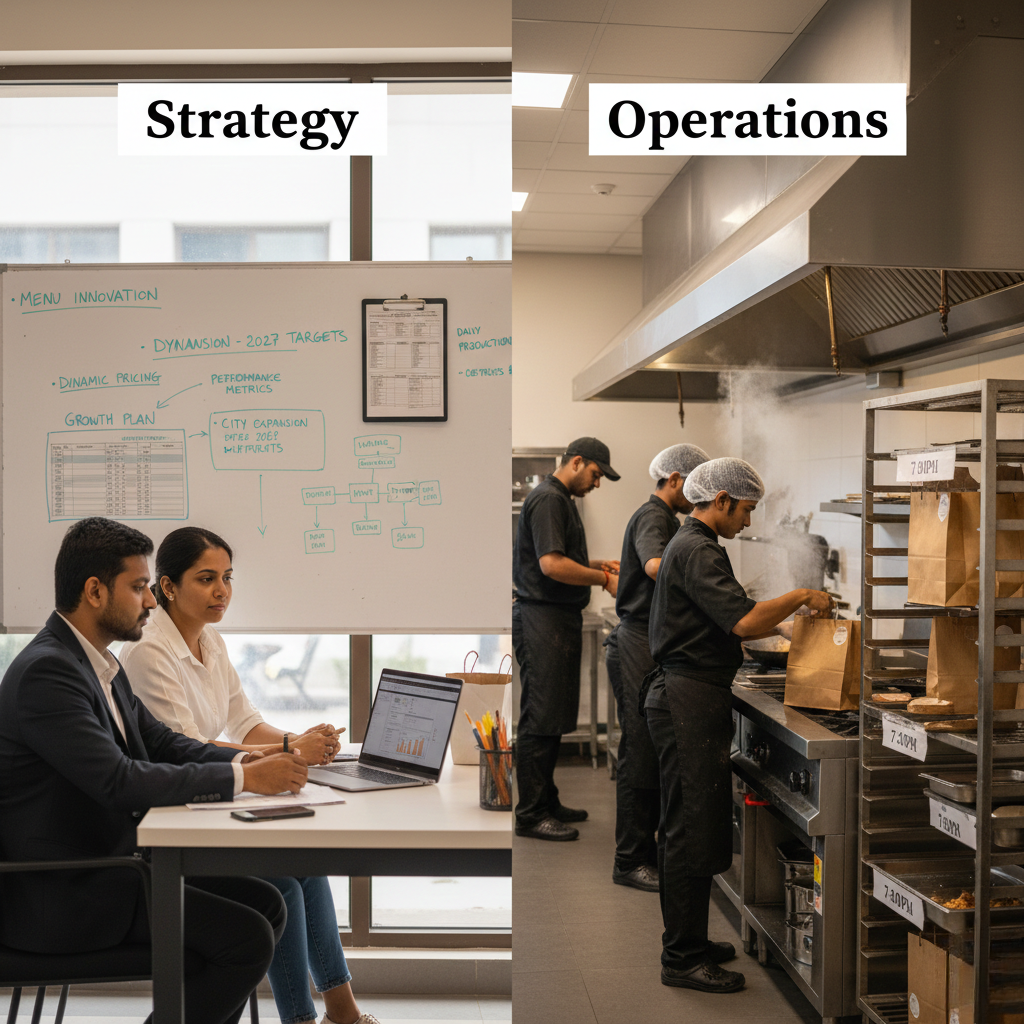
Cloud Kitchen Strategy and Operations-Many cloud kitchen founders in India confuse strategy with operations. They plan expansion, branding, and growth goals, but struggle with daily execution, margins, and consistency. The truth is simple: strategy decides where your cloud kitchen wants to go, while operations decide whether it survives long enough to get there. This guide explains the clear difference between cloud kitchen strategy and operations, why both are important, and how successful cloud kitchens balance the two.
Why Founders Confuse Strategy and Operations
Cloud kitchens are often sold as “easy to start, fast to scale” businesses. This causes founders to focus heavily on big-picture plans like brand positioning, expansion, and revenue targets.
However, most cloud kitchens in India fail not because strategy is missing, but because operations are weak.
If you are still building your fundamentals, start with Cloud Kitchen Operations Consultant. to understand how delivery-first food businesses really work.
What Is Cloud Kitchen Strategy?
Cloud kitchen strategy defines the long-term direction of the business. It answers the question: “What kind of cloud kitchen are we building?”
Strategy focuses on positioning, growth direction, and competitive advantage.
Key Components of Cloud Kitchen Strategy
Strategy is usually decided by founders or leadership and changes infrequently.
- Brand positioning and cuisine focus
- Target customer segment
- Pricing philosophy
- Expansion and location strategy
- Aggregator vs direct-order mix
- Long-term profitability goals
Strategy answers questions like: Should we be premium or mass? Single-brand or multi-brand? One location or multiple kitchens?
What Is Cloud Kitchen Operations?
Cloud kitchen operations deal with how the business runs every single day. Operations answer the question: “How do we execute the strategy without losing money?”
While strategy looks forward, operations live in the present.
Key Components of Cloud Kitchen Operations
Operations involve detailed systems, controls, and discipline across daily workflows.
- Menu execution and recipe adherence
- Food cost and portion control
- Inventory and procurement management
- Manpower scheduling and training
- Order processing and dispatch
- Quality control and refunds management
Operations determine whether margins hold or collapse under volume.
Strategy vs Operations: The Core Differences
Although strategy and operations work together, they serve very different purposes.
- Strategy is directional and long-term
- Operations are execution-focused and daily
- Strategy sets goals
- Operations ensure goals don’t destroy margins
- Strategy changes slowly
- Operations require constant monitoring
Why Strategy Fails Without Operations
Many cloud kitchens have impressive strategies: strong branding, social media presence, and aggressive expansion plans.
Yet they fail because:
- Food cost is uncontrolled
- Refunds eat margins
- Manpower costs spiral
- Aggregator commissions are ignored
These failures are explained in detail in Why Cloud Kitchens Fail in India.
Why Operations Can Save a Weak Strategy
Kitchens with average branding but strong operations often outperform better-marketed competitors.
Strong operations deliver:
- Stable margins
- Consistent food quality
- Lower refunds
- Founder independence
This is why operations-focused kitchens survive longer and scale sustainably.
Strategy vs Operations During Scaling
Scaling is where the difference becomes most visible.
Strategy decides:
- How many locations to open
- Which cities to enter
- Brand architecture
Operations decide:
- Whether food tastes the same everywhere
- Whether costs stay under control
- Whether founders can manage remotely
Before scaling, kitchens must align both, as explained in Cloud Kitchen Scaling Problems and Their Solutions.
How Consultants Bridge Strategy and Operations
Cloud kitchen consultants play a critical role in aligning strategy with operational reality.
- They test strategy against unit economics
- They design operations to support growth plans
- They prevent expansion from destroying margins
This alignment is part of the Cloud Kitchen Operations Framework.
How Successful Cloud Kitchens Balance Both
Successful cloud kitchens do not choose between strategy and operations. They respect both.
Brands like Green Salad and Fruut built clear strategies but invested heavily in operational discipline before scaling.
Common Founder Mistakes
- Obsessing over growth before fixing operations
- Copying competitor strategy without execution capability
- Assuming volume will fix margin issues
- Ignoring daily operational data
These mistakes often lead to losses even when demand is strong.
Final Thoughts: Strategy Wins on Paper, Operations Win in Reality
Strategy is important. Without direction, businesses drift.
But in cloud kitchens, operations decide survival.
The most successful founders design strategy that operations can support.
Frameworks from GrowKitchen help founders align ambition with execution.
FAQs: Cloud Kitchen Strategy vs Operations
Which is more important: strategy or operations?
Operations are more critical in the early and growth stages.
Can good operations fix bad strategy?
Strong operations can stabilize a weak strategy, but cannot save a completely flawed one.
When should founders focus on strategy?
Strategy should be clear before launch, but operations must be built immediately.
Do small cloud kitchens need strategy?
Yes, but strategy must be realistic and executable.