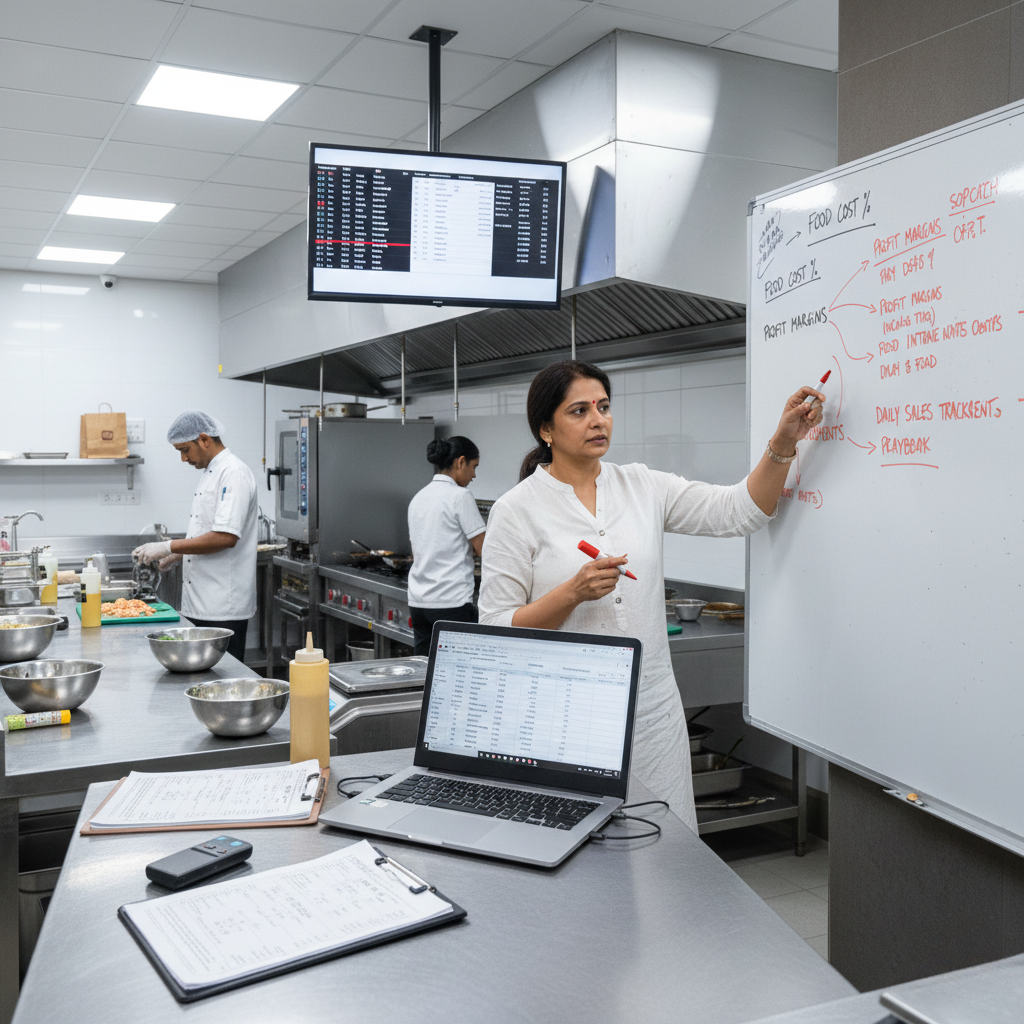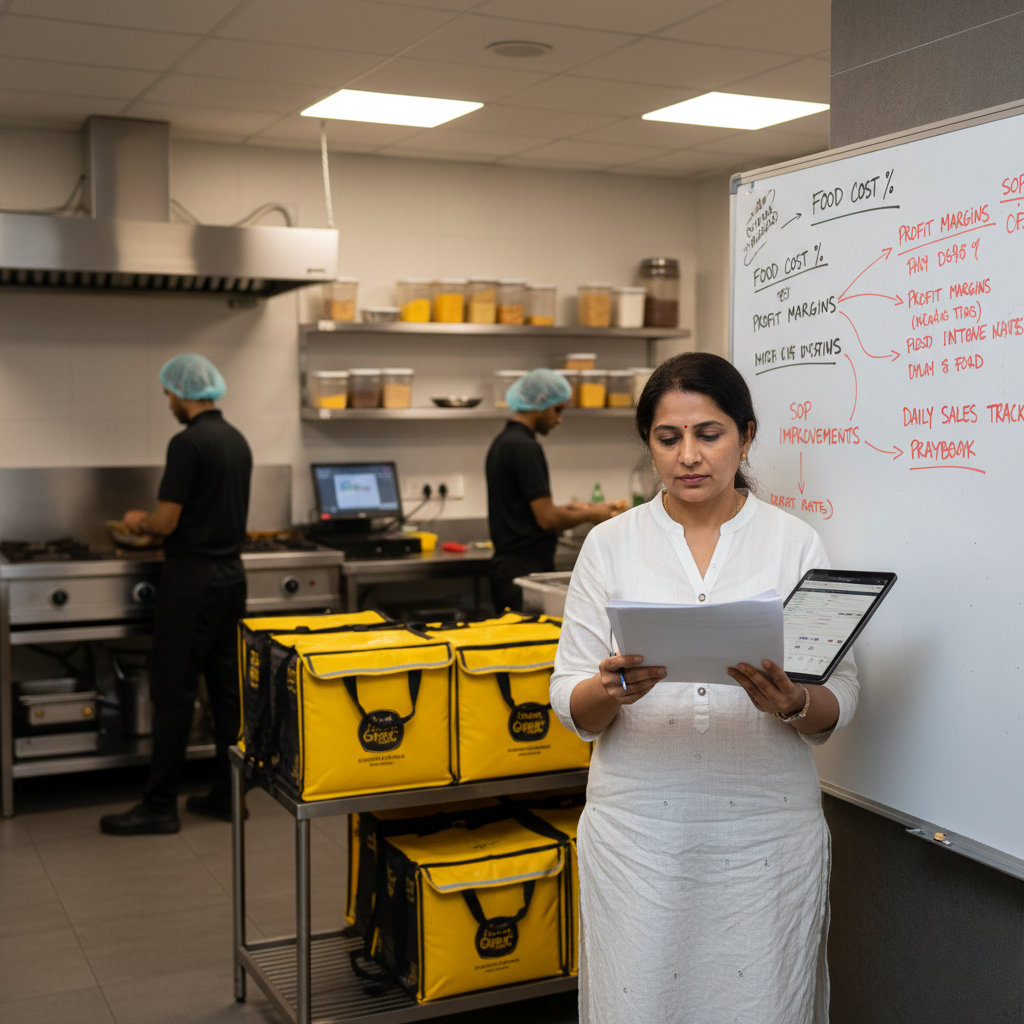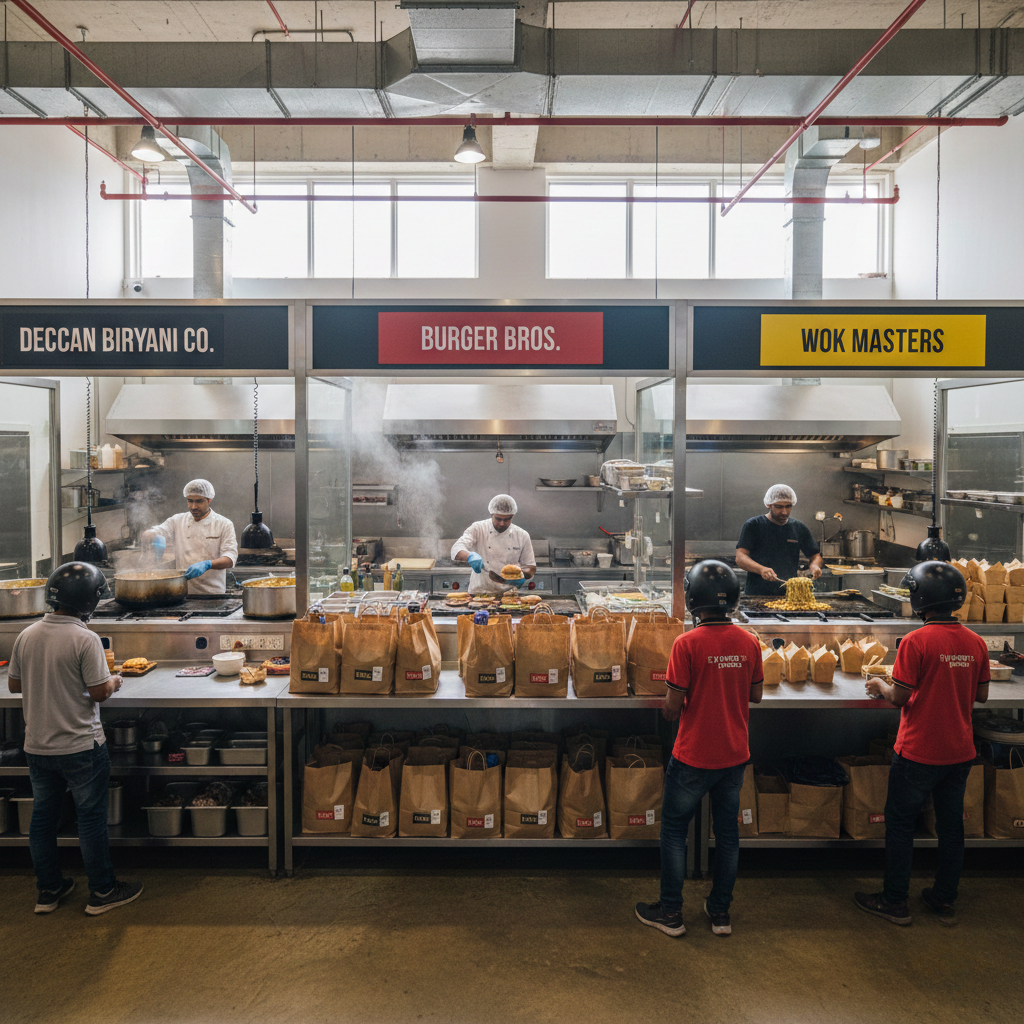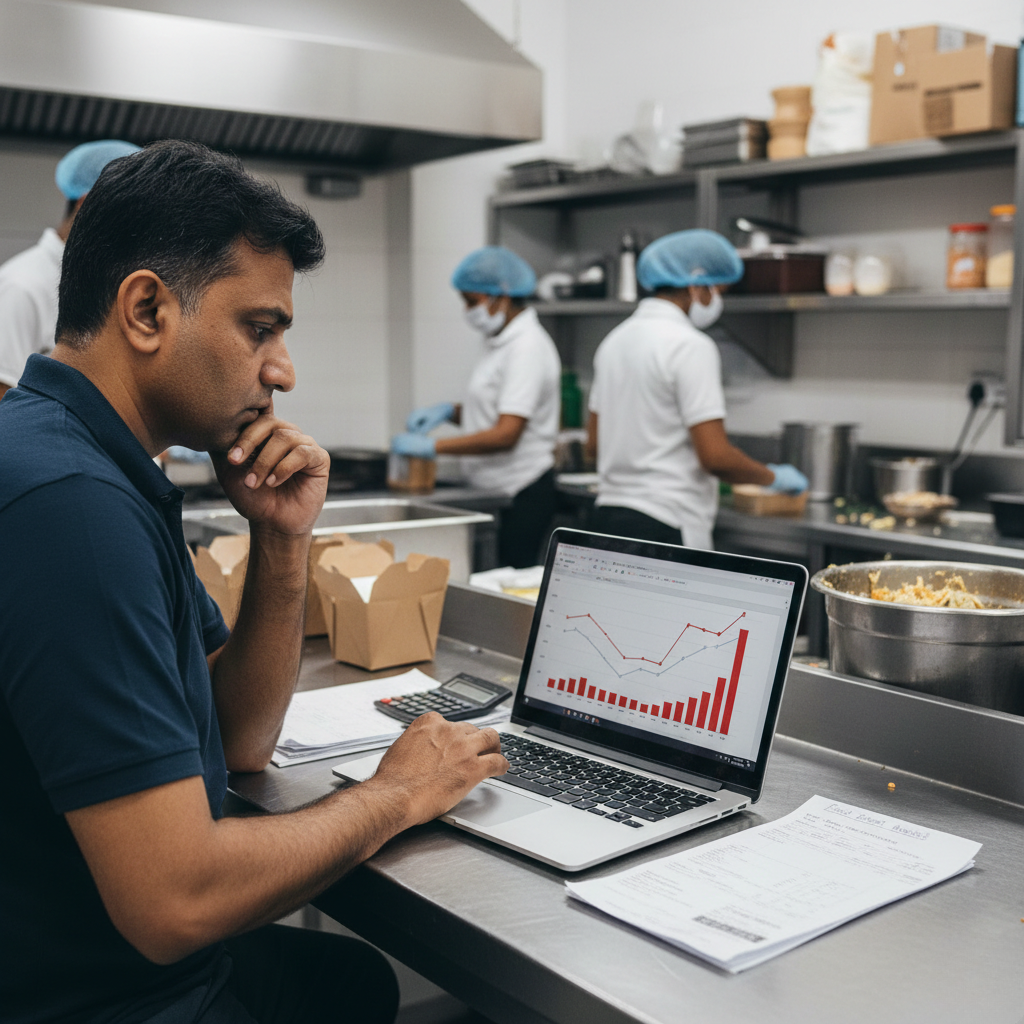
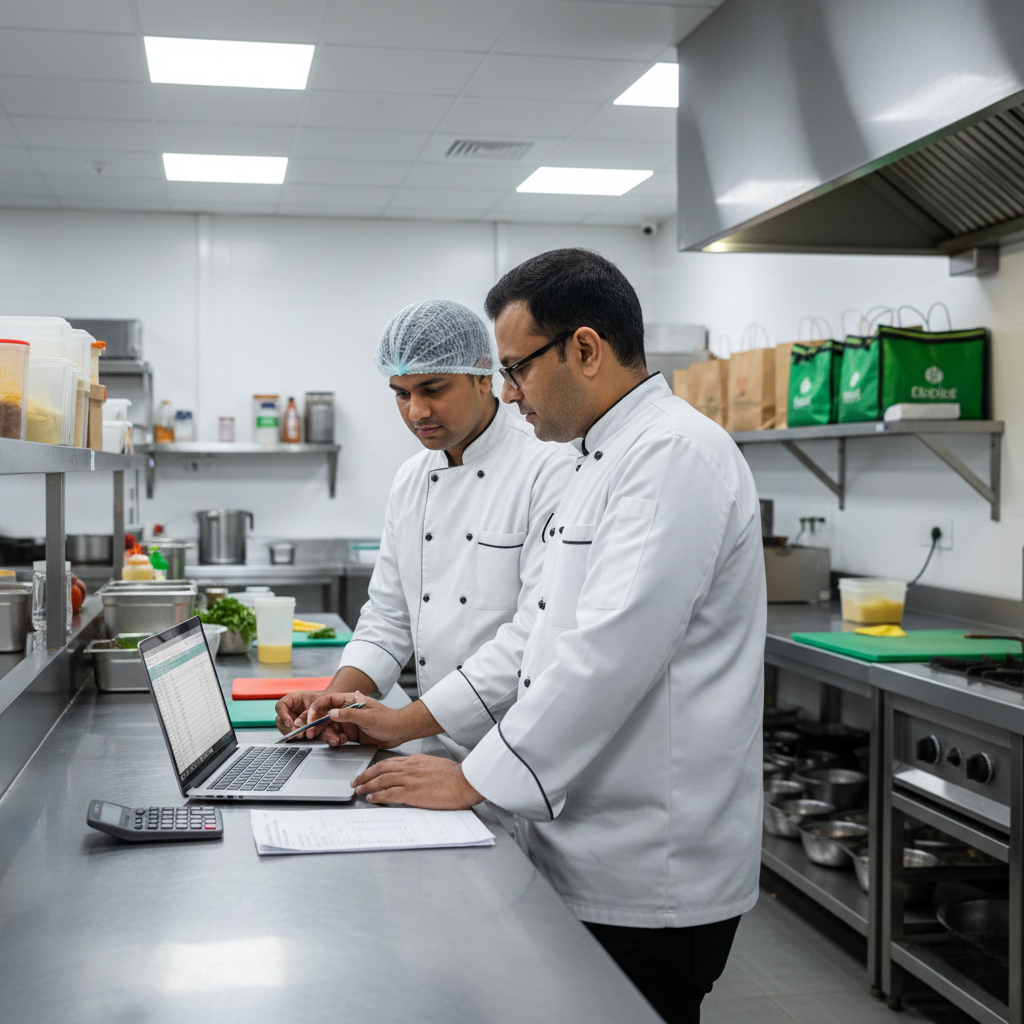
Fix Loss Making Cloud Kitchen in India-Running orders but negative profits is one of the most common realities for cloud kitchen founders in India. Many kitchens look busy on Swiggy and Zomato dashboards, yet struggle to pay salaries, vendors, or founders. The reason is simple: growth happened before profitability was engineered. This guide explains how to systematically fix a loss-making cloud kitchen, which operational levers matter the most, and how successful Indian cloud kitchens turn losses into predictable profits.
Start Here Before Fixing a Loss-Making Cloud Kitchen
This article is part of GrowKitchen’s cloud kitchen profitability and turnaround series. If you are still understanding the delivery-first food business model, begin with Cloud Kitchen Business in India.
Profitability is impossible without compliance and discipline. Ensure alignment with FSSAI, staff certification via FoSTaC, and clean billing systems through the GST Network.
Why Most Cloud Kitchens in India Start Losing Money
Most loss-making cloud kitchens are not failing because food is bad or demand is low. They fail because costs grow faster than control. Founders focus on orders, ratings, and discounts, while unit economics quietly deteriorate in the background.
A kitchen doing ₹10–25 lakhs in monthly GMV can still bleed cash if food cost, packaging, commissions, and refunds are not managed at the order level.
Root Causes of Loss-Making Cloud Kitchens
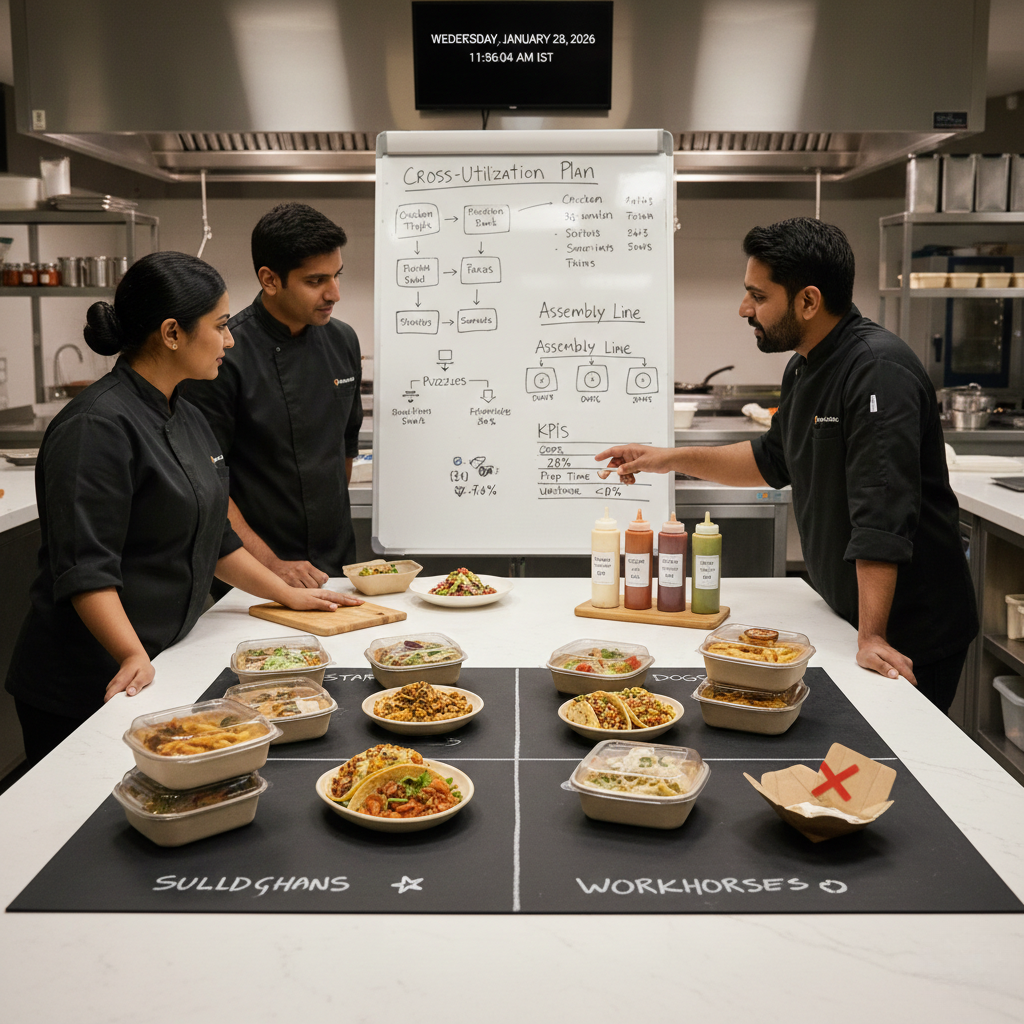
Losses rarely come from one big mistake. They come from multiple small leaks happening daily.
- Menu priced without aggregator commission awareness
- Over-portioning driven by guesswork
- Low-margin SKUs generating most orders
- High refunds from packing and dispatch errors
- Packaging costs ignored during pricing
- Discounts applied without contribution tracking
These issues are explained in depth here: Why Cloud Kitchens Fail in India.
Step 1: Fix Unit Economics Before Anything Else
Unit economics measure how much profit or loss you make per order. If one order loses money, ten thousand orders will lose more.
Every order must comfortably cover:
- Food cost (raw material + prep loss)
- Packaging cost
- Aggregator commission + GST
- Discount contribution
- Refund and error risk
Kitchens that skip this step usually try to grow their way out of losses and fail.

Step 3: Fix Portion Control to Stop Silent Losses
Over-portioning is the most common invisible loss in Indian cloud kitchens. A few extra grams per order compound into lakhs over a year.
- No weighing scales
- No gram-based recipe cards
- Different output from different cooks
Profitable kitchens enforce portion discipline using SOPs, ladle sizes, and controls defined in the Cloud Kitchen SOP Checklist.
Step 4: Take Control of Aggregator Commissions
Swiggy and Zomato commissions, GST, ads, and discounts can remove 35–40% of your order value. Many founders price food without understanding net realization.
- Commission-adjusted pricing
- Selective discount participation
- Controlled ad spending
Learn practical tactics here: How to Reduce Swiggy Commission and follow ecosystem insights from GreenSaladin.
Step 5: Fix Packaging and Refund Leakages
Refunds directly destroy profitability. Most refunds are operational, not food-quality related.
- Wrong items packed
- Spillage due to poor containers
- Cold food from delayed dispatch
Loss-making kitchens turn profitable by redesigning packing SOPs and reducing refund percentages.
Step 6: Build Dashboards That Expose Losses
Profitable kitchens track what others ignore.
- Contribution margin per order
- Refund percentage
- Food cost variance
- SKU-level profitability
- Dispatch error trends
Dashboards convert hidden losses into visible signals.
Why You Should Not Scale a Loss-Making Cloud Kitchen
Scaling weak unit economics multiplies losses. More orders, outlets, or ads will not fix a broken base.
- More orders ≠ more profit
- More kitchens ≠ stability
- More ads ≠ better margins
Use this guide before expansion: How to Scale Cloud Kitchens.
Final Thoughts: Loss-Making Kitchens Can Be Fixed
Cloud kitchens don’t become profitable through luck. They become profitable through discipline.
Fixing a loss-making cloud kitchen requires clarity, operational control, and strong unit economics.
Frameworks from GrowKitchen help founders replace intuition with systems.
FAQs: Fixing a Loss-Making Cloud Kitchen
Can a loss-making cloud kitchen be turned profitable?
Yes. Most kitchens turn profitable by fixing menu, portion control, pricing, and refunds.
How long does it take to fix losses?
With proper controls, results appear within 30–90 days.
Is marketing the solution?
No. Marketing amplifies outcomes. Without unit economics, it amplifies losses.
What net margin should I target?
A healthy cloud kitchen in India targets 10–15% net margin.