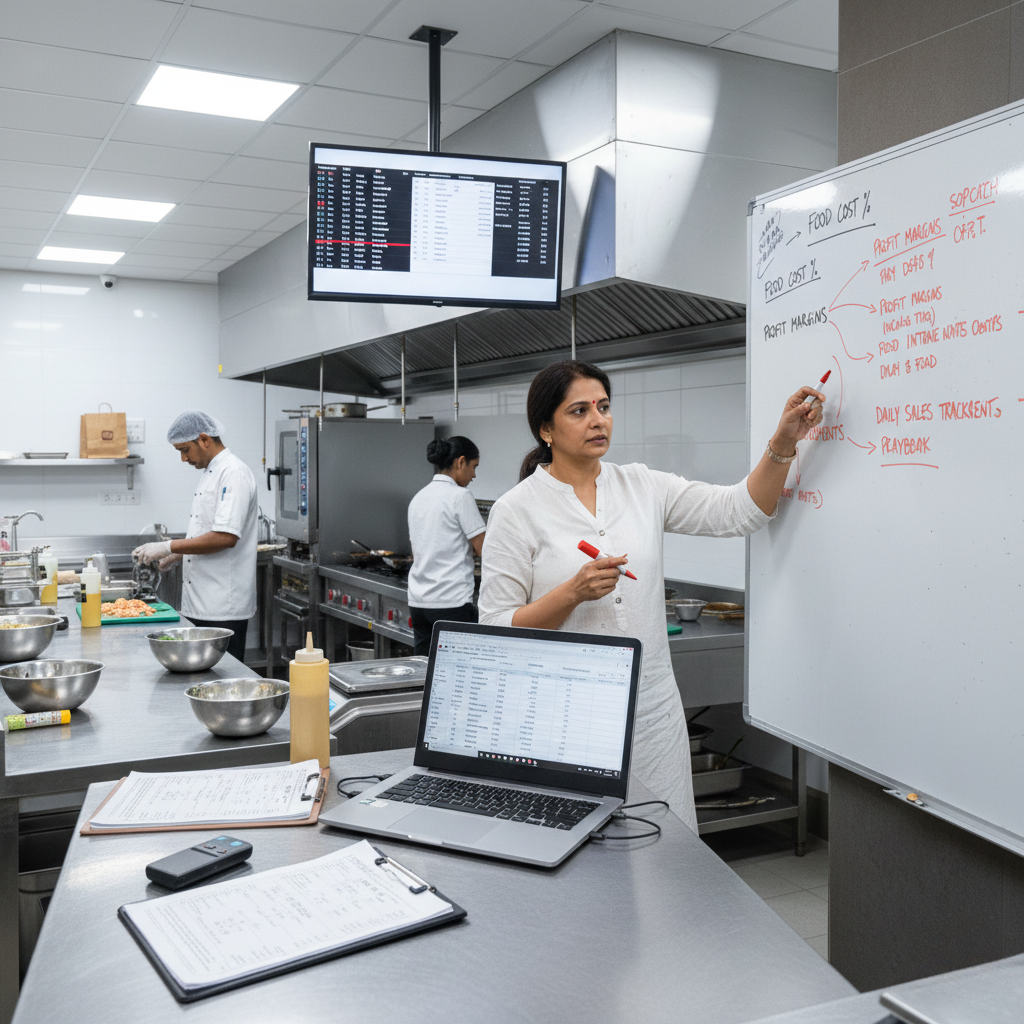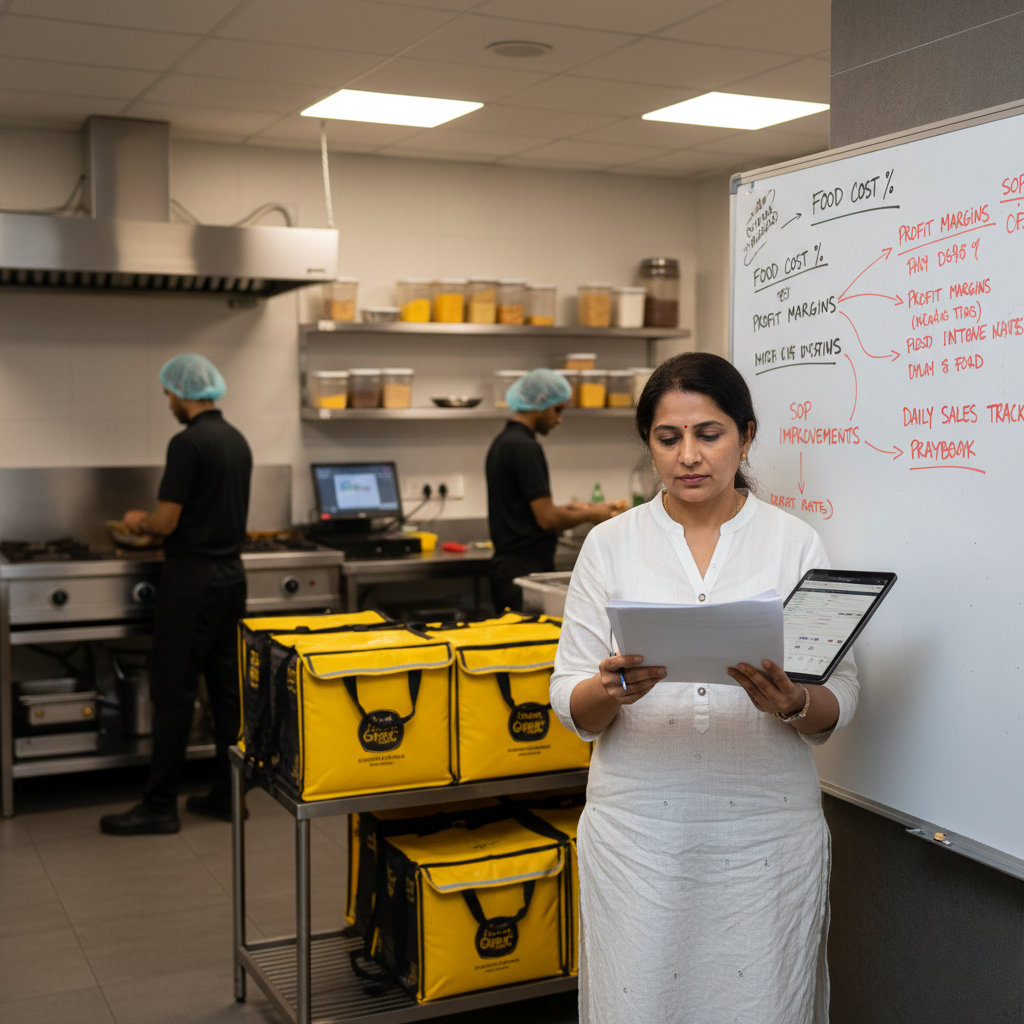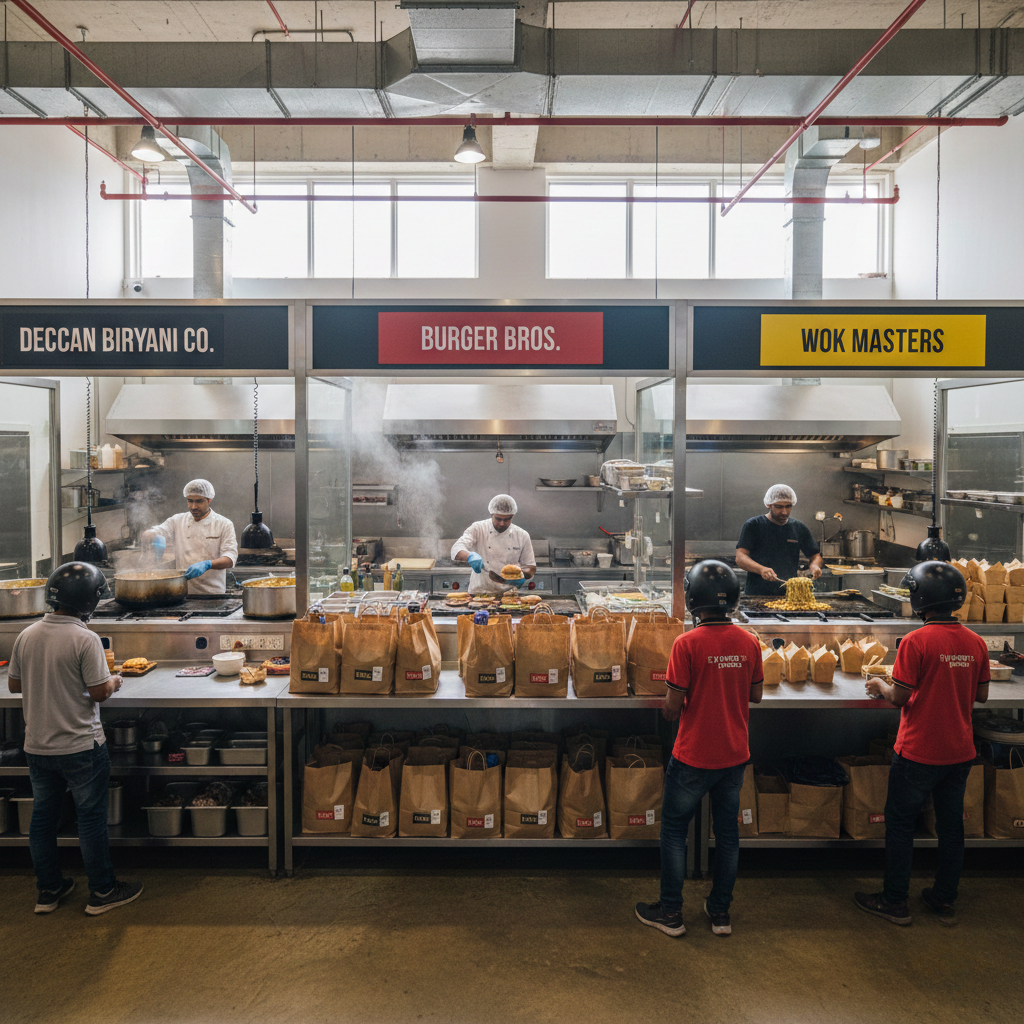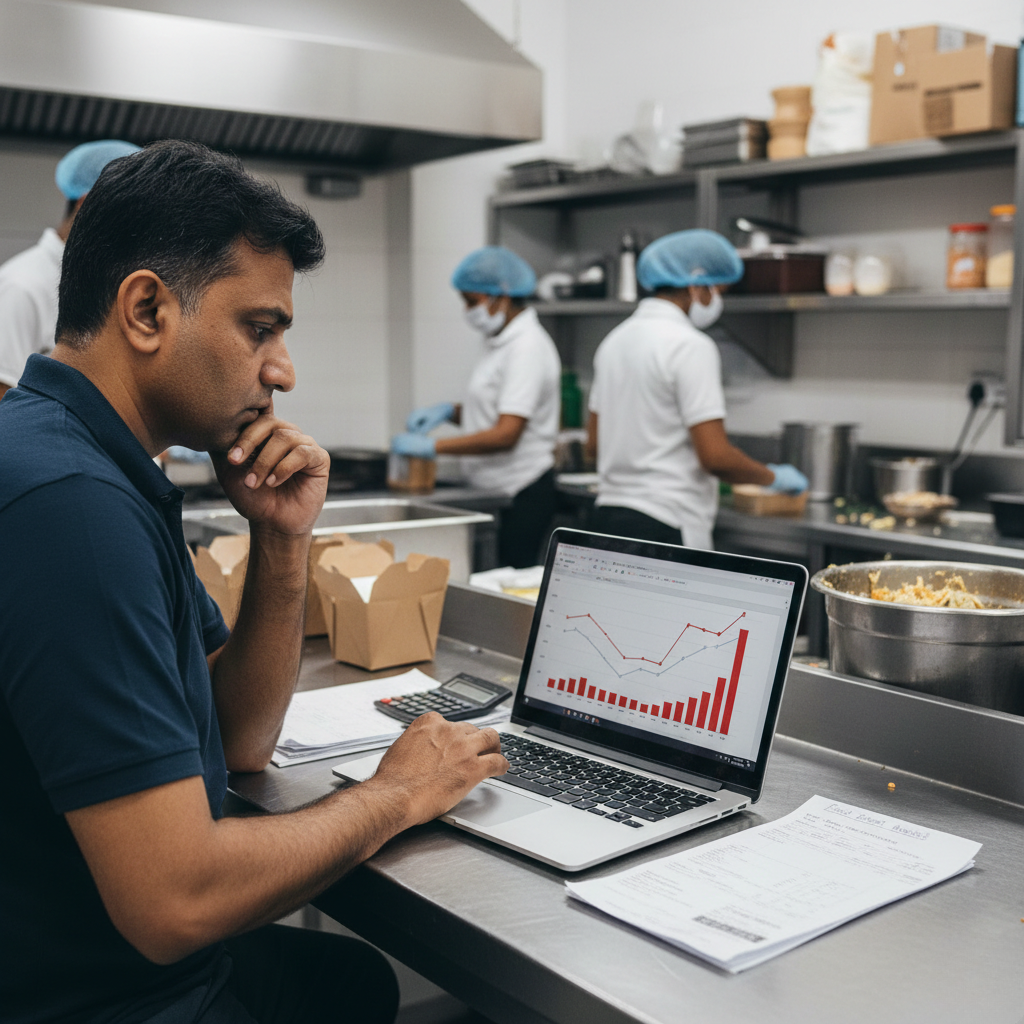
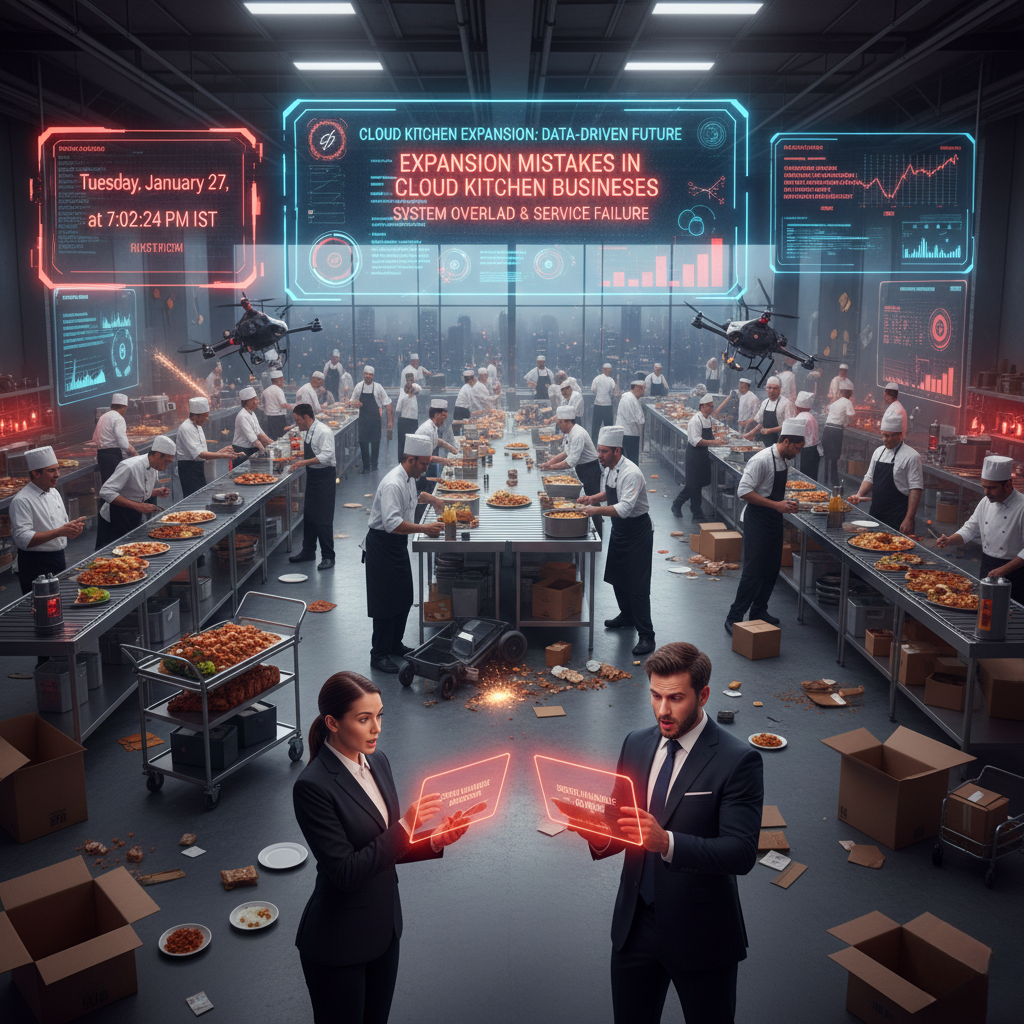
Cloud kitchen expansion mistakes appear easy to expand. Add a new location, replicate the menu, and turn on delivery platforms. Yet in India, most cloud kitchen expansions collapse within 12–18 months. The failure is not driven by demand, competition, or marketing. Cloud kitchens fail during expansion because systems don’t scale, processes don’t transfer, and operational discipline breaks under volume. This guide explains the most common expansion mistakes in cloud kitchen businesses, what actually breaks behind the scenes, and how structured operations determine whether expansion creates profitability or permanent losses.
Expansion Mistakes in Cloud Kitchen Businesses
This article is part of GrowKitchen’s profitability + operations learning series. If you’re still at the idea or single-kitchen stage, begin here: Cloud Kitchen Business in India.
Expansion multiplies both discipline and disorder. Food safety, hygiene, documentation, and staff capability must align with FSSAI compliance and structured training under FoSTaC. Without operational structure, scale magnifies risk instead of profit.
The Cloud Kitchen Expansion Myth
Most founders believe expansion equals growth. The assumption feels logical: more kitchens should mean more revenue.
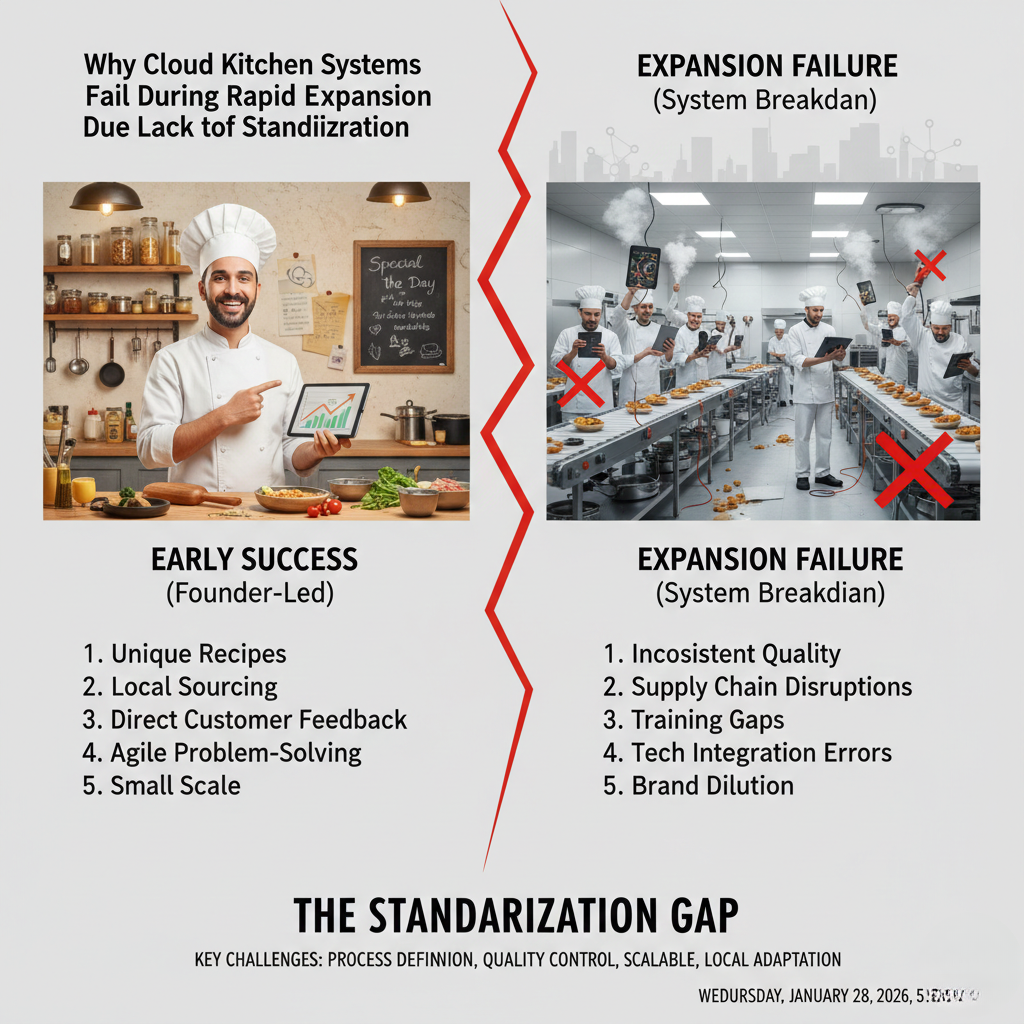
In reality, expansion is not a growth strategy. It is an operational stress test. Cloud kitchens that expand without mature systems often become harder to control than traditional restaurants.
Expanding Without Standardizing Operations
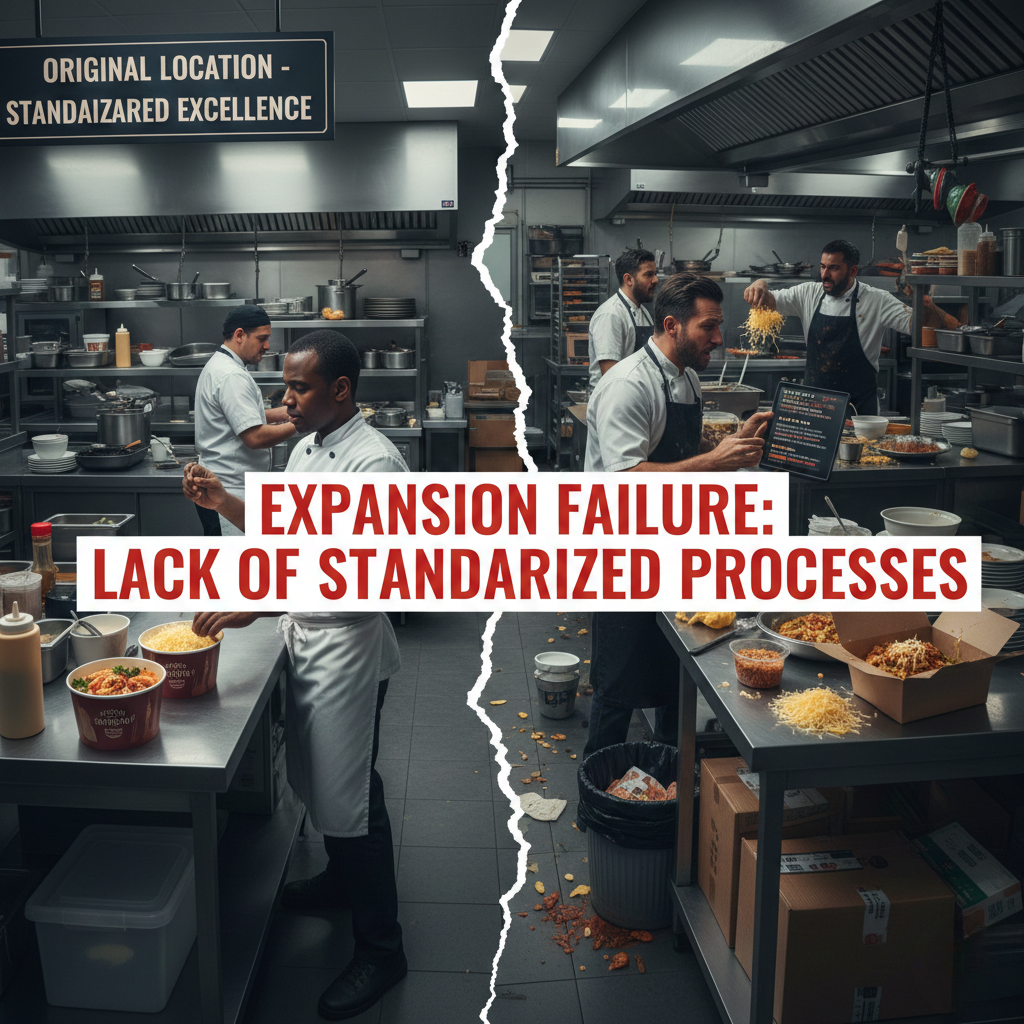
The most common expansion mistake is opening new kitchens before standardizing the first one.
Many brands expand while:
- Recipes exist only in the chef’s memory
- Prep quantities change daily
- Portion sizes are estimated, not measured
- Yield loss is never tracked
At one location, founders compensate through daily intervention. At multiple locations, intervention collapses.
This is why successful brands first build systems using frameworks like: Cloud Kitchen Operations Framework.
Scaling Without Demand-Linked Production Planning
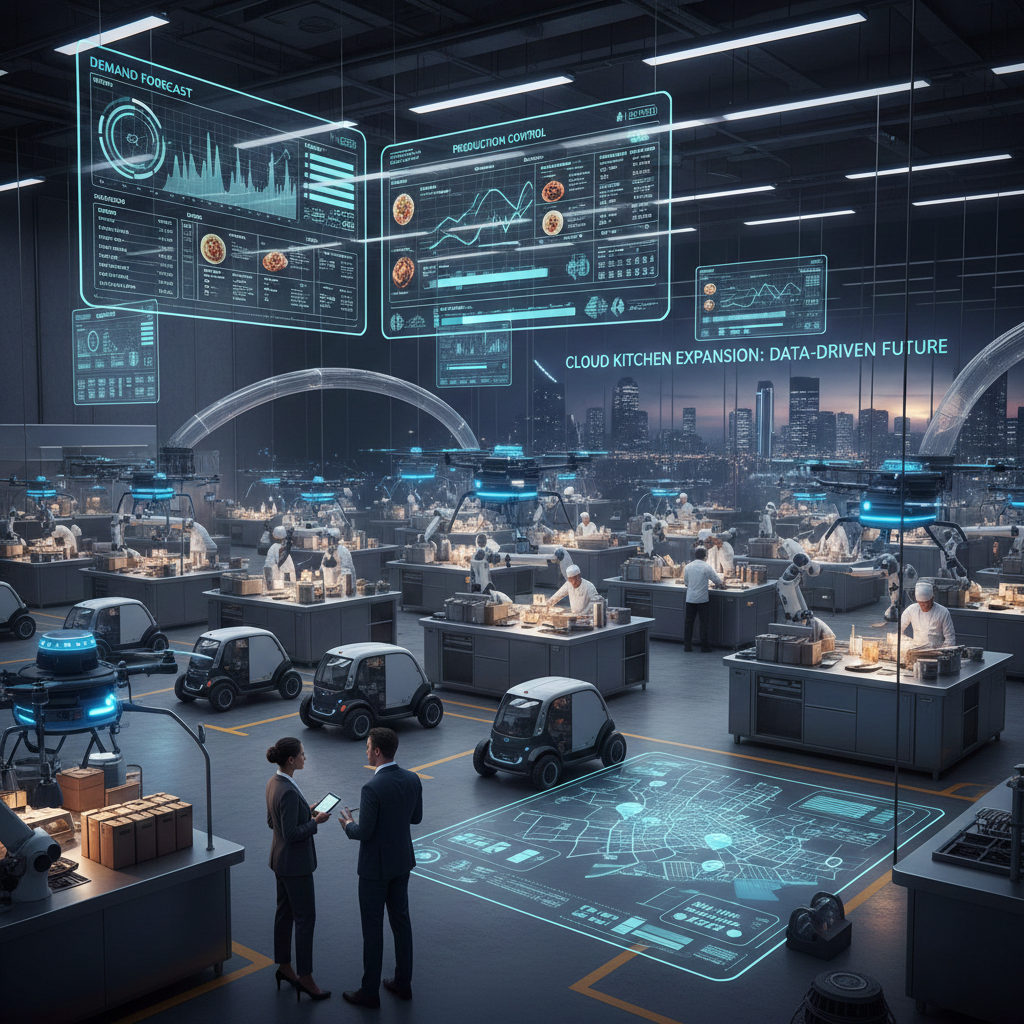
Expansion increases volume volatility. Without demand forecasting, kitchens fall into panic cooking.
Most expanding cloud kitchens lack:
- Day-part production plans
- Batch-size logic
- Historical demand analysis
The result is emergency cooking, mid-shift shortages, and silent margin erosion.
These failures closely mirror patterns discussed in: Why Cloud Kitchens Fail in India.
Why Expansion Turns Into a “People Problem”
As kitchens increase, founders often blame staff: “The team doesn’t follow instructions.”
The real issue is not people. It is undocumented, unaudited processes.
Without clear SOPs, expansion creates:
- Inconsistent execution
- Training gaps
- High dependency on individual skill
- Operational fatigue
How Expansion Silently Bleeds Money
Expansion hides losses behind revenue growth.
- Untracked yield loss
- Expired inventory
- Emergency procurement
- Re-cooking and refunds
These leaks destroy contribution margin.
Understand the math here:
Cloud Kitchen Profit Margin in India
See this – LinkedIn.
Multi-Location Kitchens vs Centralized Expansion
Centralization is often introduced too early. Without mature processes, central kitchens magnify chaos.
Many brands scale more safely by first mastering controlled multi-location kitchens.
Compare expansion models here: How to Scale Cloud Kitchens.
When a Cloud Kitchen Is Actually Ready to Expand
Expansion becomes viable only when:
- SOPs are documented and audited
- Recipes are yield-tested
- Demand planning is stable
- Margins are predictable
At this stage, expansion becomes replication, not reinvention.
Final Thoughts: Expansion Is an Operations Decision
Cloud kitchen expansion is not a marketing decision. It is an operational decision with financial consequences.
Without systems, expansion multiplies chaos. With systems, expansion becomes predictable and profitable.
FAQs: Cloud Kitchen Expansion Mistakes
When should a cloud kitchen expand?
Only after operations, margins, and processes are stable.
Is rapid expansion risky?
Yes. Speed without systems increases failure probability.
Can consulting prevent expansion failures?
Structured process design significantly reduces risk.
- Cloud Kitchen Business in India
- Cloud Kitchen Operations Framework
- Cloud Kitchen SOP Checklist
- Cloud Kitchen Profit Margin in India
- Why Cloud Kitchens Fail in India
- Cloud Kitchen Consultant in India
- CKaaS Explained
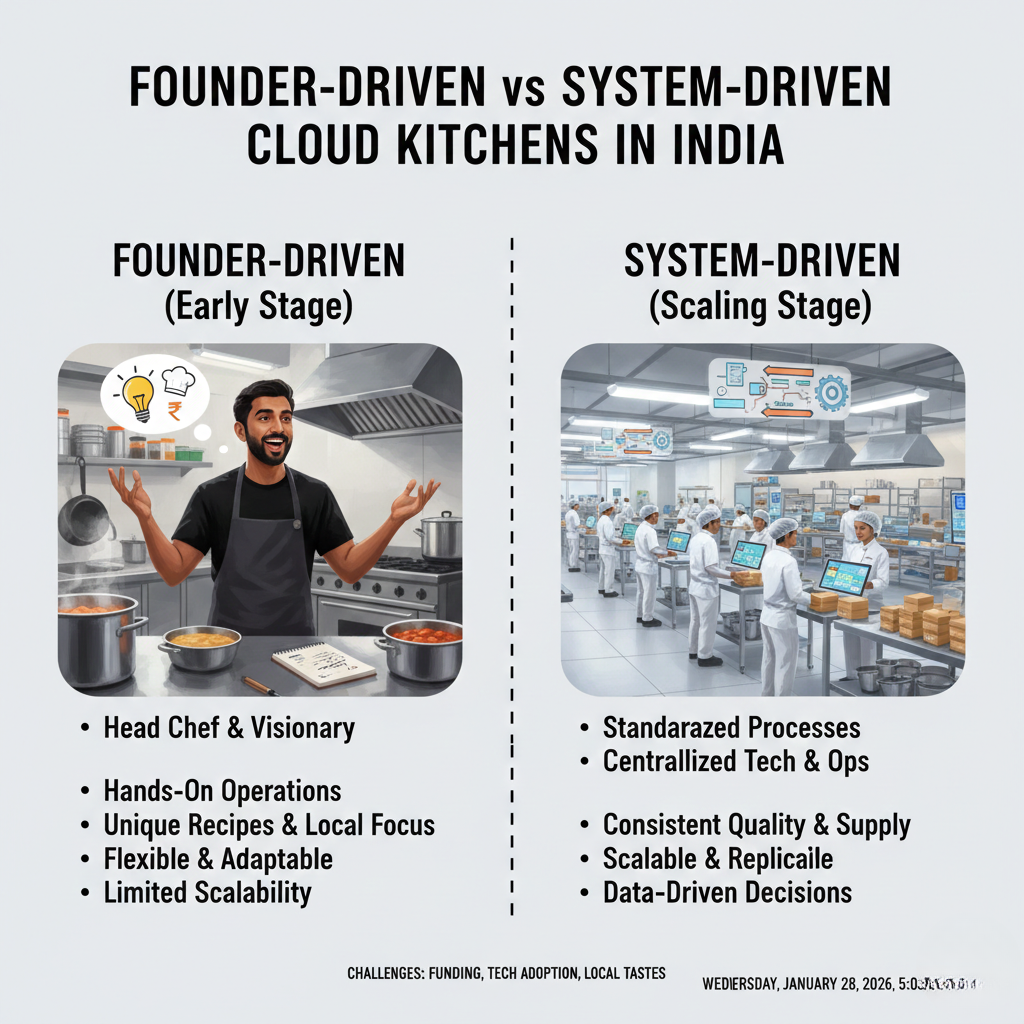
Most cloud kitchens in India start as founder-driven vs system-driven cloud kitchens businesses. The founder controls recipes, checks portions, manages staff, handles vendor gaps, fixes customer complaints, and pushes service during peak hours. This works at one kitchen but collapses during growth. Scaling a cloud kitchen requires a shift from founder-driven execution to system-driven operations where outcomes are predictable without constant intervention. This guide explains the transition from founder-driven to system-driven cloud kitchens, why most founders get stuck, and how operators build kitchens that run on systems, not daily firefighting.
Start Here Before Trying to Remove Yourself From Operations
This article is part of GrowKitchen’s operations and scaling series. If you are still validating your first kitchen, start with: Cloud Kitchen Business in India.
System-driven kitchens depend on food safety, documentation, and repeatable execution. Ensure compliance with FSSAI norms and structured staff training under FoSTaC before attempting scale.
The Founder-Driven Phase: Why It Feels Necessary
In the early days, founder involvement feels essential. You know the recipes, understand quality, and care more than anyone else.
Founder-driven execution often includes:
- Manual portion correction
- On-the-spot recipe tweaks
- Personal supervision during peaks
- Direct handling of refunds and complaints
This phase is normal. The problem begins when the business never evolves beyond it.
Why Most Founders Struggle to Let Go
The shift to system-driven operations is emotionally difficult. Founders fear quality loss and customer complaints.
Common reasons founders stay involved:
- “No one will care like I do”
- “Staff won’t follow processes”
- “Systems slow things down”
- “I’ll step back after expansion”
In reality, expansion without systems increases dependence on the founder.
What a System-Driven Cloud Kitchen Actually Means
A system-driven kitchen delivers consistent outcomes regardless of who is on shift.
This does not mean removing people. It means removing ambiguity.
System-driven kitchens rely on:
- Documented SOPs for every station
- Measured portions, not estimates
- Defined prep cycles and batch logic
- Clear dispatch and packing flows
- Regular KPI reviews
SOPs Are the Backbone of System-Driven Kitchens
Without SOPs, systems don’t exist. There is only memory and habit.
Effective SOPs cover:
- Prep quantities and timing
- Cooking sequence and heat control
- Packing order and labeling
- Dispatch handoff and escalation
Use this as your base reference: Cloud Kitchen Operations Framework. Facebook.
KPIs Replace Founder Intuition
Founder-driven kitchens rely on instinct. System-driven kitchens rely on data.
Key metrics include:
- Contribution margin per order
- Refund and remake rate
- Order delay percentage
- Rating variance by shift
- Inventory variance
Tracking these weekly removes the need for constant founder presence. Learn margin tracking here: Cloud Kitchen Profit Margin in India.
Why Systems Fix the “People Problem”
Founders often blame staff inconsistency. Systems reveal the real issue.
When expectations are clear and measurable:
- Training becomes faster
- Errors reduce naturally
- Accountability improves
- Performance becomes predictable
Systems don’t replace people. They enable average teams to perform consistently.
Why System-Driven Kitchens Scale Safely
Expansion fails when founders try to clone themselves.
System-driven kitchens scale by:
- Transferring SOPs, not habits
- Replicating menus, not improvisation
- Using KPIs instead of supervision
This difference explains why replication often fails: Why Replication Fails in Cloud Kitchen Expansion.
Final Thoughts: Let Systems Carry the Business
Founder-driven execution is heroic but unsustainable. System-driven execution is boring but scalable.
The most successful cloud kitchens in India are not run by exceptional founders every day, but by average teams guided by strong systems.
Build systems early. Let the business grow without consuming you.
FAQs: Founder-Driven vs System-Driven Cloud Kitchens
When should a founder step back from daily operations?
Once SOPs, KPIs, and menu systems deliver consistent results without intervention.
Do systems reduce food quality?
No. Systems protect quality by removing inconsistency and human error.
Can small kitchens become system-driven?
Yes. Systems matter more at small scale because margins are thinner.
Is system-building expensive?
No. Most systems are documentation and discipline, not capital investment.