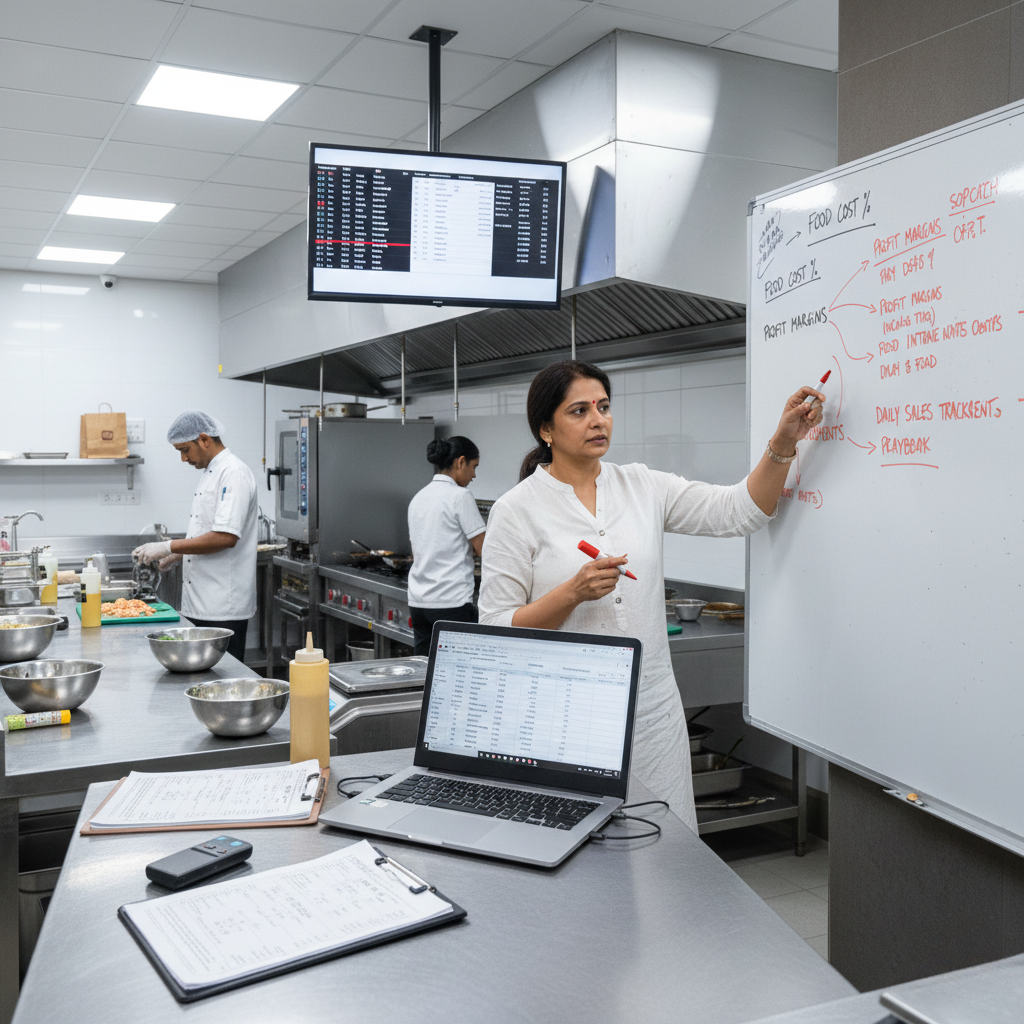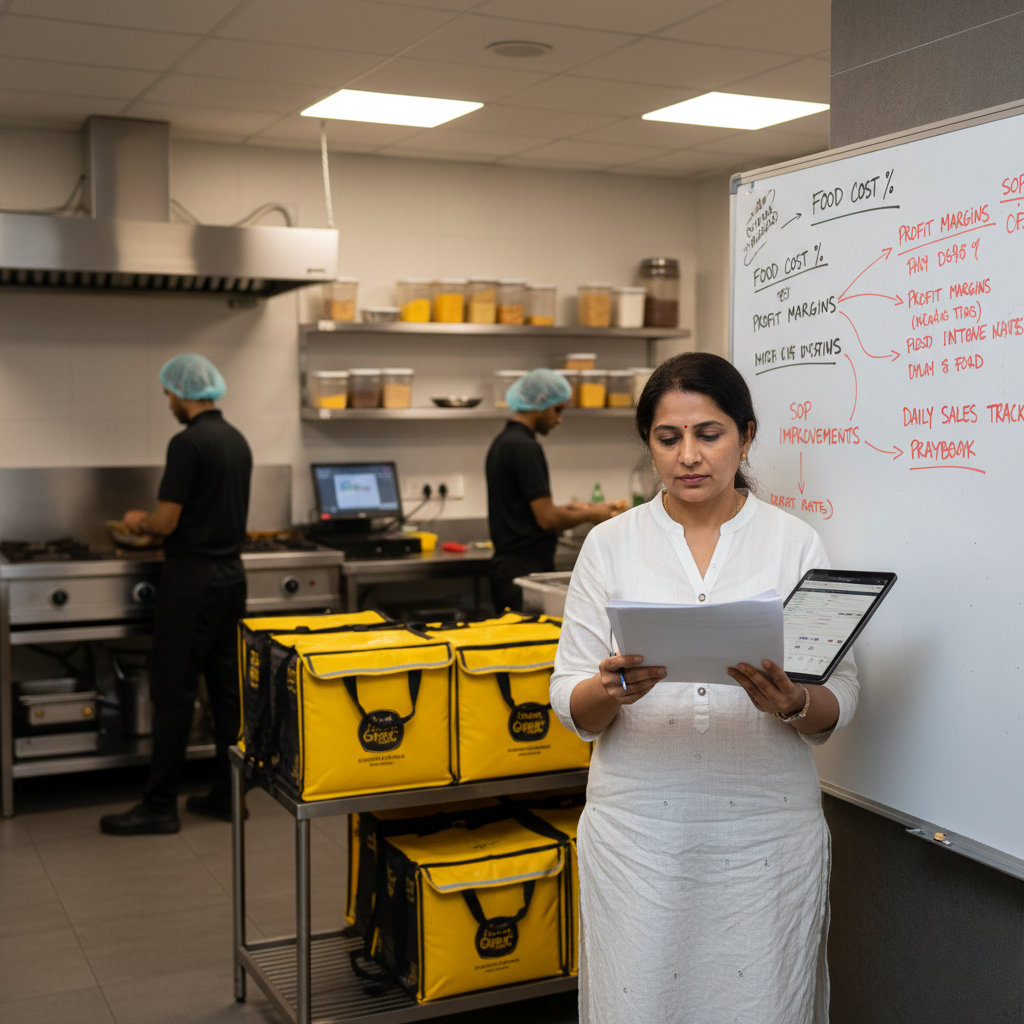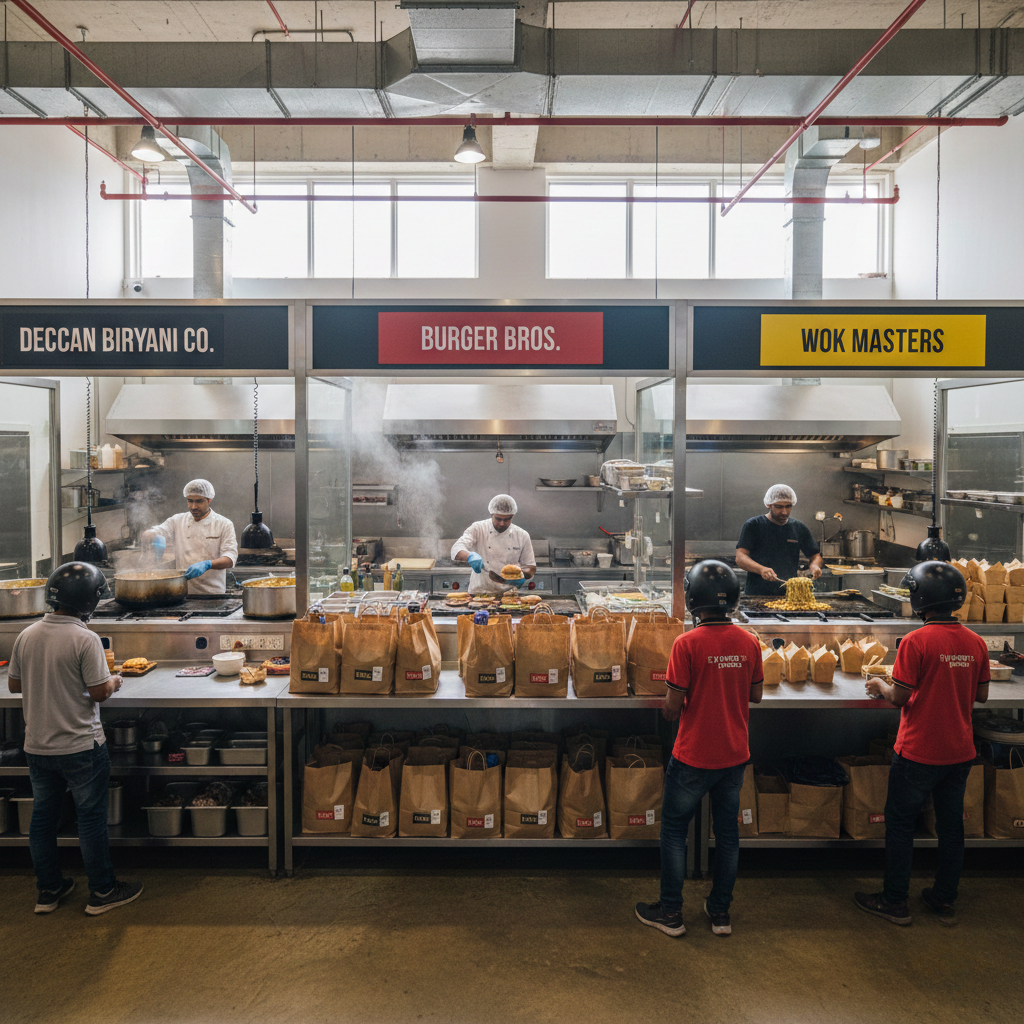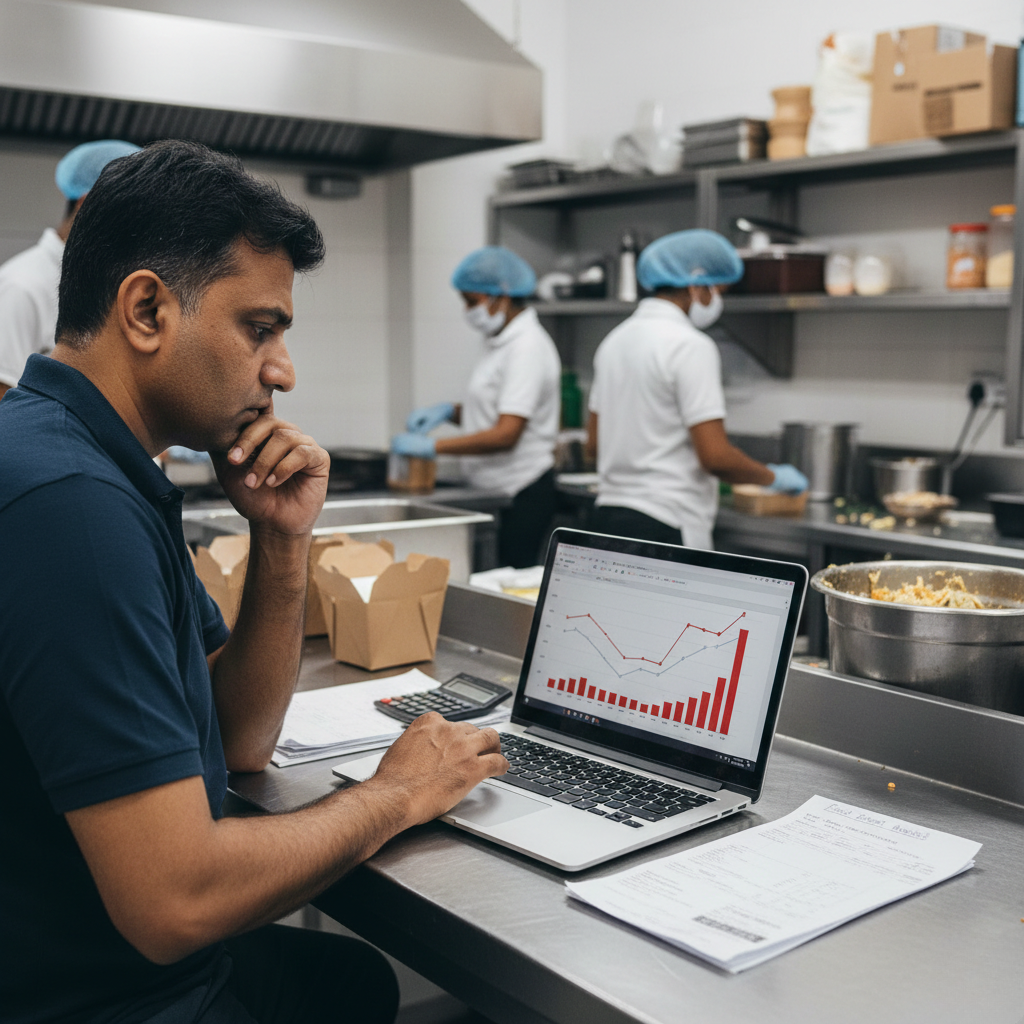
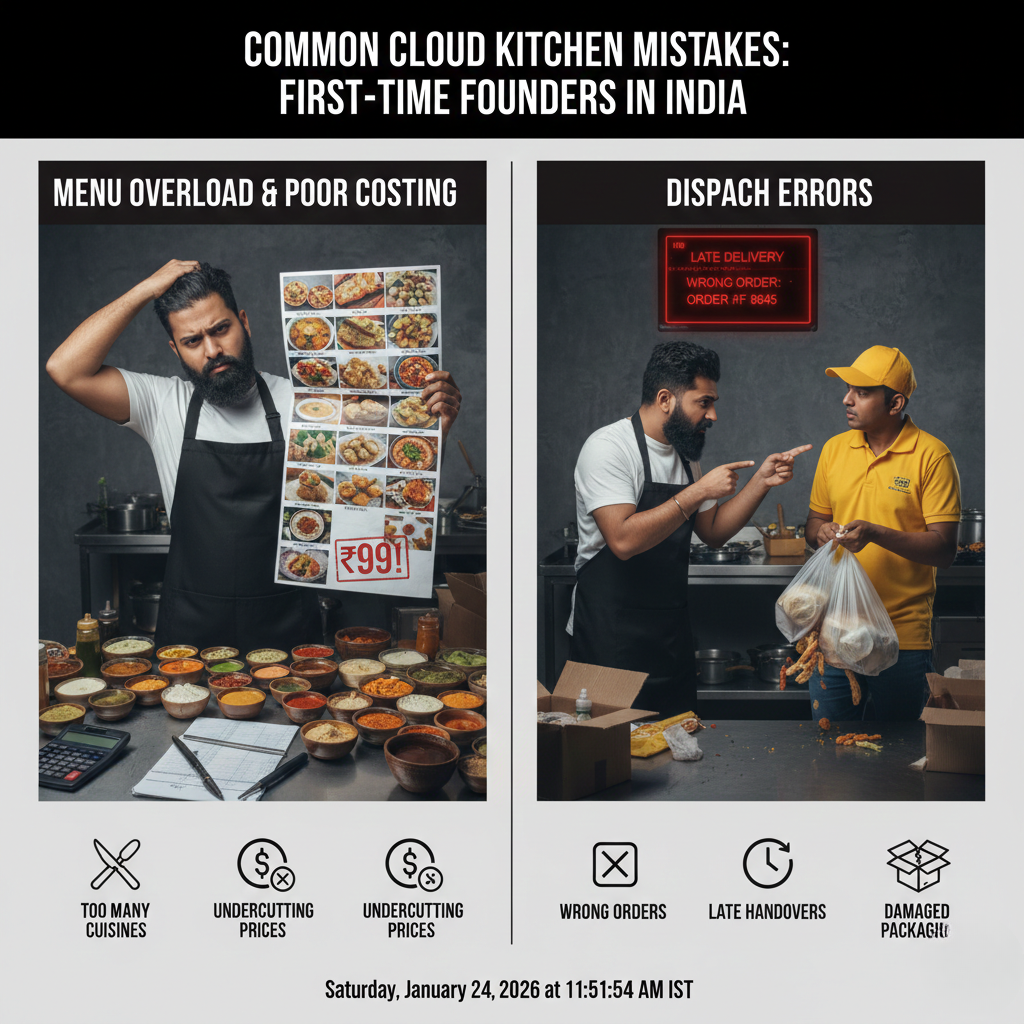
Cloud kitchen mistakes first-time founders make in India don’t fail because they can’t cook. They fail because they launch without systems. The most expensive mistakes are not visible on Day 1: wrong menu structure, weak costing, random packaging, no SOPs, poor inventory discipline, and “discount-first” marketing that kills contribution margin. This guide breaks down the most common cloud kitchen mistakes first-time founders make in India and what to do instead so you can protect ratings, control food cost, and scale without daily firefighting.
Start Here Before You Launch Your First Cloud Kitchen
This article is part of GrowKitchen’s beginner-to-operator playbook series. If you want the full foundation first, start with: Cloud Kitchen Business in India.
First-time founders should also set basics right: food licensing, hygiene training, and tax compliance. Use official references like FSSAI, safety training via FoSTaC, and billing discipline through the GST Network. If these are weak, operations become fragile quickly.
Cloud Kitchen Mistakes First-Time Founders Make in India
Your first cloud kitchen feels simple on paper: rent a kitchen, put a menu on Swiggy/Zomato, run discounts, and take orders. In reality, delivery-first food businesses punish inconsistency. Aggregator commissions, peak-hour pressure, packaging failures, and low repeat rates expose weak systems fast.
The goal is not “start.” The goal is: predictable contribution margin + stable ratings + repeat customers. That happens only when you avoid the common first-founder mistakes and build an operator-style setup.
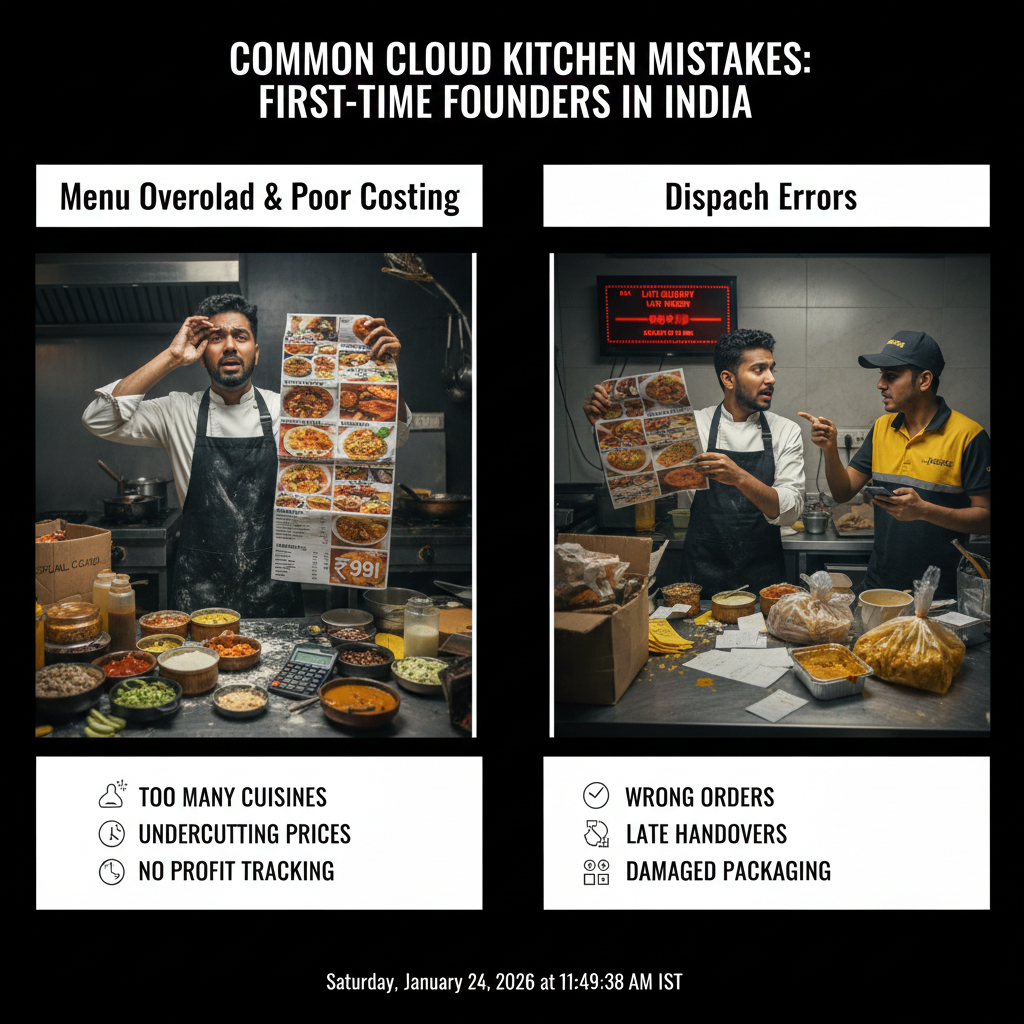
Mistake #2: Pricing Without Contribution Margin Math
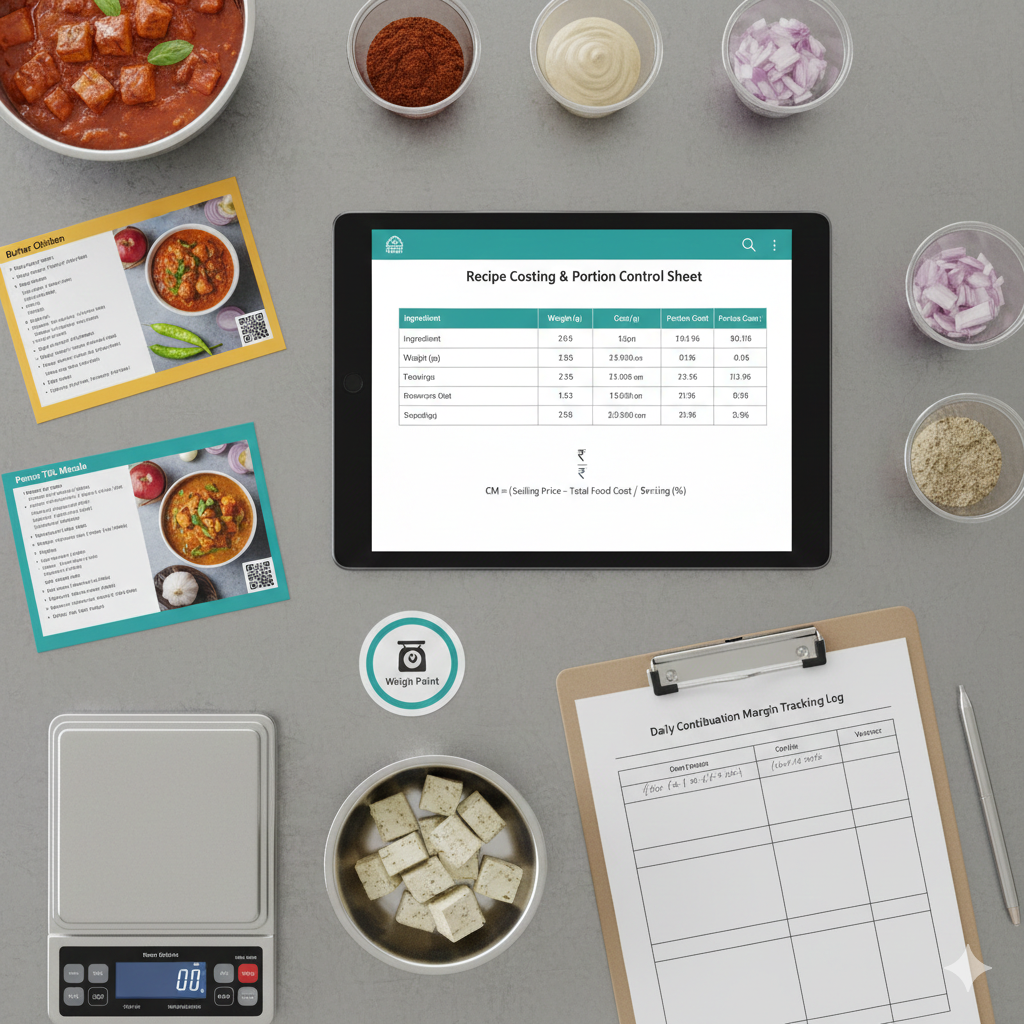
Many founders price based on competitors or gut feeling. But in India, aggregator commissions + ads + packaging + refunds can wipe out profits fast. Revenue is not profit. Professional kitchens track contribution margin per order.
- What founders do: price low, run constant discounts, ignore packaging and commission impact.
- What operators do: build a margin sheet per SKU and protect high-cost ingredients with weigh-points.
- What to do instead: audit every SKU weekly, remove loss-making items, and engineer upsells.
Use this for profitability benchmarks: Cloud Kitchen Profit Margin in India.
Mistake #3: No SOPs (Everything Runs on Memory)
The #1 scaling killer is “knowledge locked in one person.” Without SOPs, every staff member does things differently, portions fluctuate, packaging varies, and taste changes across shifts. Customers notice this faster on delivery platforms because ratings are immediate.
- What founders do: “I’ll teach them” and expect consistency.
- What operators do: station SOPs + checklists + sign-offs + escalation rules.
- What to do instead: document the minimum viable SOPs before scaling orders.
Start with: Cloud Kitchen SOP Checklist.
Mistake #4: Weak Inventory Discipline (Silent Losses)
Inventory is where profit leaks quietly: over-buying, wrong storage, no FIFO, no yield tracking, and last-minute stockouts. First-time founders often discover “leakage” only after cash crunch hits.
- RM master: standardized names, units, storage rules, substitutes, vendors.
- Par levels: reorder points based on demand + lead time.
- Variance checks: purchased vs consumed vs expected weekly.
- Wastage log: expiry, spillage, over-production, returns tracked daily.
If you’re still planning setup fundamentals, read: Cloud Kitchen Setup Cost in India.
Mistake #5: Treating Packaging as an Afterthought
Delivery is packaging-dependent. Great food can arrive soggy, leaked, cold, or mixed then ratings drop. First-time founders often choose packaging based on cost, not performance.
- What founders do: one container for everything, no venting, weak sealing.
- What operators do: packaging map by cuisine (fried, gravy, rice, noodles, desserts).
- What to do instead: test packaging during peak conditions and enforce packing checklists.
For delivery safety and hygiene practices, review: FSSAI guidelines and training on FoSTaC.

Mistake #6: No Dispatch Control (Late Orders = Low Ratings)
Many founders focus on cooking speed but ignore dispatch discipline. In peak hours, a kitchen can be “ready” but orders still go late due to poor rider staging, no batching rules, and no ticket aging control.
- What founders do: handover happens randomly, no escalation rules.
- What operators do: ready-to-handover time limit + staging racks + handover SOP.
- What to do instead: make dispatch a system, not a person’s responsibility.
If aggregator dependency is forcing discount decisions, read:
How to Reduce Swiggy Commission
See this – linkedIn.
Mistake #7: “Discount-First” Marketing That Kills Profit
First-time founders often believe discounts are the fastest growth lever. Discounts can increase orders but if your kitchen lacks systems, you scale mistakes. Plus, discounts reduce margin and attract deal-seekers, not loyal customers.
- What founders do: heavy discounts, random ads, no retention plan.
- What operators do: optimize menu visibility, packaging performance, and repeat loops first.
- What to do instead: build retention via consistent quality + top SKUs + smart combos.
If you’re planning multi-location growth, use: How to Scale Cloud Kitchens.
Mistake #8: Not Tracking KPIs Weekly
The biggest difference between amateurs and operators is measurement. If you don’t track numbers, you react late. Professional kitchens track KPIs weekly to catch drift early.
- Contribution margin per order (by SKU, by channel)
- Refund rate and top reasons (missing, cold, spillage, late)
- Dispatch delay % during peak hours
- Food cost % and stock variance weekly
- Rating variance (stability matters more than one good week)
- Repeat rate (week 1 to week 4 retention)
To understand failure signals in detail, read: Why Cloud Kitchens Fail in India.
Final Thoughts: Avoid These Cloud Kitchen Mistakes Early
Most first-time founders don’t lose because demand is low. They lose because systems are weak. Avoid menu overload, build contribution margin discipline, implement SOPs, fix inventory, engineer packaging, control dispatch, and track KPIs weekly. When these are in place, growth becomes predictable.
If you want to upgrade from “running mode” to operator-level stability, start with: Cloud Kitchen Operations Framework.
FAQs: Cloud Kitchen Mistakes in India
What is the biggest mistake first-time cloud kitchen founders make?
Launching without systems no SOPs, weak costing, and poor inventory discipline. This causes inconsistency and rating drops.
Should I start with discounts to get orders?
Discounts can bring orders, but without strong operations you scale mistakes. Build consistency first, then market.
How many items should a new cloud kitchen launch with?
A tight, repeatable menu of 18–28 SKUs is ideal. Shared bases and fast finishing improve speed and reduce wastage.
How often should I check food cost and refunds?
Weekly. Food cost by SKU and refund reasons should be reviewed every week to catch leakage and quality issues early.
- Cloud Kitchen Business in India
- Cloud Kitchen Operations Framework
- Cloud Kitchen SOP Checklist
- Cloud Kitchen Setup Cost in India
- Cloud Kitchen Profit Margin in India
- How to Reduce Swiggy Commission
- How to Scale Cloud Kitchens
- Why Cloud Kitchens Fail in India
- Cloud Kitchen Consultant in India
- CKaaS Explained