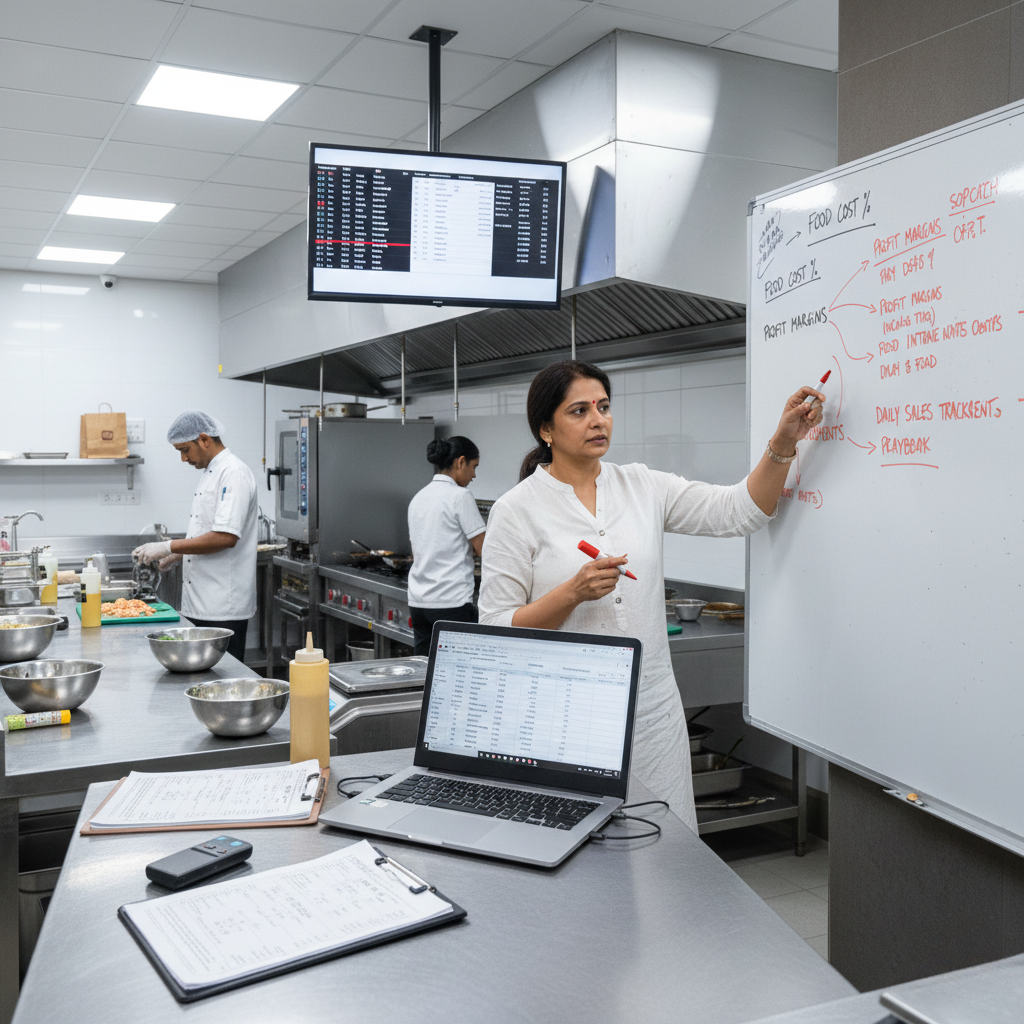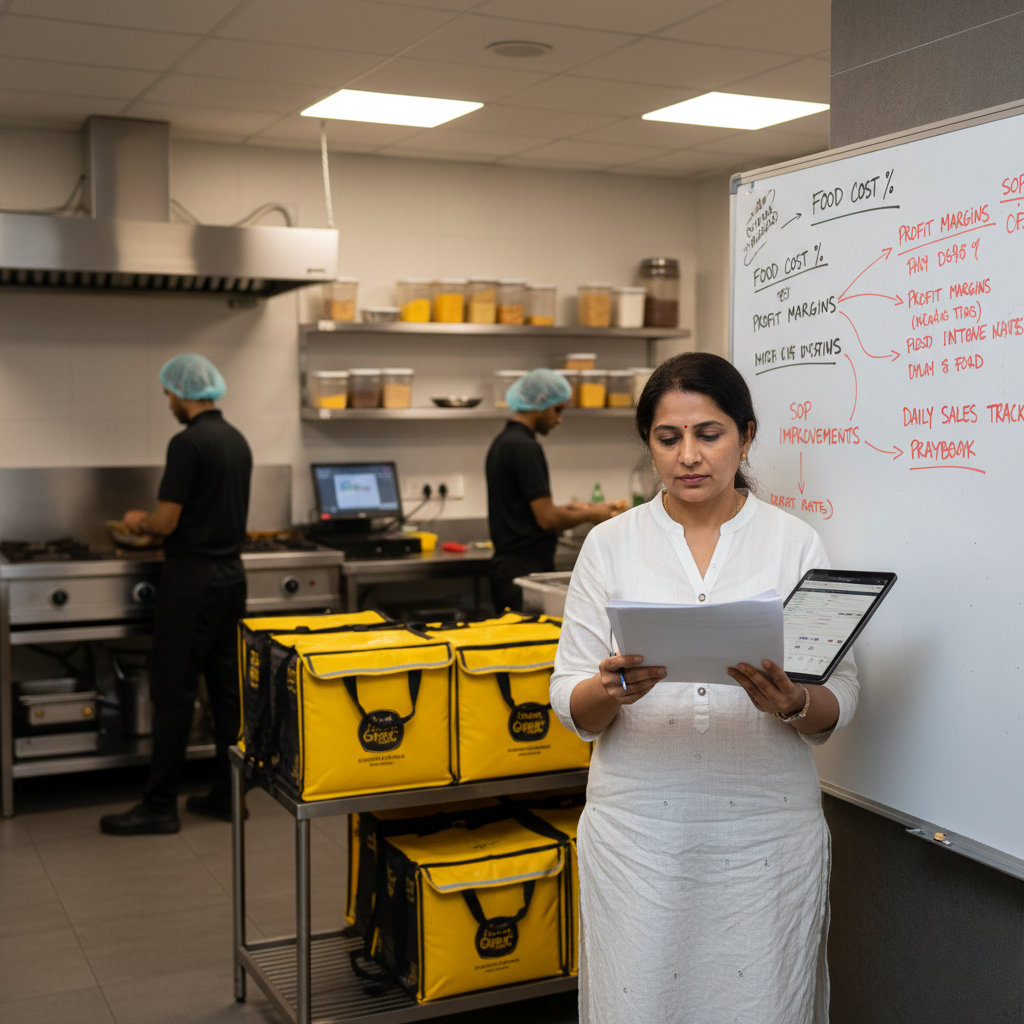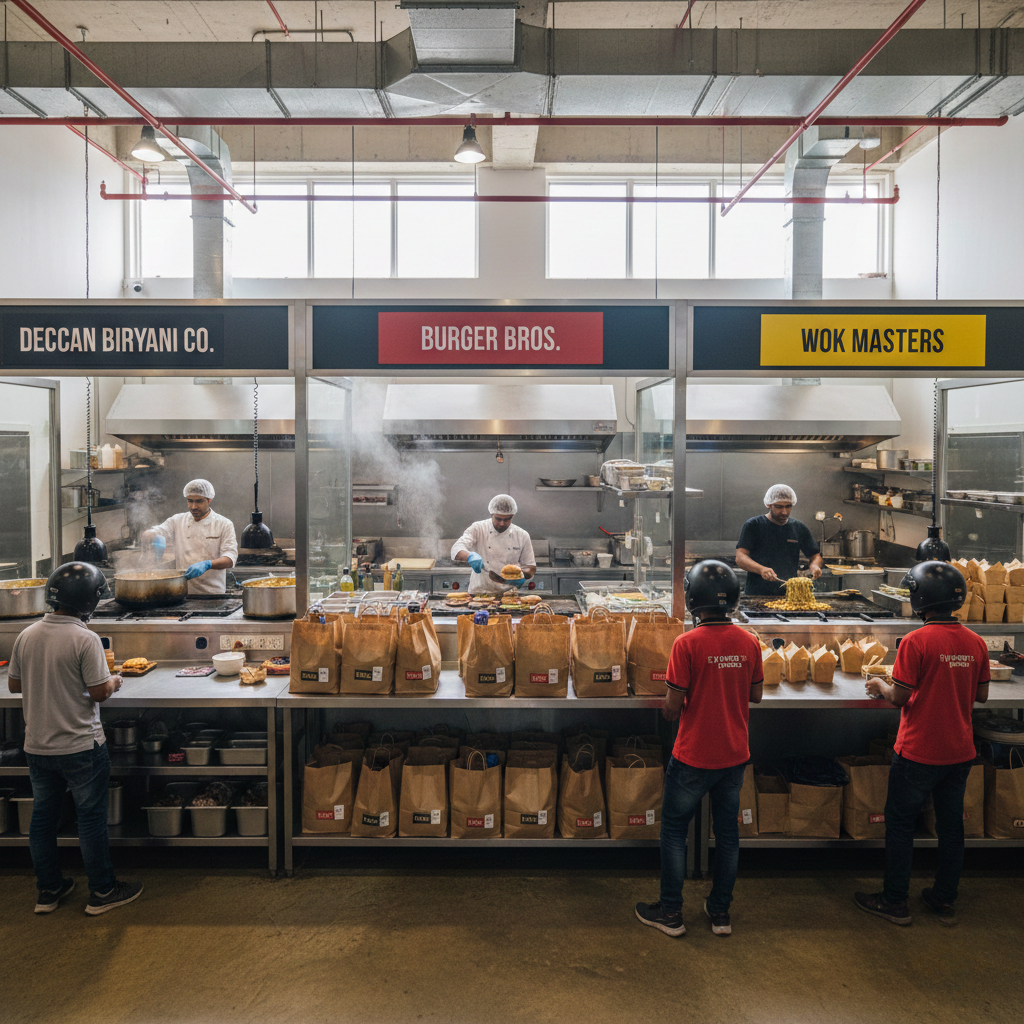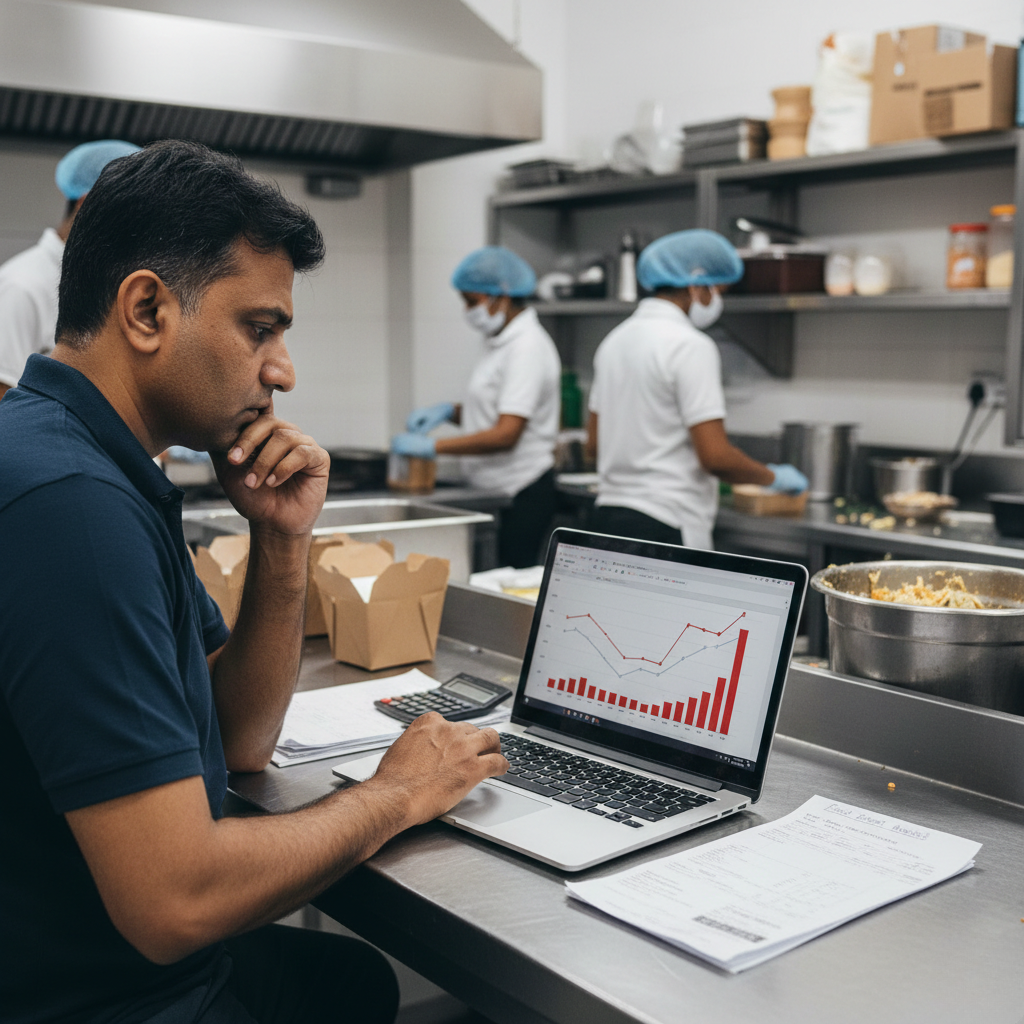
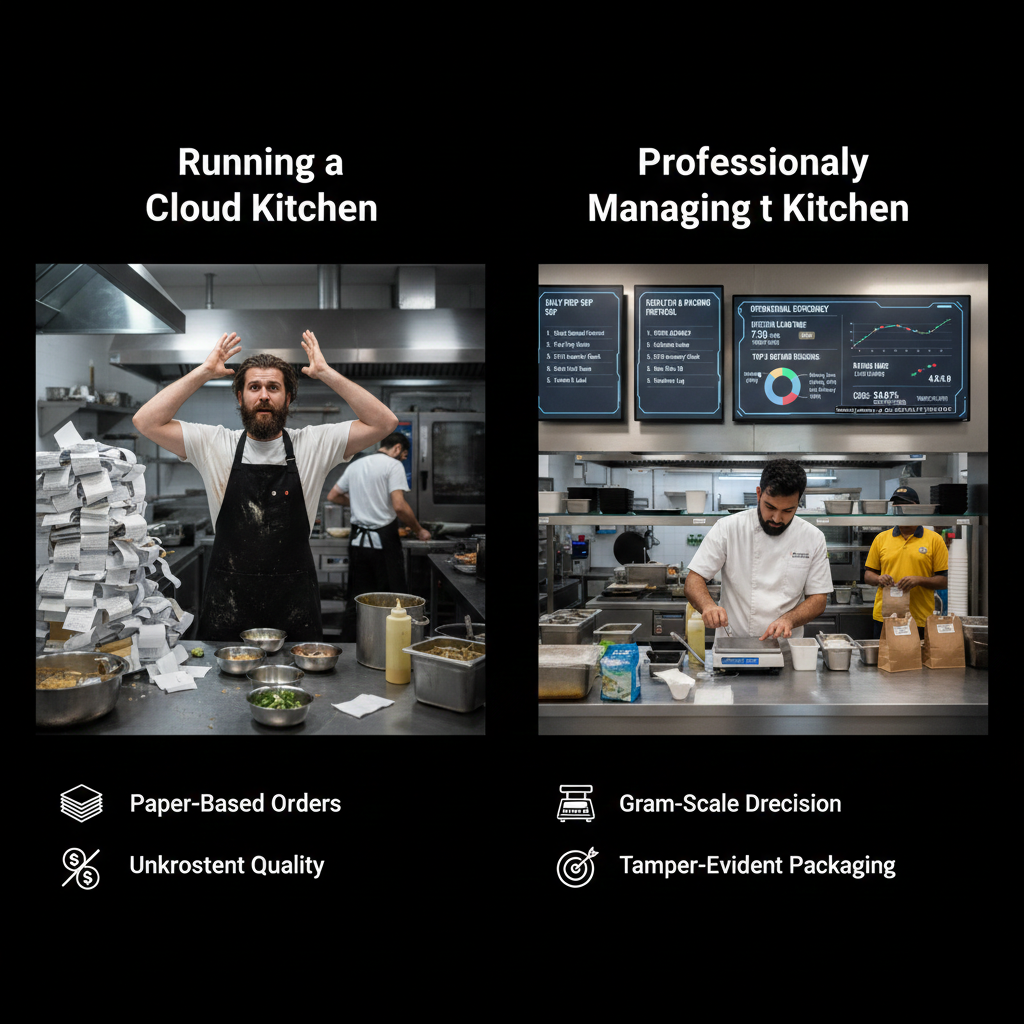
Many founders believe they are “running a cloud kitchen vs professional management” a cloud kitchen but what they’re actually doing is firefighting daily operations. Professional cloud kitchen management is different: it’s a repeatable system that protects margin, stabilizes ratings, and makes growth predictable. The difference is not talent or hard work. It’s structure SOPs, inventory discipline, menu engineering, packaging science, dispatch control, and KPI-led decision-making. This guide explains the real difference between running a cloud kitchen vs managing it professionally in India, with practical frameworks you can implement today.
Start Here Before Comparing “running a cloud kitchen vs professional management” a Cloud Kitchen
This article is part of GrowKitchen’s operations and profitability learning series. If you want a beginner-to-advanced foundation first, start here: Cloud Kitchen Business in India.
Most operational failures in India happen due to weak systems around hygiene, labeling, and documentation. Align your kitchen with FSSAI compliance and training standards like FoSTaC. Your operational structure should also match billing + tax discipline via the GST Network.
Difference Between running a cloud kitchen vs professional management
“Running a cloud kitchen” usually means handling day-to-day tasks: cooking, listing on Swiggy/Zomato, coordinating staff, buying raw material, packing orders, and responding when things go wrong. It’s survival-mode. It can work at low order volume but breaks the moment demand rises.
“Managing a cloud kitchen professionally” means building an operating system that produces consistent outcomes without founder dependence. The goal is: predictable contribution margin + stable ratings + repeat ordering. Professional management turns chaos into a process.
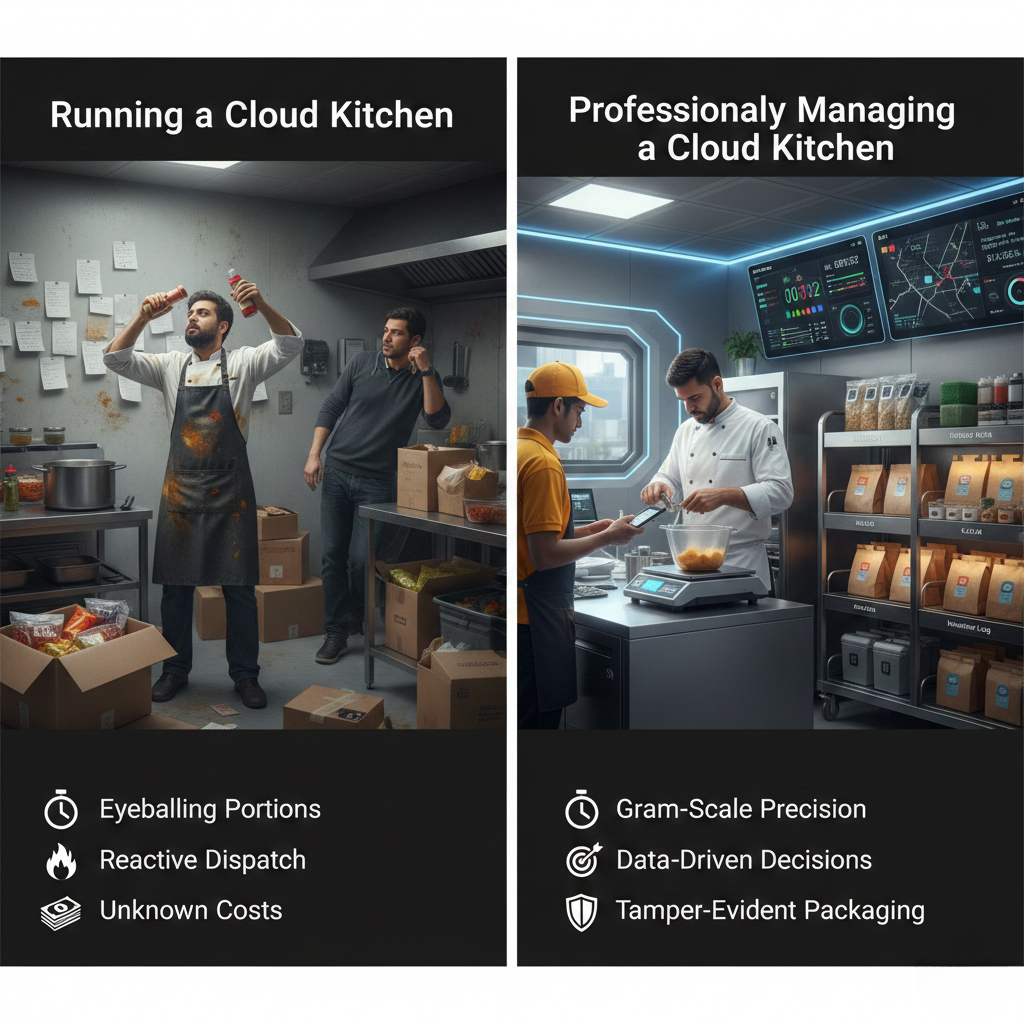
The Core Shift: From Tasks to Systems
The biggest difference is not experience it’s the operating mindset. Running a kitchen is task-led: “Do today’s orders.” Professional management is system-led: “Design repeatable processes so today’s orders don’t break tomorrow’s performance.”
- Running: founder remembers recipes, staff learns by observation, inventory is checked when something ends.
- Managing: recipe cards, portion tools, reorder points, and daily checklists make execution consistent.
- Running: decisions are emotional (panic discounts, random menu expansion).
- Managing: decisions are KPI-driven (cost, rating variance, refund reasons, prep time).
To build a repeatable operating system, use: Cloud Kitchen Operations Framework.
What “Professional Management” Actually Includes
Professional cloud kitchen management is not just “better staff.” It’s the combination of: SOPs + menu discipline + inventory control + packaging engineering + dispatch control + reporting rhythm. When these connect, performance becomes stable.
- Menu engineering: fewer, faster SKUs; shared bases; high-repeat dishes; upsell structure.
- Portion control: ladle rules, weigh-points, recipe cards, and waste tracking.
- Prep system: batch cycles, labeling, FIFO, storage rules, yield tracking.
- Packing + dispatch SOPs: packing checklist, seal rules, ticket aging limits, rider handover discipline.
- Weekly audits: food cost % by SKU, stock variance, refund rate, rating stability.
If you want a ready checklist baseline, start here:
Cloud Kitchen SOP Checklist
See this – GreenSalad.
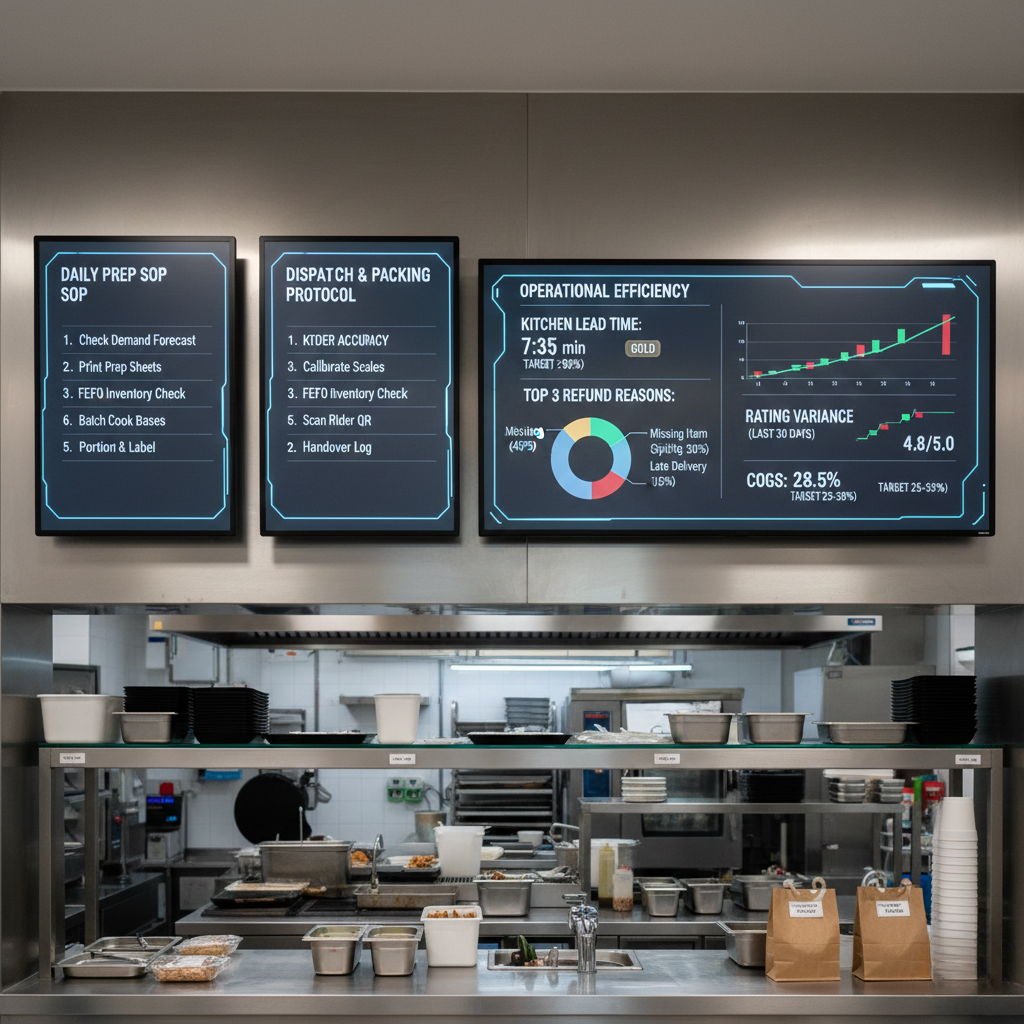
Inventory: The Biggest Difference You Can’t See From Outside
Inventory is where most kitchens leak money silently. In “running mode,” inventory is reactive: you buy when things end. In professional management, inventory is planned: par levels, reorder points, vendor mapping, and variance checks.
- RM Master: standardized names, units, storage rules, substitutes, vendors.
- Par levels: based on demand + lead time (not guesswork).
- Yield tracking: raw-to-cooked yield for gravies, meats, sauces.
- Weekly variance: purchased vs expected vs consumed.
- Wastage log: categorized daily (expiry, spillage, returns, over-production).
If you’re planning setup and storage right, use: Cloud Kitchen Setup Cost in India.
Packing + Dispatch: Where “Running” Loses Ratings
Most founders focus on taste. Customers judge delivery experience. That’s why professional managers treat packing and dispatch as a core performance department, not an end step.
- Running: packing happens fast, but missing items and leakage increase refunds.
- Managing: packing checklist + sealing SOPs + labels reduce errors and complaints.
- Running: no ticket aging discipline; orders sit until riders arrive.
- Managing: “ready-to-handover” time limit with escalation triggers and rider staging rules.
If aggregator fees and pressure are hurting your decisions, read: How to Reduce Swiggy Commission.
KPIs: Professionals Don’t “Hope” They Measure
Running mode is emotional: “This week felt slow.” Professional management is measurable: “Contribution margin dropped because refund rate increased due to packing errors during peak.”
A professionally managed cloud kitchen tracks KPIs weekly, not monthly:
- Contribution margin per order (by SKU, by channel)
- Prep-to-pack time + dispatch delay % during peak hours
- Refund rate and top reasons (missing, cold, spillage, late)
- Food cost % and stock variance weekly
- Rating variance (stability over time)
- Repeat rate (cohort retention week 1 to week 4)
If you want to see common failure patterns, read: Why Cloud Kitchens Fail in India.
When You Need Professional Cloud Kitchen Management
If you see these signs, you’re beyond “running mode” and need professional systems:
- Ratings fluctuate a lot week to week.
- Refunds are rising (missing items, late orders, leakage, cold food).
- Food cost feels unpredictable and stock ends suddenly.
- Peak-hour performance collapses, causing delayed orders.
- Founders are needed daily to keep the kitchen stable.
A good next step is building the operating system first: Cloud Kitchen Operations Framework.
Final Thoughts: Running vs Managing a Cloud Kitchen
Running a cloud kitchen can get you started. Professional management is what makes it sustainable. The difference is systems: SOPs, menu engineering, inventory discipline, packing science, dispatch control, and KPI-led decisions. When these become routine, your kitchen stops reacting and starts scaling.
If your goal is predictable profit and stability, upgrade from “running” to “managing professionally.” That’s where real growth begins.
FAQs: running a cloud kitchen vs professional management
What does professional cloud kitchen management mean?
It means running the kitchen through SOPs, inventory discipline, menu engineering, packing/dispatch controls, and KPI reporting so performance is consistent without founder dependence.
Why do ratings drop even when food taste is good?
Because delivery experience matters. Leakage, cold food, missing items, and delays reduce ratings even if taste is strong.
What should I fix first to become professionally managed?
Start with SOPs + portion control + packing checklist. Then add inventory par levels and weekly KPI reviews.
Is professional management worth it for small kitchens?
Yes systems reduce refunds and wastage early, and they make scaling smoother when order volumes rise.
- Cloud Kitchen Business in India
- Cloud Kitchen Operations Framework
- Cloud Kitchen SOP Checklist
- Cloud Kitchen Setup Cost in India
- Cloud Kitchen Profit Margin in India
- How to Reduce Swiggy Commission
- How to Scale Cloud Kitchens
- Why Cloud Kitchens Fail in India
- CKaaS Explained