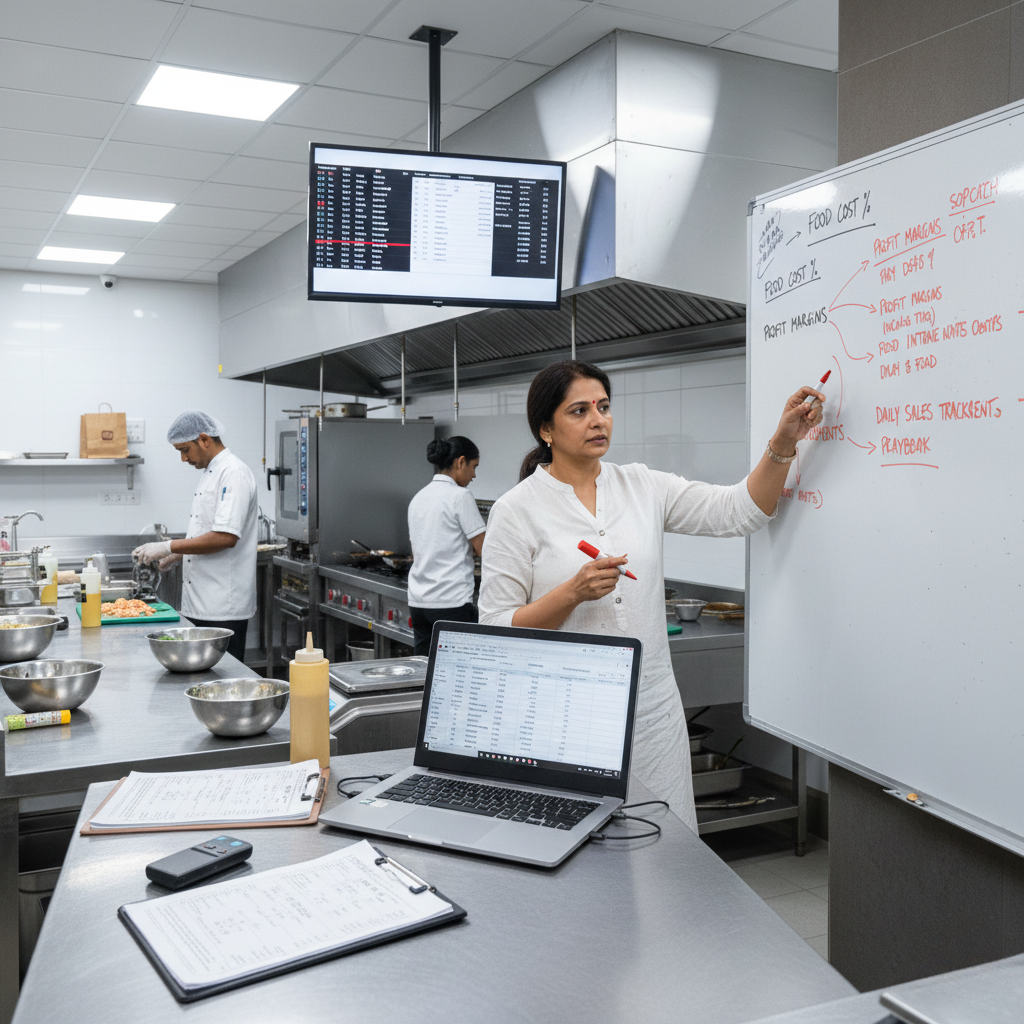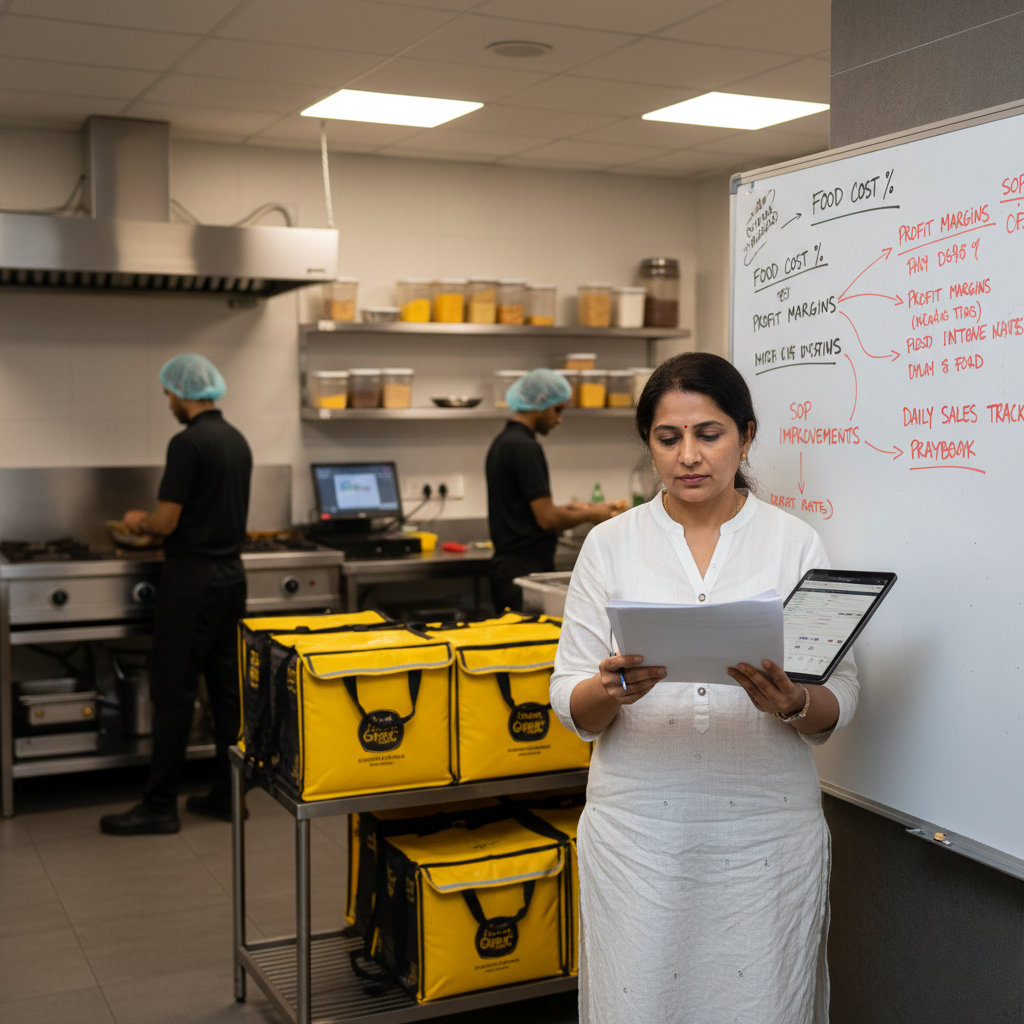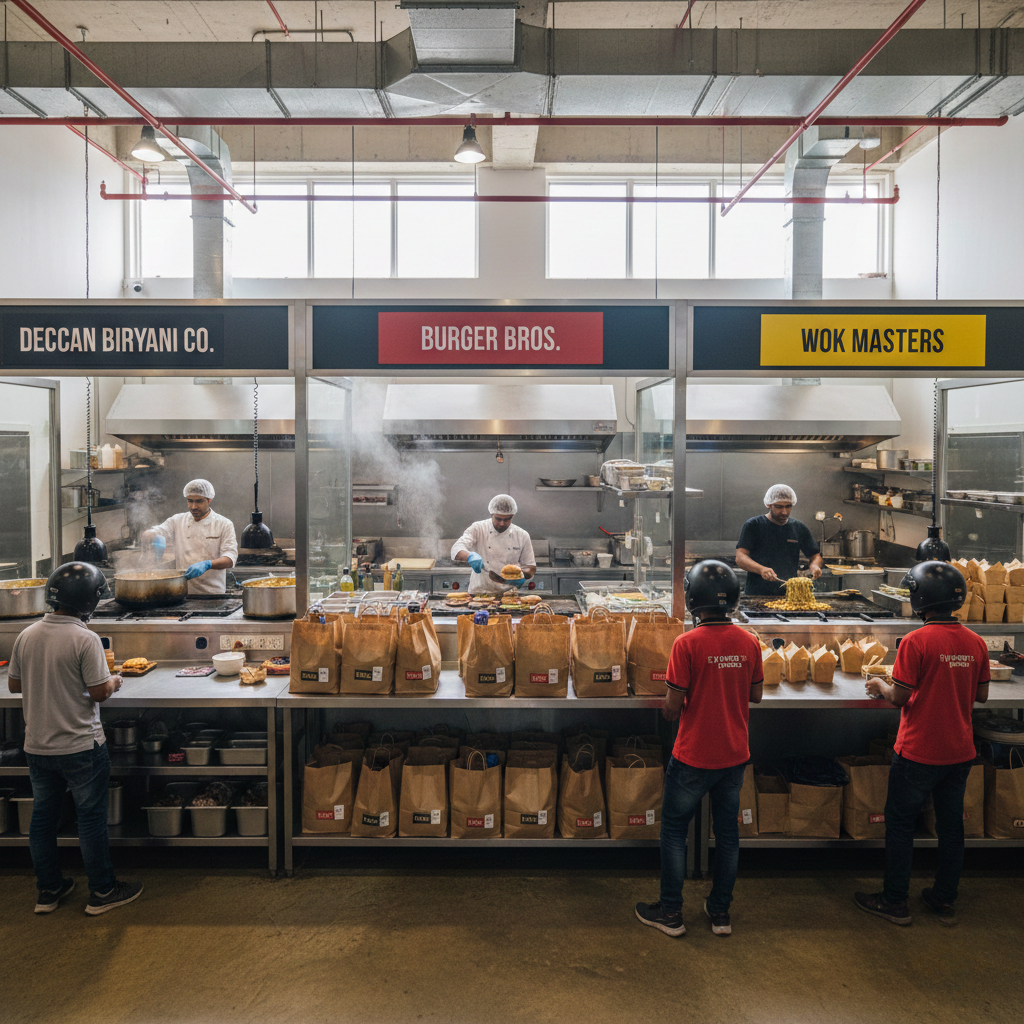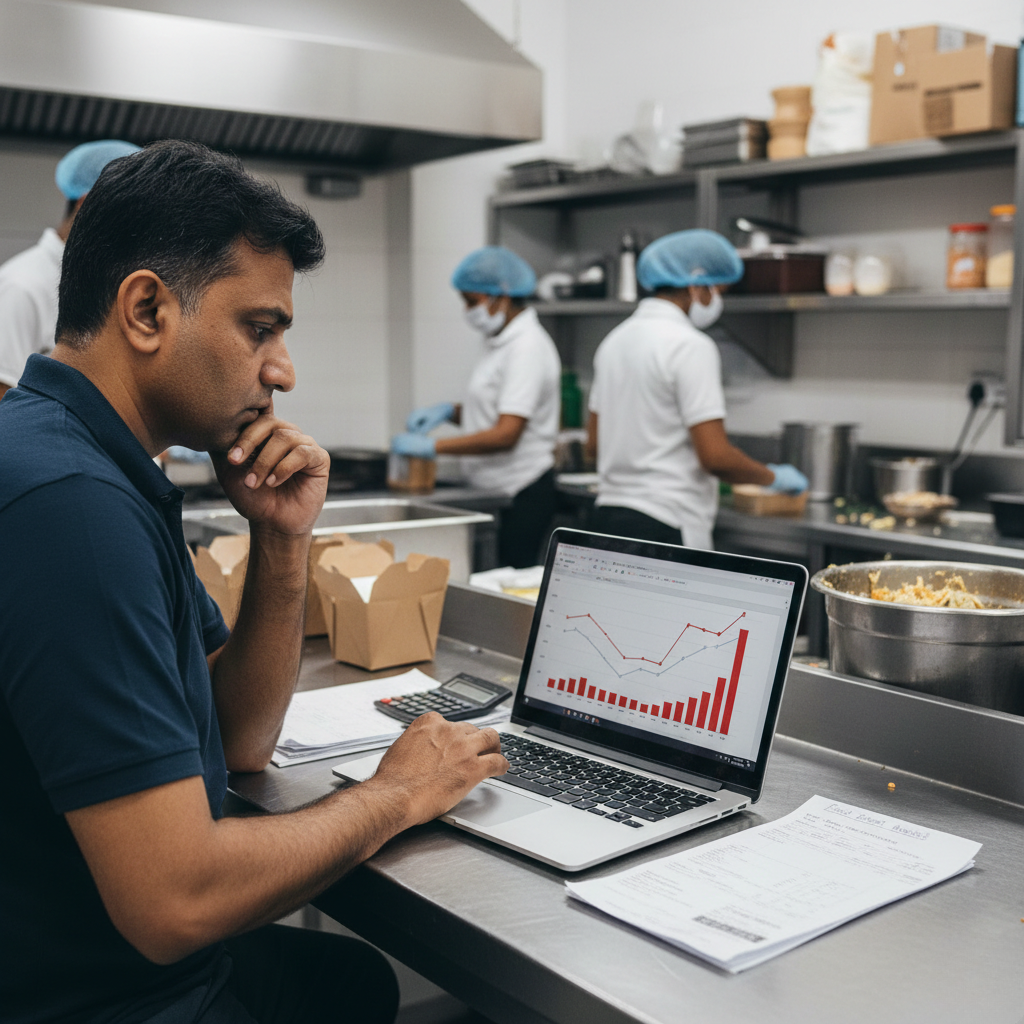
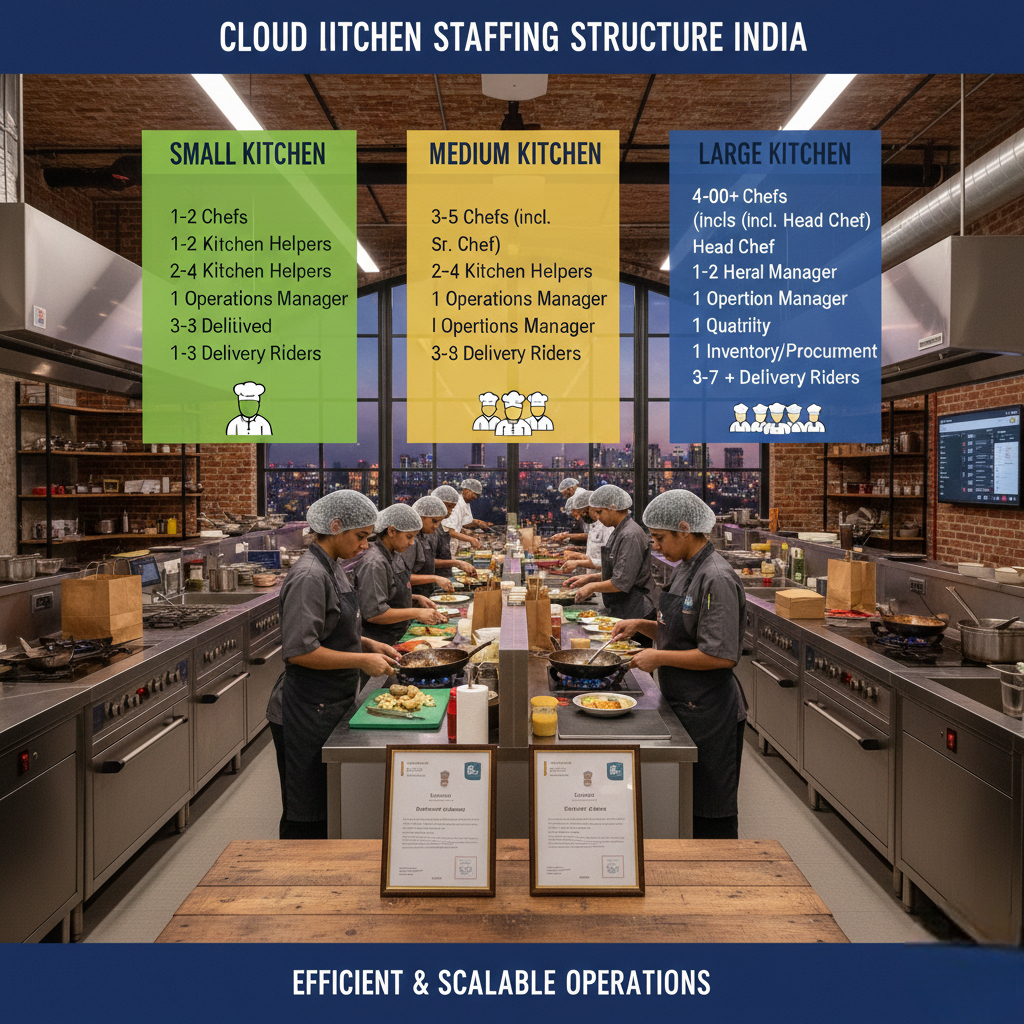
How many staff required for cloud kitchen in India? There is no single fixed answer. Staffing depends on order volume, menu complexity, operating hours, and whether you run a single brand or multiple brands from the same kitchen. Most cloud kitchens fail not because of food or marketing, but because of poor manpower planning either overstaffing and burning cash or understaffing and killing ratings. This guide explains cloud kitchen staff requirements role-by-role, minimum viable staffing models, how staffing changes as you scale, and how to control labor cost without compromising operations.
Start Here Before Hiring Staff for a Cloud Kitchen
This article is part of GrowKitchen’s operations and profitability series. If you’re still understanding the how many staff required for cloud kitchen model, start with: Cloud Kitchen as a Service (CKaaS).
Staffing decisions must align with your kitchen structure. Asset-light and managed kitchens require different manpower planning: Asset-Light Cloud Kitchen Model in India. see this linkedIn.
How Many Staff Are Required for a Cloud Kitchen?
A cloud kitchen typically requires anywhere between 3 to 12 staff members, depending on daily order volume, menu complexity, and operational hours. There is no legal minimum staff requirement but there is an operational minimum.
Understaffed kitchens suffer from delayed orders, wrong packing, food quality drops, and rating collapse. Overstaffed kitchens bleed cash silently.
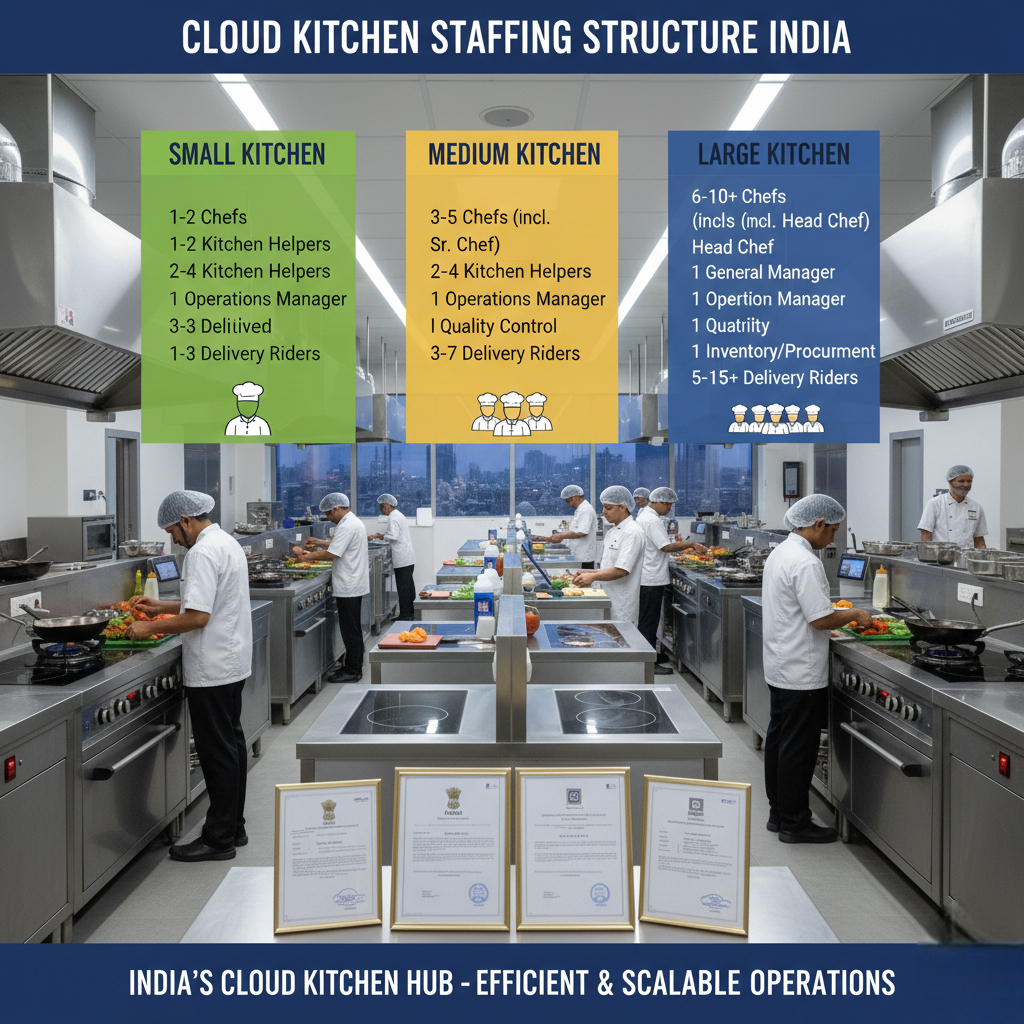
Core Roles Required in Every Cloud Kitchen
Regardless of size, every how many staff required for cloud kitchen needs people to handle food preparation, packing, and order flow. These are non-negotiable operational roles:
- Cook / Kitchen Executive: prepares food as per SOPs
- Helper / Prep Staff: chopping, prep, cleaning assistance
- Packer: packing orders, labeling, cutlery checks
- Kitchen Supervisor (or Owner): order flow and quality control
Even the smallest cloud kitchen must cover these responsibilities, even if one person handles multiple roles.
Staff Required for a Small Cloud Kitchen (20–50 Orders/Day)
A small cloud kitchen running one brand with a limited menu can operate with 3–4 staff members.
- 1 Cook (handles main cooking)
- 1 Helper (prep + cleaning)
- 1 Packer (can double as helper in non-peak hours)
- Owner or Supervisor (quality + aggregator management)
This setup works best when menus are standardized and SOP-driven. If SOPs are missing, even a small team will struggle: Cloud Kitchen SOP Checklist.
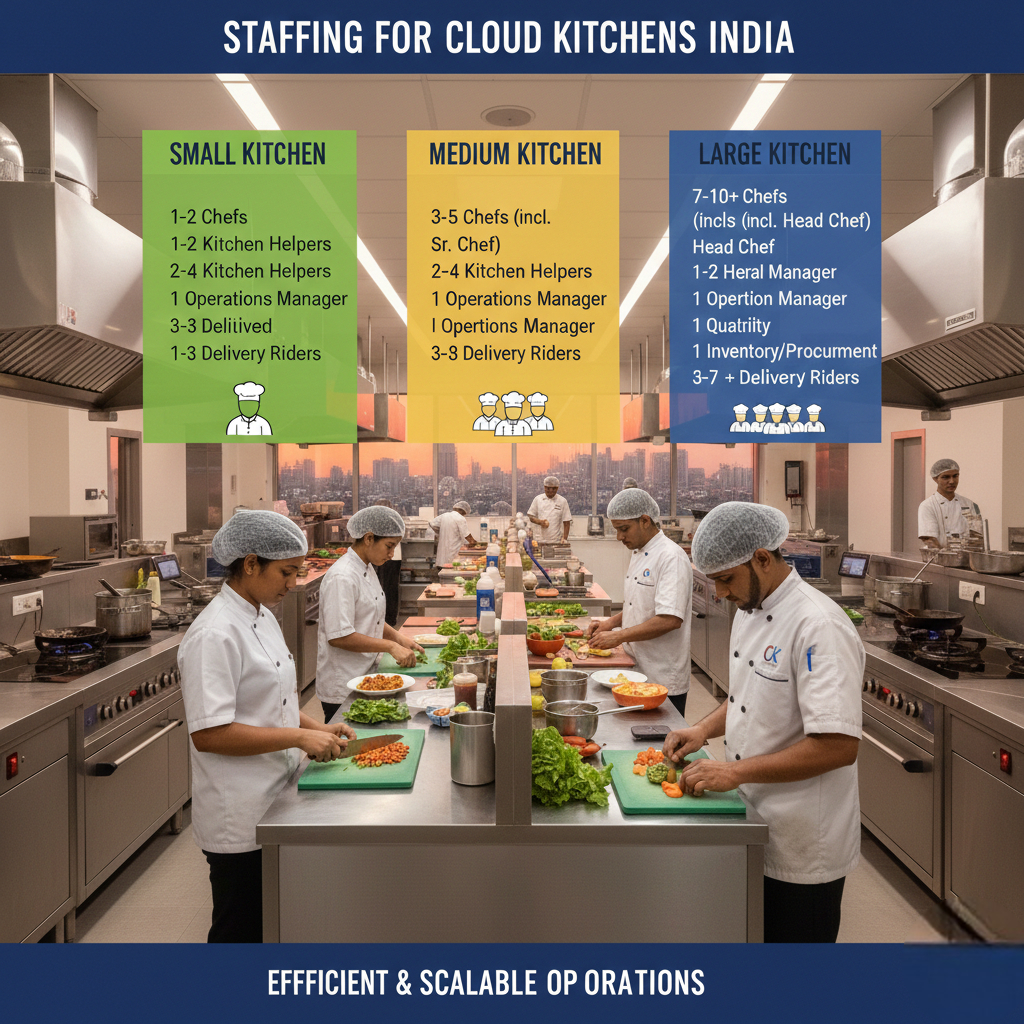
Staff Required for a Medium Cloud Kitchen (50–150 Orders/Day)
Medium cloud kitchens usually operate one or two brands and experience lunch and dinner peaks. These kitchens typically need 6–8 staff members.
- 2 Cooks (split by cuisine or station)
- 2 Helpers (prep + cleaning)
- 1–2 Packers (peak-hour focused)
- 1 Supervisor / Shift Lead
- 1 Floating staff for peak hours
At this scale, role clarity becomes critical. Undefined responsibilities lead to chaos during peaks.
Staffing for Multi-Brand Cloud Kitchens
Multi-brand kitchens do not need separate staff for each brand. They need station-based staffing.
Example:
- One cook handles all noodle-based items across brands
- One packer handles all orders irrespective of brand
- Brand differentiation happens via SOPs and packaging
This model works best in managed or CKaaS setups: CKaaS Model in India.
Labor Cost as a Percentage of Revenue
How many staff required for cloud kitchen keep labor costs between 10% to 18% of net revenue.
Common mistakes:
- Hiring too many staff before demand stabilizes
- Not adjusting staffing between weekdays and weekends
- No peak-hour staffing plan
Labor cost must be reviewed weekly, not monthly.
Reducing Staff Without Hurting Operations
Smart kitchens reduce manpower dependency using systems:
- Pre-prepped ingredients
- Centralized gravies or bases
- Clear portion control tools
- Order flow SOPs
Automation does not remove staff it makes fewer staff effective.
How Staffing Changes While Scaling to Multiple Locations
When scaling, avoid replicating mistakes. A common error is hiring full teams at every new location from day one.
Better approach:
- Start with minimum viable staff
- Stabilize operations
- Add staff only when KPIs demand it
Scaling guidance: How to Scale Cloud Kitchens.
Common Staffing Mistakes in Cloud Kitchens
- Hiring based on fear, not data
- No peak-hour staffing strategy
- One person handling too many critical roles
- No backup plan for absenteeism
These mistakes often explain poor ratings and refunds: Why Cloud Kitchens Fail in India.
Final Answer: How Many Staff Are Required for a Cloud Kitchen?
A cloud kitchen does not need a large team to succeed. It needs the right number of people in the right roles.
Start lean, track performance, and scale staffing only when data demands it. In cloud kitchens, manpower discipline is profitability discipline.
FAQs: Cloud Kitchen Staffing
What is the minimum staff required for a cloud kitchen?
A minimum of 3–4 staff can run a small cloud kitchen with limited menu and volume.
Can one person manage a cloud kitchen?
Only at very low volumes. As orders increase, role separation becomes essential.
Does each brand need separate staff?
No. Multi-brand kitchens work best with shared station-based staffing.
How do I reduce staff cost?
Use SOPs, prep standardization, and data-driven scheduling.
- Cloud Kitchen Business in India
- Cloud Kitchen Profit Margin
- Cloud Kitchen SOP Checklist
- How to Scale Cloud Kitchens