
An asset-light cloud kitchen model is the fastest way to scale a delivery brand in India without buying real estate, heavy kitchen capex, or building a large full-time team. Instead of “own everything,” you operate through partner kitchens, shared infrastructure, managed kitchens, or plug-and-play production systems-while keeping control over menu, SOPs, quality, packaging, and customer experience. This guide explains the asset light cloud kitchen model step-by-step: what it is, the main structures in India, how unit economics work, what SOPs are non-negotiable, how to pick the right partner kitchen, and the KPIs that protect ratings and margins while scaling from 1 to 10+ locations.
Start Here Before Choosing an Asset-Light Cloud Kitchen Model
This article is part of GrowKitchen’s business model + operations series. If you’re new to delivery-first kitchens, start with: Cloud Kitchen as a Service (CKaaS) and then: Cloud Kitchen Business in India. If you’re comparing costs and ROI, see: Cloud Kitchen Setup Cost in India and Cloud Kitchen ROI in India.
Your model must also stay compliant with licensing and hygiene requirements from FSSAI, and proper billing + taxation via the GST Network. In an asset-light setup, compliance gets harder (multiple kitchens, multiple teams), so systems matter more-not less.
Asset-Light Cloud Kitchen Model Explained
An asset-light cloud kitchen model is a business structure where you scale orders and locations without owning the full physical kitchen infrastructure. Instead of investing heavily in rent deposits, exhaust systems, equipment, and large staffing, you leverage existing kitchens or shared infrastructure while you control the “brand engine”: menu, SOPs, training, procurement rules, packaging, dispatch discipline, and performance tracking.
In India, this model is powerful because aggregator economics punish slow experimentation. If you burn capex first, and only then learn your demand and unit economics, you risk being trapped. Asset-light lets you validate, iterate, and expand with lower downside-if your operational control is strong.
Why Asset-Light Works in India (And Where It Breaks)
The biggest advantage of asset-light is speed: you can launch in new micro-markets fast and spend money on what actually improves outcomes-menu engineering, packaging performance, training, and demand generation. But the model breaks when founders confuse “asset-light” with “hands-off.” In reality, asset-light needs more systems, because you’re operating with more moving parts.
- Works best when: menu is standardized, prep is repeatable, and quality checks are measurable.
- Breaks when: taste drift is high, partner kitchens ignore SOPs, or inventory discipline is weak.
- Requires: documented SOPs, audits, vendor specs, and dispatch controls.
If you want a strong baseline, build your SOP backbone first: Cloud Kitchen SOP Checklist. To reduce the common failure traps, see: Why Cloud Kitchens Fail in India.
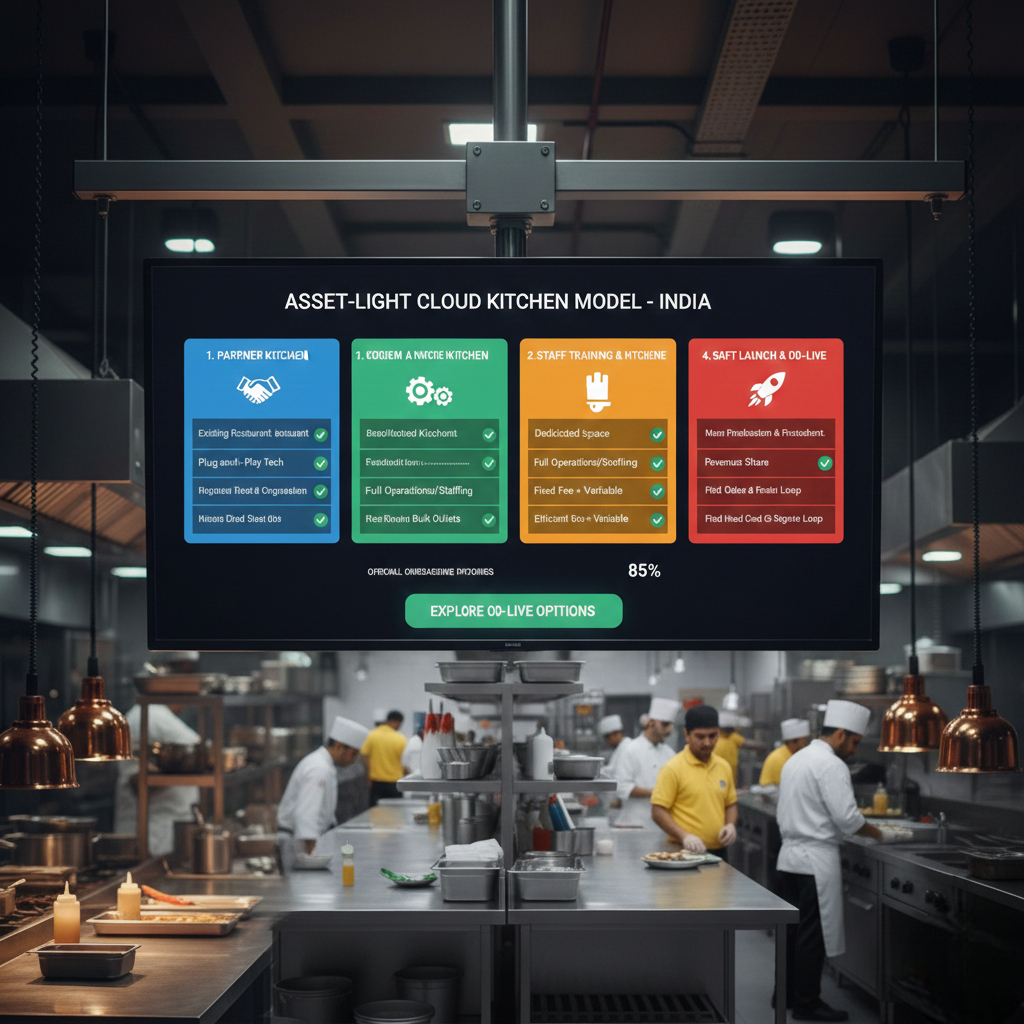
4 Asset-Light Structures Used by Cloud Kitchens in India
“Asset-light” can mean different things. Choose the structure based on your menu, required control, and expansion speed. Here are the most common asset-light structures in India:
- 1) Partner Kitchen / Revenue Share: You operate your brand inside another kitchen. You pay a fixed fee, a revenue share, or a hybrid. Best for fast testing, but requires strict SOP enforcement.
- 2) Managed Kitchen (CKaaS style): A specialized operator runs production and dispatch using your SOPs and reporting standards. This gives higher control and replicability.
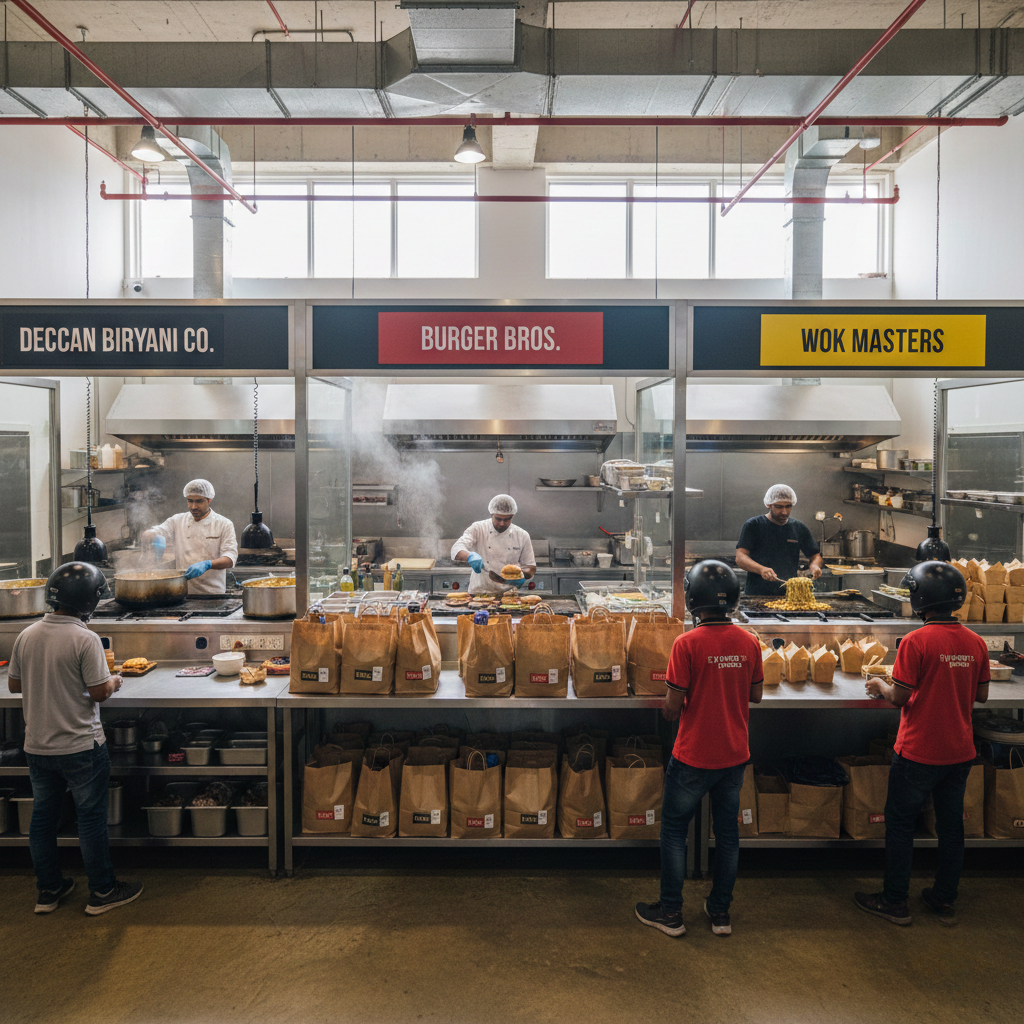
- 3) Shared Infrastructure / Co-kitchen: You rent a station or time slots in a shared facility. Useful for early-stage brands, but control varies by operator.
- 4) Hub-and-Spoke (Asset-light hybrid): Central production (hub) + smaller finishing/dispatch points (spokes). Strong for metro cities, consistency, and cost control.
If you’re exploring a more centralized approach, read: Centralized Cloud Kitchen Model in India. If you’re scaling across locations, use: How to Scale Cloud Kitchens.
Unit Economics in Asset-Light Setups: How to Not Get Trapped
Most asset-light deals look profitable on paper and quietly collapse in reality because founders don’t model the full stack: commission + ads + discounts + partner fee + packaging + refunds + staffing + variance. You must calculate contribution margin per order at the SKU level, not just total revenue.
A practical unit economics checklist:
- Food cost % (by SKU) + yield assumptions (raw-to-cooked)
- Packaging cost (by order type) + leakage/heat-loss risk
- Aggregator commission + taxes + ad spends
- Partner fee (fixed / rev share / hybrid) + minimum guarantee (if any)
- Refund/complaint rate impact on net revenue
- Labor allocation (who staffs the station and who supervises peaks?)
Build your margin fundamentals here: Cloud Kitchen Profit Margin in India. To protect against commission pressure, keep a plan ready: How to Reduce Swiggy Commission.
How to Choose the Right Partner Kitchen (The Non-Negotiables)
In an asset-light model, the kitchen partner is your “factory.” Choose badly and you inherit their hygiene, their delays, and their staff behavior. Choose well and you can expand faster than traditional owners.
Use these non-negotiables before signing:
- Infrastructure fit: cold storage, ventilation, water, drainage, waste handling.
- Peak handling: can they execute during dinner rush without chaos?
- Team discipline: are station roles defined? is there a shift lead?
- Quality control willingness: are they open to audits and corrective actions?
- Data readiness: can they share daily production + wastage + stock movement?
- Exclusivity & contamination risk: are they running conflicting cuisines or high-odor menus?
For structured food safety training support, you can reference: FSSAI FoSTaC. For India’s general food safety compliance basics: FSSAI.
The “Control Stack”: What You Must Own Even in Asset-Light
Asset-light only works when the brand owns the control stack. If you outsource control, you outsource outcomes. Your control stack should be documented and portable so you can move kitchens without rebuilding operations.
- Menu bible: recipes, portions, cook times, plating/packing rules, substitutes.
- Procurement rules: vendor specs, approved items, substitutes, rejection criteria.
- Training plan: station-wise training, tests, certification for new staff.
- Packaging SOP: item-specific packaging, seals, labels, cutlery policy, heat control.
- Dispatch rules: ticket aging, escalation triggers, rider handover staging.
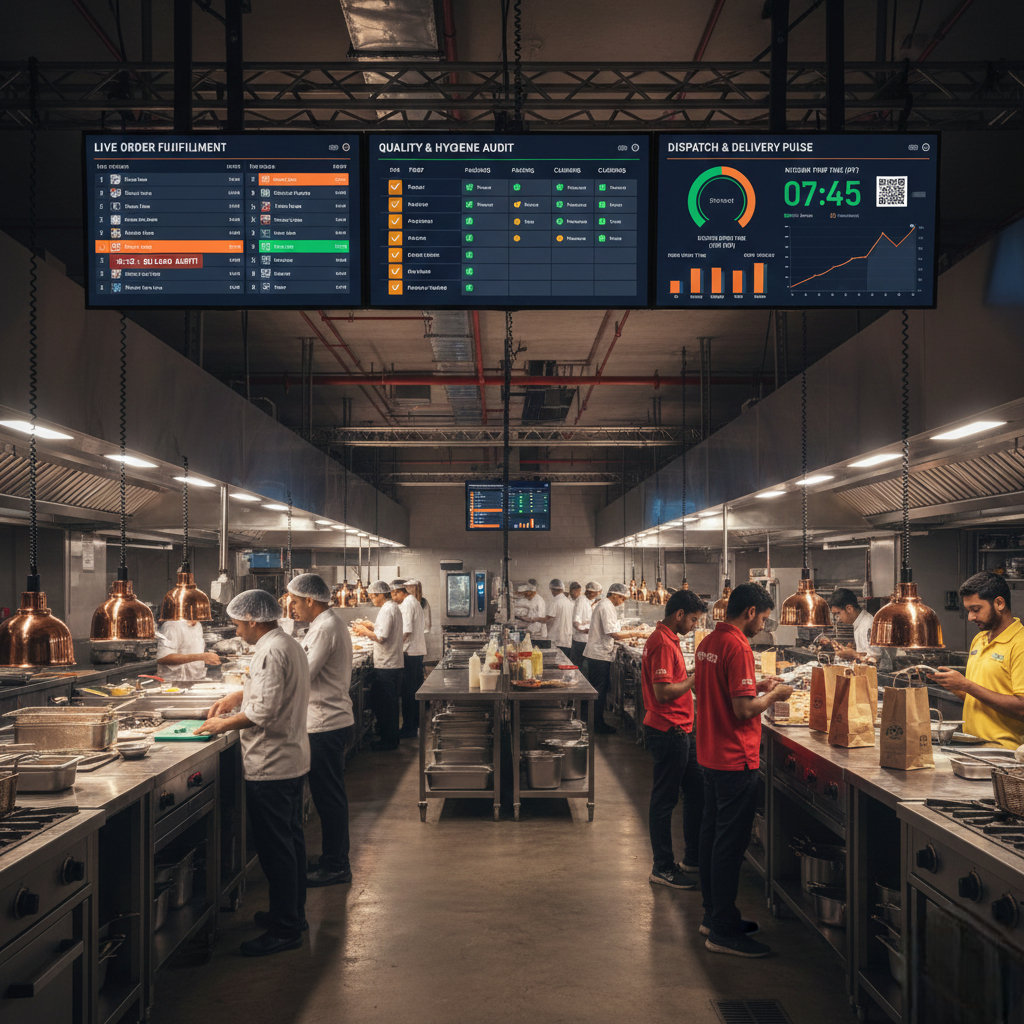
- Audits: weekly hygiene + taste + packing audits with scorecards and penalties.
If your base SOP system is missing, start here: Cloud Kitchen SOP Checklist. If you want a broader system view, see: Cloud Kitchen Operation Framework.
Asset-Light Launch Playbook: From 0 to Live in 7–14 Days
Asset-light launches should be fast but controlled. The goal is not a “big bang” opening. The goal is stable operations first, then scale demand. Here’s a practical launch sequence:
- Day 1–2: kitchen audit, infra fit check, compliance checks, station mapping.
- Day 3–4: menu finalization, RM master, procurement alignment, packaging trials.
- Day 5–7: staff training, SOP drills, mock service, taste checks, ticket aging tests.
- Go-live Week 1: soft launch (limited SKUs + limited radius), strict QC, fix issues daily.
- Scale Week 2: add SKUs in batches, expand radius only after rating stability.
For scaling responsibly across multiple locations after you stabilize the first: How to Scale Cloud Kitchens.
KPIs to Track in Asset-Light Kitchens (So You Don’t Lose Control)
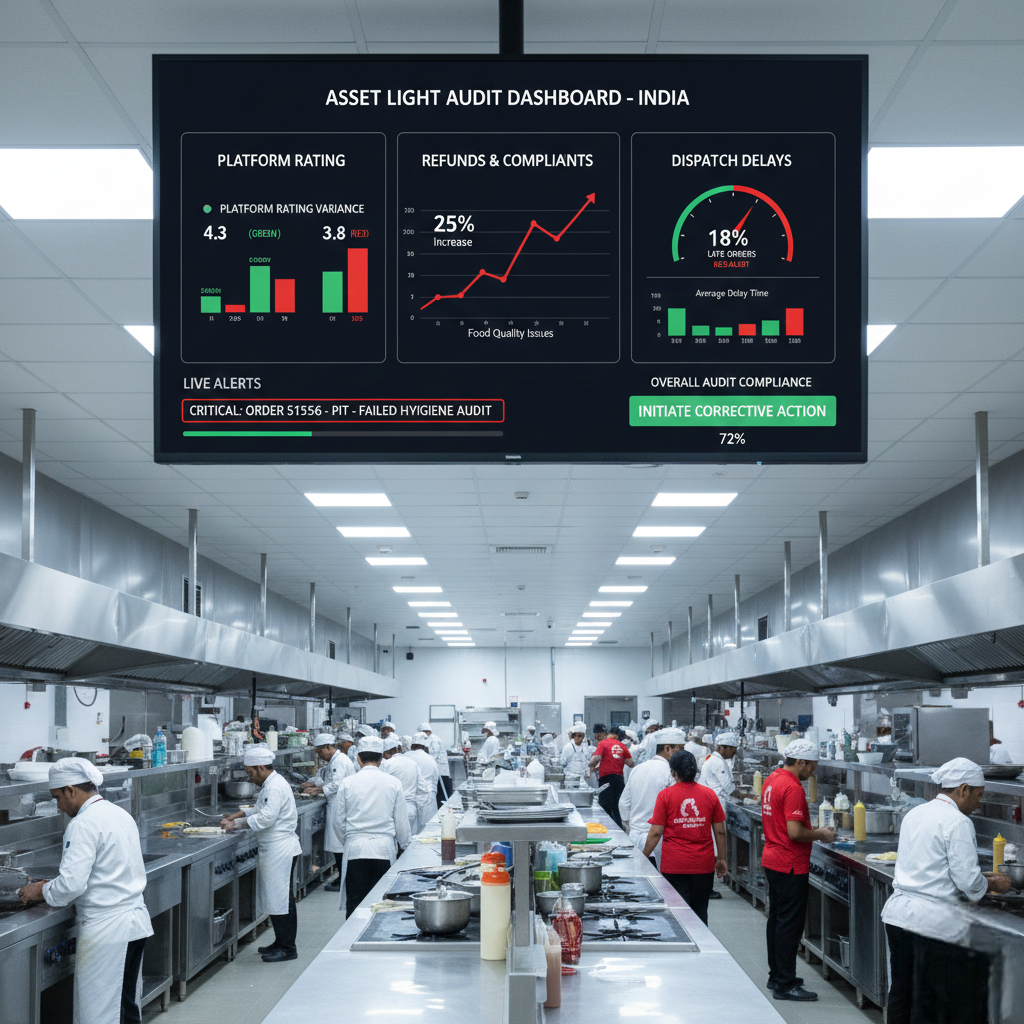
In asset-light setups, you can’t rely on physical presence. KPIs become your “eyes.” Track these weekly (and some daily during launch):
- Contribution margin per order (by SKU + by kitchen)
- Rating variance (stability across weeks, not only average)
- Refund rate and top reasons (leakage, cold, missing items, late)
- Prep-to-pack time + dispatch delay % during peaks
- Food cost % and stock variance (purchased vs consumed)
- Repeat rate (week 1 → week 4 cohorts)
If you want to pressure-test why scaling fails even with demand, read: Why Cloud Kitchens Fail in India.
Common Mistakes Founders Make in Asset-Light Cloud Kitchens
Asset-light models fail for predictable reasons. Avoid these and you’ll outperform most operators:
- Signing the deal before testing ops: always do mock service and packaging trials.
- No audit system: without audits, SOPs become “suggestions.”
- Scaling ads too early: demand spikes expose weak dispatch and tank ratings.
- Weak vendor specs: quality drift starts with inconsistent raw material.
- Undefined station roles: peak hours become chaos without clear responsibilities.
If you’re building a scalable managed structure, you may also like: CKaaS Model India.
Final Thoughts: Asset Light Cloud Kitchen Model
An asset-light cloud kitchen model is the fastest way to expand a delivery brand in India-if you build the right control stack. The winners don’t “own kitchens.” They own systems: SOPs, audits, vendor specs, packaging discipline, and KPI-driven control. That’s what allows a brand to scale from 1 to 10+ locations without margin collapse and rating drift.
If you want to scale safely, treat asset-light as a systems game: stabilize one unit, prove repeatability, then replicate with audits and non-negotiable gates.
FAQs: Asset Light Cloud Kitchen Model
What is an asset-light cloud kitchen model?
It’s a structure where you scale locations and orders without owning full kitchen infrastructure-using partner/shared/managed kitchens while you control menu, SOPs, packaging, and performance KPIs.
Is asset-light better than owning a cloud kitchen?
It’s better for faster expansion and lower capex, but it requires stronger SOPs and audits because control is harder across kitchens.
What is the biggest risk in an asset-light model?
Taste and quality drift due to weak SOP adherence, poor vendor control, and lack of audits-leading to refunds and rating collapse.
How do I protect margins in asset-light operations?
Track contribution margin per order, engineer packaging, control portions, model partner fees correctly, and monitor refunds and delays weekly.