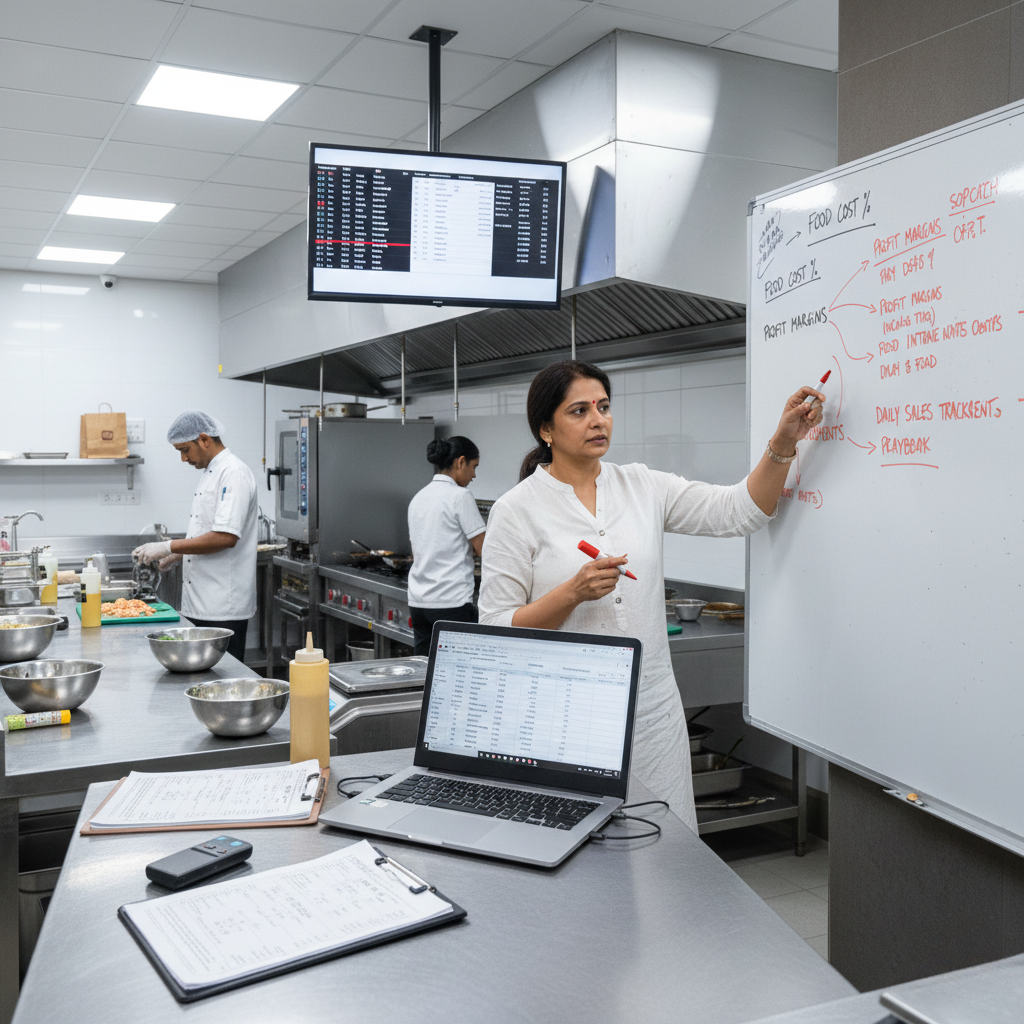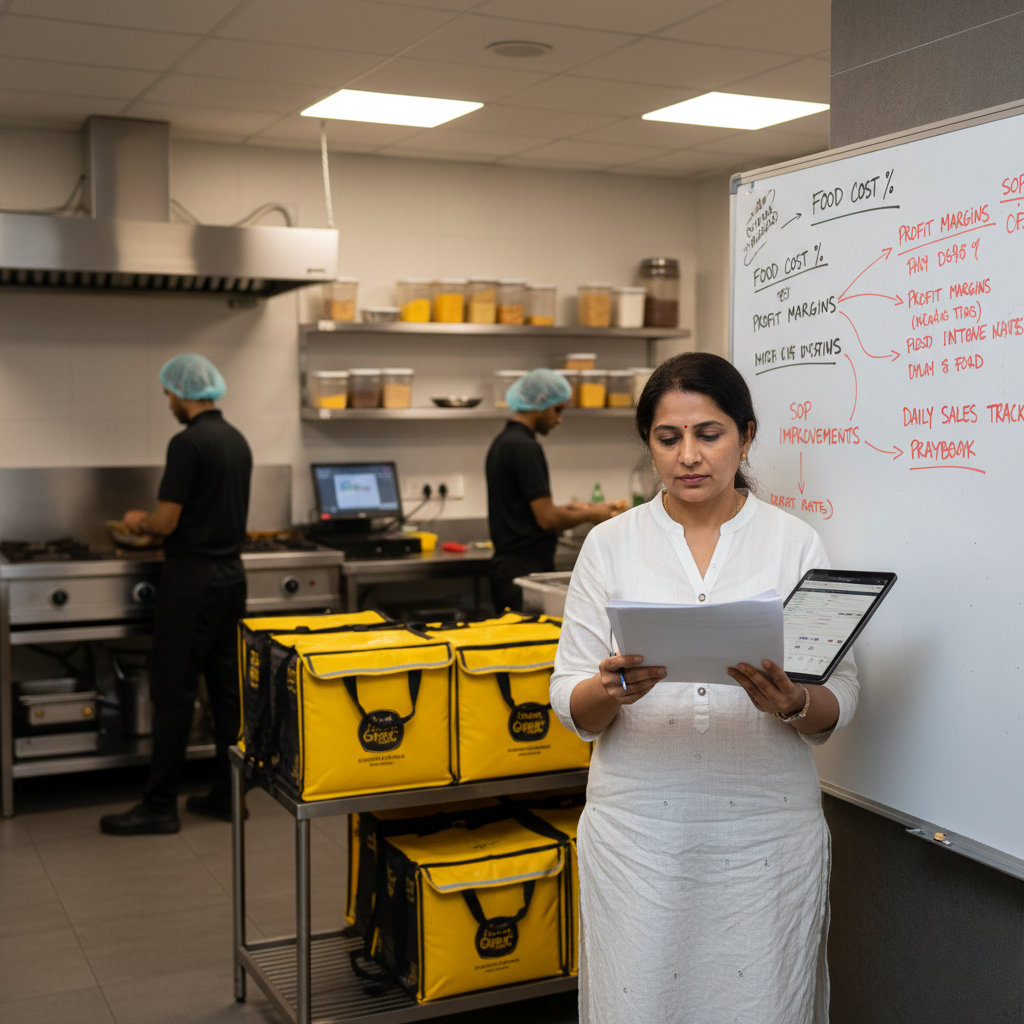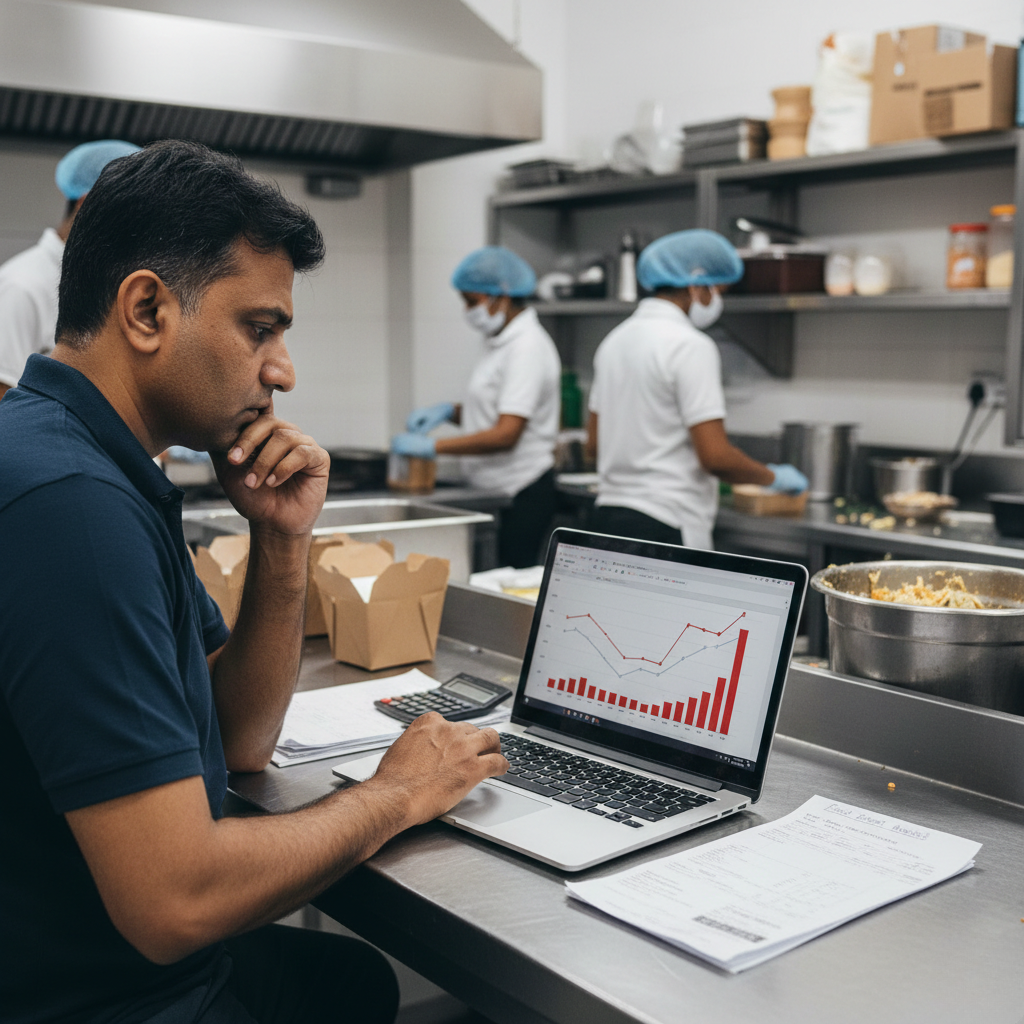
The cloud kitchen Advantages and Disadvantages model has reshaped how food businesses are built in India. From lower startup costs to faster scalability, cloud kitchens offer clear advantages-but they also come with real operational and strategic challenges. In this guide, we break down the key advantages and disadvantages of cloud kitchens, so founders can make informed decisions before launching or scaling.
Start Here If You’re Building a Cloud Kitchen in India
This page is part of GrowKitchen’s core cloud kitchen learning series. If you want the full end-to-end view (models, costs, unit economics, SOPs, scaling), start with our pillar guide: Cloud Kitchen as a Service (CKaaS).
What Is a Cloud Kitchen?
A cloud kitchen is a delivery-first food business that operates without a dine-in facility. Orders are placed via food delivery platforms, websites, or WhatsApp, and food is prepared in a professional kitchen focused entirely on production, packaging, and dispatch.
If you’re new to the concept, read our complete guide: Cloud Kitchen Business in India.
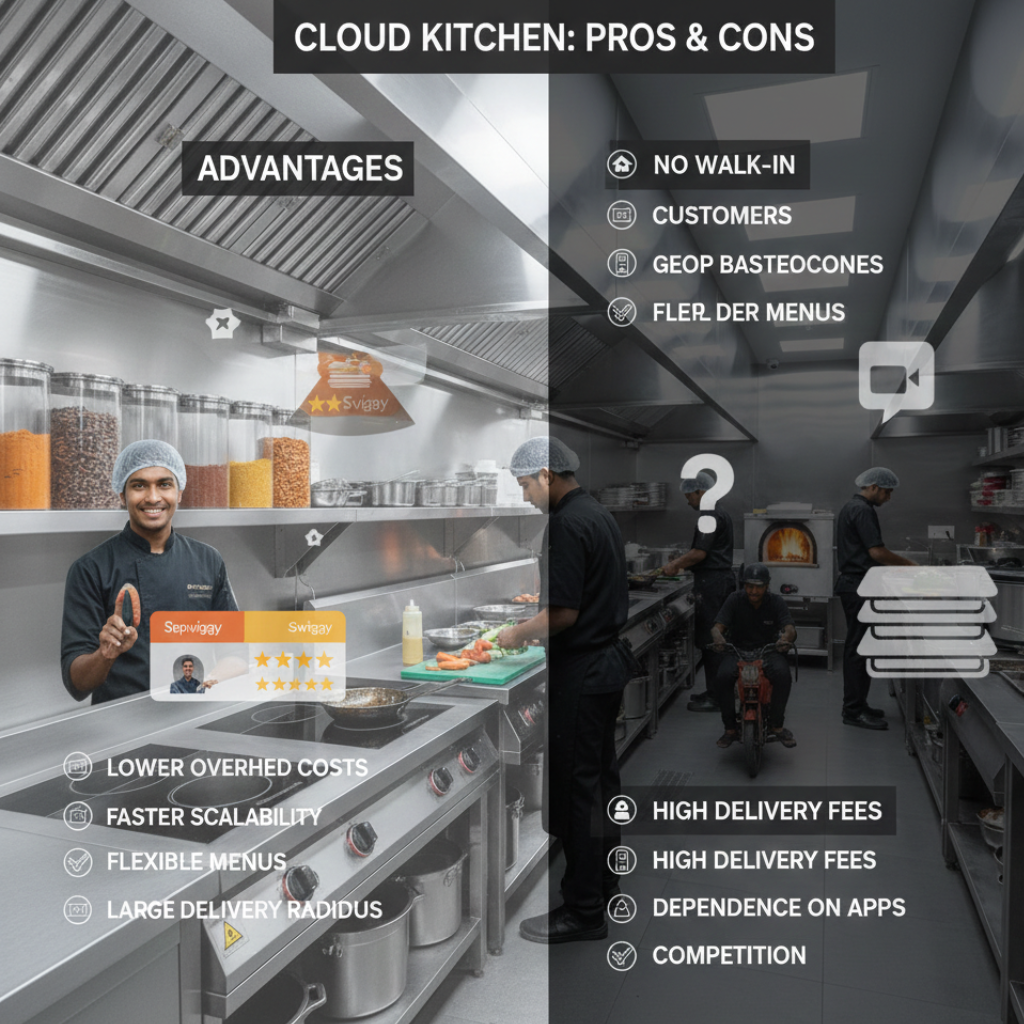
Advantages of Cloud Kitchen Business
1. Lower Startup Cost
One of the biggest advantages of a cloud kitchen is the significantly lower investment compared to a traditional restaurant. There is no need for expensive interiors, large service staff, or premium high-street locations.
In most Indian cities, a cloud kitchen can be launched within ₹5-10 lakh, making it accessible for first-time founders and small operators. If you want a practical setup checklist, use: How to Start a Cloud Kitchen in India.
2. Faster Launch and Scalability
Cloud kitchens can launch faster than dine-in restaurants because the focus is purely on kitchen operations and delivery readiness. Once licenses, equipment, SOPs, menu and packaging are ready, going live can happen quickly.
Scaling is also simpler when systems are documented. Successful operators replicate a stable kitchen model across micro-markets using standard SOPs, vendor mapping, and training playbooks. Learn more here: How to Scale Cloud Kitchens.
3. Multi-Brand Capability (Higher Revenue per Sq Ft)
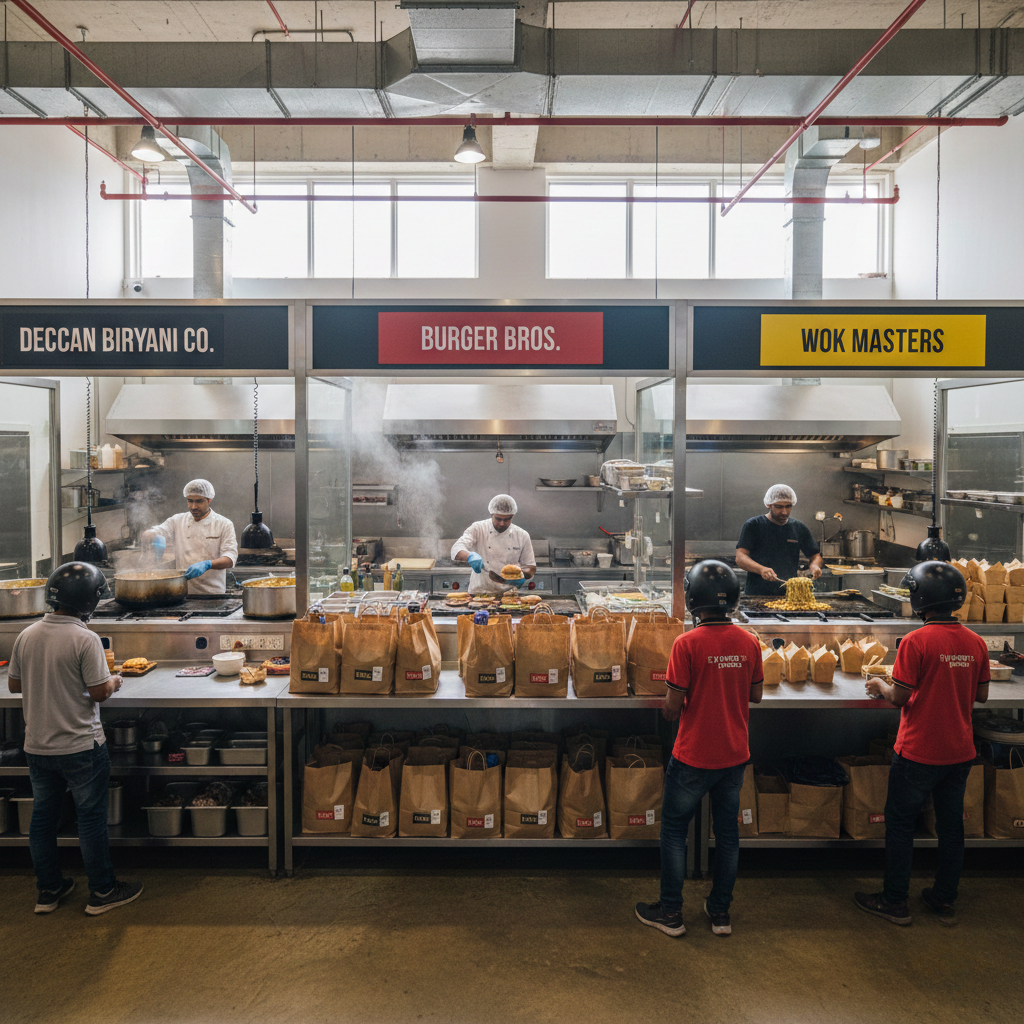
A single cloud kitchen can operate multiple virtual brands from the same infrastructure. This allows operators to serve different cuisines, price points, and dayparts without increasing fixed costs at the same speed.
Multi-brand kitchens maximise asset utilisation and improve revenue per square foot-especially in Indian markets where demand changes by time-of-day (lunch vs dinner vs late night).
4. Better Cost Control (If SOPs Exist)
Cloud kitchens are system-driven. With SOPs, portion control, and menu engineering, founders can manage food cost, manpower, and wastage far better than typical dine-in setups.
Most margin leaks come from inconsistent portioning, untracked wastage, and weak inventory discipline. That’s why SOPs matter from day 1: Cloud Kitchen SOP Checklist.
5. Data-Driven Decision Making
Delivery platforms provide data on orders, ratings, customer behaviour, peak demand windows, and item-level performance. This helps operators optimise menus, pricing, photography, and combos using real signals-not gut feel.
6. Easier Experimentation (Fast Testing)
Cloud kitchens allow faster experimentation with a new cuisine, new price band, or a new product category. You can test in one micro-market without investing heavily in a dine-in location.
7. Efficient Staffing Structure
Without front-of-house staff and table service, staffing becomes leaner and more predictable. The focus shifts to prep, assembly, packing, and dispatch-roles that are easier to standardise.
8. Better Fit for Direct Ordering and Subscriptions
Cloud kitchens integrate well with WhatsApp ordering and meal plan subscriptions because repeat cycles can be automated. If you want to build repeat orders beyond discounting, read: WhatsApp for Cloud Kitchen Growth.
Disadvantages of Cloud Kitchen Business
1. Heavy Dependence on Aggregators
Most cloud kitchens rely heavily on delivery platforms for demand. High commission rates and frequent policy changes can impact margins-especially for new brands.
That’s why strong operators build direct channels alongside aggregators: WhatsApp ordering, website ordering, subscription plans, and CRM-based retention.
2. No Physical Brand Presence
Unlike restaurants, cloud kitchens lack physical visibility. There is no signage, no walk-in discovery, and no “experience” layer to build trust quickly.
Brand trust is built through food quality, packaging, delivery performance, ratings, and repeat orders-which takes operational discipline.
3. High Competition and Low Switching Cost
Entry barriers are low, so competition is intense. Customers can switch brands instantly if delivery is late, food quality drops, or ratings slip.
Consistency becomes non-negotiable. A bad week of dispatch errors can reduce ranking and visibility for weeks after.
4. Operational Complexity at Scale
One kitchen can be manageable. Scaling to multiple locations introduces complexity: training, quality control, inventory, procurement, compliance, and performance tracking.
Many kitchens fail during expansion because the first unit was founder-dependent and undocumented. Read more: Why Cloud Kitchens Fail in India.
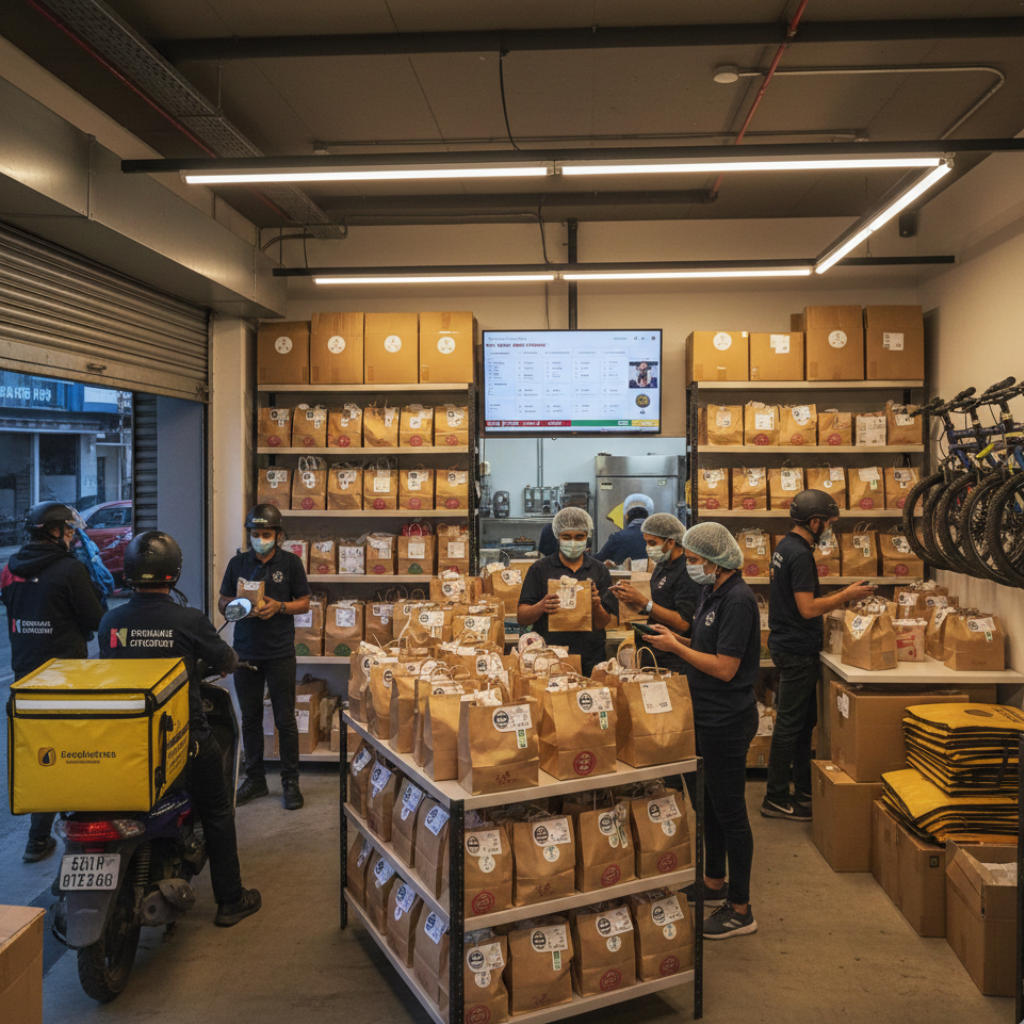
5. Packaging and Delivery Risk (Ratings Killer)
In cloud kitchens, packaging is part of the product. Spillage, sogginess, condensation, or temperature loss during delivery directly affects ratings, refunds, and repeat orders.
Great food can still lose if the packaging fails. Treat packaging like a quality checkpoint, not a last-minute purchase decision.
6. Marketing Pressure Never Stops
With no walk-ins, demand is driven by platform visibility and repeat behaviour. If your brand is not improving its funnel (ratings, offers, photos, combos, retention), growth can stall quickly.
7. Margin Volatility if Costs Aren’t Tracked
Raw material prices fluctuate. If recipes aren’t standardised and costing isn’t tracked weekly, margins silently drop. To build tighter contribution margin control, use: How to Optimise Cloud Kitchen Profit Margins.
Quick Decision Framework: Is a Cloud Kitchen Right for You?
A cloud kitchen is a great fit if you are comfortable building systems and executing consistently. It is not a fit if you rely on intuition, untracked discounts, or “we’ll figure it out later” operations.
- Best fit: SOP-driven founders, multi-brand operators, delivery-first brands, subscription models
- Risk zone: founders who want dine-in brand presence, complex menus, or inconsistent staff systems
- Non-negotiables: portion control, packaging quality, dispatch speed, ratings management, retention
So, Is a Cloud Kitchen Right for You?
Cloud kitchens offer powerful advantages-lower cost, faster scaling, and operational flexibility-but they are not “easy businesses.” They demand discipline, systems, and constant optimisation.
If you enjoy building processes, tracking numbers, and improving margins, a cloud kitchen can be one of the most scalable food business models in India. If you rely on guesswork, discounts, or inconsistent execution, the disadvantages will show up quickly.
FAQs: Cloud Kitchen Advantages and Disadvantages
What are the main advantages of a cloud kitchen in India?
Lower startup cost, faster launch, easier scalability, multi-brand operations, better SOP-based cost control, and data-driven optimisation using platform demand signals.
What are the biggest disadvantages of a cloud kitchen?
High dependence on aggregators, no physical presence, intense competition, complexity while scaling, and packaging/delivery risk impacting ratings and repeat orders.
Is a cloud kitchen profitable in India?
Yes-if you control unit economics, maintain ratings, reduce refunds, and build repeat orders through retention.
How much does it cost to start a cloud kitchen in India?
Many kitchens launch within ₹5-10 lakh depending on city, equipment, cuisine type, and compliance.
How do cloud kitchens reduce dependency on Swiggy and Zomato?
By building direct ordering via WhatsApp, subscriptions, and websites-and using retention journeys instead of constant discounts.
Is a cloud kitchen better than a restaurant for first-time founders?
Often yes for delivery-first brands because investment is lower and operations can be standardised faster.
What type of food works best for a cloud kitchen?
Food that travels well and assembles fast-biryani, bowls, meals, wraps, burgers, fried chicken, salads, and Chinese combos.