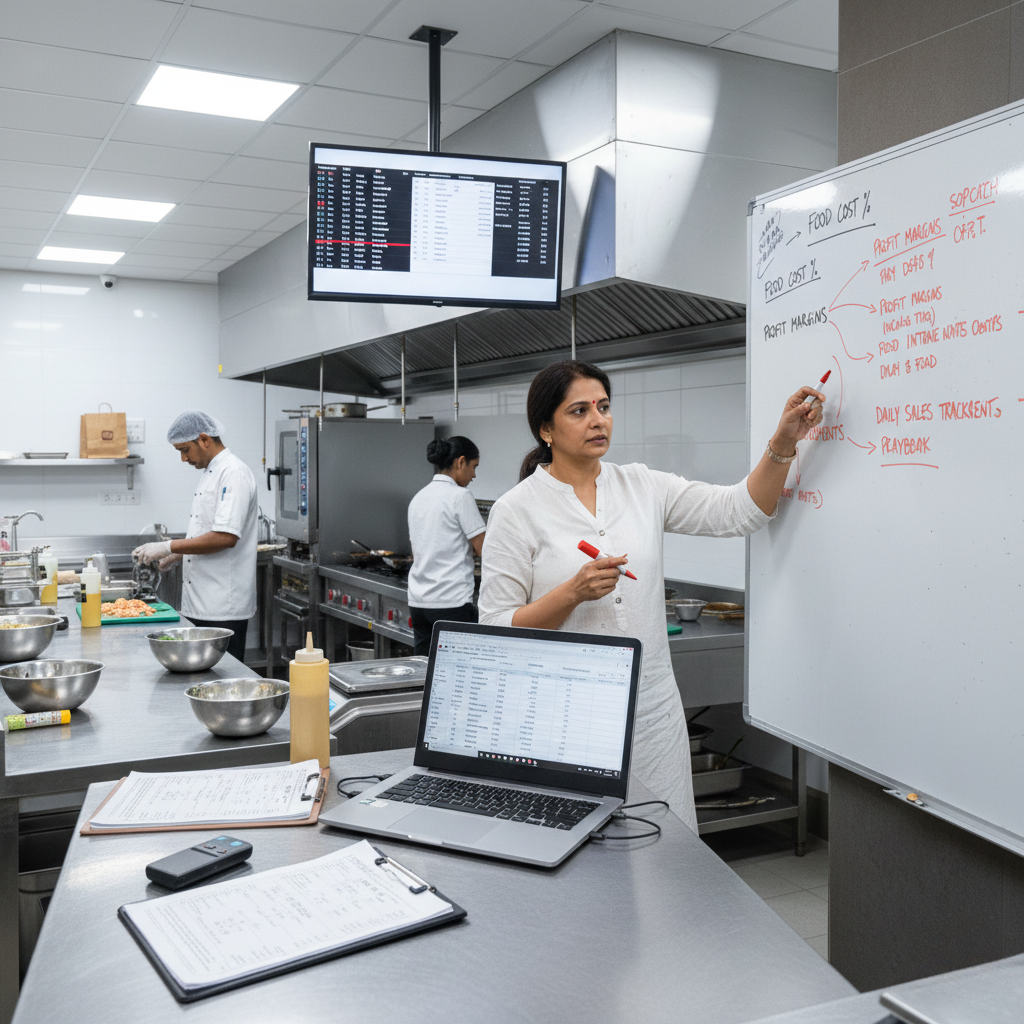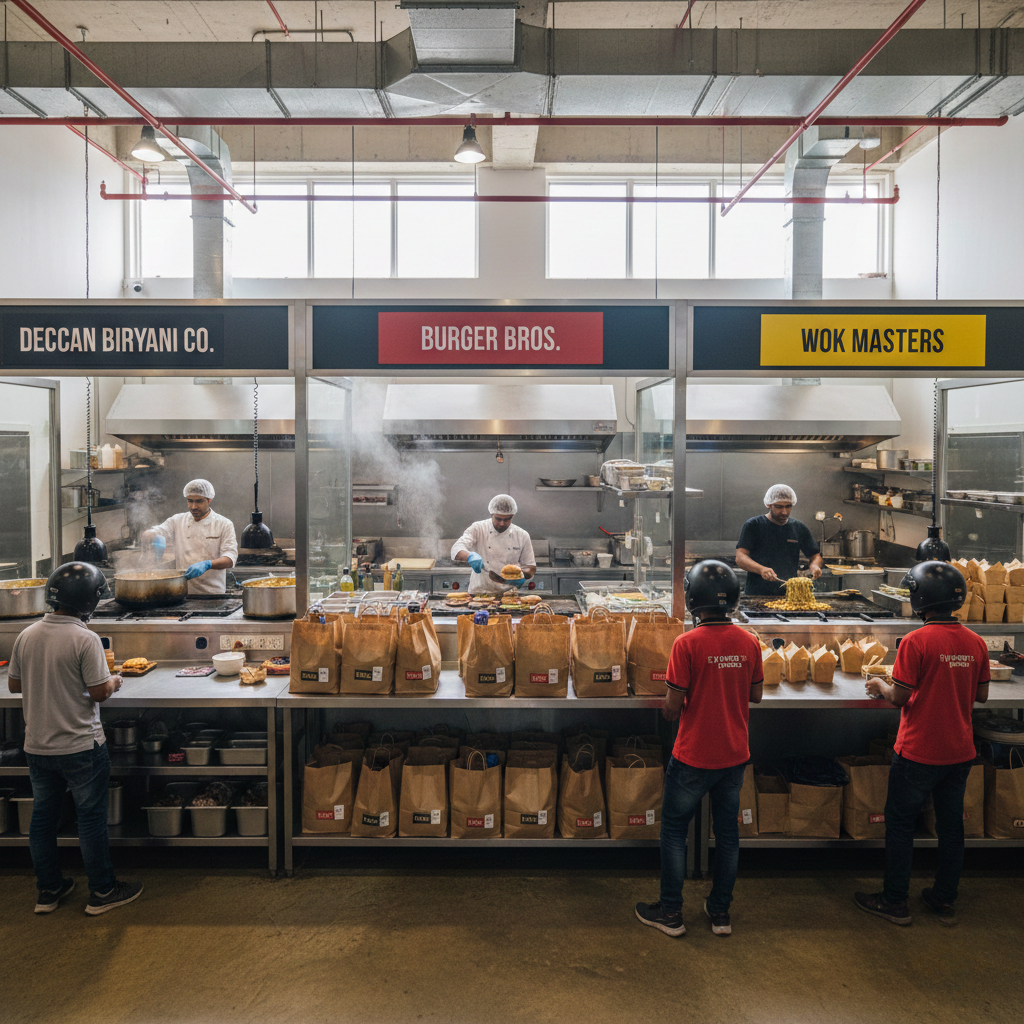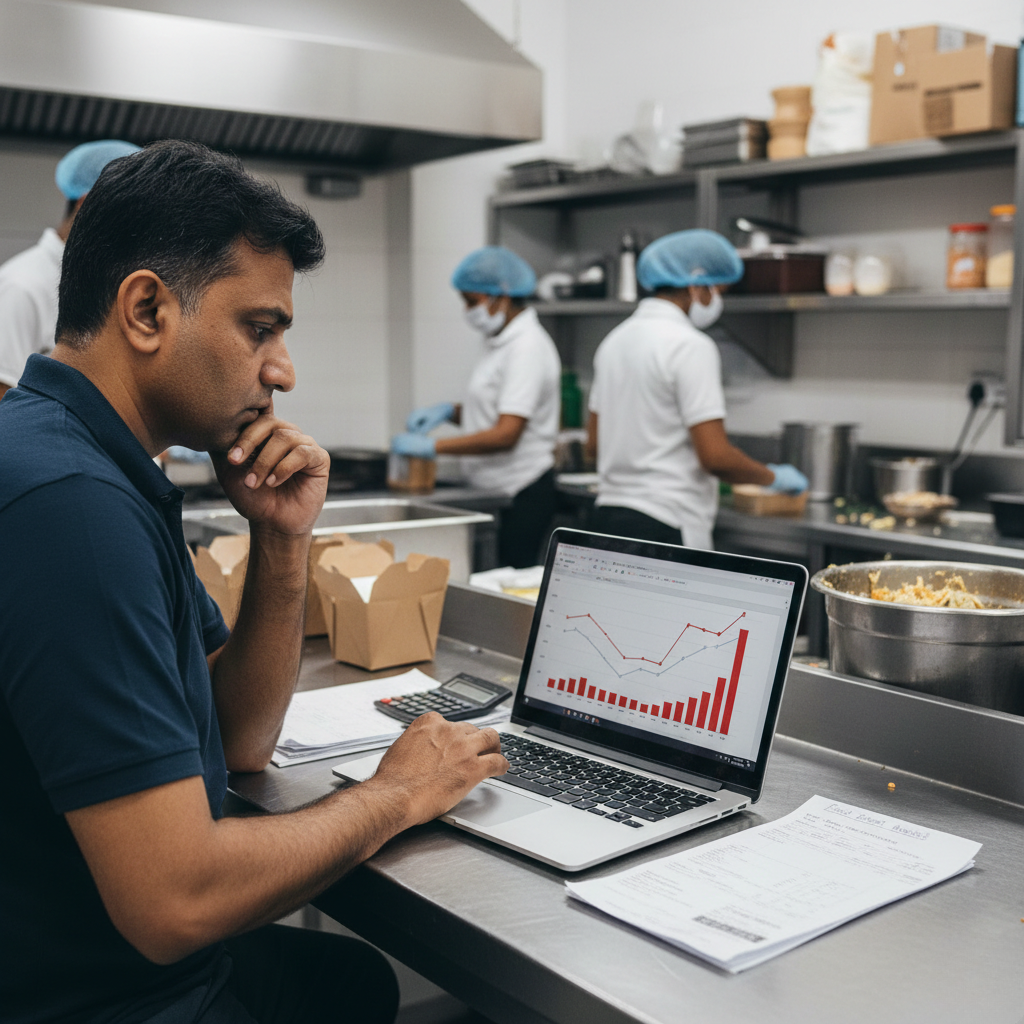
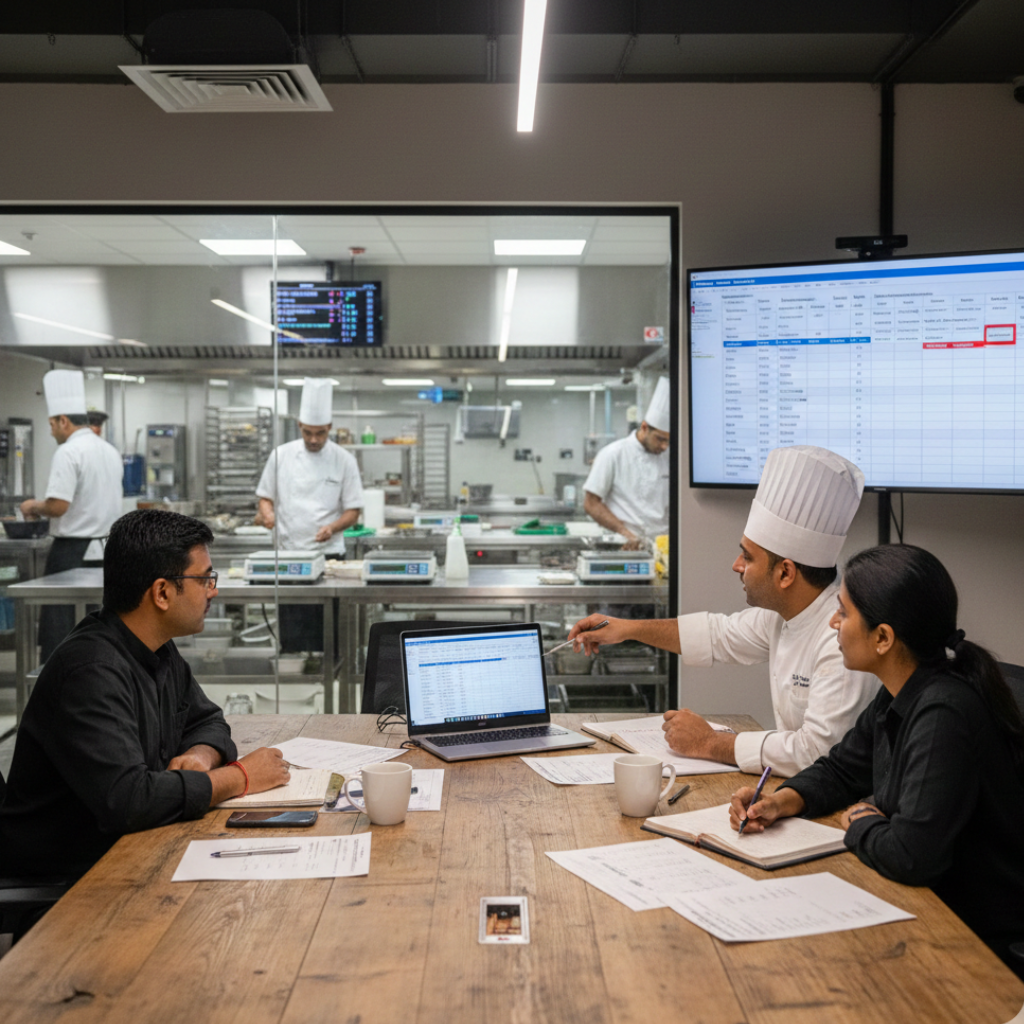
Food cost percentage is one of the most critical metrics for running a profitable cloud kitchen in India. Since cloud kitchens operate on thin margins and high order volumes, even a small increase in food cost can significantly impact profits. Understanding benchmarks, calculating food cost accurately, and controlling it effectively is essential for long-term success.
What Is Food Cost Percentage in a Cloud Kitchen?
Food cost percentage refers to the proportion of your total food revenue spent on raw ingredients. In a cloud kitchen business model, this includes ingredients, spices, oils, packaging directly related to food preparation, and wastage.
Formula:
Food Cost Percentage = (Total Food Cost ÷ Total Food Sales) × 100
For example, if your cloud kitchen spends ₹1,20,000 on ingredients in a month and generates ₹4,00,000 in food sales, your food cost percentage is:
(1,20,000 ÷ 4,00,000) × 100 = 30%
Ideal Cloud Kitchen Food Cost Percentage in India
In India, the ideal food cost percentage for cloud kitchens typically falls within the following range:
- 25% – 30% → Excellent cost control
- 30% – 35% → Industry average
- Above 35% → Risky and unsustainable
Cloud kitchens selling pizzas, burgers, biryani, or bowls usually target the lower end (25–30%) due to standardized recipes and bulk purchasing.
You can also explore our detailed guide on cloud kitchen profit margins in India to understand how food cost directly affects profitability.
Food Cost Benchmarks by Cloud Kitchen Category
| Category | Ideal Food Cost % |
|---|---|
| Pizza & Burgers | 22% – 28% |
| Biryani & Indian Meals | 28% – 32% |
| Desserts & Bakery | 30% – 35% |
| Healthy Bowls & Salads | 32% – 38% |
How to Calculate Food Cost Accurately
Accurate calculation goes beyond bills and invoices. Follow these steps:
- Track opening inventory value
- Add all purchases during the period
- Subtract closing inventory
- Add wastage and spoilage costs
Food Cost Formula:
Opening Stock + Purchases − Closing Stock = Total Food Cost
Using inventory software or POS systems helps avoid manual errors. For operations guidance, check our article on cloud kitchen operations management.
Common Reasons for High Food Cost in Cloud Kitchens
- Poor portion control
- Over-ordering raw materials
- High wastage due to low demand forecasting
- Unstandardized recipes
- Vendor price fluctuations
How to Control Food Cost Percentage Effectively
1. Standardize Recipes
Create fixed recipes with exact gram measurements. This ensures consistency and prevents over-portioning.
2. Negotiate with Suppliers
Bulk buying and long-term contracts help lock prices. According to FSSAI guidelines, proper sourcing also improves food safety and quality.
3. Menu Engineering
Identify high-margin items and promote them aggressively on Swiggy and Zomato. Remove low-selling, high-cost dishes.
4. Control Wastage
Use daily prep sheets and demand forecasting. Even a 2% reduction in wastage can significantly improve monthly profits.
Food Cost vs Other Cloud Kitchen Costs
Food cost should never be analyzed alone. A healthy cloud kitchen typically follows this structure:
- Food Cost: 25% – 32%
- Platform Commission: 18% – 25%
- Staff & Rent: 15% – 20%
- Marketing & Packaging: 5% – 8%
If food cost crosses 35%, overall profitability becomes difficult, even with high order volumes.
Conclusion
Maintaining the right cloud kitchen food cost percentage in India is the foundation of a profitable delivery-only business. By tracking inventory, standardizing recipes, negotiating suppliers, and engineering your menu smartly, you can keep food costs under control and scale sustainably.
Frequently Asked Questions (FAQs)
What is a good food cost percentage for cloud kitchens in India?
A good food cost percentage ranges between 25% and 30%. Up to 35% is acceptable, but anything higher impacts profitability.
How often should food cost be calculated?
Ideally, food cost should be tracked weekly and reviewed monthly for better control and faster corrections.
Does packaging count in food cost?
Primary packaging directly linked to food delivery is often included in food cost, while branding and outer packaging are treated as marketing expenses.
Can cloud kitchens survive with 40% food cost?
Sustaining a cloud kitchen with 40% food cost is extremely difficult unless prices are premium and order volumes are very high.
Which cuisine has the lowest food cost?
Pizza, burgers, and standardized Indian meals usually have the lowest food cost due to controlled recipes and bulk ingredient usage.
People Also Read
- Cloud Kitchen Expansion Strategy in India
- Cloud Kitchen Multi-Brand Model in India
- Cloud Kitchen Centralized Kitchen Model in India
- Cloud Kitchen Scaling Framework in India
- Cloud Kitchen Menu Engineering